Nail Texture Techniques: Velvet and Fiberglass Looks
This guide covers how texture changes the way a color reads, how to do textured nails step by step, and how to keep the look wearable.
- Words by
- Julio Arco
- Published
- Reading
- 4 min
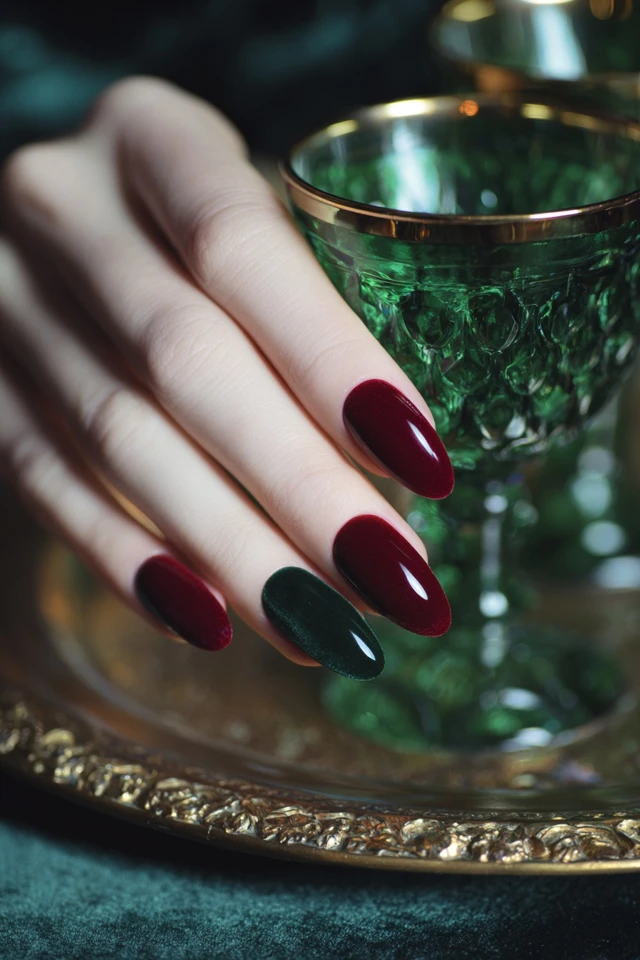
A velvet nail is a matte, soft-looking finish, usually a flocked or velvet-effect top layer, applied over a color base. On fiberglass or other extensions it gives you a plush surface that absorbs light instead of reflecting it. If you want to try it, ask your technician for a velvet or flocked finish in one color, and keep the shape short to medium.
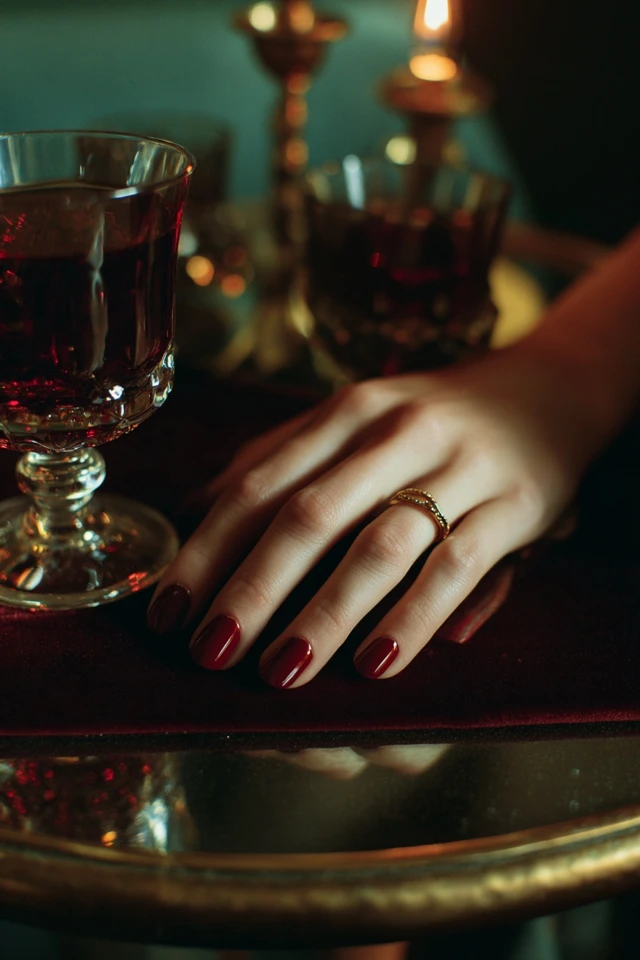
Why does texture change how a nail color looks?
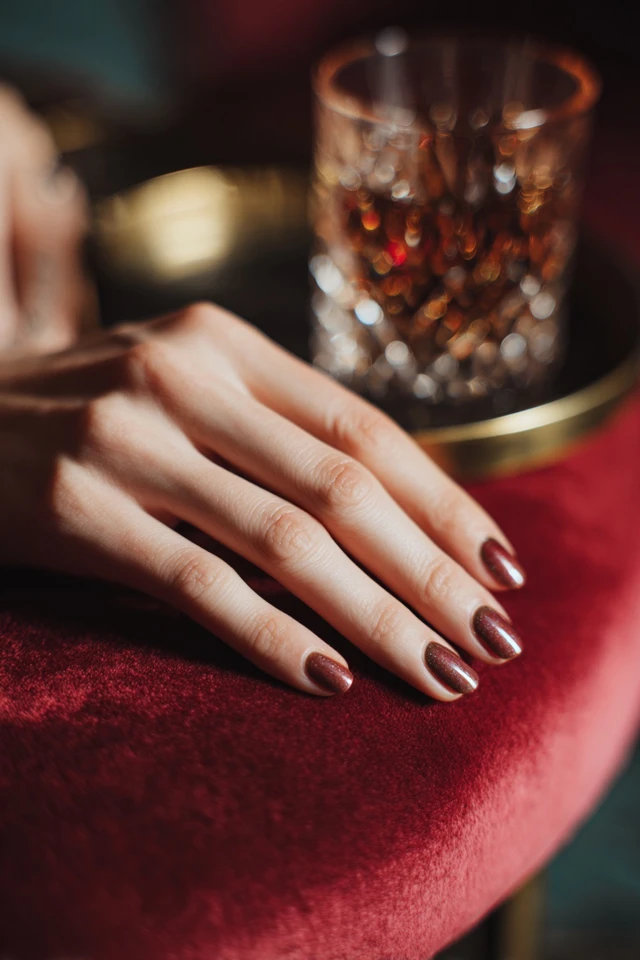
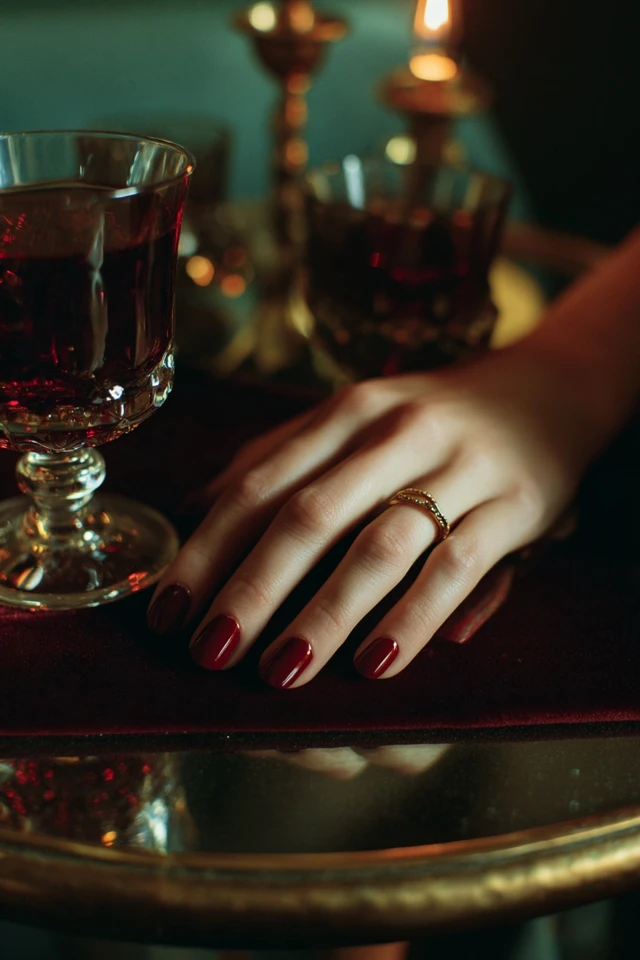
The same burgundy looks like two different colors in matte and glossy. A glossy surface bounces light back as bright highlights. A velvet surface scatters it, so the color looks deeper, softer and slightly darker.
Through the lens of evidence-based design, I'd think about texture before color. Texture changes how a shade reaches the eye, and on a small canvas like a nail that effect is easy to see. Deep tones such as burgundy, midnight blue, forest green and chocolate suit velvet well because the matte surface adds depth. Very pale shades can look chalky, so test one nail first.
How do you do textured nails?
Methods vary by product, but a velvet or flocked manicure follows the same logic as most texture nail art: build a smooth base, add the texture while a layer is still workable, then seal only what needs sealing.
- Prep and shape the nails. Texture shows every bump, so a smooth, even base matters more than usual.
- Apply the base color and cure or dry it as the product directs.
- Apply the tacky layer, then press or brush the velvet powder or flock over it.
- Brush off the excess and cure again if the system calls for it.
- Leave the velvet area unsealed unless the product instructions say otherwise, since a glossy top coat would erase the soft look.
If you do this at home, follow the instructions of the specific kit. Systems differ, and a technician can tell you which one suits your nails.
Ways to add texture to a manicure
Velvet is only one option. Others you can ask for or try:
- Matte top coat over a color, the simplest option and the easiest to remove.
- Embossed or sweater-style patterns, built with thicker gel in raised lines.
- 3D gel or acrylic details such as small flowers or ridges.
- Chrome powder, which adds a mirror finish rather than a tactile one.
- Caviar beads, pearls or rhinestones placed on one or two accent nails.
For more looks in the same family, see luminous flocking velvet nails and the galactic fiberglass mani.
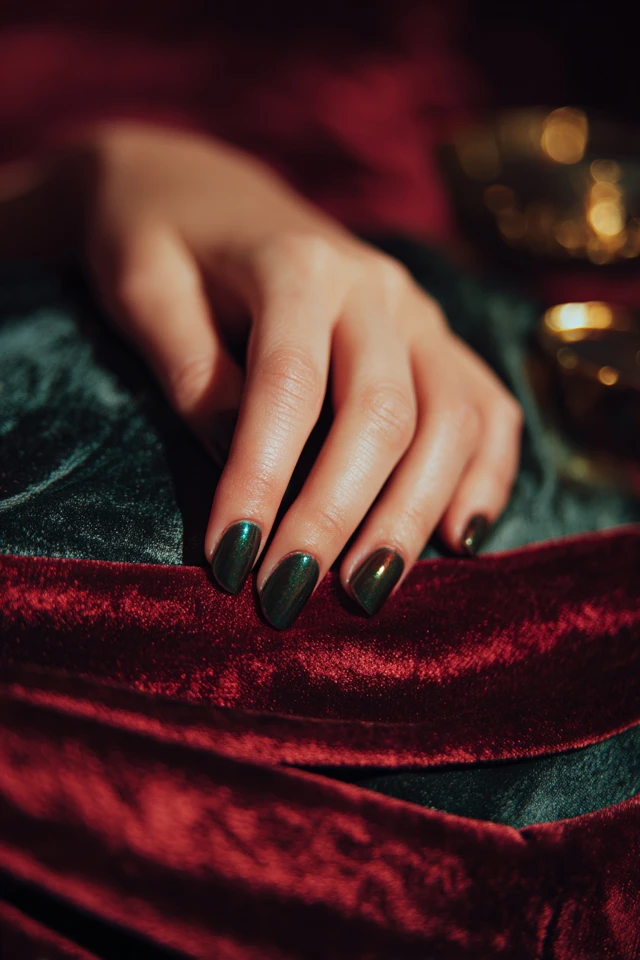
How to use matte and glossy nail contrast
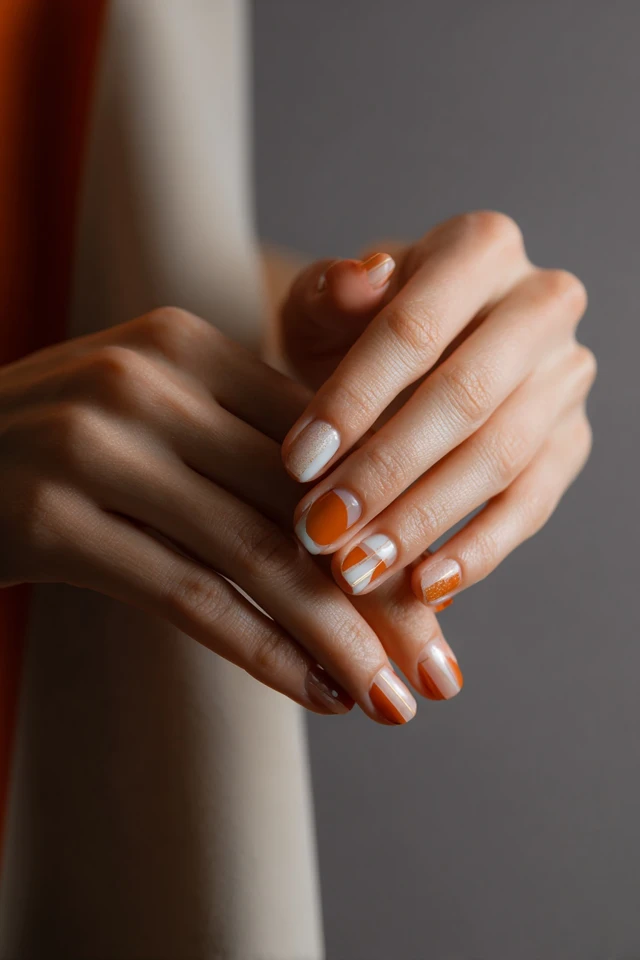
Matte and glossy nail contrast is the easiest way to get texture without bulk. Keep most nails velvet and leave one accent nail glossy, or run a glossy stripe or French tip over a matte base. The shine draws the eye to one spot, and the matte nails calm the rest.
Use the same color family for both finishes. A burgundy velvet with a glossy burgundy accent looks intentional. Two unrelated colors with two finishes start to look busy.
Which texture works on short nails?
Short nails take texture well if you keep it flat. For nail texture techniques for short nails, choose a velvet or matte finish in one deep color, or add a single raised detail near the cuticle. Avoid thick 3D pieces across every nail, since they can look heavy on a small surface and snag on clothing.
Longer shapes can carry bolder texture, but they also give you more surface to catch on knitwear. Match the texture to what you wear: a plush finish pairs naturally with wool, suede and cashmere, while sleek tailoring works with a single glossy accent.
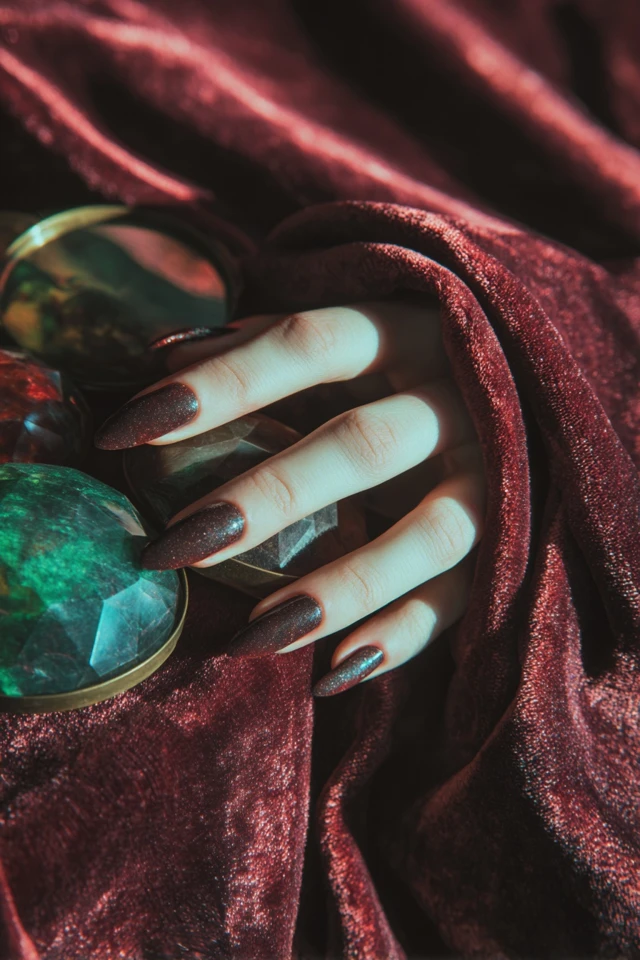
Keeping textured nails healthy
A healthy natural nail has, in the words of a review in the National Institutes of Health's PMC database, "a smooth glossy surface, a translucent nail bed visible underneath, an oval contour" and smooth cuticles. Texture work sits on top of that base, so protect it.
- Artificial nails need filing for adhesion. The American Academy of Dermatology notes that filing the natural nail until it feels rough thins it and makes it weaker.
- If you wear them for more than a few weeks, plan on touch-ups every 2 to 3 weeks, per the same AAD page.
- Removal is where most damage happens. Cleveland Clinic says careless gel removal can temporarily damage nails, with cracking and peeling the most common problems.
Board-certified dermatologist Shari Lipner, MD, PhD, says: "After removing the color, wait one month before getting another one of these manicures." Give your nails a break between sets, and check with a dermatologist if you notice pain, discoloration or lasting damage.
Styling a velvet manicure
Keep the nails as the one textured detail and let the outfit stay simple. Burgundy velvet works with a camel coat. Deep green suits cream knits. Matte black pairs with leather and silver rings. If your clothes already have heavy texture, pick a smoother nail finish so the two do not compete.
More inspiration: polished minimalist nails for a quieter take, or radiant marble nails if you prefer pattern to plush.
Frequently asked questions
How do you do textured nails?
Start with a smooth base color, then add texture with a velvet powder, matte top coat, raised gel or beads while the layer is still tacky or workable. Follow your product's cure and sealing instructions.
How do I stop ridges on my fingernails?
Ridges are a nail health matter, so ask a dermatologist what is causing them. Gentle buffing before polish can make the surface look smoother, but avoid heavy filing on thin nails.
Are fiberglass nails damaging to natural nails?
Any artificial nail can weaken the natural nail through filing and removal. Careful application and soaking-based removal reduce the risk, and a professional can advise on your nails.
Can I wear a velvet finish to work?
Yes. A velvet manicure in a deep neutral or muted color reads as soft and polished, especially on short to medium nails.
Filed under Nail Design