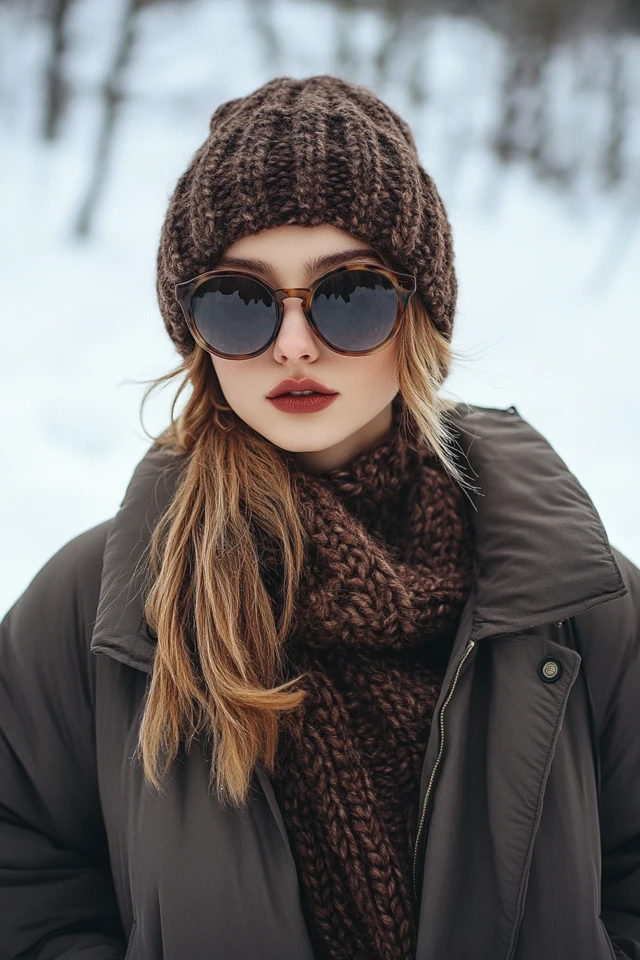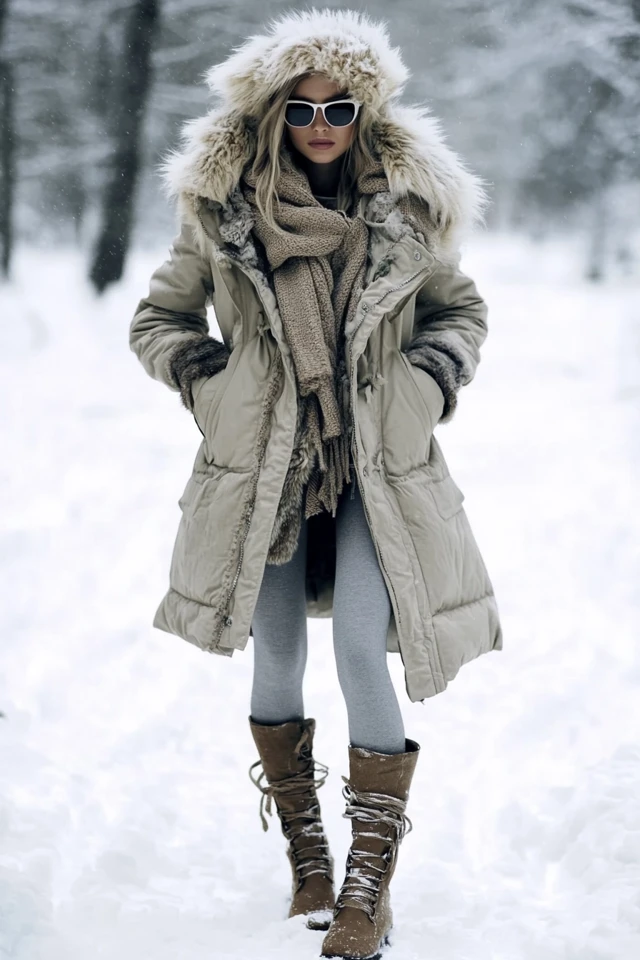
Fleece-Lined Parkas for Snowy Winter Strolls
- Words by
- Julio Arco
- Published
- Reading
- 4 min
The best parkas for winter and rain pair a waterproof shell (look for taped seams and a storm flap over the zipper) with a warm lining such as fleece, and a hood that stays up in wind. A hem that falls at mid-thigh covers the most ground on wet, cold days.
A fleece-lined parka is a good fit for snowy walks and drizzly commutes alike. The shell keeps water out, the lining holds warmth in, and what you wear underneath decides whether the whole system works.
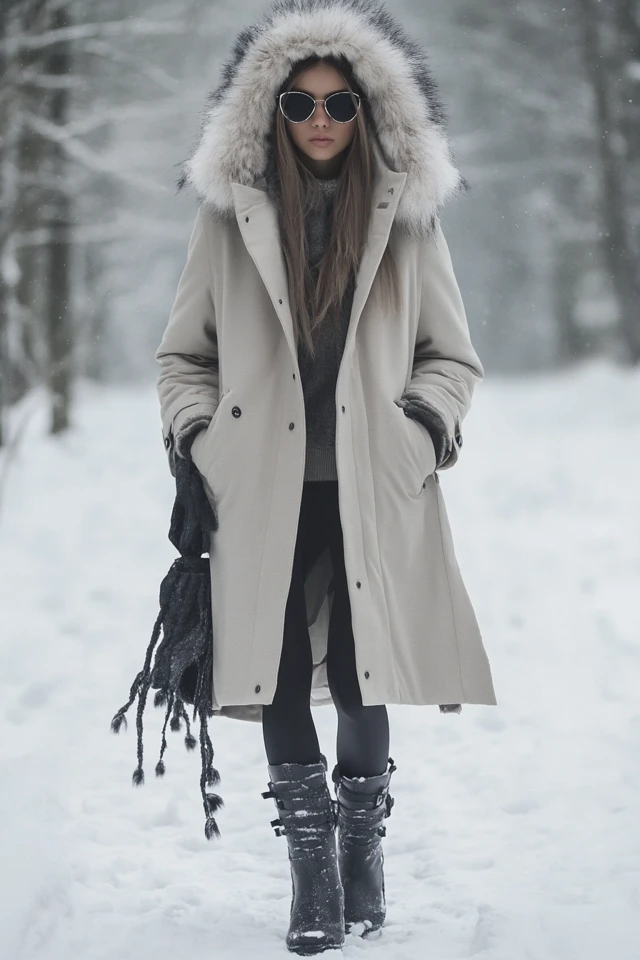
What makes a parka work in both rain and cold?
Two jobs, two layers. The outer shell stops wind and water. The lining and any insulation trap warm air. A coat that does only one of these leaves you either damp or chilled.
Snow is forgiving, since it sits on the surface for a while. Cold rain is not, because it soaks through quickly and pulls heat from you. That is why a shell labeled waterproof matters more for wet winters than one labeled water-resistant, which usually handles only light drizzle.
What should you look for in waterproof parkas for winter and rain?
Shell fabric and seams
Nylon and polyester shells with a waterproof membrane or coating are the usual choice. Check the product details for taped or sealed seams: stitching holes are where water gets in first. Treated cotton blends look softer but tend to soak through sooner in sustained rain.
Hood
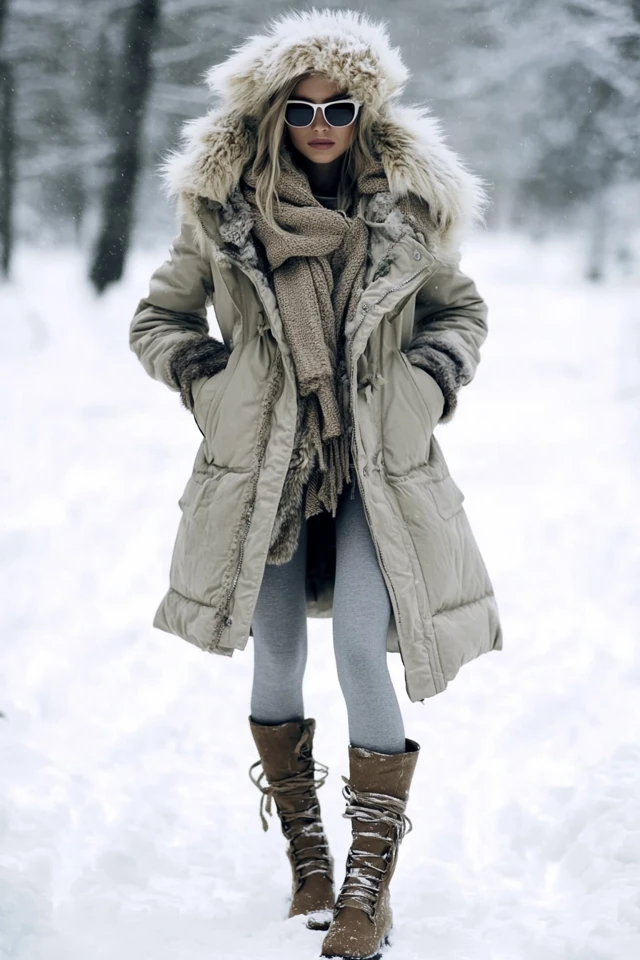
A hood should have a drawcord and a brim or stiff edge that keeps rain off your face. A fleece-lined hood is cozy, and faux fur trim blocks some wind, but both hold water and take longer to dry. If your area is rainy more often than snowy, a detachable trim is easier to live with.
Length
A hem past the hip protects your legs and the seat of your pants from splashes and wind. Mid-thigh is the practical sweet spot. Shorter parkas move more freely for active walks, so choose by how you spend your days.
Closures and pockets
A storm flap over the zipper, adjustable cuffs and a drawcord at the waist or hem seal out drafts. Deep pockets should be easy to reach with gloves on. A two-way zipper lets you open the bottom when you sit or climb stairs and keep the chest closed.

Is fleece lining warm enough?
For most cold winter days, yes. Fleece traps air, stays soft and feels light. Sherpa-style or double-layer fleece adds loft for extra warmth. For very low temperatures, look for a parka that adds insulation between the shell and lining, and check the manufacturer's stated temperature range rather than guessing.
Through the lens of evidence-based design, I'd pay attention to the texture against your neck and wrists. Those are the spots where the lining touches skin most, and a soft, smooth finish there changes how comfortable the coat feels over a long day.
What do you wear under a parka?
The base layer matters as much as the coat. Texas A&M's Howdy Health notes that the layer closest to your skin should be moisture wicking, drawing sweat away from your skin. The same page advises avoiding cotton, including undergarments, because it absorbs moisture and can keep it next to your skin, making you cold.
That advice is written for exercise, but it applies to long walks too. A thin merino or synthetic base layer, a sweater or fleece, then the parka gives you room to add or remove warmth. When trying on a parka, wear the thickest sweater you plan to use with it. If you can raise your arms without the hem lifting, the fit is right.
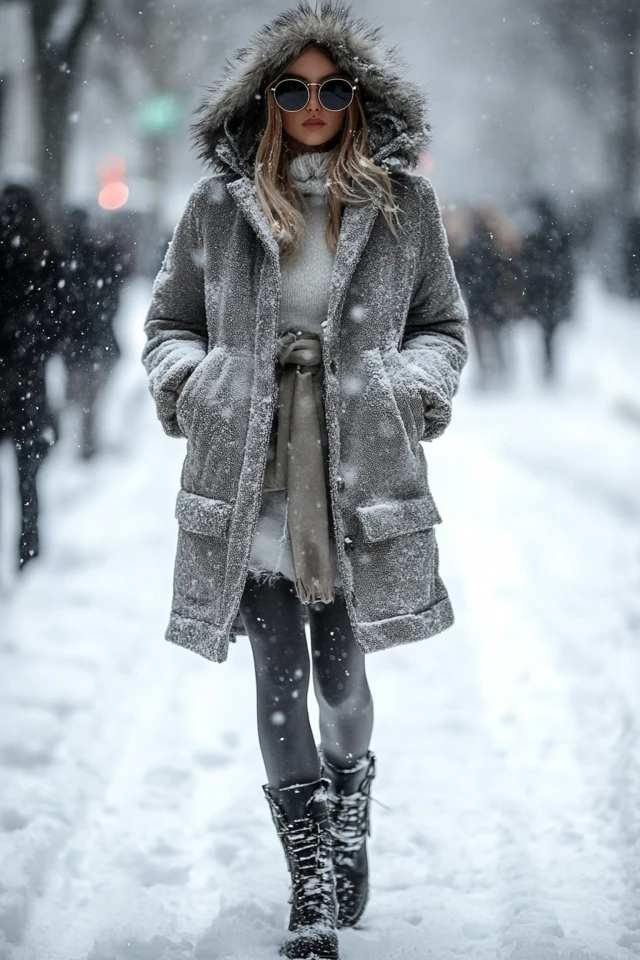
How do you style a parka?
Casual weekend
Black or navy parka, jeans, a chunky knit and lace-up boots. Add a beanie and a scarf in a different texture, such as ribbed wool, so the look has depth.
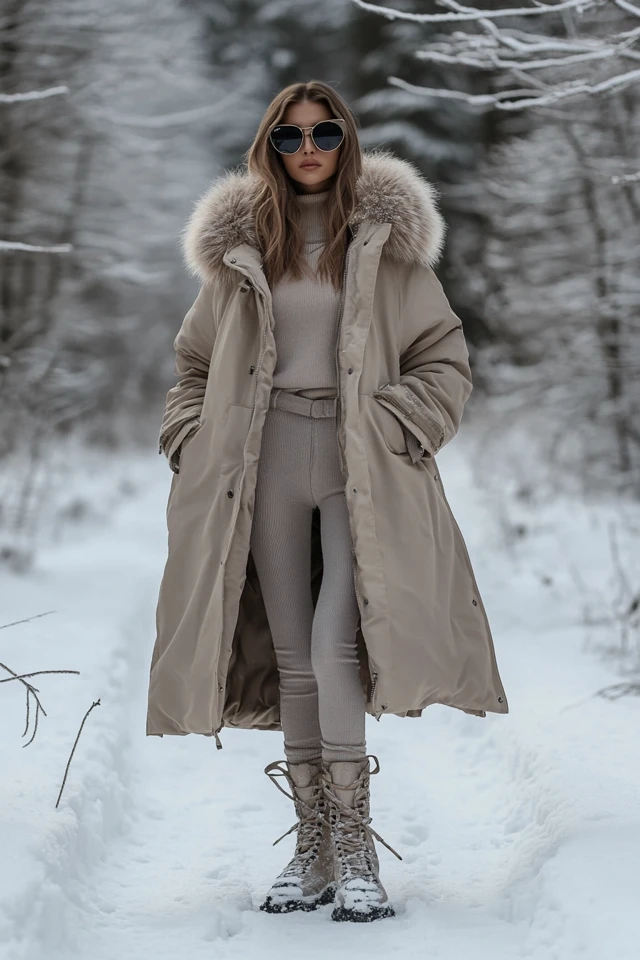
Polished city
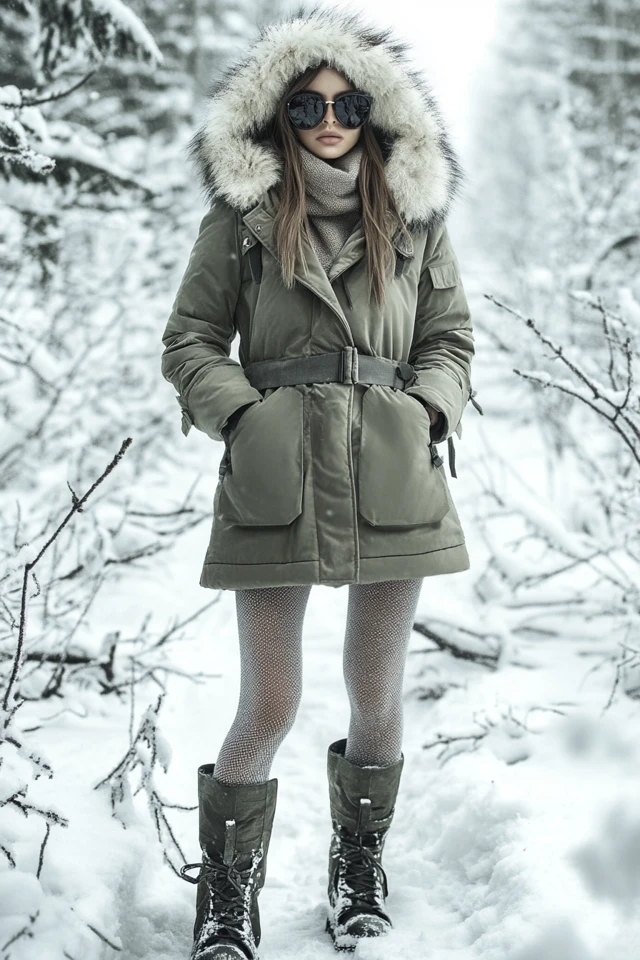
A belted parka in camel or olive reads sharper because the waist is defined. Pair it with slim trousers, ankle boots and leather gloves. Keep the bag and boots in the same tone.
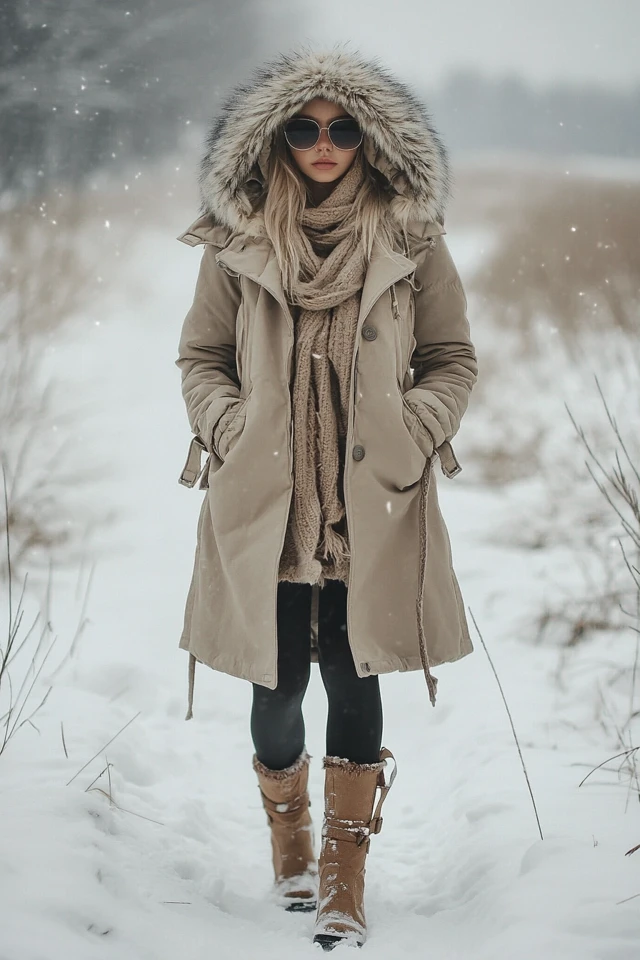
Active days
Choose a bright or navy shell over thermal leggings and a fleece pullover. For more ideas, see fleece-lined leggings for freezing temperatures and fleece jackets for frosty winter sports.
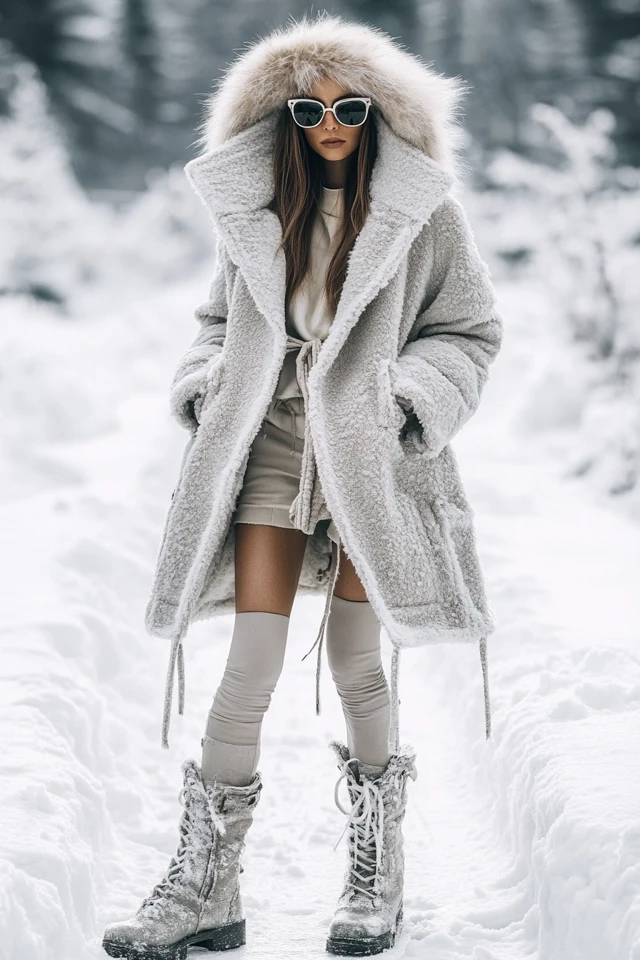
Evening
Drape a faux fur-trimmed parka over a midi sweater dress and knee-high boots. As an architect trained in evidence-based design, I'd keep the dress in a matte knit, because a glossy parka shell next to shine on the dress competes for attention.
Parka or another winter coat?
If your winters are dry and very cold, a puffer or quilted coat may suit you better. Compare options in warm quilted coats, cozy puffer jackets or the broader winter coats guide. For deeper cold, padded parkas for arctic winds add more insulation. A parka wins when rain and cold show up in the same week.
How do you care for a waterproof parka?
- Follow the care label. Some parkas can be machine-washed on a gentle cycle, others need professional cleaning.
- Spot clean the shell with a damp cloth.
- Dry completely on a hanger in a ventilated spot before storing, especially the lining and hood.
- Store on a sturdy hanger in a cool, dry place.
Finish with waterproof footwear: shearling-lined boots keep feet as warm as the coat keeps your torso.
Frequently asked questions
What is the best jacket for both rain and winter?
A parka with a waterproof shell, taped seams and a warm lining covers both. Choose a length that reaches mid-thigh and a hood with a drawcord.
What is the best parka for cold weather?
One with insulation or a thick fleece lining, a windproof shell, a storm flap and adjustable cuffs. Check the brand's stated temperature range before buying.
What is the best waterproof parka?
Look for a waterproof membrane or coating, sealed seams and a hood that stays in place. Water-resistant alone usually handles only light rain.
Are fleece-lined parkas heavy?
Usually not. Fleece is light for the warmth it gives, though added insulation and a long cut will raise the weight.
Filed under Weather Style