Puffer Jackets and Vests for Cold Weather: How to Choose
- Words by
- Julio Arco
- Published
- Reading
- 5 min
For snow and real cold, pick a puffer with a hood, a shell that sheds light moisture, and room for a sweater underneath. Choose down for dry, very cold days and synthetic fill if you expect wet snow. A vest is a good layering piece, but it will not replace a jacket on its own.
Below is how to choose between jackets and vests, get the length and fit right, and layer so you stay warm without overheating.
How do puffer jackets keep you warm?
A puffer is stitched into chambers filled with down or synthetic insulation. The fill traps air, and that trapped air slows the loss of your body heat. The shell on top blocks wind and, on many jackets, light snow or drizzle.
Puffers are also light for the warmth they give, so you can move, climb stairs or carry a bag without feeling weighed down by a heavy wool coat.
Jacket or vest: do puffer vests keep you warm?
A vest keeps your core warm, which matters a lot, but your arms stay exposed. That makes it a fine choice for cool days, for active outings where sleeves would make you overheat, and as a middle layer under a shell or coat.
For standing around in snow, a vest alone is not enough. Wear it over a long-sleeve base layer and a knit, or choose a full jacket. A lightweight puffer jacket is the easier all-rounder if you only want to buy one piece.
Down or synthetic insulation?
- Down is very warm for its weight and compresses small. It is a good fit for dry, deep cold.
- Synthetic fill keeps insulating better when damp and is usually easier to wash, so it suits wet snow, rain and heavy use.
Check the shell too. A water-resistant finish handles flurries, but in steady rain or wet snow you will want a waterproof layer over it. For subzero days, a purpose-built insulated ski jacket is a better tool than a fashion puffer.
How should a puffer fit?
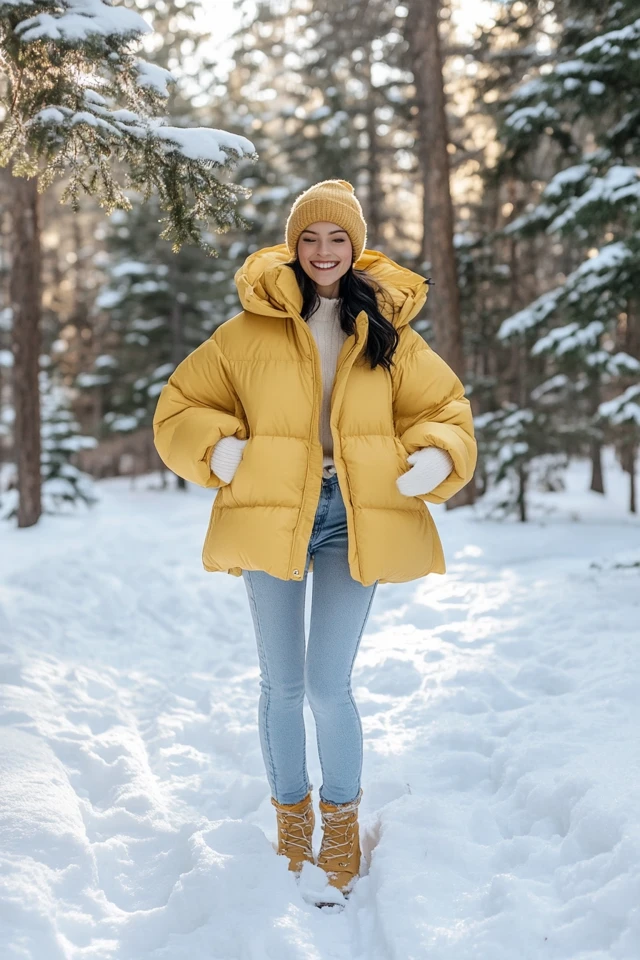
If a puffer pulls across the back when you reach forward, it is too small. That is a sizing problem, not a you problem. Test it with the thickest sweater you plan to wear. The shoulder seam should sit near the end of your shoulder (or just past it in an oversized cut), and the sleeves should cover your wrists when you lift your arms.
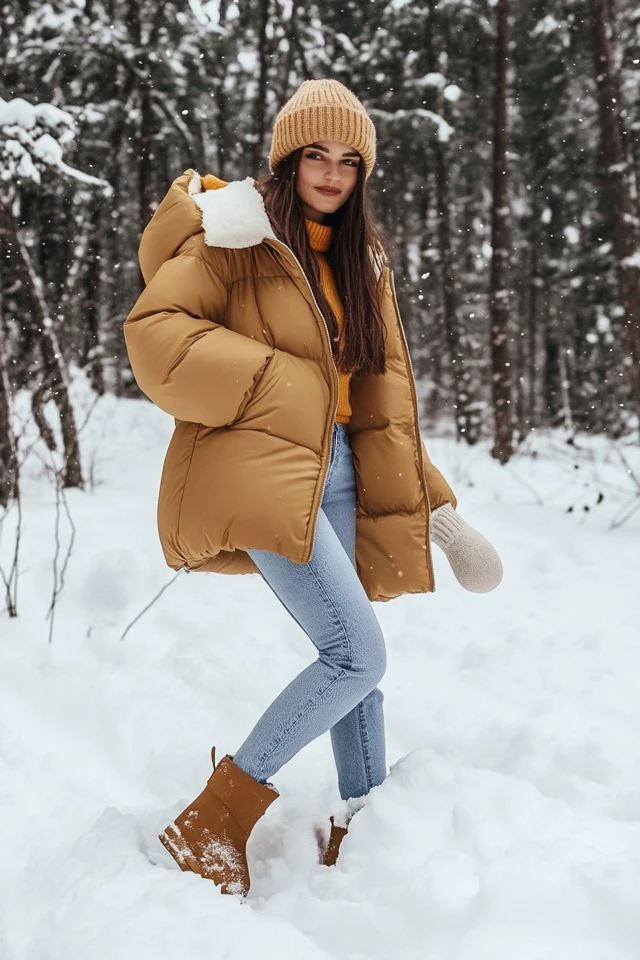
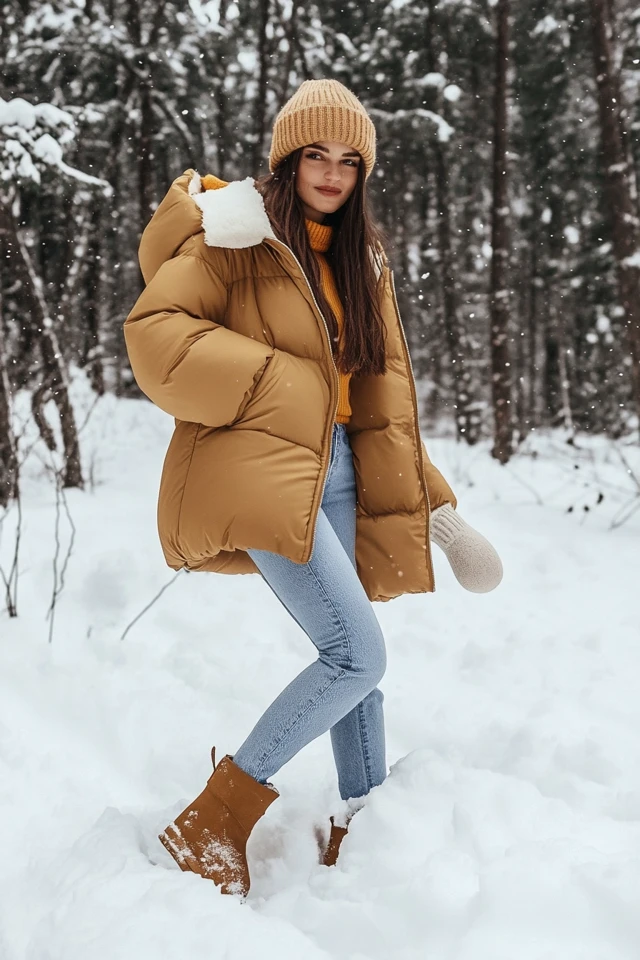
Fit that is too tight squashes the insulation and cuts warmth, while a very loose fit lets cold air circulate. If you like volume, an oversized puffer works well as long as the cuffs and hem still close snugly.

Which length and shape suit you?
Length changes proportion, so start with what you wear underneath.
- Cropped puffers sit best over high-waisted pants and show off the waist line. They are less warm on the hips.
- Hip-length jackets are the easy everyday choice.
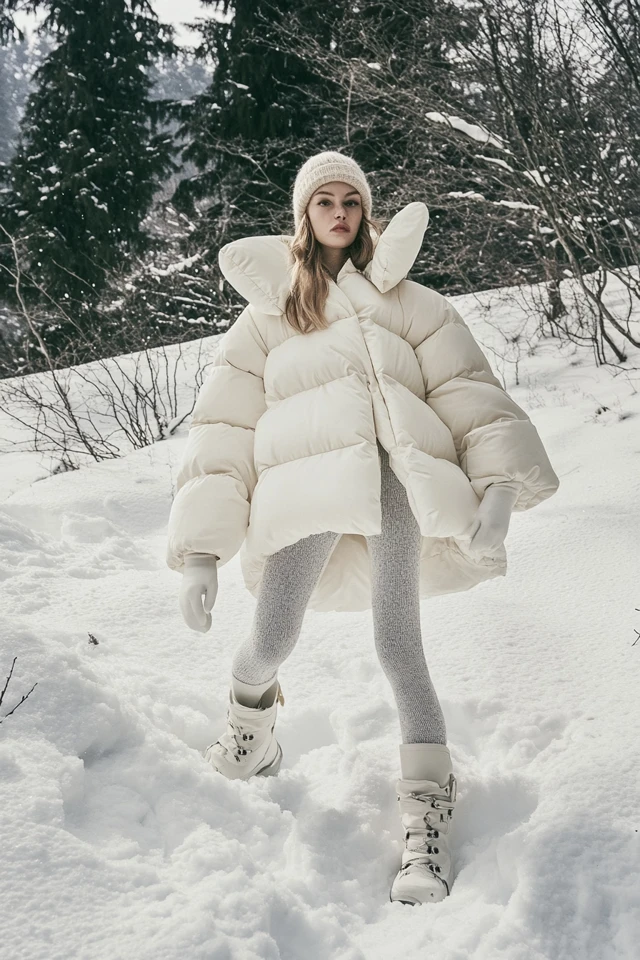
- Longline coats and a long women's puffer vest add coverage over the thighs. Both read as one long vertical line, which can make you look taller.
- Belted or fitted styles define the waist; see belted and fitted puffers if you want shape.
Horizontal quilting broadens the eye's path across the body, while vertical channels lengthen it. Pick whichever effect you want rather than following a rule about body type.
Which hood and details are worth it?
For snow, a hood is worth having. A men's puffer jacket with a hood, or the equivalent in any size, should have an adjustable drawcord and a brim that stays up over a beanie. Also look for:
- a zipper that runs smoothly, ideally with a storm flap over it
- pockets deep enough for gloves
- elastic or adjustable cuffs that seal over gloves
- an inner pocket for your phone, since batteries drain faster in the cold
How to layer under a puffer
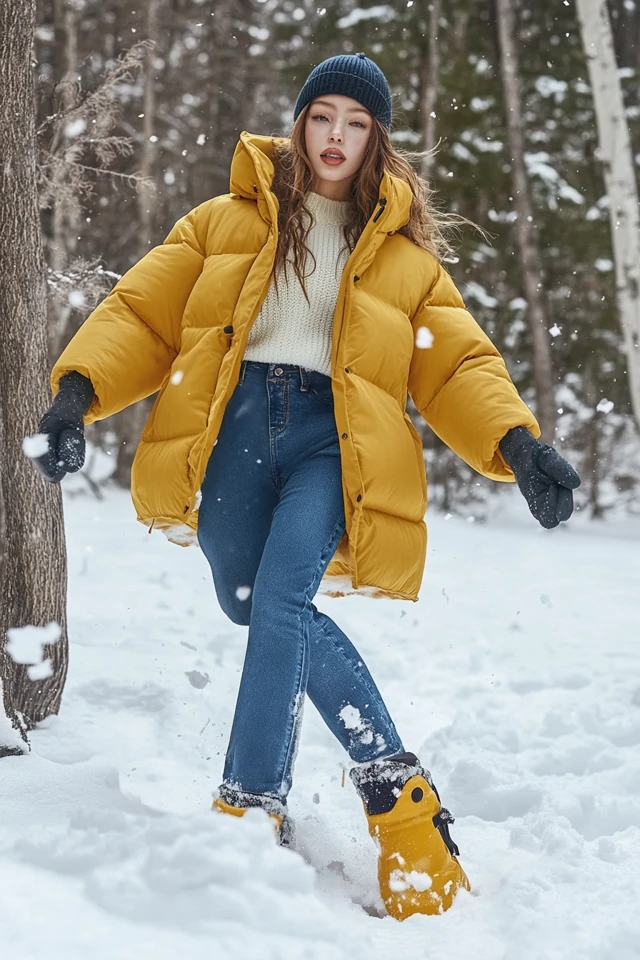
Start with a base layer that moves sweat off your skin. Texas A&M's Howdy Health notes that the layer closest to your skin should be moisture-wicking, and it also advises to avoid cotton, including your undergarments, because it absorbs moisture and can keep it next to your skin.
Then add a fleece or a thin wool knit, and finish with the puffer. If you start to sweat while walking, open the zipper before you get damp, since damp layers cool you quickly once you stop.
Which color works best in snow?
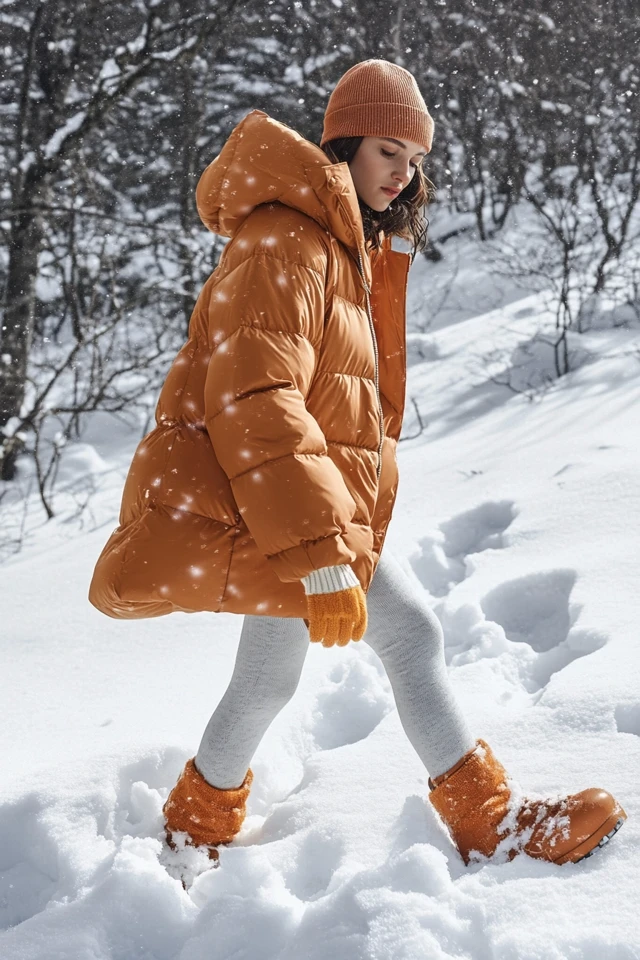
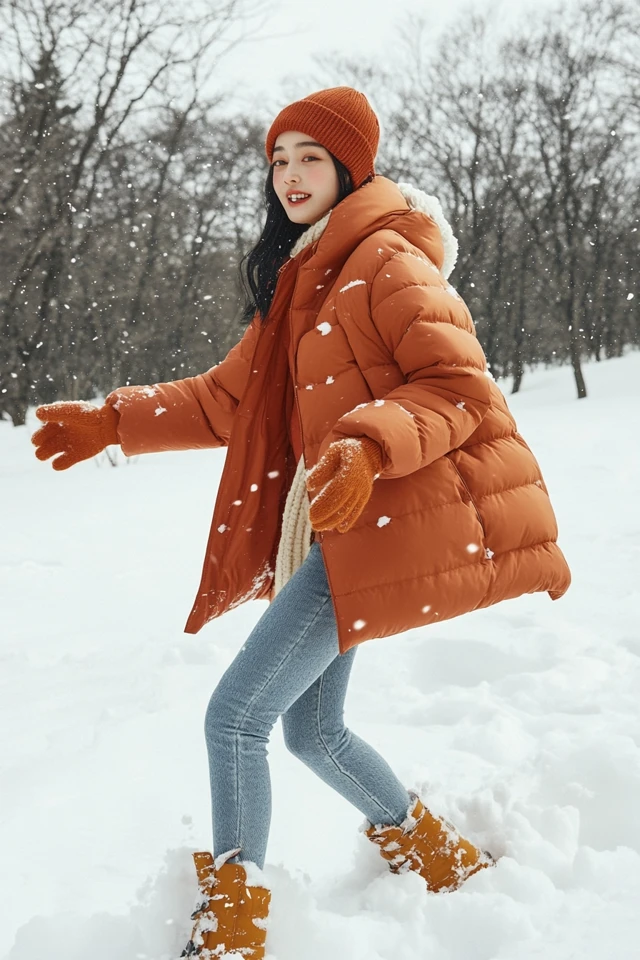
Through the lens of evidence-based design, I'd think about contrast first. Against white snow, a saturated red, yellow or cobalt reads clearly and cheerfully, while black and navy look sharp and go with nearly everything. Metallic finishes catch light and look different from one angle to the next, so they suit city strolls; for a closer look, see metallic puffer jackets or bright oversized puffers.
A matte finish usually looks more tailored, and a glossy one more sporty, even in the same color.
How do you care for a puffer?
- Follow the care label first, since down and synthetic fills can differ.
- Wash on a gentle cycle with a mild detergent made for the fill type.
- Dry on low heat with a few clean tennis balls or dryer balls to break up clumps and restore loft.
- Make sure the jacket is fully dry before storing it, and hang it or loosely fold it rather than compressing it for months.
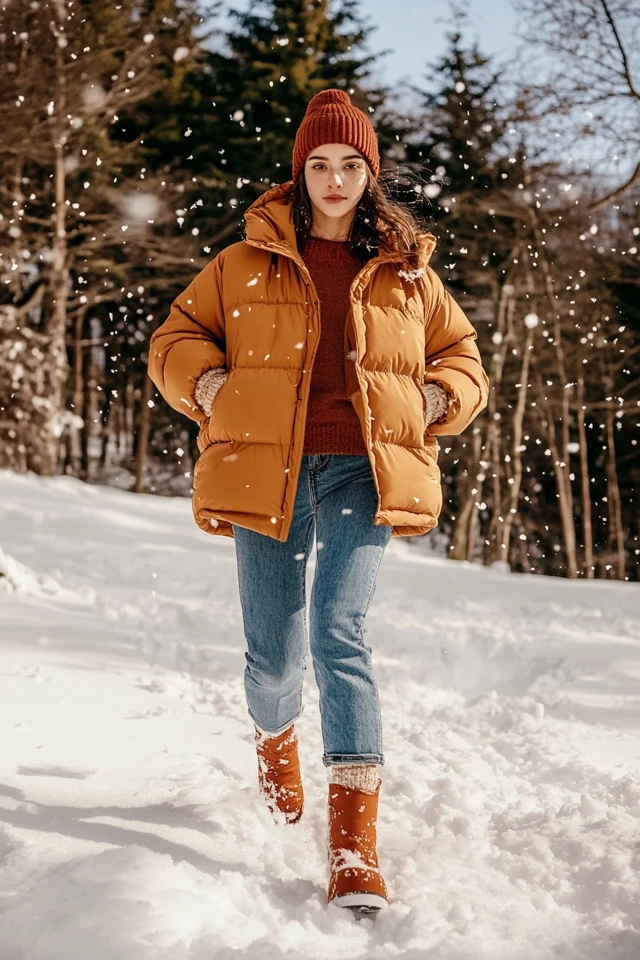
If you often face deep cold and wind, a warm down jacket is the next step up.
Frequently asked questions
Do puffer vests actually keep you warm?
They warm your core, but your arms stay exposed. Wear one over a long-sleeve layer or under a coat, and choose a jacket for long stretches in the cold.
Are puffer jackets suitable for everyday wear?
Yes. Cropped, hip-length and longline cuts all work for daily outfits, and a matte finish in a neutral color looks the most polished.
Can puffer jackets handle wet snow or rain?
Many have a water-resistant shell that copes with light snow. In steady rain or wet snow, choose synthetic fill or add a waterproof layer on top.
What brand has the best puffer jacket?
It depends on your climate and budget, so compare insulation type, shell, hood and fit rather than the label alone. Try jackets on over your thickest layer.
Filed under Weather Style