Hot Weather Activewear for Sunny Hikes: What to Wear
- Words by
- Julio Arco
- Published
- Reading
- 4 min
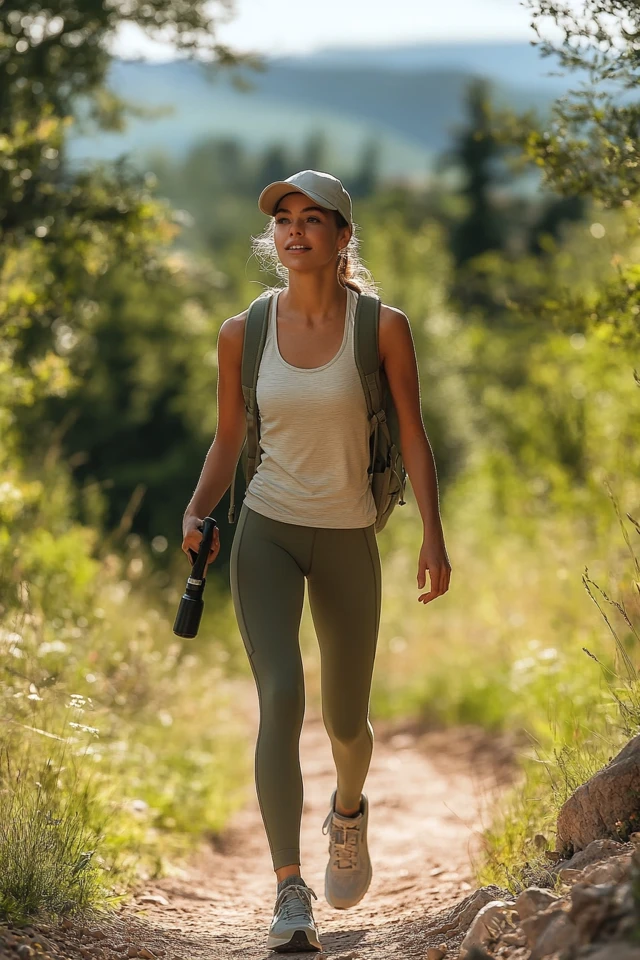
The best hot weather activewear for a sunny hike is a lightweight, moisture-wicking top, shorts or light leggings that move with you, and a hat. Choose fabrics that pull sweat off the skin and dry fast, and keep the fit loose enough for air to move.
If you are wondering what to wear when it's 90 degrees on the trail, start there and add sun protection. The rest of this post covers fabrics, fit, color and the small extras that make a long day outside easier.
Which fabrics work best for hot hikes?
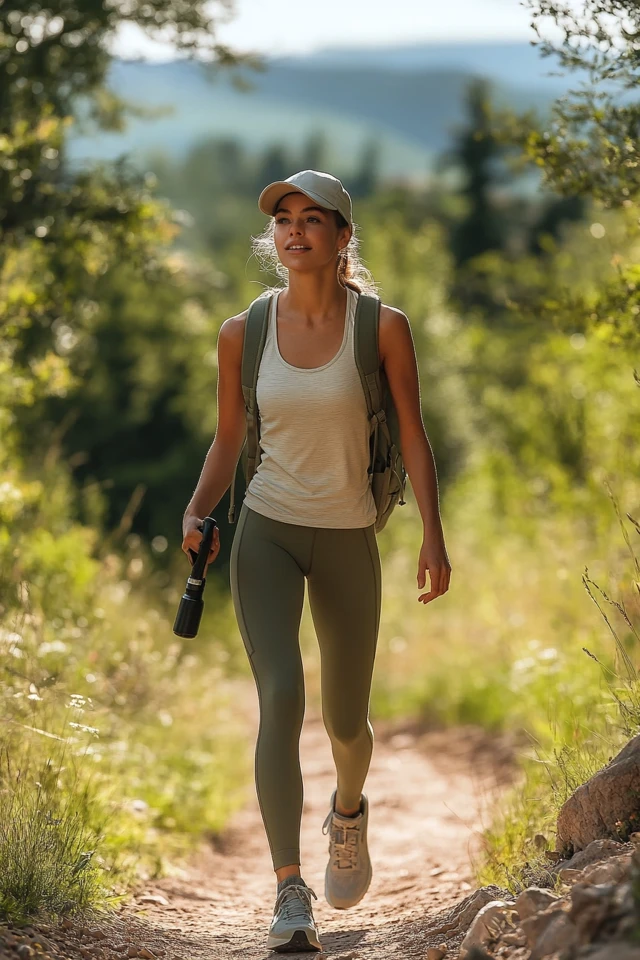
Synthetics such as polyester and nylon are the usual choice for moisture-wicking workout clothes for heat, because they are built to carry sweat away from the skin and dry quickly. Merino wool is a fine alternative if you like how it feels against the skin, and mesh panels add airflow where you sweat most.
Cotton is the one to be careful with. Georgia Tech's News Center notes that cotton's moisture vapor transmission rate is lower than linen's, meaning it doesn't dry as quickly. On a climb, a damp shirt that stays damp feels heavy and clingy.
Why does moisture-wicking matter in the heat?
Sweat only cools you when it can leave the skin. A wicking layer moves it outward so it can evaporate, and it also cuts down on the rubbing that causes chafing. Texas A&M's Howdy Health says the layer closest to your skin should be comprised of moisture wicking materials that draw sweat away from your skin. That advice is written for cold weather, but the same logic applies in summer, where the goal is simply to stay dry.
For a hot day, one thin wicking layer is usually enough. Extra layers trap heat, so save them for the cool start of an early hike and pack them small.
Loose fit or close fit?
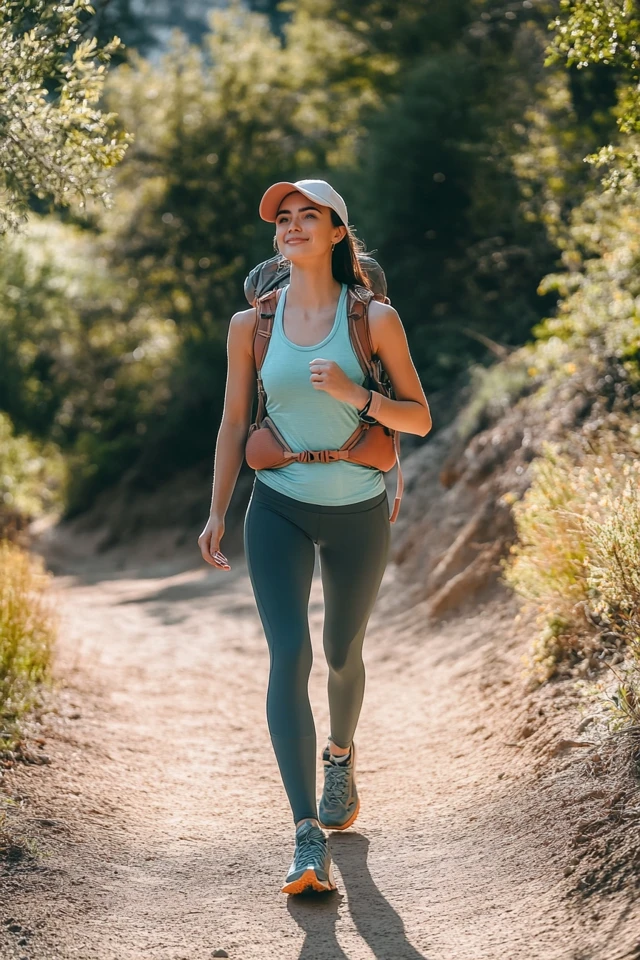
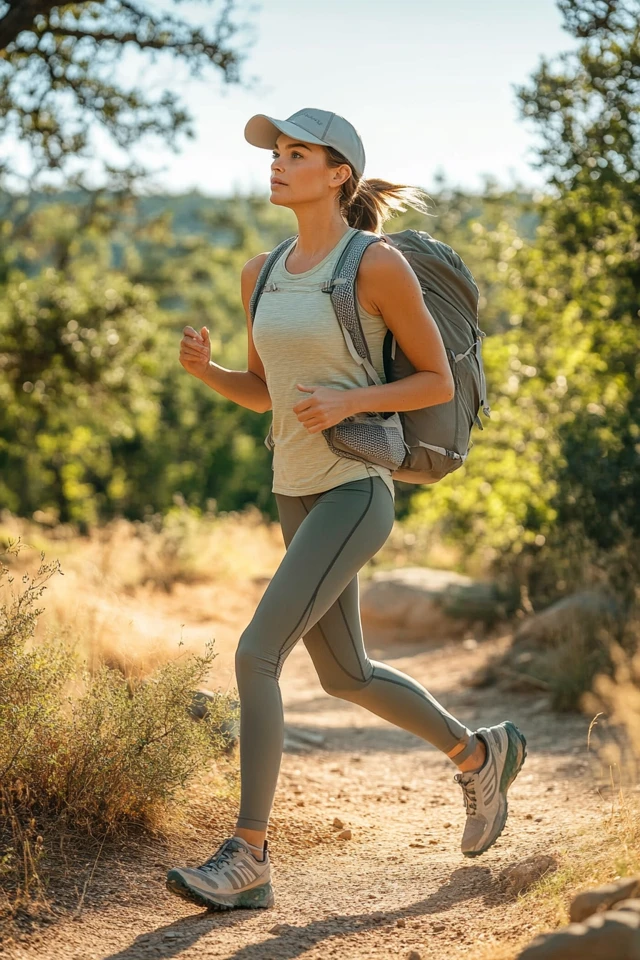
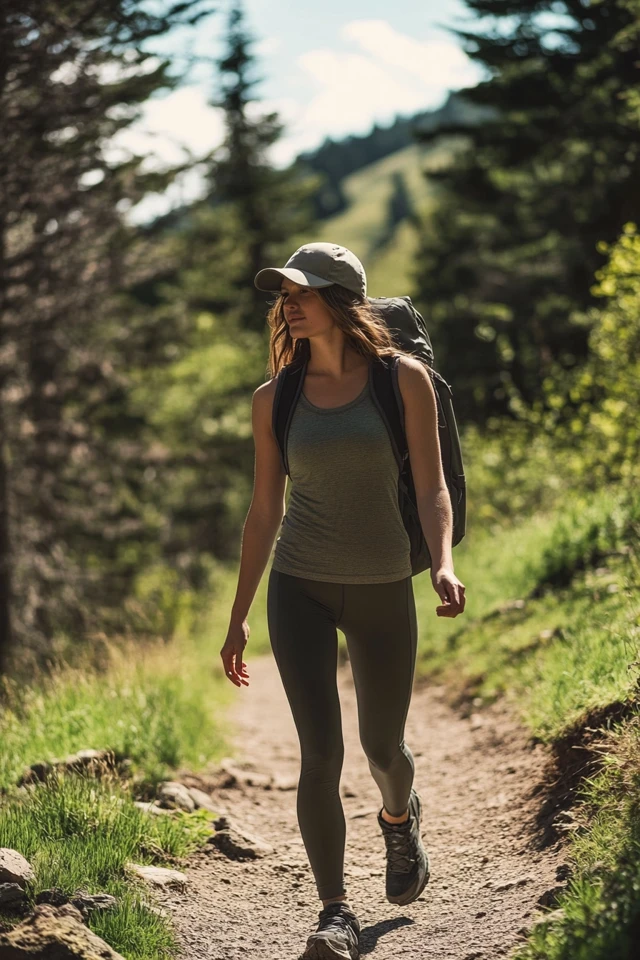
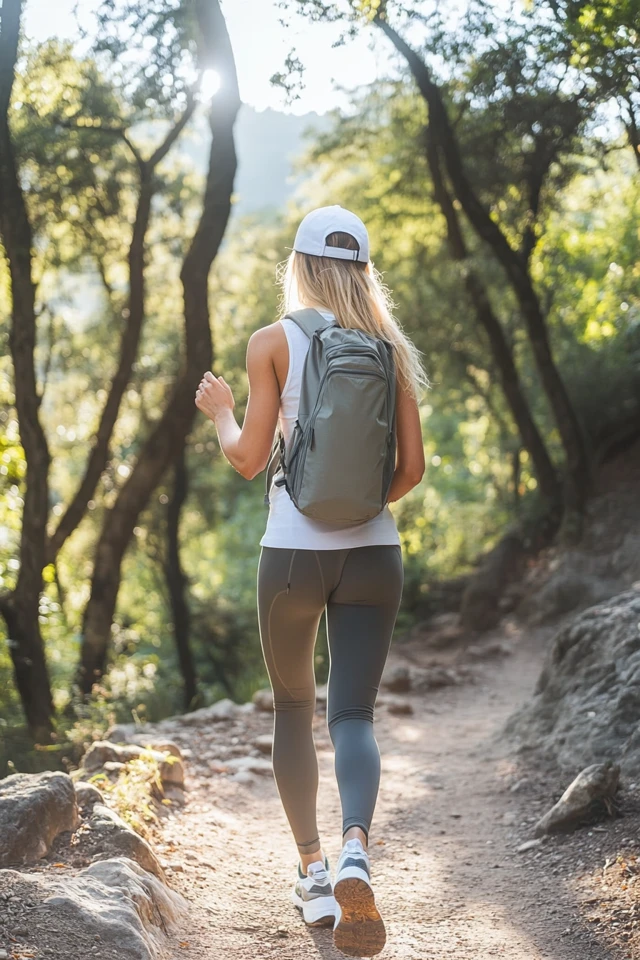
Both can work, and the choice depends on the piece. A loose, airy shirt lets air circulate and keeps fabric off sunburned shoulders. A close fit sits against the skin, which helps wicking and avoids bunching under a pack strap.
A simple formula: a relaxed top with fitted or mid-length shorts, or a snug tank under an open, breathable shirt. If a waistband digs in or a seam rubs when you step up onto a rock, that is a fit problem, not a you problem. Try the piece with a full range of movement before the trail.
Does color change how hot you feel?
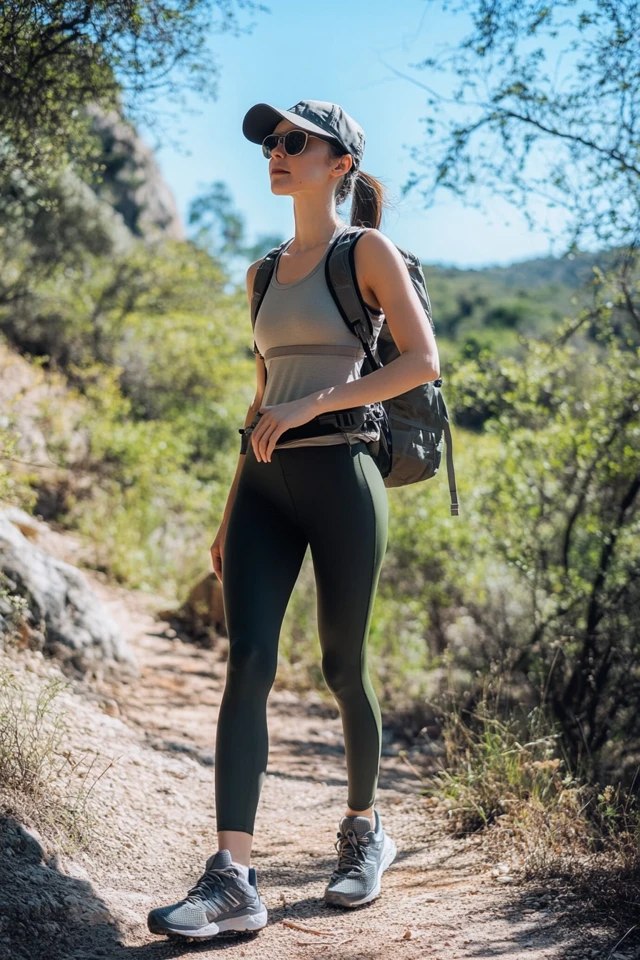
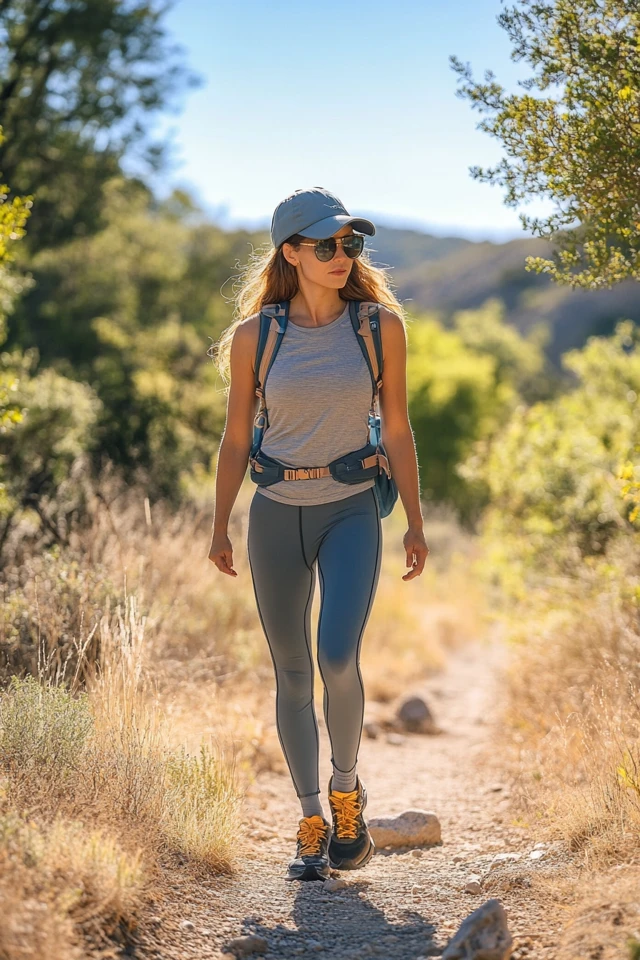
Through the lens of evidence-based design, I'd look at color and texture together. Light colors such as white, beige and pale gray generally read as cooler and tend to absorb less sunlight than dark ones, while a fabric with an open, matte weave also looks lighter on the body.
Brighter shades like coral or turquoise are a good choice if you want a lift in the outfit, and olive or rust blends into a forest trail. None of these is a requirement. If you pick a dark top, make sure the fabric itself is thin and breathable.
What sun protection should hot weather activewear have?
Look for a UPF label. The Skin Cancer Foundation explains that a UPF of 30 to 49 offers very good protection, while UPF 50+ offers excellent protection. Its Seal of Recommendation requires a minimum UPF of 50, which blocks 98 percent of the sun's rays and allows only 2 percent to penetrate.
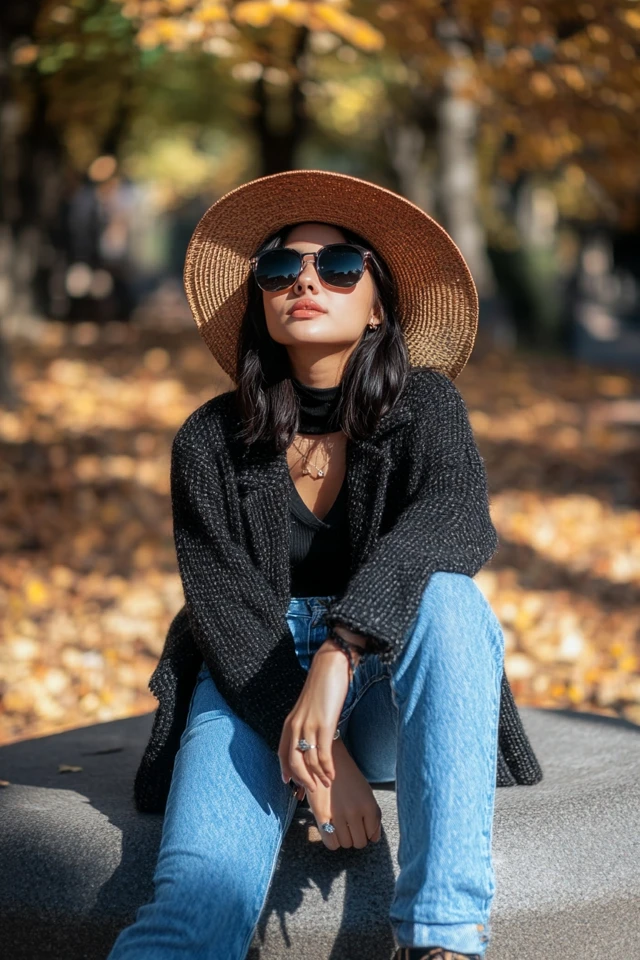
A hat matters as much as the shirt. Anna L. Chien, MD, of Johns Hopkins University School of Medicine, says: "A hat with a 3-inch brim protects the top of your scalp, ears and face." Sunglasses and sunscreen on exposed skin fill in the gaps. For skin concerns, check with a dermatologist. If you want a hat that also breathes, see these breathable straw hats for bright and hot days.
What should you wear from top to bottom?
Tops
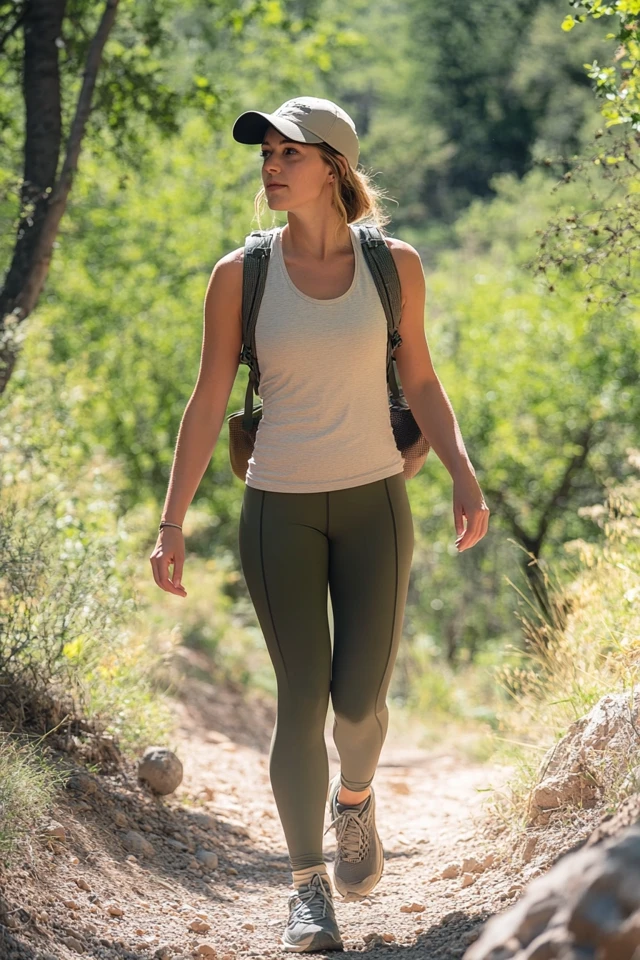
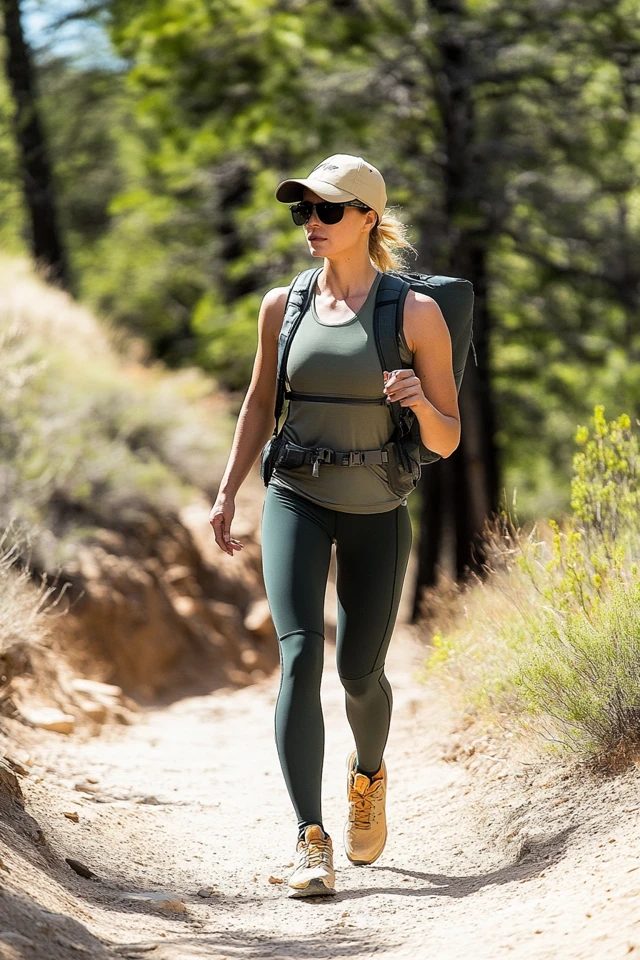
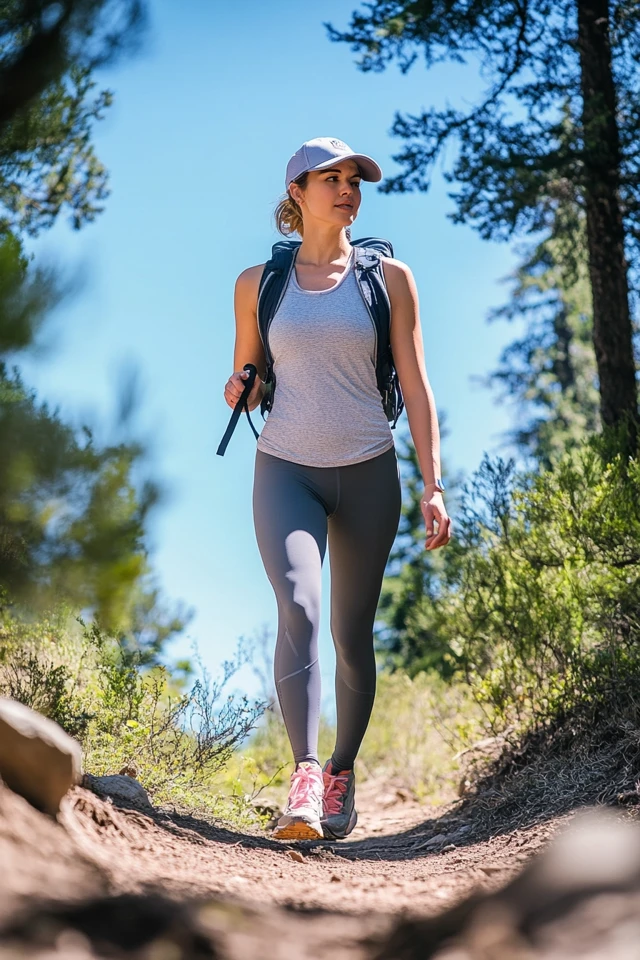
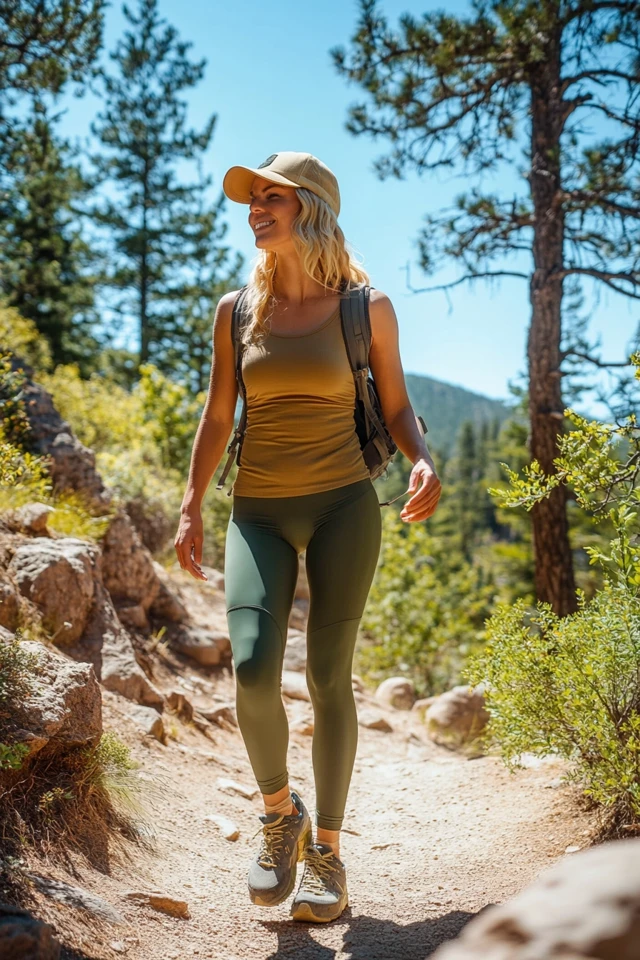
A wicking tank or short-sleeve tee is the easiest base. If you want more coverage, a thin long-sleeve with a UPF rating covers your arms without adding much heat. For other options, browse wicking activewear tanks for hot workouts or breathable shirts for dry and hot outdoor work.
Shorts and leggings
Shorts give the most airflow. Light capri leggings with a pocket suit you if you prefer more coverage or deal with brush on the trail. Seams that are flat and a waistband that stays put matter more than any label.
Layers and extras
A packable windbreaker covers cool mornings and sudden wind. Add moisture-wicking socks and a small towel. For a full outfit approach, see comfortable hiking attire with activewear vibes, and for gym days, breathable activewear sets.
How do you match the outfit to the hike?
- Easy walks: a loose tee, light shorts or leggings, and trail sneakers are enough.
- Moderate trails: a wicking top, shorts or mid-weight leggings, and shoes with grip.
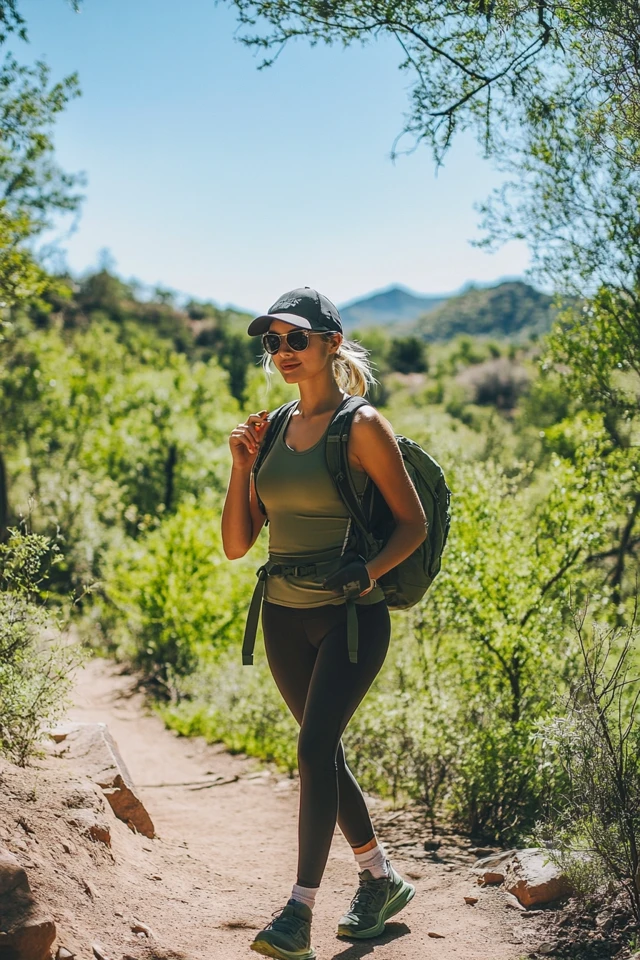
- Long or steep hikes: technical fabrics, mesh ventilation, a UPF top, and a hydration pack.
Wash activewear following the care label, usually in cold water and air-dried, so the fabric keeps its stretch and wicking finish.
Frequently asked questions
What is the coolest clothing to wear in hot weather?
Thin, loose or lightly fitted pieces in wicking synthetics, merino, or linen let sweat evaporate and air move. Light colors and an open weave help the outfit feel cooler.
What to wear when it's 90 degrees?
A wicking tank or tee, breathable shorts, a wide-brim hat and sunglasses cover most hikes. Add a UPF top if you will be in direct sun for hours.
What are the best gym clothes for people who overheat and sweat?
Look for lightweight wicking tops with mesh panels and shorts with flat seams. Avoid thick cotton, which stays damp, and skip extra layers.
How do I prevent chafing on a hike?
Choose flatlock or seamless pieces that fit without bunching, and wear wicking fabric against the skin. For persistent irritation, check with a doctor or pharmacist.
Filed under Weather Style