
Strappy Sandals for Hot Beach Days: How to Choose
- Words by
- Julio Arco
- Published
- Reading
- 4 min
For a hot beach day, pick strappy sandals that are flat or have a very low heel, adjustable straps, and a footbed with some cushioning. Open straps keep air moving around your foot, and adjustable ones let you tighten the fit when sand and sweat make your feet slip.
Color and strap style come second. Tan, nude and metallic pairs go with nearly everything, while a coral or turquoise pair works as the one bright note in a simple outfit.
What makes strappy sandals work on hot days?
The design does the cooling for you. Thin straps leave most of the foot uncovered, so heat and moisture escape instead of building up. They are also light and flat enough to fold into a beach bag, which matters if you are traveling with carry-on only.
Material matters too. Leather and suede soften with wear, while sturdy synthetics handle splashes and sand better. If you plan to walk into the water, choose synthetic or leather you do not mind rinsing.
Flat or low heel: which is better for the beach?
Flat is the easiest choice for sand, boardwalks and long walks. Strappy sandals flat styles, such as gladiators and simple slides with an ankle strap, stay stable on uneven ground.
If you want a little lift for dinner, a strappy sandals low heel style is a sensible step up. Harvard Health says the most comfortable women's shoes are low-heeled but not necessarily flat, no higher than three-quarters of an inch. Podiatrists at Atrium Health Wake Forest Baptist note that the higher the heel, the greater the pressure on the ball of the foot.
An ankle strap block heel sandal is the dressier option that still feels steady, because the wider heel spreads your weight better than a thin stiletto. Save it for paved evenings, not soft sand.

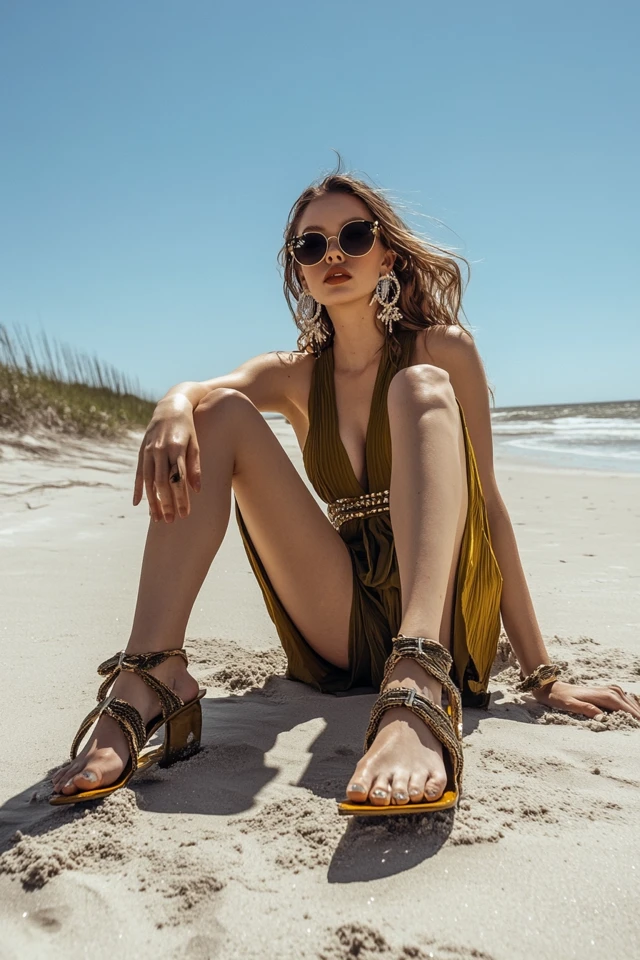
How should strappy sandals fit?
A good pair holds your heel snugly and leaves room for your toes. Atrium Health Wake Forest Baptist describes sensible shoes as fitting the heel snugly, with plenty of toe room, a firm sole and arch support. Harvard Health also advises leaving at least a quarter to a half inch between your longest toe and the end of the shoe, which you can check in the same guide to shoes for foot pain.
A strap that digs in or a toe that hangs over the edge is a fit problem, not a you problem. Some adjustments by foot shape:
- Narrow feet: adjustable or lace-up straps let you create a snug hold.
- Wider feet: softer, more flexible straps rub less than stiff, narrow ones.
- High arches: look for a cushioned sole and straps that cross the midfoot to hold you in place.
- Flat feet: a slight arch contour or padded insole is more comfortable over a long day.

Do cushioned footbeds matter?
On a day of walking, yes. Strappy sandals with a cushioned footbed take the edge off hard pavement and boardwalk planks. Podiatrist Gina Hild, DPM, says in a Cleveland Clinic article: "Footwear that offers cushioning plus heel and arch support can help you relieve and manage symptoms".
If you have ongoing foot pain, check with a podiatrist or your doctor before choosing a pair.

Which colors work best?
Through the lens of evidence-based design, I'd think of sandal color as a frame for the outfit, because the eye reads shoe color against both your skin and the ground.
Neutrals
Tan, beige, white and nude blend into sand and skin tones, so they lengthen the line of the leg and go with swimwear, shorts and sundresses.
Metallics
Gold, silver and bronze catch light and look dressier, which helps one pair move from beach to dinner.
Bright colors
Coral, turquoise or yellow work best when the rest of the outfit is quiet. A white linen dress or plain shorts and a tank let the sandals be the point.

How to style strappy sandals
- Beach cover-up: flat sandals with a kaftan or sarong, plus a breathable straw hat.
- Boho: lace-up sandals with a maxi dress and a woven tote. A linen dress suits this well.
- Evening: metallic sandals with a sleek jumpsuit or a midi skirt.
- Casual night out: tan sandals with denim shorts, a cropped tank and a light cardigan.
For more ideas on finishing the look, see the best accessories to match strappy sandals.

Strappy sandals for a beach wedding
Strappy sandals for a wedding on sand or grass work best with a block heel or a flat. Thin heels sink. Pearl details, metallic finishes or a delicate T-strap pair well with a pastel chiffon dress and look dressy without the wobble.

Trends and classics
Lace-up wraps, flatform soles, clear straps and beaded or embroidered details are all around right now. Simple leather straps, gladiators and T-straps keep working year after year. If you shop for the long term, pick a classic in a neutral and add one trend piece.
For a wider look at the style, see strappy sandals for warm weather days.
Care tips for beach wear
- Break them in at home first to avoid blisters.
- Rinse off sand and salt, wipe with a damp cloth, then air dry fully.
- Check the strap fit before a long walk so your foot does not slide.
- Pack a second pair if you expect to get wet.
Podiatrist Gina Hild, DPM, says in the same Cleveland Clinic piece: "Shoes typically only last about six months or so depending on the activity level of the individual." A pair that has gone flat or stretched out is due for replacement.

Frequently asked questions
Can I wear strappy sandals with formal outfits?
Yes. Metallic or embellished pairs work with dresses and jumpsuits, and a block heel is steadier on grass or sand.
How do I prevent blisters from strappy sandals?
Break them in at home and choose padded straps or lining. If a strap rubs in one spot, adjust it or pick a different style.
Are strappy sandals suitable for wide feet?
They can be. Look for adjustable, softer straps that do not dig in and a footbed wide enough that your foot does not spill over the edge.
Filed under Weather Style