Long Layered Haircuts: Styles and How to Ask for Them
This post uses mid-back waves as the starting point, because layers behave differently in waves than in straight hair. Below you will find the main styles, what suits each hair type, and how to explain the cut at the salon.
- Words by
- Julio Arco
- Published
- Reading
- 4 min
The best long layered haircuts keep your length and change where the weight sits. Long, soft layers add movement, face-framing pieces shape the cheekbones and jaw, and the right layer length depends on whether your hair is fine, thick, straight or wavy.
What are long layers, exactly?
Layers are sections cut at different lengths so the hair stacks and moves instead of hanging as one blunt line. In a long cut, the shortest layers usually start around the chin or collarbone and the longest stay at your full length.
Fewer, longer layers keep the ends dense. More, shorter layers give lift and shape but remove weight from the bottom. That trade-off is the whole decision.
Which layer cut is best for long hair?
It depends on your texture, but three options cover most requests.
- Long, soft layers: the safest pick. Pieces blend gradually, so the cut looks natural both wet and dry.
- Face-framing layers for long hair: shorter strands start around the cheekbone or chin and sweep back into the length. They are easy to grow out.
- Heavily stepped layers: visible tiers with lots of movement. They look good on thick or wavy hair and can make fine hair look stringy at the ends.
The mid-back layered haircut is a good reference for a polished version of this look.
Layers with bangs and curtain bangs
Long layered haircuts with bangs work because the fringe connects to the shortest layers. Curtain bangs part in the middle and sweep to each side, so they blend into face-framing pieces without a hard line across the forehead.
Long layered haircuts with curtain bangs suit most face shapes and grow out gracefully. If your hair has a strong cowlick at the hairline or is very curly, tell your stylist before they cut, since the fringe will spring up and sit shorter than it looks wet.
Long layered haircuts for thin hair
Fine hair needs density at the ends, so ask for long layers with the shortest pieces no higher than the collarbone. Too many short layers thin out the perimeter and make the hair look sparse.
Face-framing pieces and curtain bangs add shape around the face without removing much length from the back. A blunt-ish perimeter with soft layers inside usually reads fuller than a heavily feathered one.
Long layered haircuts for thick hair
Thick hair benefits from more layers, because the weight pulls the hair down and can make it triangular. Layers starting around the chin let the hair collapse into the length rather than puff out at the sides.
Ask for the layers to be cut with the hair's natural texture in mind. Straight cuts on thick hair can look flat, while some internal layering removes bulk without changing the length.
Layers on wavy and straight hair
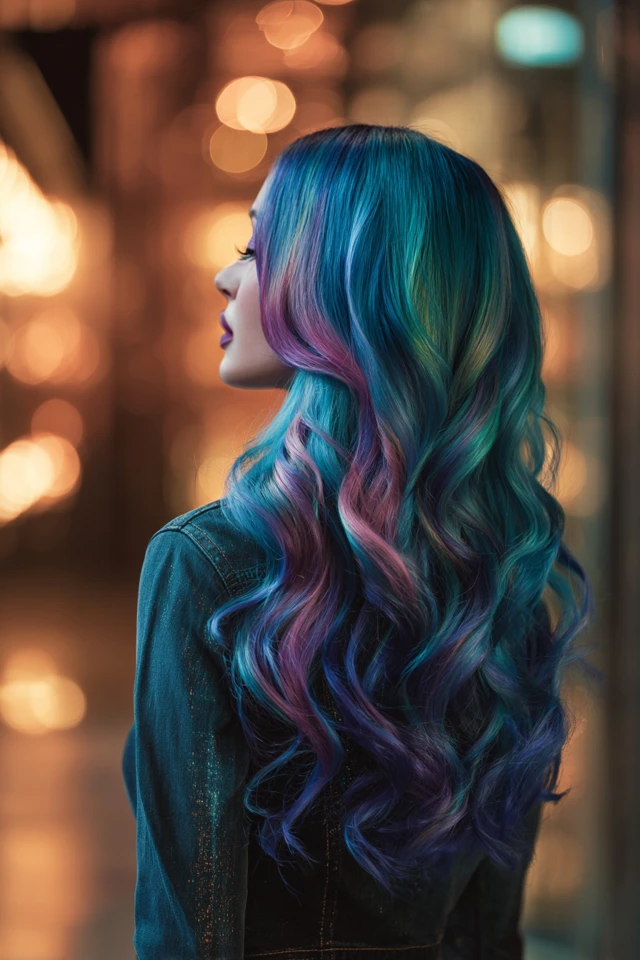
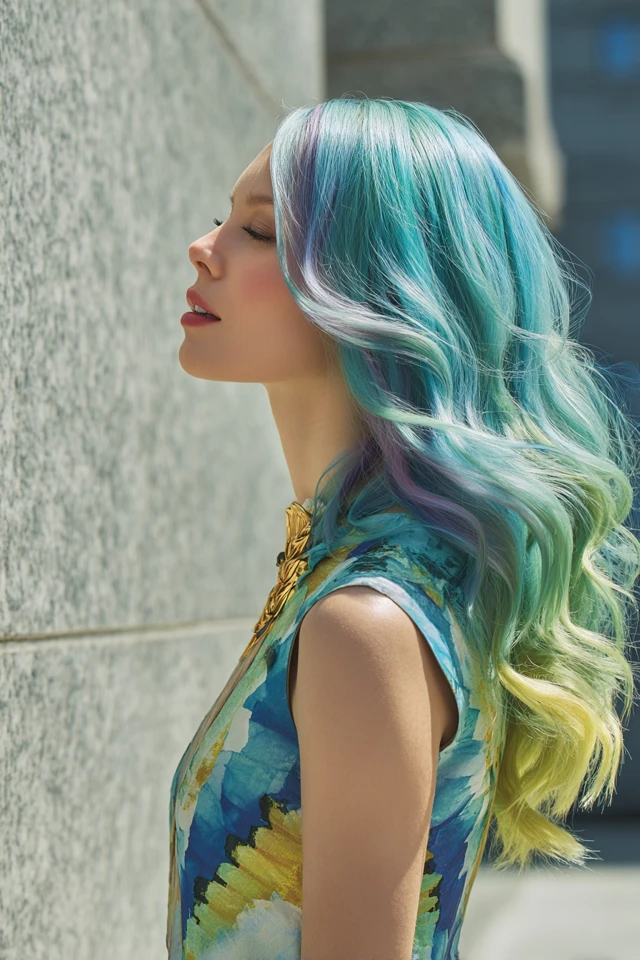
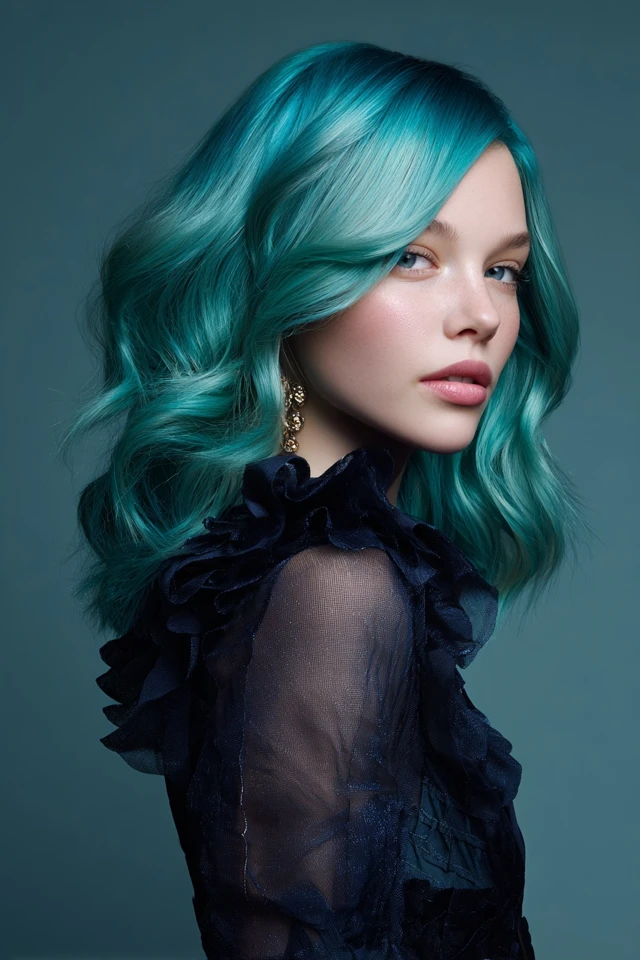
Waves show layers best. The shorter pieces spring up and the longer ones stretch, so the pattern looks lively. For more on shape, see these long wavy cuts and this armpit-length wavy cut.
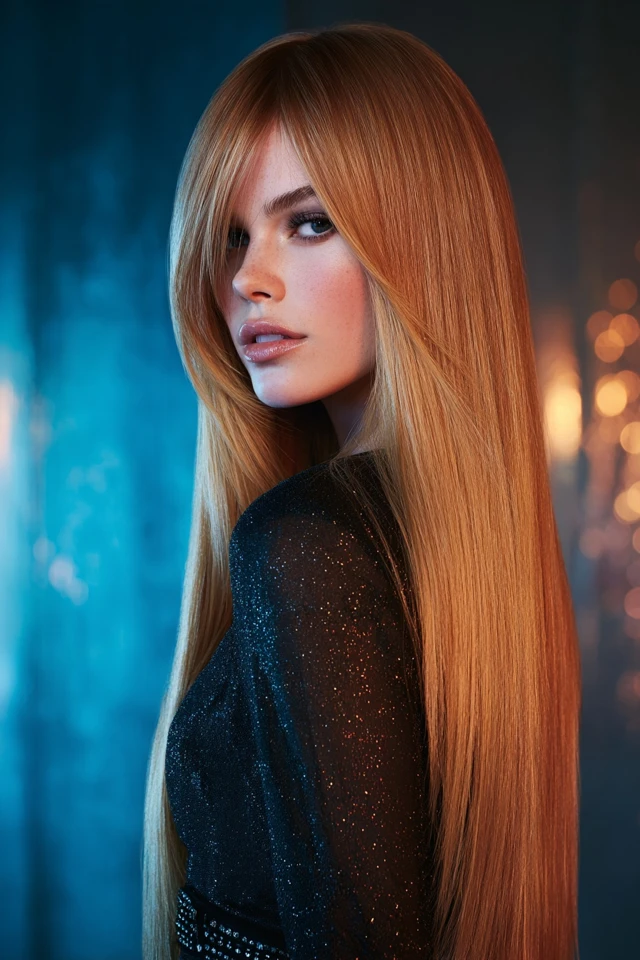
With a layer cut for long hair straight, the layers read more subtly. Straight hair shows every line, so the haircut needs clean, even sections. Check out the mid-back straight cut for how smooth hair catches light.
Through the lens of evidence-based design, I'd pay attention to texture before color here. Waves scatter light in many directions, while straight hair reflects it in a single band, so the same layers can read soft on one and sleek on the other.

Do layers make you look younger?
Layers don't change your age, but they do change what the eye reads. Movement around the face and lifted ends tend to look lighter than a heavy, blunt line, and many people associate that with a fresher look. A cut that suits your texture matters more than the layering itself.
How to ask your stylist for long layers
- Say your target length and that you want to keep it.
- Name where the shortest layer should start: chin, collarbone or lower.
- Say whether you want face-framing pieces, curtain bangs or neither.
- Describe how you style it on a normal day: air-dry, blow-dry, flat iron.
- Bring two or three photos of hair with a texture like yours.
Photos of straight hair won't predict how your waves will fall, so match texture first.
Keeping layers looking good
Layers show damage and split ends quickly, so heat and handling matter. The American Academy of Dermatology says flat irons should be used on dry hair on a low or medium heat setting, no more often than every other day.
When hair is wet it is more fragile, and the AAD advises that you use a wide-tooth comb instead of a brush to detangle wet hair. If frizz makes your layers look ragged, board-certified dermatologist Zoe D. Draelos, MD, FAAD, says of leave-in conditioner that "You should see less frizz. Your hair should be easier to brush or comb, so you'll have less breakage."
For scalp or hair concerns, check with a dermatologist or your stylist. Trims every few months keep the ends of the shortest and longest layers consistent.

Frequently asked questions
What is the most popular layered haircut?
Long, soft layers with face-framing pieces are the most commonly requested because they keep length and work on most textures. Curtain bangs are a frequent add-on.
Do layers make you look older or younger?
Layers don't change your age, but lifted ends and movement around the face usually read lighter than a blunt, heavy line. Fit to your texture matters most.
Can I get layers if my hair is very fine?
Yes, with long, subtle layers that start at the collarbone or lower. Avoid heavy short layers, which can thin out the ends.
Filed under Haircuts