Long Layered Haircuts: Styles for Wavy Mermaid Hair
- Words by
- Julio Arco
- Published
- Reading
- 4 min
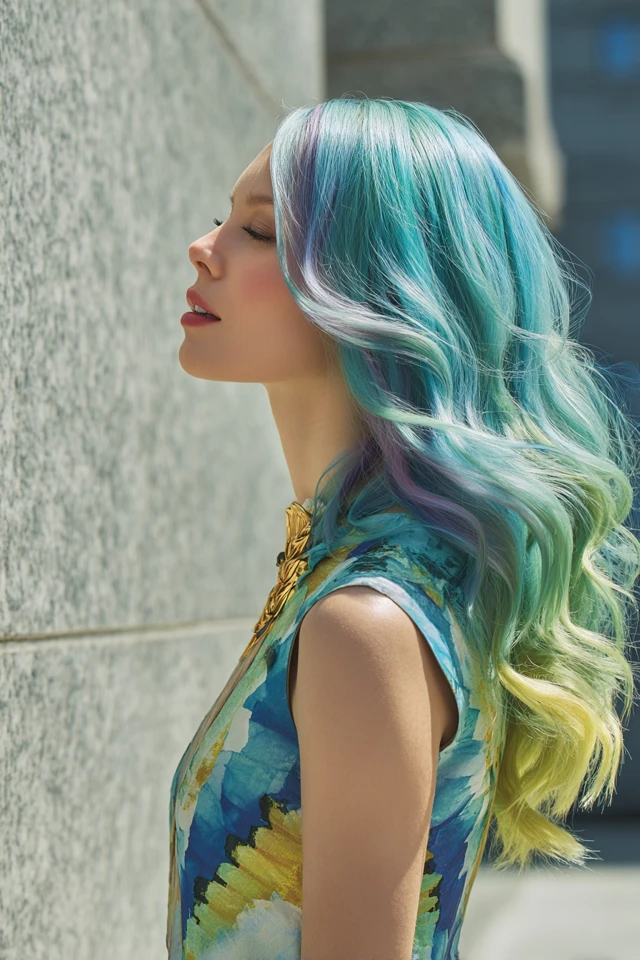
The long wavy "mermaid" look works best with long layers: a length that falls past the shoulders, with shorter pieces cut through the waves so they move instead of stacking into a triangle. Ask for long layers that start around the chin or collarbone, and keep the ends full.
Layers do different jobs on different hair. Thin hair needs fewer, longer layers to keep the ends dense. Thick hair can take more of them to lose bulk. Below you'll find how to pick, how to add bangs, and what to say to your stylist.
What do layers do to wavy hair?
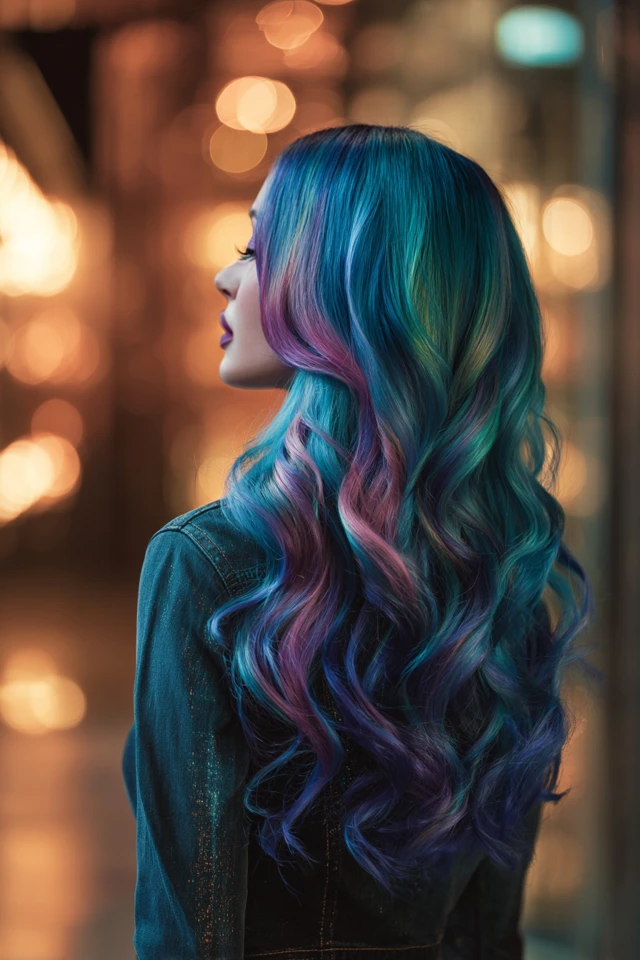
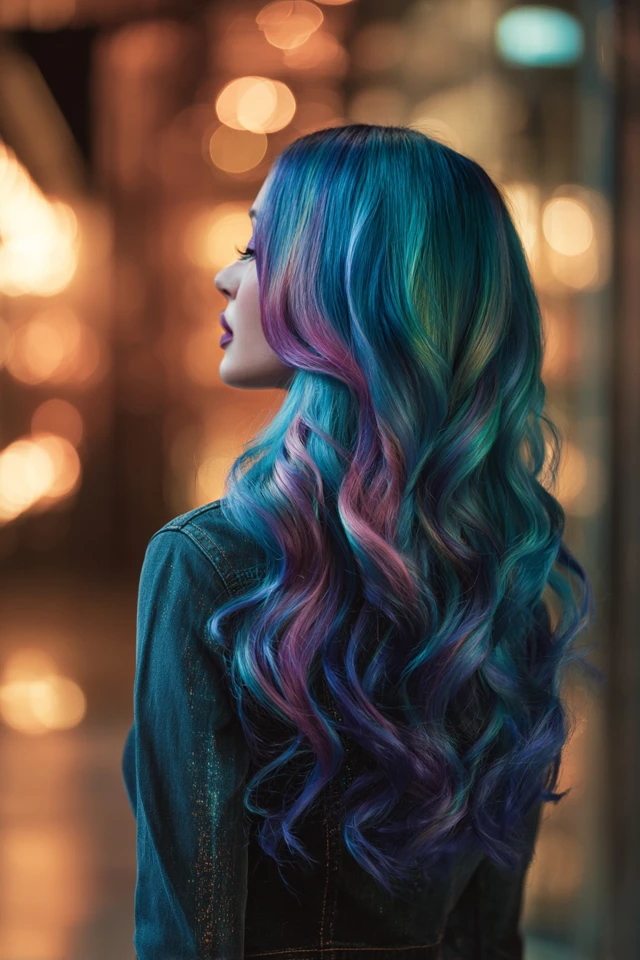
Layers remove weight at different points, so a wave can curl up instead of hanging flat. In a one-length cut, the wave pattern often collapses at the bottom and puffs at the top. Layers even that out.
Through the lens of evidence-based design, I'd think about layers as a way to control where the eye lands. Shorter pieces near the face draw attention up to the cheekbones and eyes, while longer pieces create the vertical line of the "mermaid" flow.
Which layer cut is best for long hair?
There is no single best cut. These are the common options for long wavy hair:
- Long, soft layers: pieces blended through the length, with little visible stepping. Good for most textures and the easiest to grow out.
- Face-framing layers for long hair: the shortest pieces start near the chin or cheekbone and blend into the length. They add shape around the face without losing the length at the back.
- V-shaped back: the ends point to a center line, which looks dramatic on waves. See the long V-shape cut for how it lengthens.
- U-shaped back: a softer curve, with fuller sides. The long U-shape cut suits hair that tends to look stringy at the edges.
- Invisible layers: shorter pieces hidden underneath so the outline stays full. Long invisible layers are a good fit if you fear losing density.
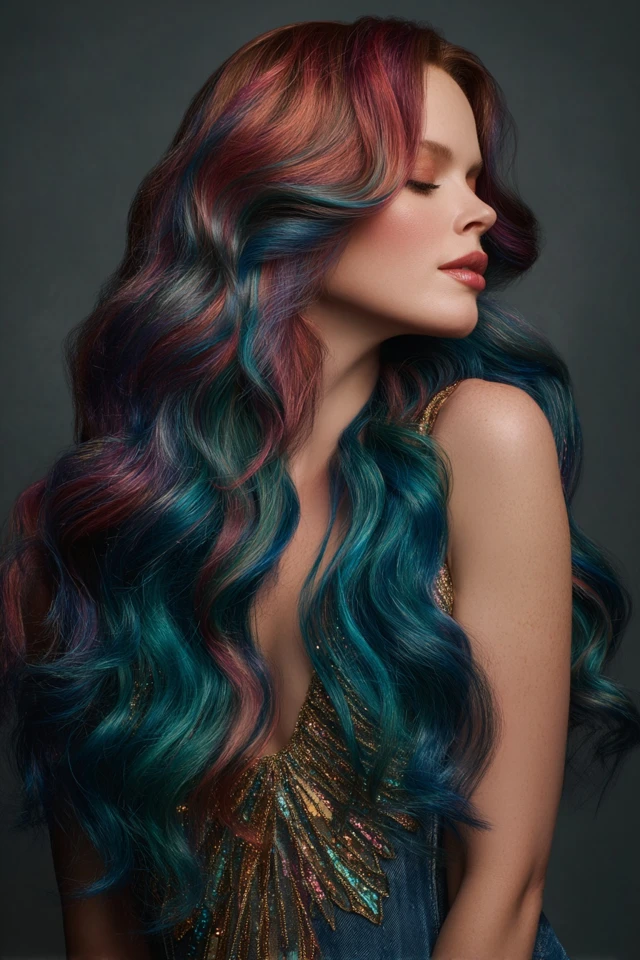
Long layered haircuts for thin hair
With fine or thin hair, fewer layers usually look better. Too many short pieces can make the ends look see-through, which is the opposite of the mermaid effect.
Ask for a blunt perimeter with a few long layers, and keep the shortest piece well below the cheekbone. Waves help here: the bend in each strand makes hair look fuller than it does straight.
Long layered haircuts for thick hair
Thick wavy hair can take more layers, and it often needs them. The goal is to remove bulk from the mid-lengths so the waves sit closer to the head and stop flaring out at the sides.
Ask your stylist to texture inside the layers rather than thin the ends heavily. Overly thinned ends can frizz and lose the clean tip that makes waves look finished.
Long layered haircuts with curtain bangs
Curtain bangs part in the middle and sweep to each side, which blends neatly into face-framing layers. On waves they look soft rather than severe, because the curve repeats the line of your hair.
Before you commit, check two things. Your hairline: a strong cowlick near the front can make bangs lift or split. And your routine: bangs usually need a quick touch-up each morning, since they get oily faster than the rest. If you aren't sure, start with longer face-framing pieces and cut the bangs later. You can also see how the same idea works at other lengths in the collarbone-length wavy cut.
Do layers make you look younger?
Layers don't change age, but they change what the eye reads. Movement and soft framing around the face tend to look lighter and fresher than a heavy, flat length. A cut that is overgrown or has ragged, dry ends reads the opposite way, regardless of the layers.
How to ask your stylist for long layers
- Say where you want the shortest layer to land (chin, collarbone or lower).
- State the length you want to keep. Trims of even an inch can change the shape of a wave.
- Tell them whether you want visible or hidden layers.
- Mention how you style: air-dry, diffuser or blow-dry. If you rarely use heat, a long air-dry cut is planned differently from one built for a blowout.
- Bring photos of hair with a similar texture to yours, not just similar length.
Keeping waves healthy between cuts
Hair is delicate when wet, so the American Academy of Dermatology recommends a wide-tooth comb instead of a brush to detangle wet hair. That suits waves well, since brushing tends to break up the pattern.
A leave-in conditioner can help too. Dermatologist Zoe D. Draelos, MD, FAAD, says in the AAD's leave-in conditioner tips: "You should see less frizz. Your hair should be easier to brush or comb, so you'll have less breakage."
If you use a flat iron to smooth the waves on special days, the AAD advises dry hair, low or medium heat, and no more often than every other day. For a gentler routine, see the long heatless cut.
Book a trim when the ends look thin or the layers lose their shape, since that is when waves start to hang flat again.
Frequently asked questions
Which layer cut is best for long hair?
Long, soft layers starting around the chin or collarbone suit most wavy hair. Fine hair does better with fewer layers, and thick hair can take more.
Do layers make you look older or younger?
Layers add movement and soft framing, which usually reads as lighter and fresher than a heavy single length. Dry, ragged ends read older, with or without layers.
What is the most popular layered haircut?
Long layers with face-framing pieces, often paired with curtain bangs, come up most often in inspiration lists. They blend easily with waves and are simple to grow out.
Can I get layers if my hair is very fine?
Yes, but keep them few and long, with a full, blunt bottom edge. Ask your stylist to avoid heavy thinning at the ends.
Filed under Haircuts