Long Layered Haircuts: Styles for Straight Mid-Back Hair
- Words by
- Julio Arco
- Published
- Reading
- 4 min
On straight, mid-back hair, long layered haircuts work best when the layers are long and soft: the shortest piece starts around the collarbone or chin, and the ends stay fairly full. That keeps the sleek, shiny line of straight hair and still adds movement.
Which layers you pick depends on density. Fine hair needs fewer, longer layers to keep the ends from thinning out. Thick hair can take more layers to remove bulk. Bangs and face-framing pieces are the quickest way to change how the whole cut reads.
What do layers do on straight hair?
Straight hair shows every line of a cut. Layers are different lengths stacked through the hair, and on a straight surface they show up as soft steps instead of curls or waves hiding them. A cut with no layers falls as one heavy sheet, which looks sharp and glossy but can feel flat at the crown.
Shine comes from how smoothly light bounces off the hair surface. Through the lens of evidence-based design, I'd think of layers as a texture decision: the more broken up the surface, the less mirror-like the finish. Long, blended layers keep the surface smooth and still give lift.
Long layers with face-framing strands
Face-framing layers for long hair are the shortest pieces, starting near the cheekbone, jaw or chin and blending into the length. They are the easiest layers to try because they can be grown out without disturbing the rest of the cut.
- Cheekbone-length pieces draw attention up and suit longer or oval faces.
- Chin-length pieces sit at the jaw and soften a square or angular line.
- Longer pieces starting at the collarbone are the gentlest option if you are unsure.
As an architect trained in evidence-based design, I'd treat the line around your face as the first thing the eye reads, so choose where it starts before anything else.
Long layered haircuts with bangs
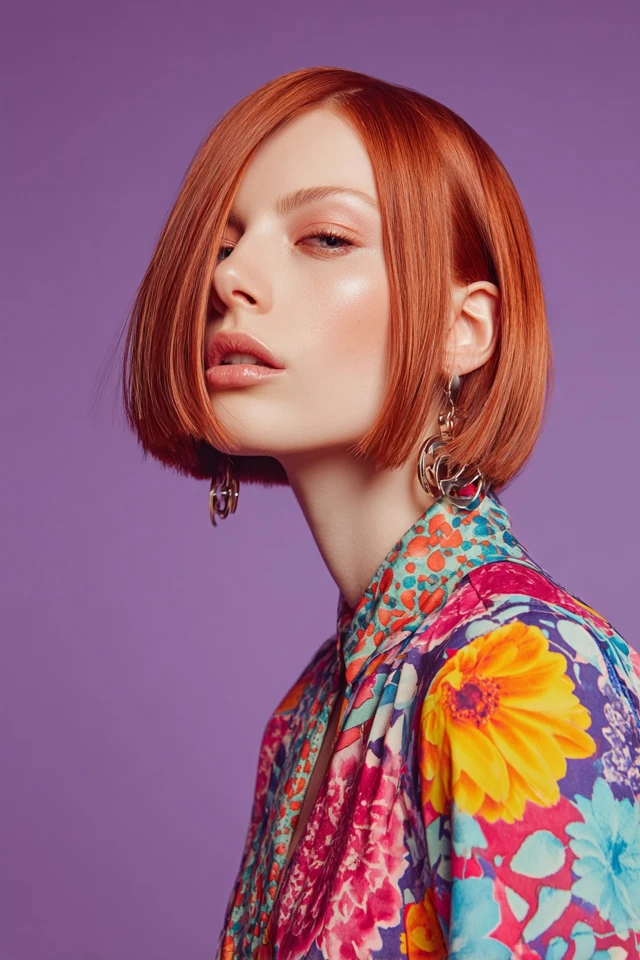
Long layered haircuts with bangs give a straight cut a focal point. Straight bangs make the look more graphic. Wispy or side-swept bangs blend into the layers and are easier to live with.
Long layered haircuts with curtain bangs
Curtain bangs part in the middle and sweep to each side, so they work as face-framing layers that happen to start higher. They suit most straight hair because they can be tucked behind the ears while they grow. A cowlick or very fine hairline at the front is worth mentioning to your stylist before cutting.
Long layered haircuts for thin hair
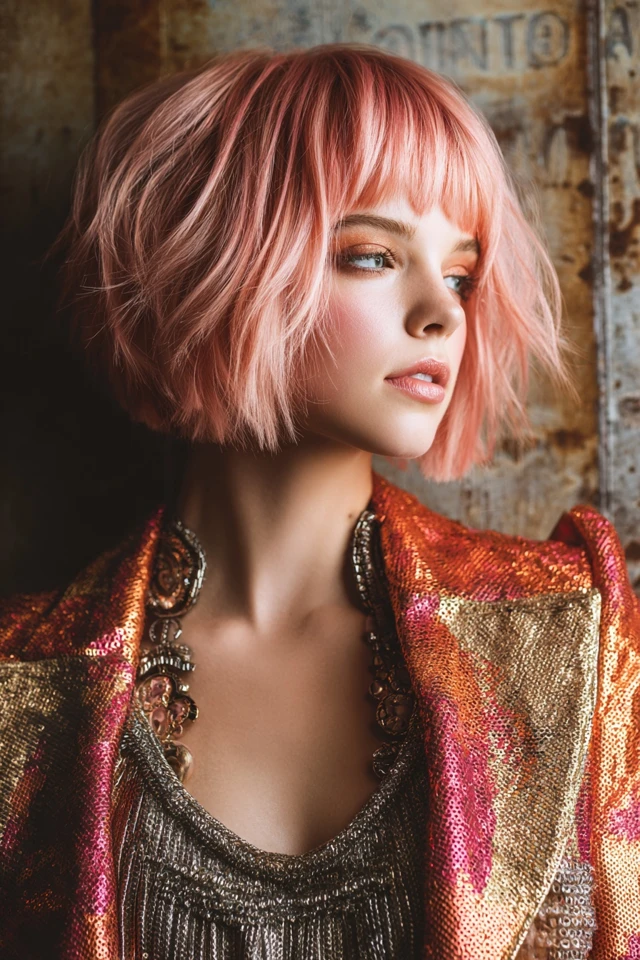
Long layered haircuts for thin hair should keep the perimeter full. Ask for a few long layers, starting low, instead of many short ones, which can leave the ends see-through. A blunt-looking bottom edge with soft interior layers gives the most body.
Face-framing pieces and light bangs add the look of density where the eye lands first. Skip heavy thinning or razoring on fine hair unless your stylist has a specific reason.
Long layered haircuts for thick hair
Long layered haircuts for thick hair can handle more layers, including some shorter ones through the middle, to take out bulk and stop the hair from triangling at the ends. On straight thick hair, the layers should still blend so the shape stays smooth.
Thick hair also holds a blunt edge well, so you can keep the ends full and put the work into the interior. If you want a deeper look at one shape, see this mid-back layered cut.

Do layers make you look younger?
Layers do not change age, but they change what the eye reads. Soft movement around the face and lift at the crown usually look lighter and fresher than a heavy, one-length fall. Hair that looks glossy and healthy tends to read better than any specific cut, so condition matters as much as shape.
How to ask your stylist for layers
- Name your length: mid-back, and how much you are willing to lose.
- Say where the shortest layer should start: collarbone, chin or cheekbone.
- Say whether you want bangs, and what type.
- Describe your hair density and how much time you spend styling.
- Bring two or three photos of similar hair texture, not only the cut.
If you like the sleek, long look but want less layering, compare it with an upper-back cut with clean lines or keep a blunter shape like the blunt bob.

Keeping the shine
Straight layers look best when the hair is smooth and moisturized. The American Academy of Dermatology says flat irons should be used on dry hair on a low or medium heat setting, no more often than every other day. It also advises a wide-tooth comb instead of a brush to detangle wet hair, since hair is delicate when wet.
Board-certified dermatologist Zoe D. Draelos, MD, FAAD, says of leave-in conditioner: "You should see less frizz. Your hair should be easier to brush or comb, so you'll have less breakage." Regular trims, about every couple of months, keep the ends from splitting and dulling the line. For scalp or hair concerns, check with a dermatologist.
Frequently asked questions
Which layer cut is best for long hair?
Long, blended layers that start at the collarbone or chin suit most hair. They add movement without removing much length or weight.
Do layers make you look older or younger?
Layers do not change your age, but soft movement near the face and lift at the crown usually read as lighter and fresher than one heavy length.
Can fine hair have layers?
Yes, but keep them few and long so the ends stay full. Ask your stylist to avoid heavy thinning.
Filed under Haircuts