Parkas for Winter and Rain: How to Choose One
- Words by
- Julio Arco
- Published
- Reading
- 5 min
The best parka for cold, wet weather has three things: a waterproof or highly water-resistant shell, enough insulation for your climate, and a hood that stays up in wind. Fluffy insulation alone keeps you warm only while it stays dry, so the shell matters as much as the fill.
Below you'll find how to judge shell, fill, length and details, how to layer under a parka, and how to care for it so it keeps working.
What makes a parka work for both winter and rain?
A parka for cold weather traps warm air. A parka for rain keeps water out of that trapped air. You need both jobs done by one coat, so look at the outside first and the filling second.
For waterproof parkas for winter and rain, check the label for a waterproof membrane or coating, and look at the seams. Taped or sealed seams stop water from getting in through the stitch holes, which is where a merely water-resistant coat usually fails in a long downpour.
Water-resistant fabric sheds light rain and wet snow for a while. If your winters are mostly drizzle and slush, that may be enough. If you stand at bus stops in steady rain, choose a fully waterproof shell.
Down or synthetic: which insulation suits wet weather?
Down is very warm for its weight and packs small, but it loses much of its loft when soaked. Synthetic fill is usually a bit heavier for the same warmth, yet it keeps insulating better when damp and is often easier to wash.
For a rainy climate, synthetic fill is the safer pick. For dry, deeply cold days, down is hard to beat. A down parka with a truly waterproof shell can work in both, but it costs more and needs careful drying.
Fill power describes how lofty down is: higher numbers trap more air for the weight. Treat it as a comparison tool between down coats, not a promise about warmth, since the amount of fill and the cut matter too.

How long should a winter parka be?
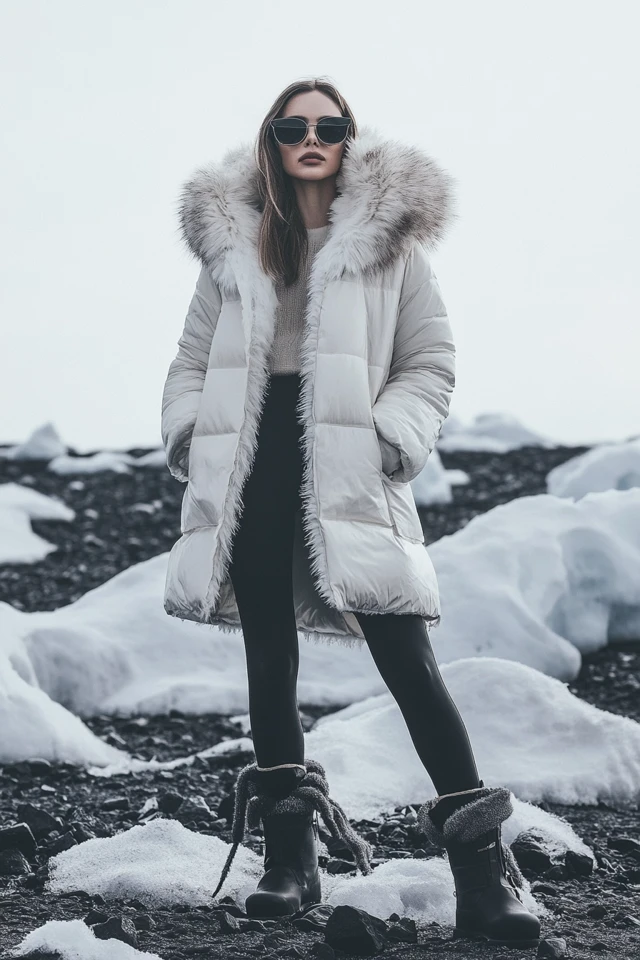
Length is a warmth decision. A parka that reaches mid-thigh covers your hips and keeps wind off the top of your legs. A knee-length version covers more, and suits long waits outdoors or very cold commutes.
Shorter parkas are easier to walk and climb stairs in, and they pair well with boots and insulated pants. Longer cuts read more dramatic and column-like, so a belt or drawcord at the waist helps if you don't want to disappear inside the volume.
Through the lens of evidence-based design, I'd treat the silhouette as the first thing the eye reads. A defined waist on a bulky coat breaks up the block of fabric, which is why a cinched parka usually looks more streamlined than the same coat worn open and loose.
Which hood and details matter most?
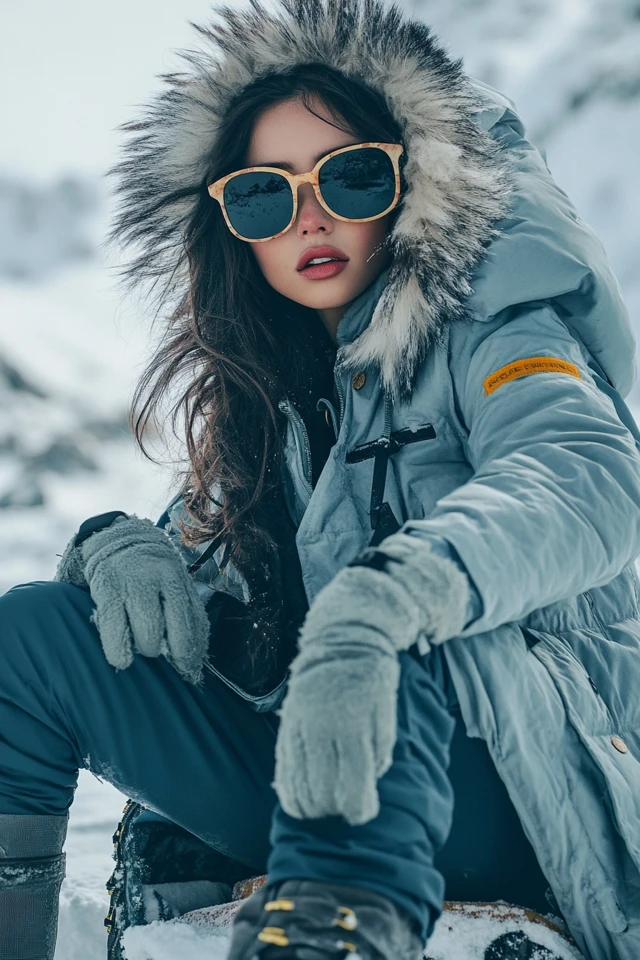
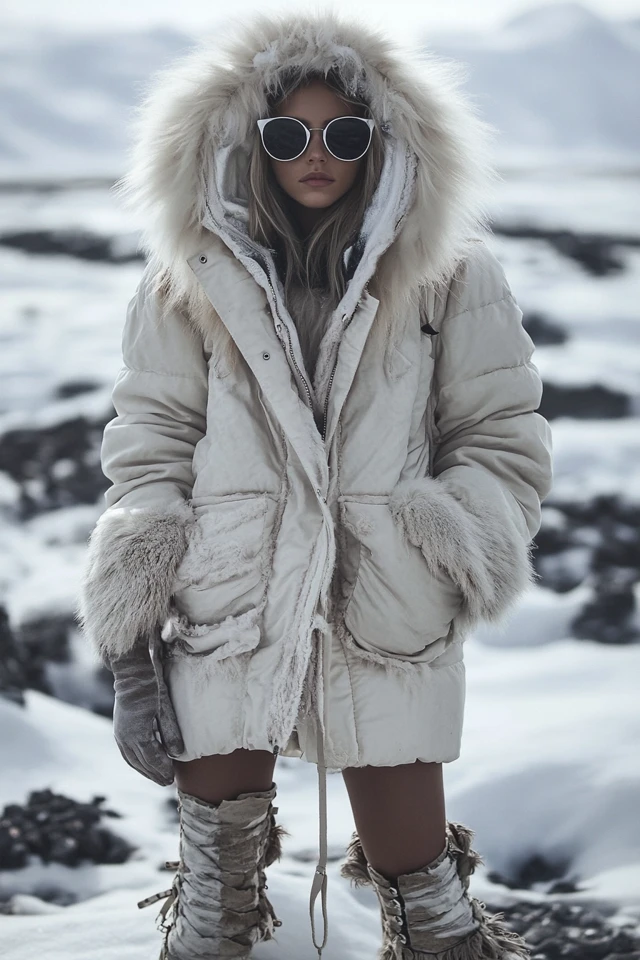
The hood decides whether the coat works in wind and rain. Look for a hood with an adjustable drawcord and a stiffened brim or wire, so it keeps its shape and shields your face. A trim of faux fur breaks up wind at your cheeks, and detachable trims are easier to clean or remove when it's wet.
- A storm flap over the zipper stops water and wind from coming through the front closure.
- Adjustable cuffs, with a hook-and-loop strap or elastic, seal the gap at your wrists.
- Pockets that sit high enough to reach with gloves on, ideally lined with a soft fabric.
- A hem drawcord to close off drafts when you're standing still.
What should you wear under a parka?
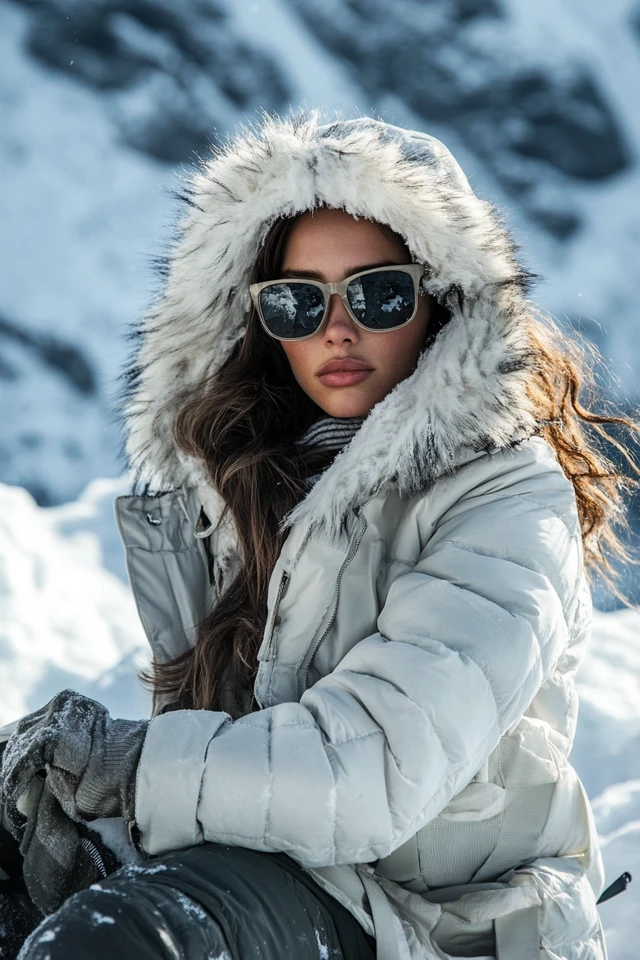
Dress in layers, and keep the base layer dry. Howdy Health at Texas A&M says the layer closest to your skin should be moisture-wicking material that draws sweat away from your skin, and it advises avoiding cotton because it absorbs moisture and can keep it next to your skin, which makes you cold.
Over that, add a fleece or wool knit for warmth, then the parka as the weather barrier. Leave a little room in the sleeves and chest, because trapped air is what keeps you warm, and a coat that is too tight compresses it.
How do you style a parka so it looks polished?
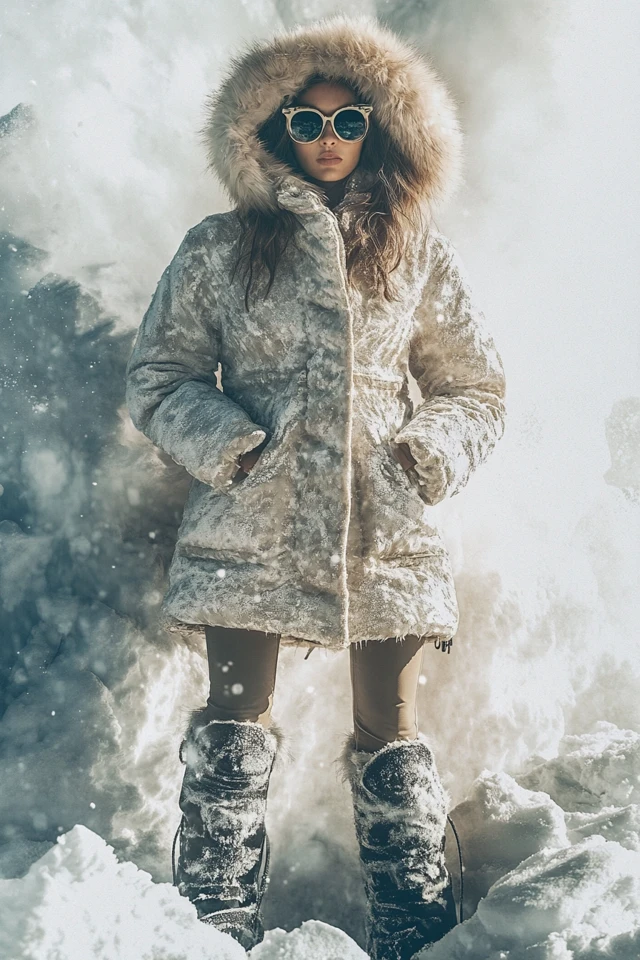
Parkas are bulky, so keep the pieces underneath simple. Slim or straight trousers and a fitted knit balance the volume on top. Boots with a visible sole add weight at the bottom so the coat doesn't look like it's swallowing you.
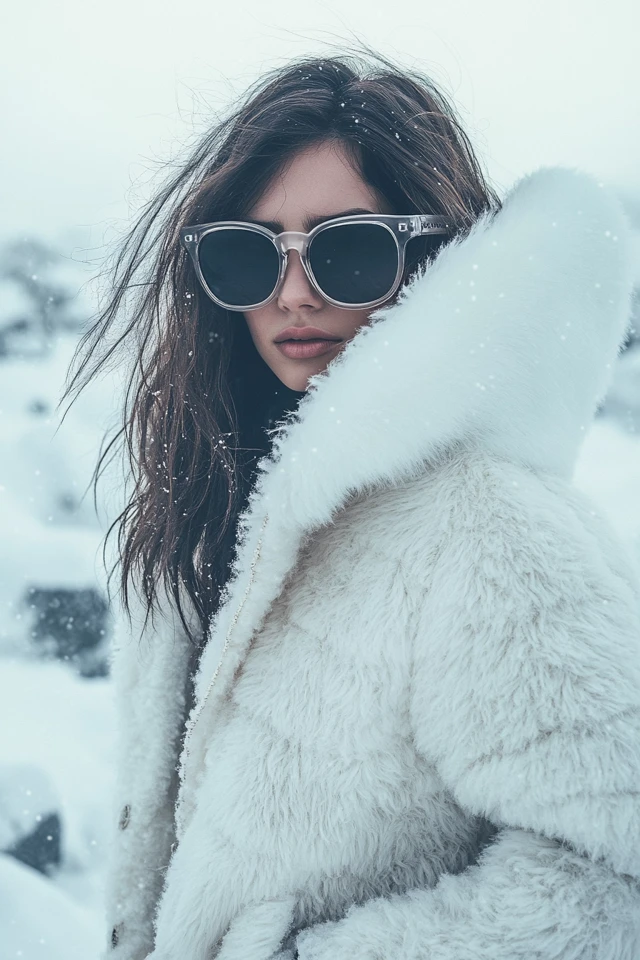
Color works by contrast and texture. Navy, black, olive and gray are easy to pair. A matte shell and a soft, fuzzy lining read differently under light: the shell looks calm and the trim looks warm, so one bright scarf is enough accent.
For a longer coat, try ankle boots and a narrow trouser. For a short one, high-rise jeans keep the proportions tidy. If you want more ideas by fill and fit, see padded parkas for arctic winds and fleece-lined parkas for snowy strolls.
Which parka suits rainy days best?
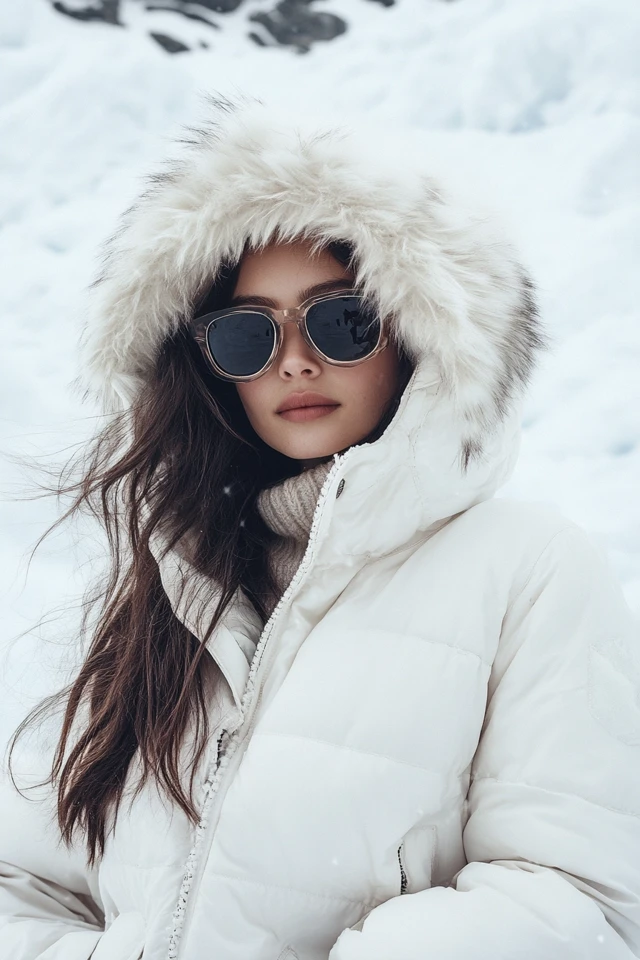
If rain is more common than snow where you live, start with a shell-first coat. Our guide to versatile parkas for rainy days covers lighter options, and the winter coats guide compares parkas with other cuts.
If the main concern is wind and deep cold, a puffer can be a good alternative: see warm down jackets for windy winter days. For a complete outfit, add snow boots and a soft scarf.
How do you care for a parka?
- Follow the care label. Some parkas can be machine-washed, others need professional cleaning.
- Spot clean small marks with a damp cloth and mild detergent.
- Dry down-filled coats thoroughly on low heat, adding clean tennis balls or dryer balls to break up clumps and restore loft.
- Waterproof finishes wear down over time, so water that no longer beads on the surface is a sign to reproof the shell with a product made for it.
- Store the coat hanging in a cool, dry place, not compressed in a bag for months.
Frequently asked questions
What is the best jacket for both rain and winter?
A waterproof parka with sealed seams and synthetic insulation covers both, since it keeps its warmth when damp. Pick a hood with a drawcord and a length that reaches at least mid-thigh.
What is the best parka for cold weather?
For dry, very cold days, a long down parka with a windproof shell and an adjustable hood is hard to beat. Look at the amount of fill and the coverage, not only the fill power number.
What is the best waterproof parka?
The best one has a waterproof membrane or coating, taped seams, a storm flap and a structured hood. Try it on with your usual layers underneath to check the fit.
Can I wear a parka in milder winter weather?
Yes, if it has lightweight insulation or you wear thin layers underneath. A removable liner or ventilation zippers help when temperatures hover just above freezing.
Filed under Weather Style