Fluffy Snow Boots for Warm Winter Walks
- Words by
- Julio Arco
- Published
- Reading
- 5 min
Wear the snow pants over the boots when you expect deep, loose snow, and tuck them in only when the boot is short and the pant leg is slim. Either way, the goal is the same: no gap where snow or slush can get in.
The rest comes down to a few choices: boot height, pant cut, and what you layer underneath. Here is how to sort each one.
Should snow pants be tucked into boots?
Usually no. Snow pants are cut to fall over the boot, and the hem often has a cinch cord, an elastic cuff or a snap that seals around the top of it. Worn outside, the pant sheds snow down and away from the opening.
Tucking can make sense in a few cases:
- You are wearing short, ankle-height boots and the pants are slim.
- The pants have an inner gaiter or snow cuff that is meant to sit inside the boot.
- You are walking through wet slush, and a pant hem would soak up water.
If you tuck, pull the pant leg smooth first. Bunched fabric inside a boot adds pressure over the instep and can make your foot feel tighter than the size suggests.
How to wear snow pants with boots
Put the pants on first, then step into the boots, and pull the hem down over the boot shaft. Cinch the cuff so it sits snug but does not squeeze the top of the boot.
Match the boot height to the pant
A mid-calf boot gives the pant hem something to rest on, so the leg falls cleanly. An ankle boot leaves more fabric to drag, which is fine for dry snow and a nuisance in slush. For very wet days, I'd choose the taller boot for the cleaner line and the extra coverage.
Keep the silhouette balanced
Snow pants add volume through the leg. A chunky boot with a thick sole balances that volume, while a thin, sleek boot can look small beneath a wide hem. Through the lens of evidence-based design, I'd treat the boot as the visual anchor: the eye reads the heaviest shape at the bottom of the outfit first.

What to wear under snow pants
Think in thin layers. A fitted base layer, then leggings or light fleece pants if it is very cold. Snow pants are meant to be the outer shell, so they should not feel tight over what is beneath.
The layer closest to your skin should be made of moisture-wicking material, according to Texas A&M's Howdy Health guide to cold-weather exercise, which also advises avoiding cotton, including undergarments, because it absorbs moisture and keeps it next to your skin.
For a casual walk, fleece-lined leggings are enough. For a longer day, add a mid-weight layer. If you like the look of fleece, fleece joggers work well underneath roomy snow pants.

What pants to wear with winter boots when you skip snow pants
Not every winter day needs a full shell. For city streets and light snow, these options work:
- Lined or thermal leggings tucked into tall boots, with a long coat over the top.
- Straight or slightly wide jeans worn over the boot, so the hem skims the upper.
- Fleece joggers with a cuffed hem, which sit neatly inside or just over a short boot.
Skinny cuts tuck in easily. Wider denim looks best outside the boot, with the hem a little above the ground so it stays out of slush.

How to choose insulated waterproof snow pants
Look at the details rather than the label. A good pair has taped or sealed seams, a water-repellent outer fabric, and some insulation sized to your climate. Check the cuff: an adjustable hem or snow gaiter keeps the boot opening sealed.
- Fit: you should be able to squat and lift your knee without the fabric pulling.
- Length: the hem should reach the top of the boot when you stand, without pooling over the sole.
- Bib or waist style: a bib keeps snow out of your back if you fall or sit, while a waist style is easier to take on and off.
The same logic applies to men's, women's and kids' sizes. For children, leave room for growth in the leg length, and make sure the hem can be cinched so it does not drag.

Pick winter boots that suit the pants
Insulation and a waterproof upper matter most, followed by a grippy rubber sole. Fluffy linings in faux fur, fleece or shearling feel soft and trap warmth, which is why they suit slow winter walks. For deeper options, see these puffy snow boots for slushy streets and these shearling boots. For trails, warm hiking boots are better suited.
Check the fit with your winter socks
Try boots on with the socks you will actually wear. Harvard Health advises leaving at least a quarter- to a half inch of space between your longest toe and the end of the shoe. A boot that is too tight cuts off the air that holds warmth, so a bigger sock is not always a warmer one. For sock ideas, see thermal socks for subzero walks.

Style the set for different winter weather
Dry, cold days
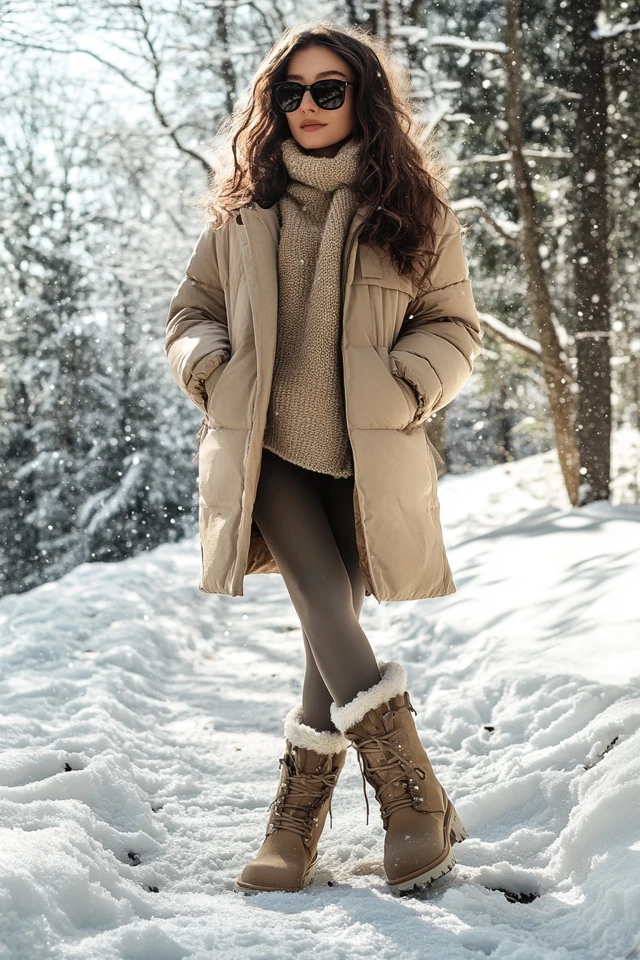
Skip the shell and go with lined leggings, a chunky sweater and a long coat. Add a fluffy scarf for texture near the face.
Heavy snow
Snow pants over tall boots, a thermal base layer and a warm parka. A neutral boot in cream or gray against dark pants keeps the outfit from looking bulky, since a lighter shape at the bottom breaks up the dark mass above it.
Slush and wet streets
Choose a dark waterproof boot and keep the pant hem above the sole. Salt stains show less on darker leather and rubber.

Look after your boots
Wipe off salt with a damp cloth after each wear, let boots air dry away from direct heat, and reapply waterproofing spray when water stops beading on the surface. Brush faux fur cuffs gently to keep them fluffy.
Podiatrist Gina Hild, DPM, says in the Cleveland Clinic that "Shoes typically only last about six months or so depending on the activity level of the individual." If your boots have lost cushioning or support, check with a podiatrist about replacing them.

Frequently asked questions
Should snow pants be tucked into boots?
Usually not. Worn over the boots, the pant leg sheds snow downward. Tuck only with short boots, slim pants, or a snow gaiter designed to sit inside.
What pants do you wear with winter boots?
Lined leggings, straight jeans or fleece joggers all work. Tuck slim styles into tall boots and leave wider legs over the boot.
What should I wear under my snow pants when I ski?
Start with a moisture-wicking base layer and add fleece leggings if it is very cold. Avoid cotton against the skin because it holds moisture.
Can I wear fluffy snow boots every day?
Yes, for errands and walks, as long as the boots are insulated, waterproof and fit with your winter socks. Let them dry fully between wears.
Filed under Weather Style