Puffer Jackets and Vests in Bright Colors for Winter
This guide covers what to check before buying, which bright colors work with which outfits, how to balance the volume, and how to care for the jacket afterward.
- Words by
- Julio Arco
- Published
- Reading
- 5 min
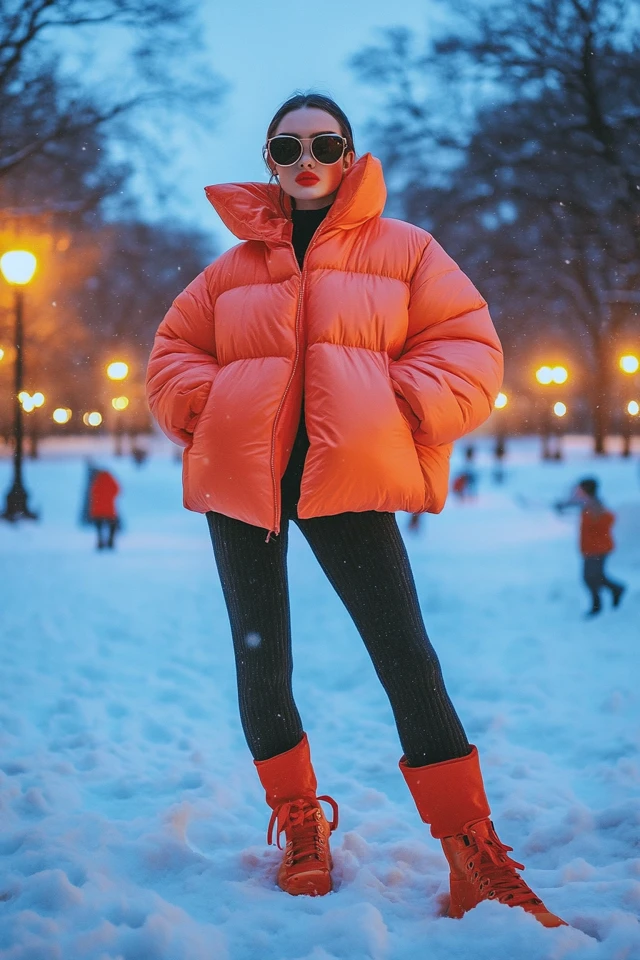
For puffer jackets and vests in cold weather, pick the fill for your climate, a length that suits how you move, and a color you'll actually enjoy wearing on gray days. An oversized cut in a bright shade is a good place to start: the volume leaves room for layers, and the color does the styling for you.
What to look for in puffer jackets and vests for cold weather
Down or synthetic fill?
Down is light for the warmth it gives, so it suits the coldest, driest days. Synthetic fill is usually cheaper and keeps insulating better when damp, which makes it a sensible choice for wet snow or rainy winters. If you have allergies, check with a professional about which fill is right for you.
Do puffer vests keep you warm?
They keep your core warm, which matters most, but your arms stay exposed. A vest works best over a long-sleeve knit or fleece on cool days, or under a coat when it gets properly cold. For standing around outside in deep winter, choose sleeves.
Details that earn their place
- A hood or tall collar that closes over your neck. A men's puffer jacket with a hood and a women's one work the same way here: the hood should fit over a beanie without pulling the jacket up.
- A zipper plus a snap or storm flap to block wind.
- A drawstring hem to hold heat in.
- Deep pockets, ideally lined, for cold hands.
- Water-resistant nylon or polyester on the outer shell if you get snow or drizzle.
Which length and fit work best?
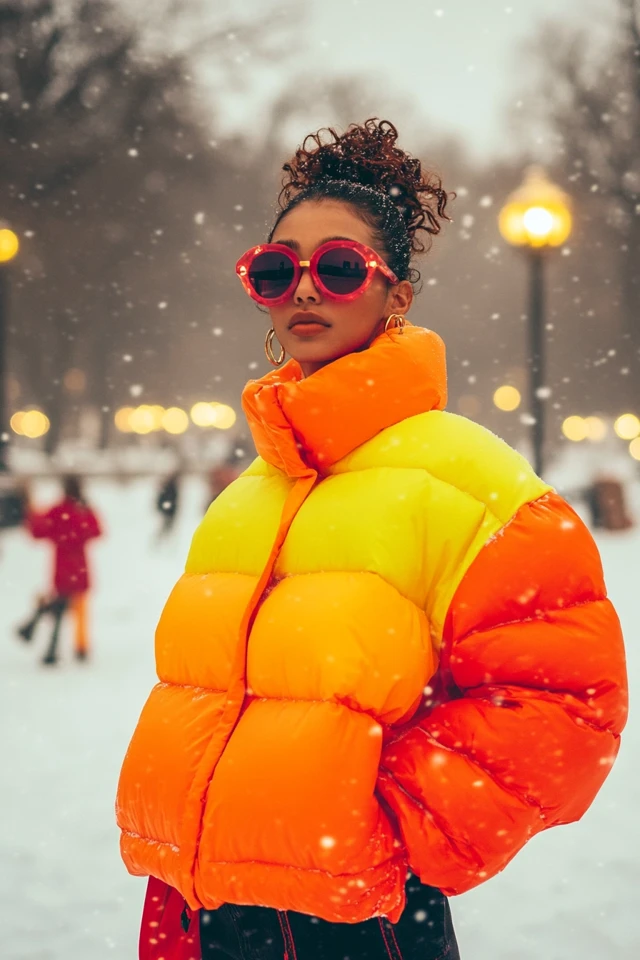
Cropped puffers sit well with high-waisted trousers and suit milder days. Hip-length is the easiest all-rounder: it covers enough without swallowing your frame. Longline versions and a women's puffer vest long enough to reach mid-thigh add coverage and a more dramatic shape, and they tend to look best on taller frames or with a belt.
If you're petite, a cropped or hip-length cut keeps the volume in proportion, and a belt or adjustable waist restores some shape. If the shoulders of an oversized jacket drop a little, that is the intended look. If the sleeves cover your knuckles, that is a fit problem, not a you problem, and a size down usually fixes it.
What bright colors work for winter?
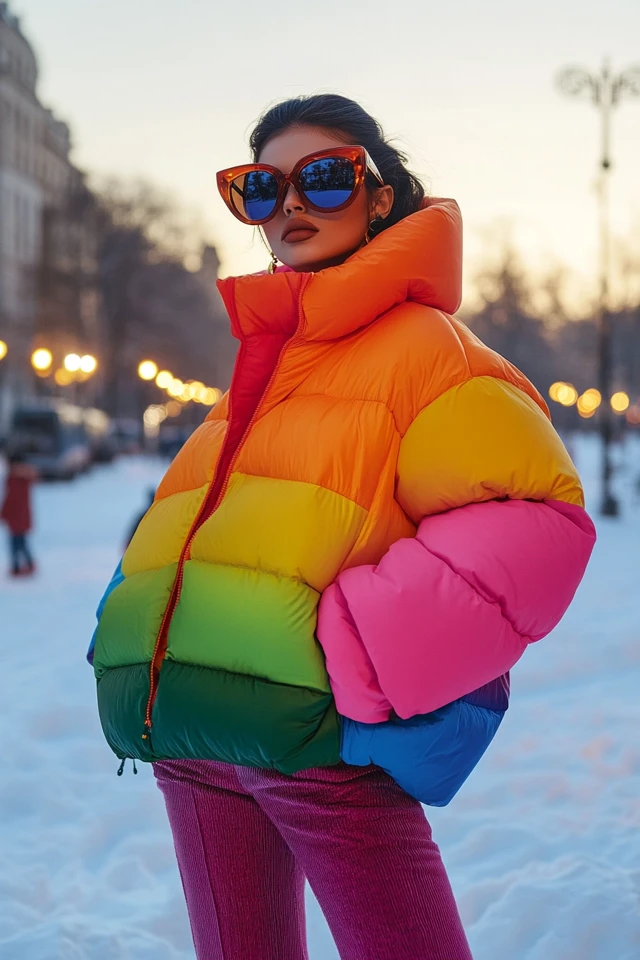
Through the lens of evidence-based design, I'd think about how a color reads against gray skies and snow. Saturated shades stand out strongly in that setting, which is why they are easy to spot and easy to enjoy.
- Cobalt blue pairs cleanly with black, white or denim.
- Sunny yellow looks best against dark neutrals like charcoal and navy.
- Fuchsia or magenta stands out against gray and black.
- Emerald green works with camel, cream and black.
- Fire-engine red is a classic that goes with jeans and tailored trousers.
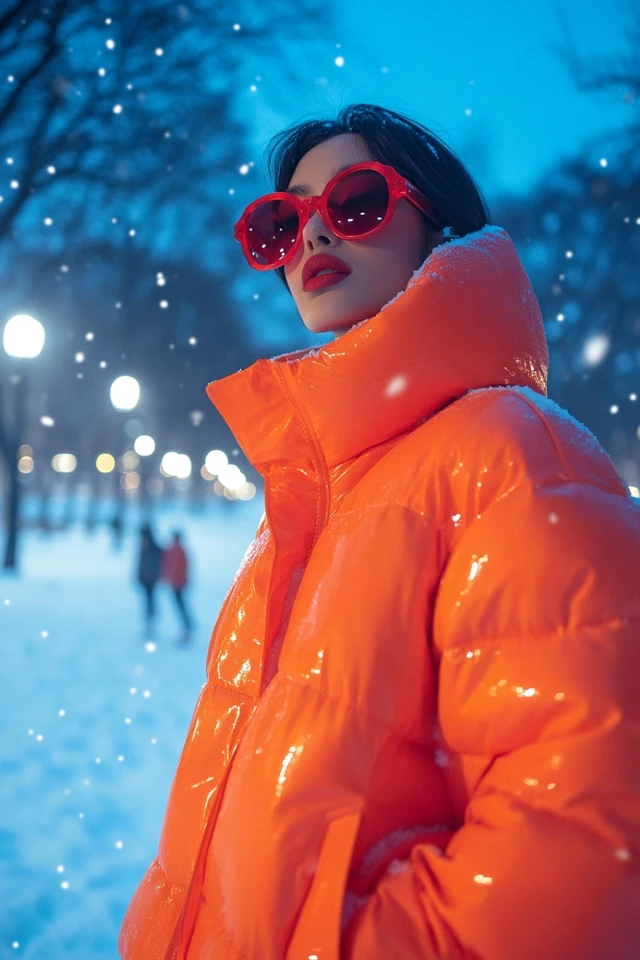
Finish also changes the color. A glossy shell reflects light and looks sharper and brighter, while a matte one reads softer and more muted. As an architect trained in evidence-based design, I'd choose matte if you want the color to feel calmer and glossy if you want it to be the first thing people notice.
How do you style an oversized puffer?
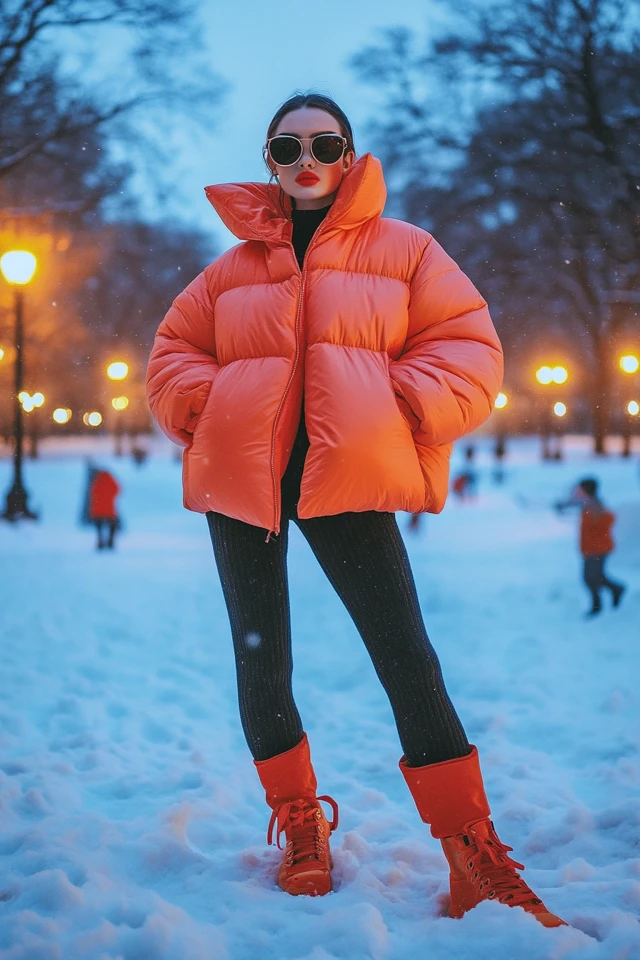
The formula is simple: big on top, slimmer below. Pair the jacket with leggings, straight or skinny jeans, or tapered trousers so the silhouette stays balanced.
- Casual: black leggings, a white sweater and chunky sneakers, with the jacket as the only loud piece.
- Edgy: leather pants and combat boots.
- Softer: a textured knit and a long scarf in a tone close to the jacket.
- Dressier: a dark puffer with tailored trousers and heeled boots.
Keep accessories calm. One bright piece is plenty, so a beanie and gloves in neutral or tonal shades usually look better than a third color. Browse our other takes on this theme in metallic puffer jackets for winter street style and belted and fitted puffers.
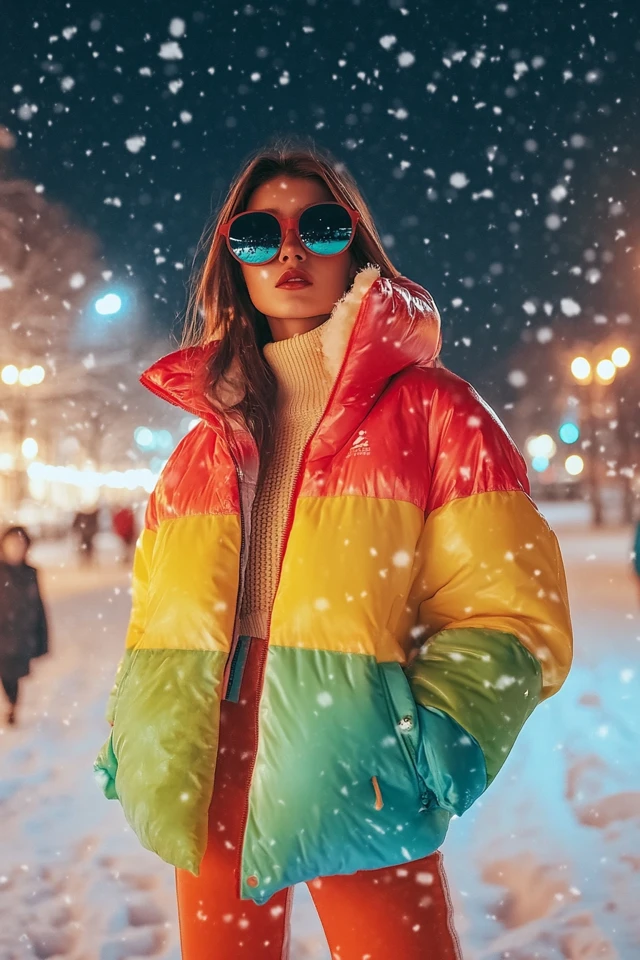
What should you wear under a puffer?
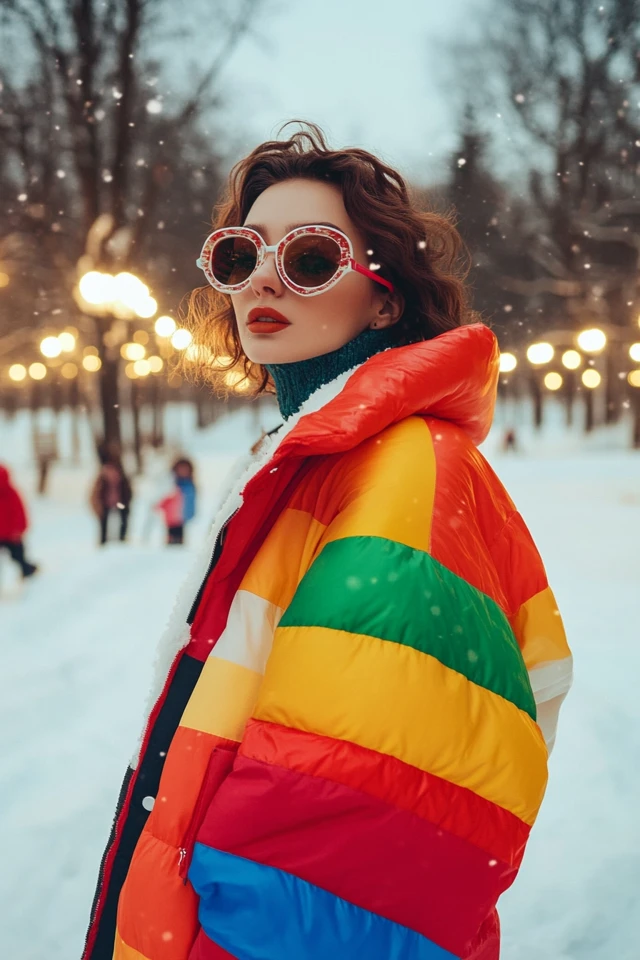
A puffer is only the outer layer of a warm outfit. According to Howdy Health at Texas A&M, the layer closest to your skin should be made of moisture-wicking materials that draw sweat away from your skin. The same page advises avoiding cotton, because it absorbs moisture and can keep it next to your skin, which makes you cold.
That advice is written for exercise, but it applies to a hike or a long walk in a puffer too. For a calm city day, a soft knit over a thin base layer is plenty. If you want a lighter option for layering, see lightweight puffer jackets.
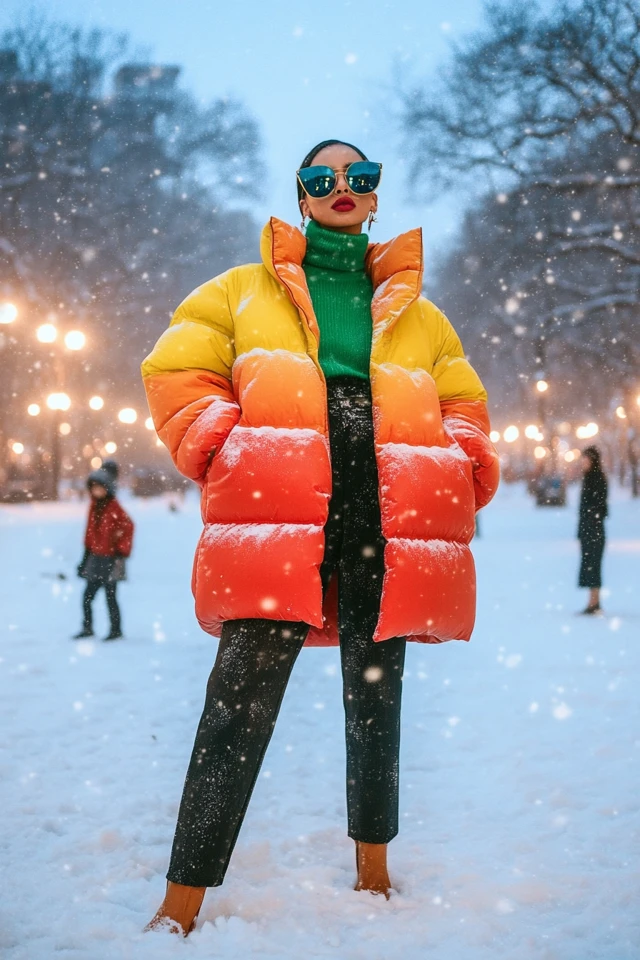
Which puffer should you choose for your plans?
- Snow and wind: a longer, water-resistant shell with a hood. Our guide to oversized puffers for windy days goes deeper.
- City commuting: hip-length with deep pockets and a collar that closes.
- Mild days or layering: a vest or a cropped puffer.
- Extra cozy: see cozy puffers for snowy days for warmer picks.
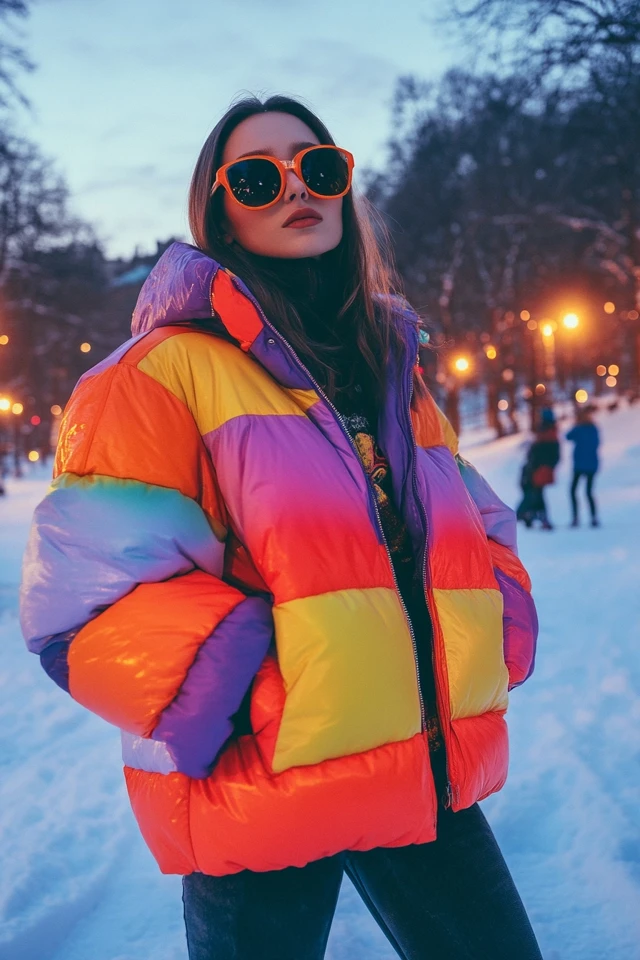
How do you care for a puffer jacket?
Check the care label first. Many puffers can be washed on a gentle cycle with mild detergent, though some should only be spot-cleaned, so follow the tag. Spot-clean stains quickly, especially on light or bright shades.
Let the jacket air-dry fully so the fill keeps its loft, and shake it out now and then as it dries. In the off-season, store it in a breathable garment bag rather than compressed in plastic.
Frequently asked questions
Are puffer vests still in style?
Yes. A vest is a practical layering piece that works over knits, shirts and under coats. Choose a clean shape and a color you like, and it will keep working season after season.
Do puffer vests actually keep you warm?
They warm your core, but your arms stay uncovered. They work best layered over a long-sleeve top in cool weather, and in deep cold you'll want sleeves.
Can oversized puffer jackets be worn for formal occasions?
A sleek, dark puffer can work with tailored trousers and heeled boots. Bright colors suit casual outfits better.
Are oversized puffers suitable for petite frames?
Yes. Cropped or hip-length styles and belted waists keep the volume in proportion.
Filed under Seasonal Trends