Nail Texture Techniques: Velvet PolyGel and More
- Words by
- Julio Arco
- Published
- Reading
- 4 min
The simplest way to add texture to a manicure is to change the finish, not the color. A velvet (soft matte) PolyGel nail, a glossy accent nail beside it, or a few raised details give the same shade a different look.
Below: how velvet PolyGel works, how to do textured nails, and which ways to add texture suit short nails, plus what to know before removal.
What makes a velvet PolyGel nail look textured?
PolyGel is a putty-like gel that is shaped on the nail and cured under a lamp. A velvet look comes from a matte, slightly soft surface on top. Light scatters instead of reflecting in one bright streak, so the color looks deeper and calmer.
Through the lens of evidence-based design, I'd think about texture before color. A navy in gloss and the same navy in velvet do not read as the same shade, because the surface changes how light reaches your eye.

How to do textured nails
Most salon techniques follow the same order. Ask your technician to walk you through it, since the details vary by product.
- Prep and shape the natural nail, then apply the base layer.
- Build the shape with PolyGel or your usual gel, and cure it.
- Apply color, then add the texture layer: a matte top coat, a flocking or velvet effect, or raised detail.
- Cure and check the edges and cuticle area for any lifting or bumps.
Textured nail polish (matte, sandy or glitter-heavy formulas) is a lower-commitment option if you paint at home. It will not give the sculpted depth of gel, but it shows quickly whether you like the feel.
Matte and glossy nail contrast
Matte and glossy nail contrast is the easiest texture trick. Keep one color and switch the finish: velvet on most nails, a glossy top coat on one accent nail, or a glossy tip over a matte base.
It works because the eye reads the shine difference as pattern. You get variety without adding a second color or any thickness.
Ways to add texture to a manicure
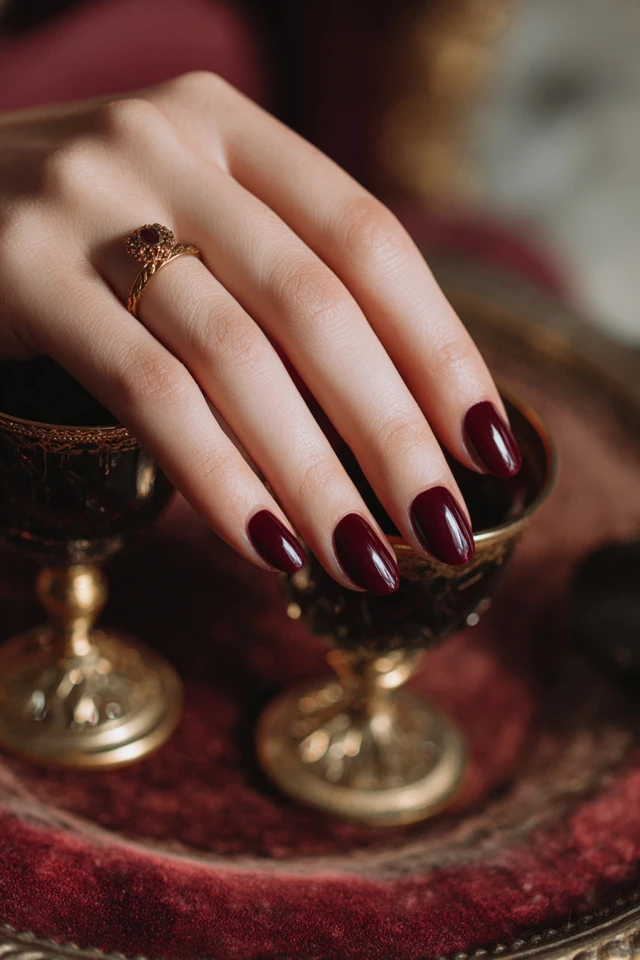
- Velvet or matte top coat over a deep shade such as burgundy, navy or emerald.
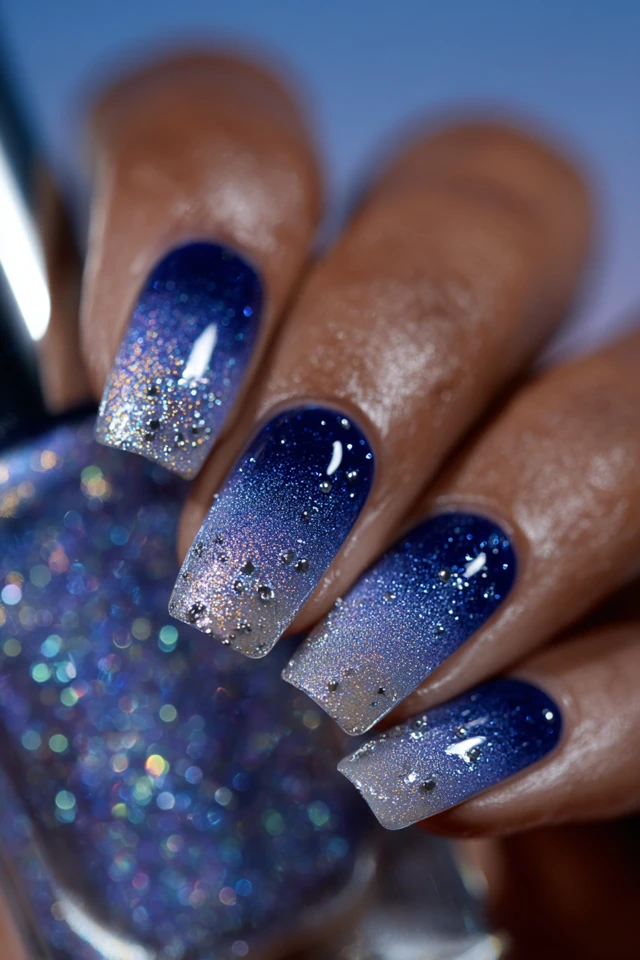
- Fine glitter or sand-effect polish for a grainy surface.
- Embossed or sweater-style patterns, built in gel in thin lines.
- Chrome powder on selected nails against a matte base.
- Small rhinestones, pearls or caviar beads as a single accent.
If you want a more sculpted base first, our crystal PolyGel nails and velvet acrylic nails posts show related approaches.
3D nail designs without the bulk
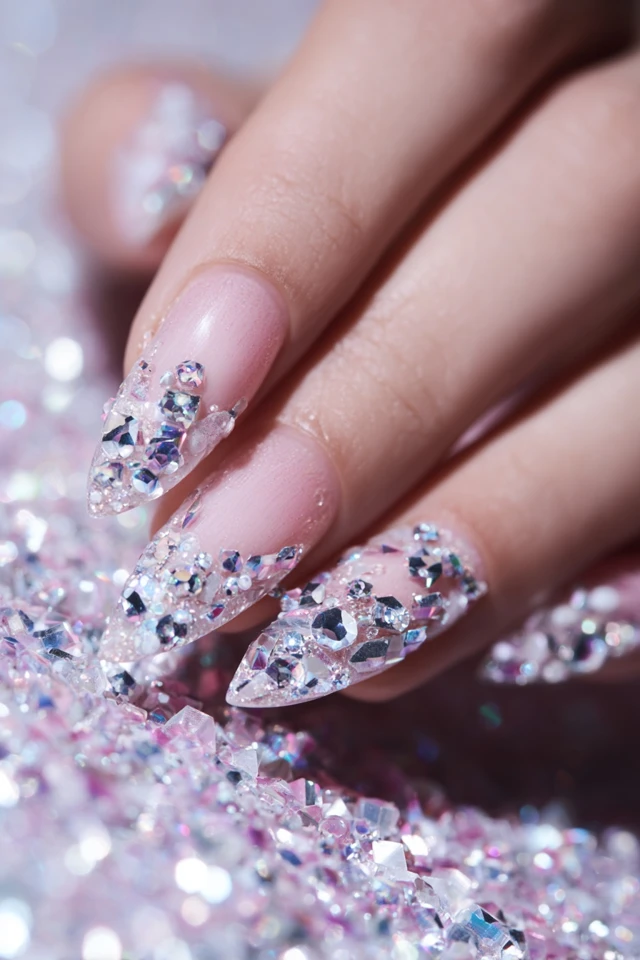
3D nail designs look best when the raised element is small and placed with intent. One or two pearls near the cuticle or a single line of raised gel is easier to wear, type and glove than a full set of charms.
As an architect trained in evidence-based design, I'd treat height like a proportion question: the taller the detail, the fewer of them you need.
Nail texture techniques for short nails
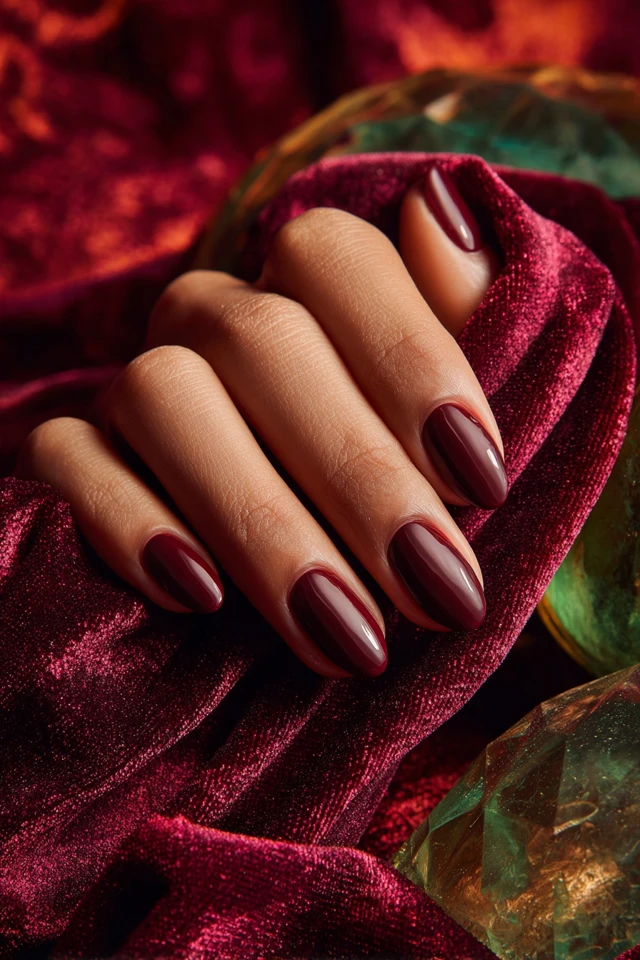
Short nails suit texture that sits flat or near flat. Velvet finish, matte-gloss contrast and a thin embossed pattern all work. Heavy 3D pieces can overwhelm a small nail bed, so keep them to one accent nail.
Rounded or short oval shapes show a matte color evenly. For more shape ideas, see modern beveled nails and sleek flare nails.
Choosing a texture for your outfit and nail shape
Match texture to what you wear. Velvet nails sit well with soft fabrics such as knits and suede, while a glossy accent picks up satin or leather. Deep shades (burgundy, navy, emerald) usually look richer in velvet than pale ones.
If you are choosing between finishes, start with a single accent nail. It tells you quickly whether the feel and look suit your hands.

Wear, upkeep and removal
Artificial nail products need maintenance. The American Academy of Dermatology says that if you wear artificial nails for more than a few weeks, you'll need touch-ups every 2 to 3 weeks to fill in the gaps as your nails grow.
Removal is where damage usually happens. The AAD notes that acetone is the most effective way to remove gel polish at home, and the Cleveland Clinic says removing gel polish carelessly can temporarily damage your nails, most often through cracking and peeling. Do not pick or peel it off.
Board-certified dermatologist Chris Adigun, MD, FAAD, says, "Looking closely at your nails after removing the color helps you spot a problem early." If anything looks or feels wrong, check with a dermatologist.
Frequently asked questions
How do you do textured nails?
Prep and shape the nail, apply gel or PolyGel and color, then add the texture layer, such as a velvet top coat, raised gel lines or small beads, and cure. A technician can do this in one visit.
How do I stop ridges on my fingernails?
Ridges have several causes, so a dermatologist is the right person to ask. Meanwhile, a smooth base layer under gel or polish can make mild ridges less visible.
What is the newest nail technique?
Velvet and matte finishes, subtle 3D details and matte-gloss contrast are popular right now. Trends shift quickly, so ask your technician what they currently offer.
Can I do velvet nails on short nails?
Yes. A velvet finish adds no length or bulk, so it suits short nails well.
Filed under Nail Design