Vivid Russian Manicure Design
- Words by
- Julio Arco
- Published
- Reading
- 4 min
The simplest way to add texture to a manicure is to mix finishes on the same color: a glossy base with a matte accent nail, or a matte coat with a glossy line over it. For more relief, ask for raised gel, a sweater-knit pattern, or a few beads and rhinestones placed in one spot.
Texture works because the surface changes how light reaches your eye. Through the lens of evidence-based design, I'd pick texture before adding more colors: one shade in two finishes often looks richer than three flat shades side by side.
What is the nail texture trend?
Texture nail art is any design where you can see or feel the surface change: raised gel, embossed patterns, matte against shine, chrome powder, or small embellishments. Russian-style manicures are a good base for it. The careful cuticle prep leaves a clean, even nail plate, so raised details sit neatly instead of looking crowded at the edges.
A healthy natural nail is smooth and glossy, as described in a National Institutes of Health review of nail enhancement. That is a useful starting point: texture looks best on a nail that is not already ridged, flaking or thin.
How to do textured nails
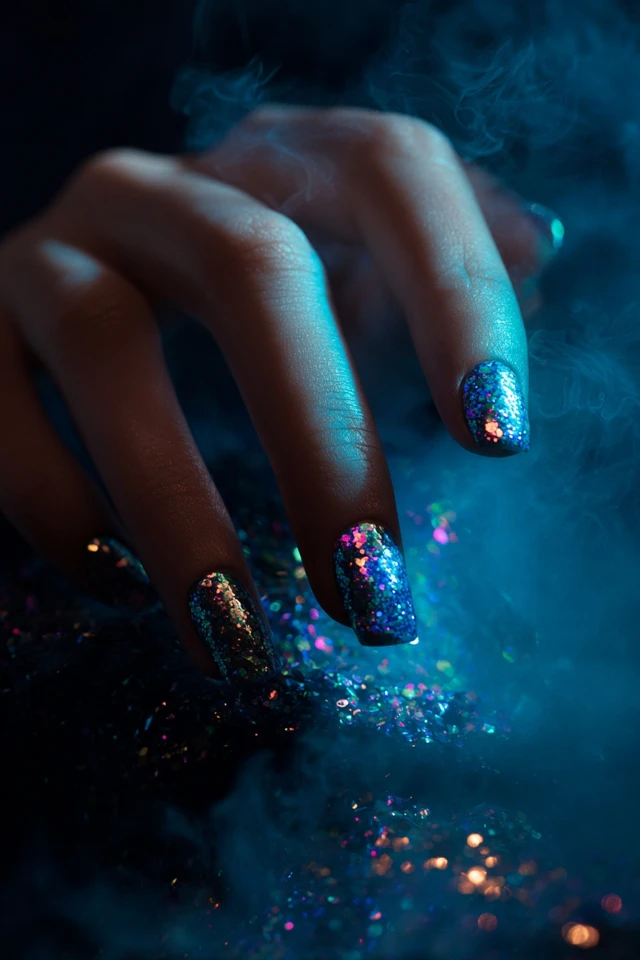
If you are wondering how to do textured nails at home, build from the least raised to the most raised. Work in thin layers and cure or dry each one fully.
- Prep the nail: push back the cuticle gently, wipe off oils, and keep the surface even.
- Apply your base color in two thin coats.
- Add the texture layer: matte top coat, a thicker gel, or a textured polish.
- Place any beads or stones while the layer is still tacky, then seal around them, not over every facet.
- Check the free edge and sidewalls for catches. Anything that snags a sweater will chip early.
Textured nail polish, sold as sand, velvet or glitter-grain formulas, is the easiest entry point because it needs no sculpting at all.
Matte and glossy nail contrast
Matte and glossy nail contrast is the lowest-effort, lowest-bulk option. Paint all ten nails one color, then apply matte top coat to most of them and leave one or two glossy. Or do the reverse on a single nail: a glossy stripe, dot or French tip over a matte field.
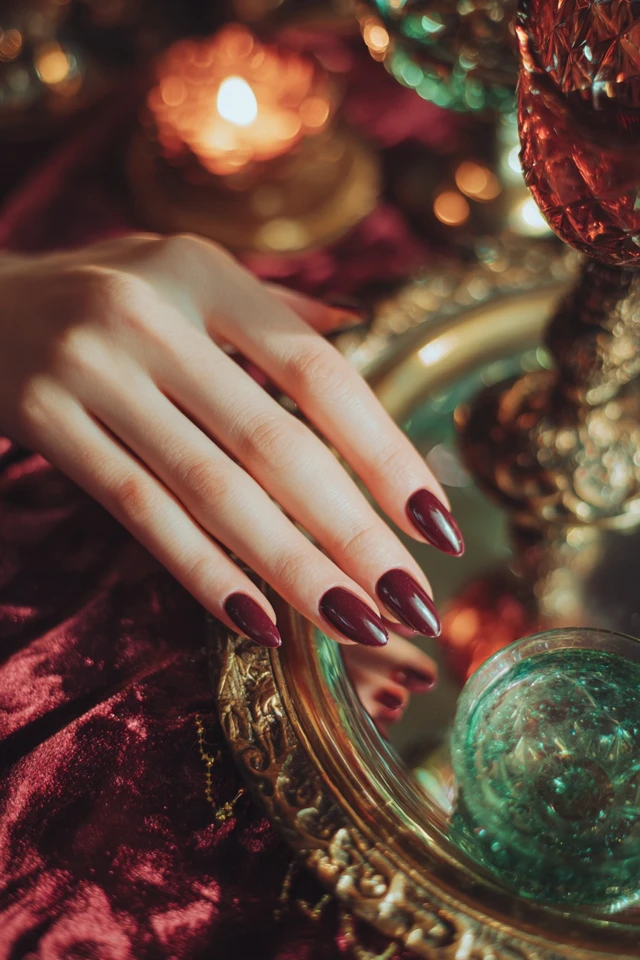
Deep shades like burgundy, navy and forest green show the difference most clearly. Pale nudes show it less, so pick a mid or dark tone if you want the contrast to be obvious from across a table.
3D nail designs and gel layering
3D nail designs use builder gel or sculpting gel to make raised shapes such as petals, waves, bubbles or ribbed lines. Encapsulation goes the other way: a decoration such as foil or dried flowers is sealed between gel layers, so the surface stays smooth while the design has depth.
Both are technician work in practice. If you ask for them, bring a photo and say how raised you want the result. Mention if you type a lot, since tall relief catches on keys.
Sweater, chrome and bead finishes
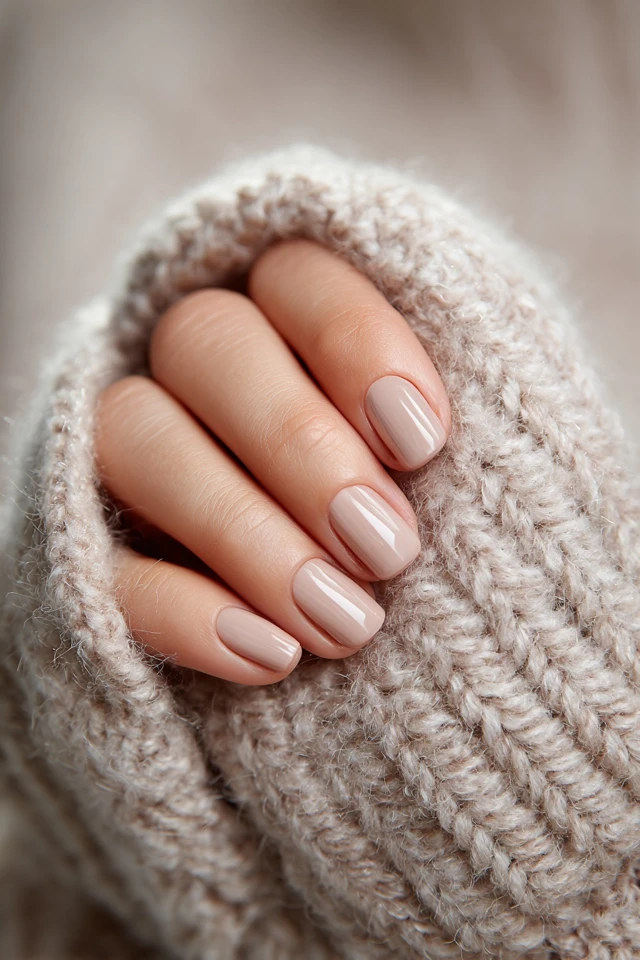
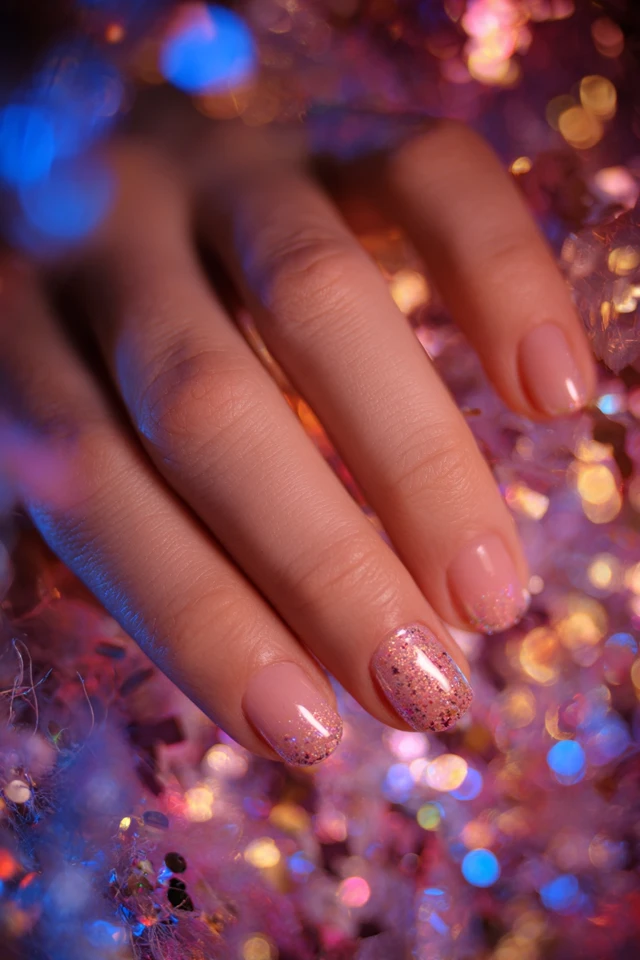
- Sweater nails: raised cable or knit lines in a soft neutral. They read as cozy and suit matte tops.
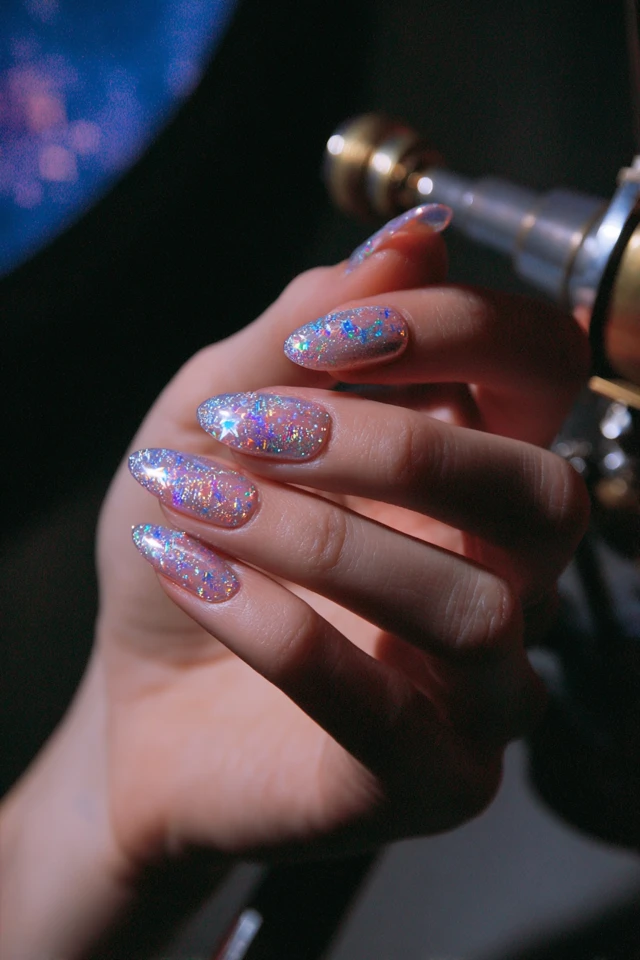
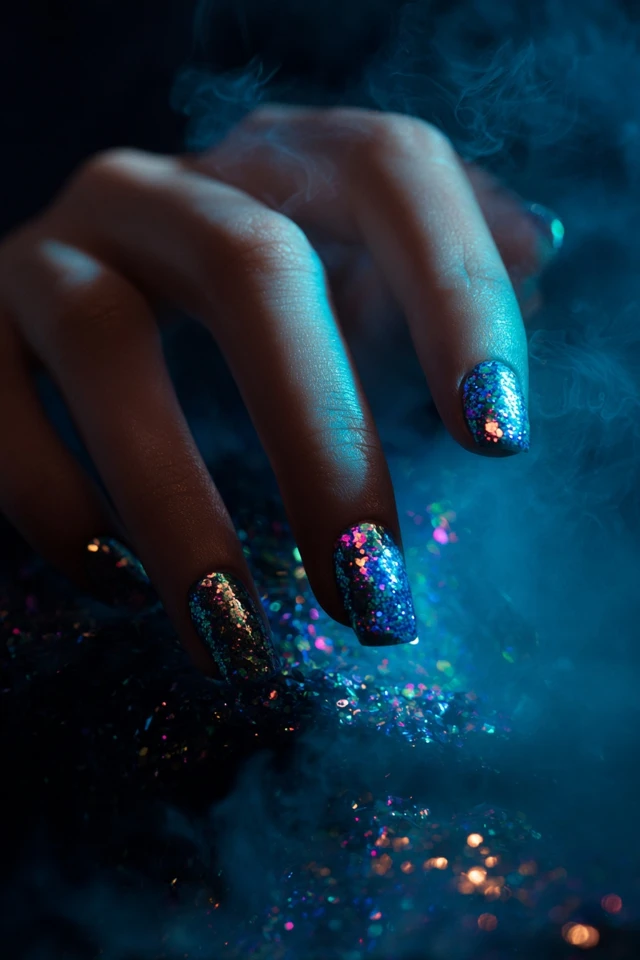
- Chrome and mirror powders: smooth but reflective, so they add texture through light rather than relief.
- Caviar beads: tiny metallic spheres clustered at the base or along one side.
- Pearls and rhinestones: one or two per hand look deliberate; a full set tends to catch on hair and fabric.
For a related finish built on cool tones and sparkle, see these ice frost nail designs.
Nail texture techniques for short nails
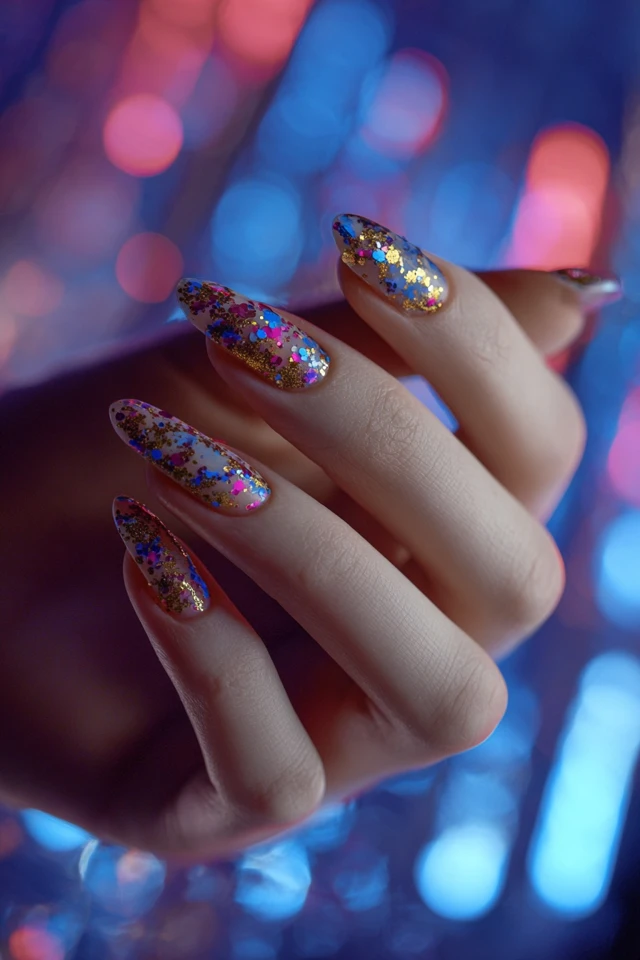
Short nails handle texture well if you keep it to one zone. A matte finish, a single row of beads at the cuticle, or one accent nail with a small raised motif adds interest without crowding the nail. Avoid heavy relief across the full width of a short nail, because it makes the nail look wider and blocky.
If you prefer longer shapes, Russian almond nail ideas give more room for ribbed or knit patterns.
Nail texture techniques with acrylic
Acrylic is the classic sculpting medium for dimensional work: raised flowers, swirls and layered shapes can be built right into the nail. The trade-off is prep. The American Academy of Dermatology notes that getting acrylics to stick means filing the natural nail until it feels rough, which thins it. Wearing them longer than a few weeks also means touch-ups every 2 to 3 weeks, per the same source.
If your nails are already thin or peeling, a matte top coat, textured polish or a few beads on a gel manicure are gentler ways to get a similar look.
Keeping textured nails healthy
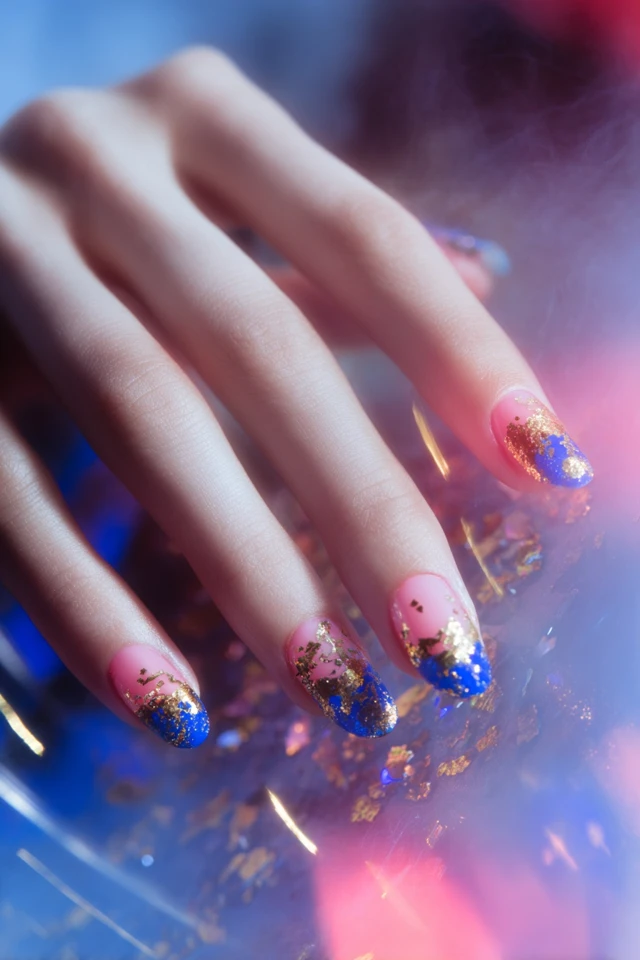
Heavier designs take longer to remove, so plan for it. The AAD says acetone is the most effective way to remove gel polish at home, and careless removal can temporarily damage nails, with cracking and peeling the most common problems according to the Cleveland Clinic. Do not pick or peel off raised gel.
Dermatologist Shari Lipner, MD, PhD, says of dip manicures: "After removing the color, wait one month before getting another one of these manicures." A break between heavy sets is a sensible habit for any enhancement.
If you notice ridges, discoloration or pain, check with a dermatologist rather than covering it with a thicker design.
Frequently asked questions
How do you do textured nails?
Apply your base color, then add a texture layer such as matte top coat, textured polish, raised gel or beads. Use thin layers and seal the edges so nothing snags.
How do I stop ridges on my fingernails?
Ridges can have several causes, so it is best to ask a dermatologist. Meanwhile, avoid picking at the nail and skip heavy buffing, which can thin the plate.
What are the top nail art techniques?
Common ones include matte and glossy contrast, chrome powder, encapsulation, 3D gel sculpting, sweater patterns and bead or rhinestone placement. Each adds a different kind of surface interest.
Filed under Nail Design