Asymmetrical Draped Dresses: How to Wear Them Well
- Words by
- Julio Arco
- Published
- Reading
- 5 min
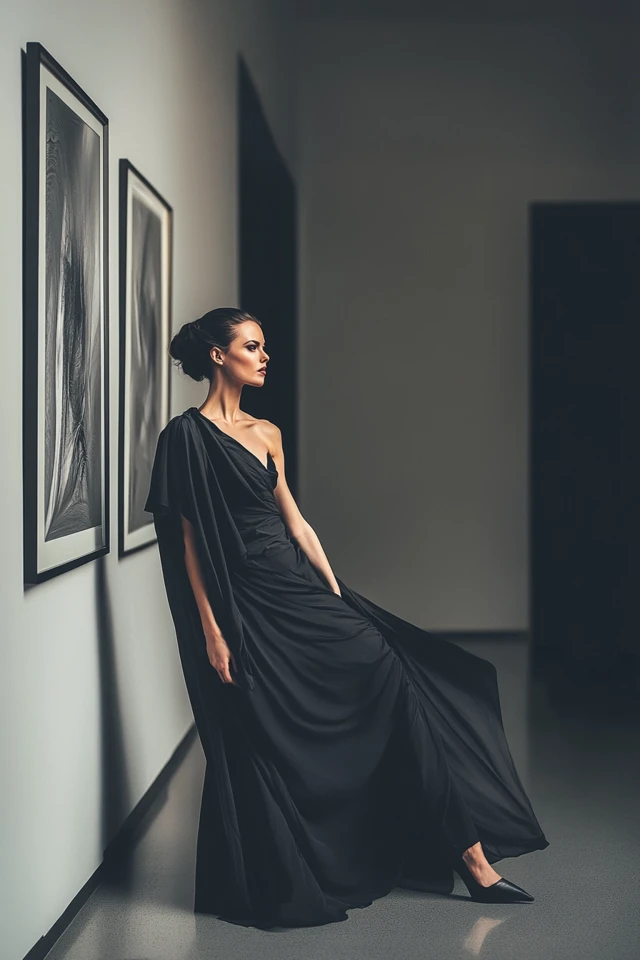
Asymmetrical draped dresses work best when one detail leads and everything else stays quiet. Pick a dress with a single uneven element (a one-shoulder neckline, a side gather or an angled hem), choose a fabric that falls softly, and keep accessories simple.
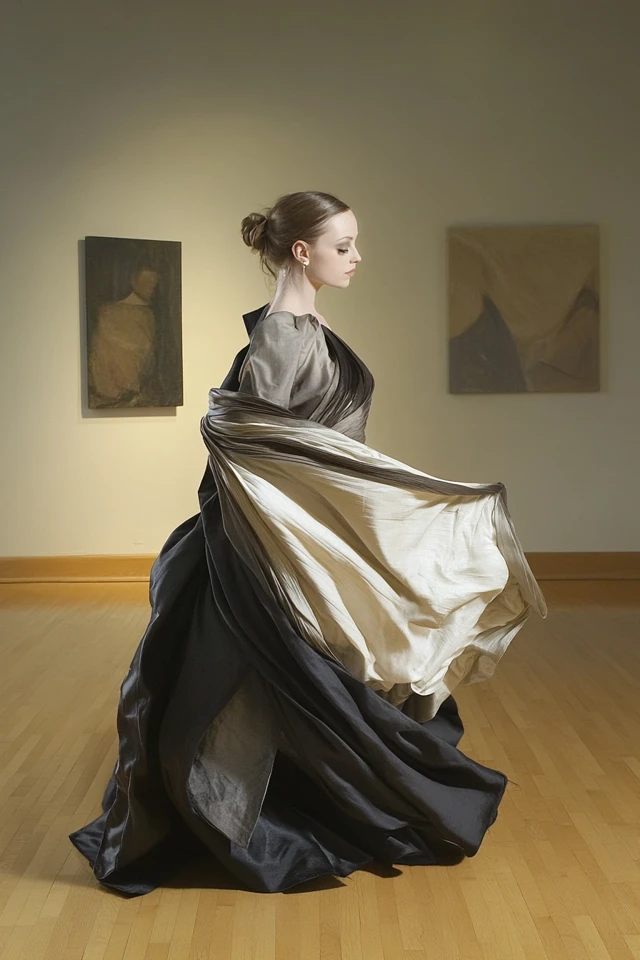
Draping means fabric is folded, gathered or pleated across the body instead of cut into rigid lines. Asymmetry means the neckline, sleeve or hem is uneven. Together they give you movement and a clear focal point, which is why these dresses suit both dressy and relaxed occasions.
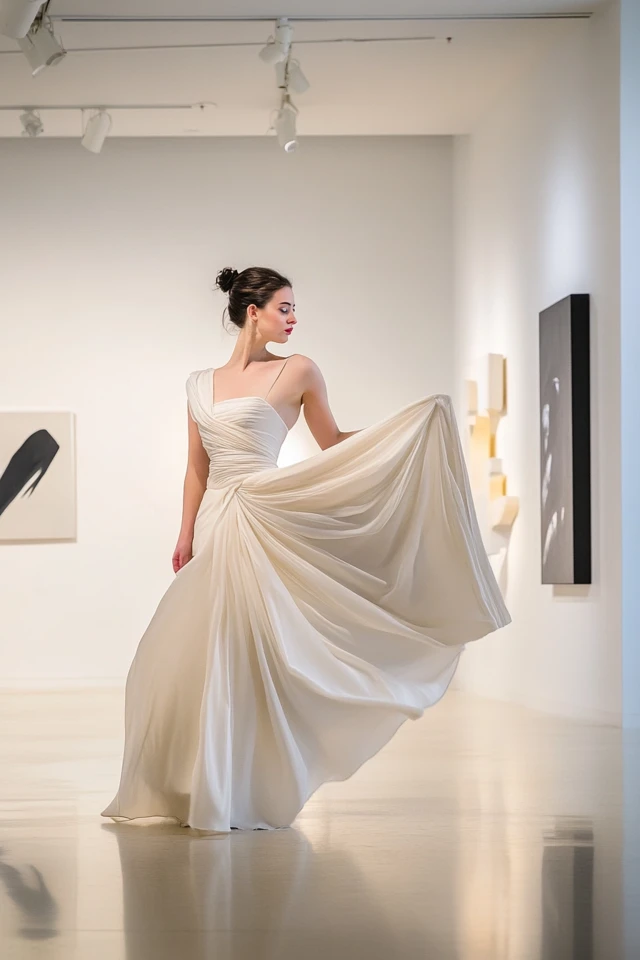
Are asymmetrical dresses flattering?
Usually yes, because an angled line gives the eye a path to follow. A diagonal neckline or hem breaks up a straight vertical or horizontal and can make a silhouette read longer. Draping adds softness, so the dress skims instead of clinging.
Fit still decides everything. If the shoulder seam sits off your shoulder or the gathers pull across the stomach, that is a fit problem, not a you problem. Try a size up or a different gather placement.
Which draped styles are kind to the midsection?
Look for ruching or gathers that start at a side seam and fall loosely over the stomach, or a wrap-style front that you can adjust. Fabric with some weight, such as a matte jersey, hides less than a thin chiffon only if it clings, so check how it hangs before buying. Through the lens of evidence-based design, I'd choose a matte surface over a shiny one here, because shine catches light on every fold and makes the eye stop at them.
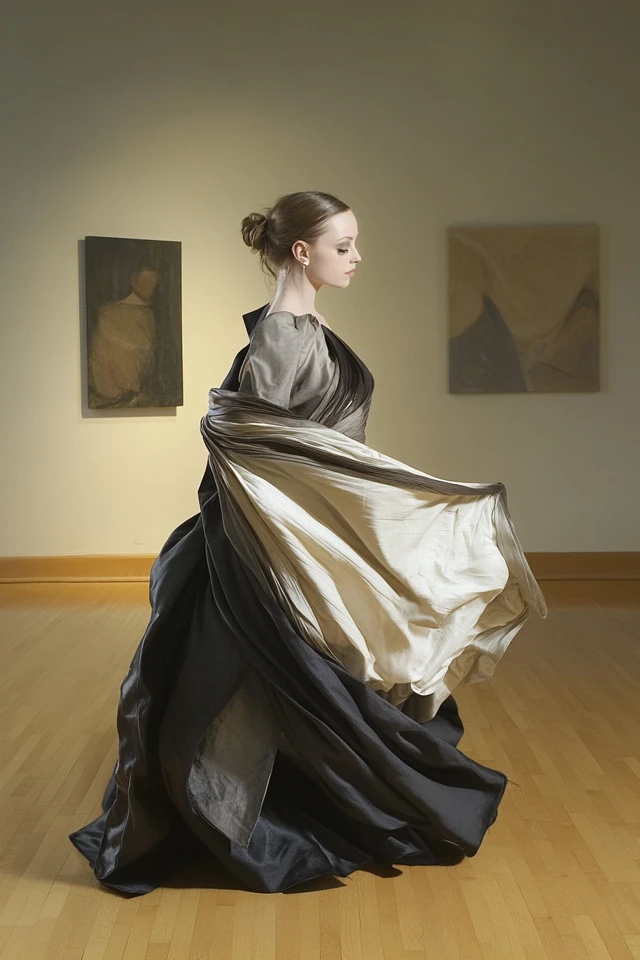
What makes a dress asymmetrical?
Three places can be uneven, and each changes the look differently.
- Neckline: one-shoulder or diagonal cuts draw attention to the collarbone and shoulders. More on this in elegant asymmetrical necklines.
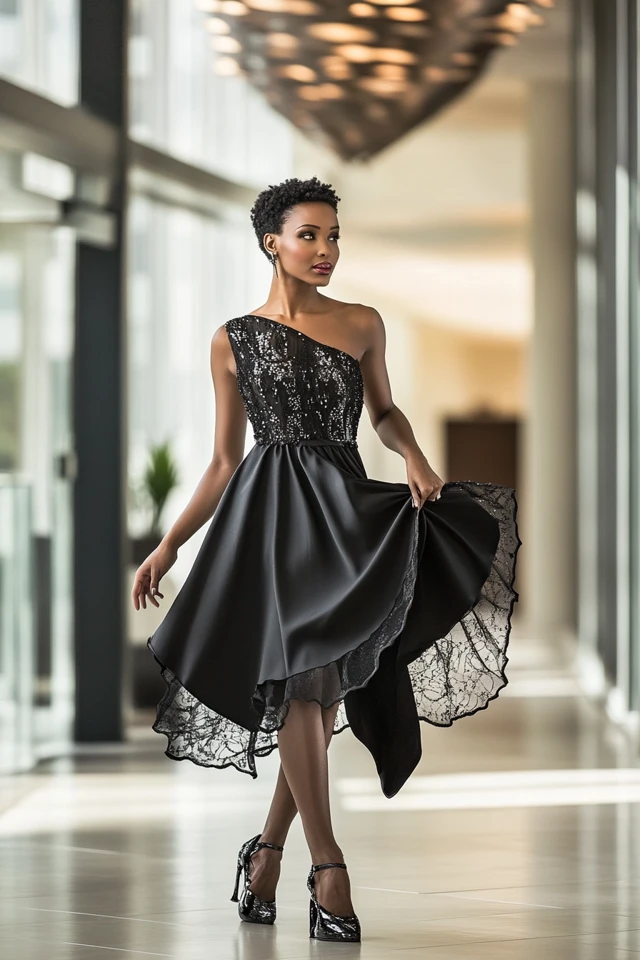
- Hem: high-low or diagonal hems show off movement when you walk. See asymmetrical hemlines in summer dresses.
- Sleeves: one long sleeve with one bare shoulder, or a single draped sleeve, adds interest on top while the skirt can stay simple.
If you want an asymmetrical dress with sleeves, a single long sleeve or a draped cap sleeve keeps the uneven line without leaving the arms fully bare.
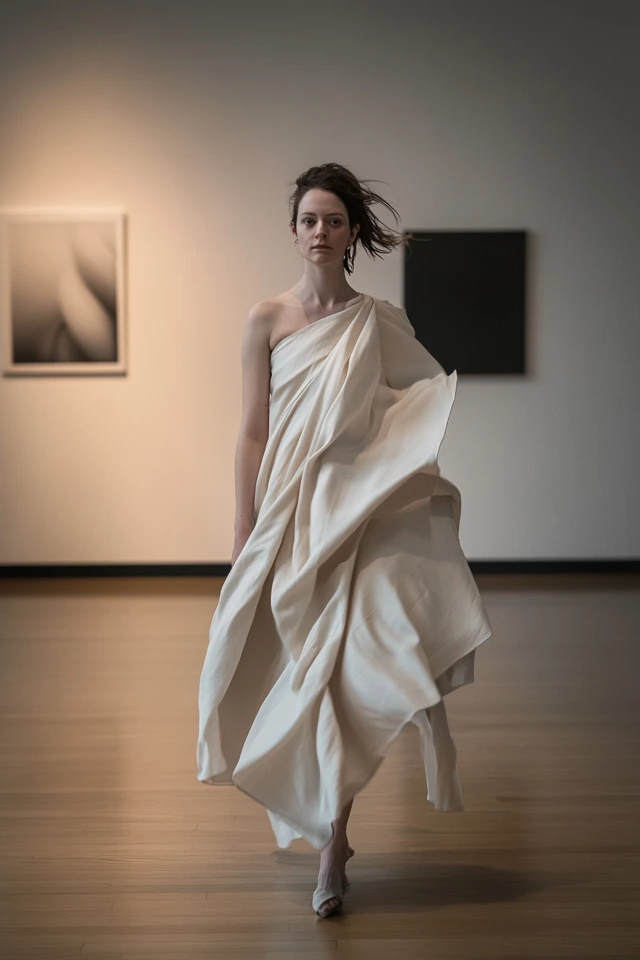
Midi, maxi and mini: which length suits you?
Midi
An asymmetrical draped midi dress is the easiest to wear to work, lunches and weddings. A hem that slants from mid-calf to just below the knee shows a little leg and still feels polished.
Maxi
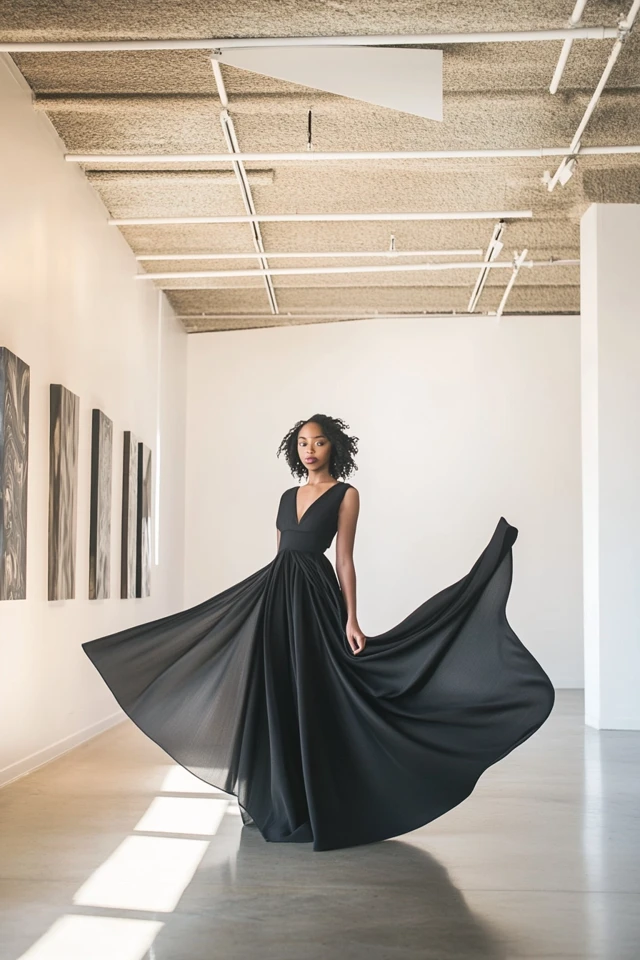
A maxi asymmetrical draped dress gives the most drama and the most fabric movement. Wear heels or a sandal with a small heel so the front hem clears the floor, and hem it to the shoes you plan to wear.
Mini
Minis with a side drape or wrap front are playful and good for evenings out. Keep the rest of the outfit streamlined: a denim jacket or blazer and ankle boots are enough.
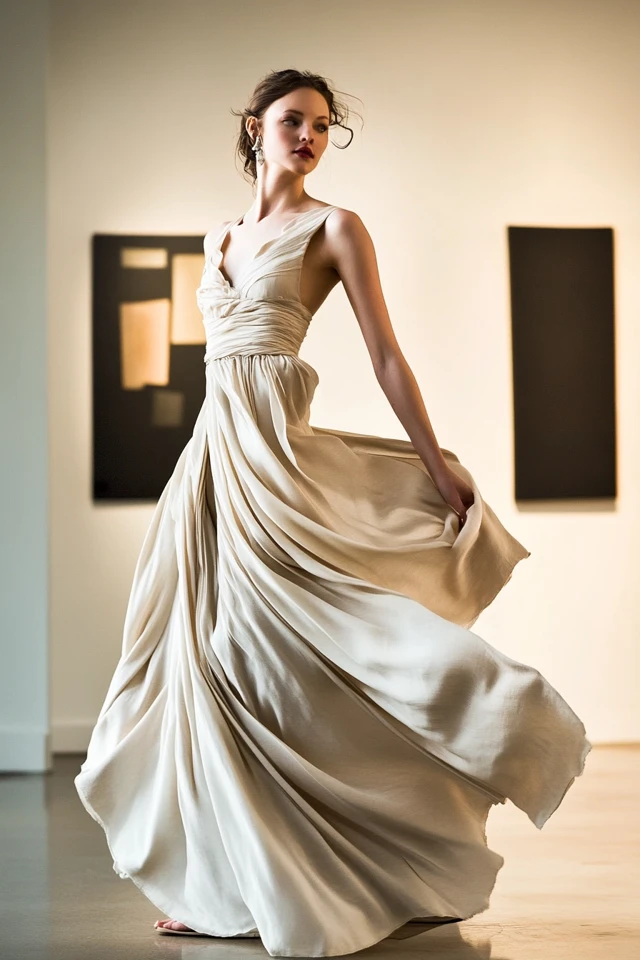
Which fabrics drape best?
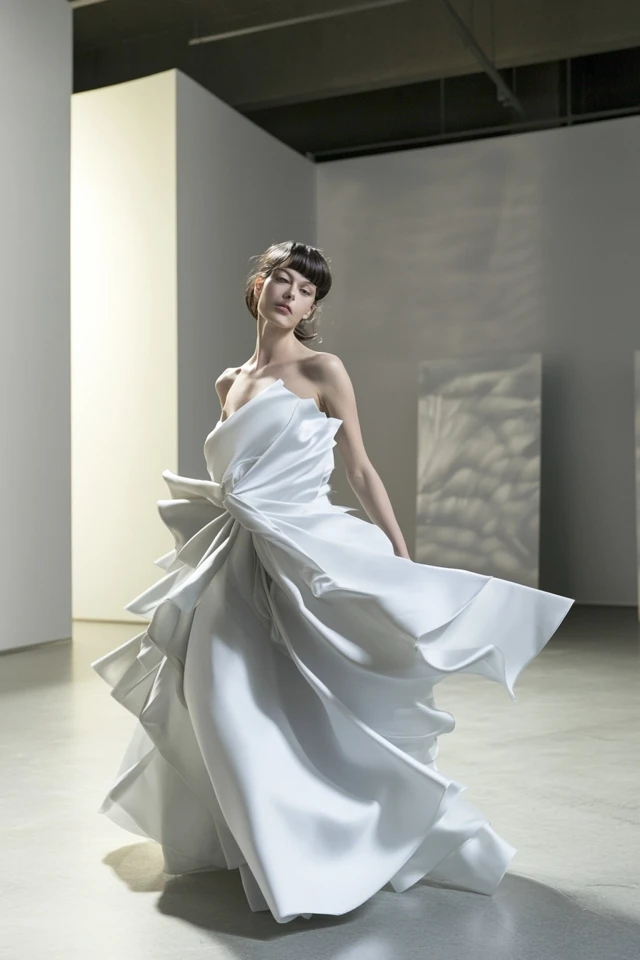
Fabric decides whether a drape looks elegant or limp. Silk, satin, crepe and jersey fall in soft, fluid folds. Chiffon floats and suits layered skirts, though it can show every seam underneath. Stiffer cotton or taffeta holds shape and gives sculptural folds instead of flowing ones.
Texture also changes how a color reads. The same navy in matte crepe and in glossy satin looks like two different colors, because the surface changes how light reaches your eye. Check the care label too: many drapey fabrics prefer gentle washing or dry cleaning, and padded hangers help them keep their shape.
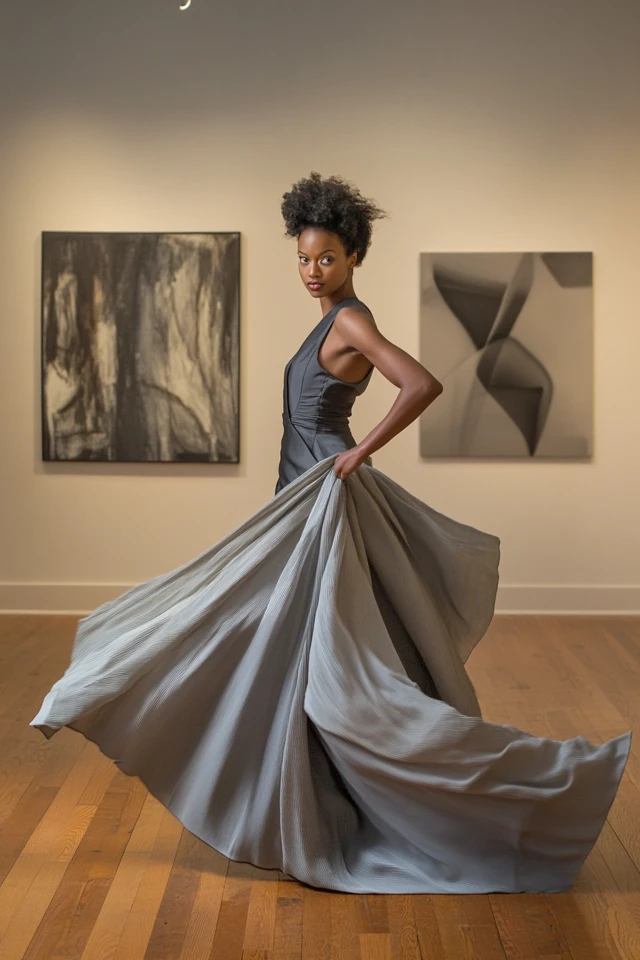
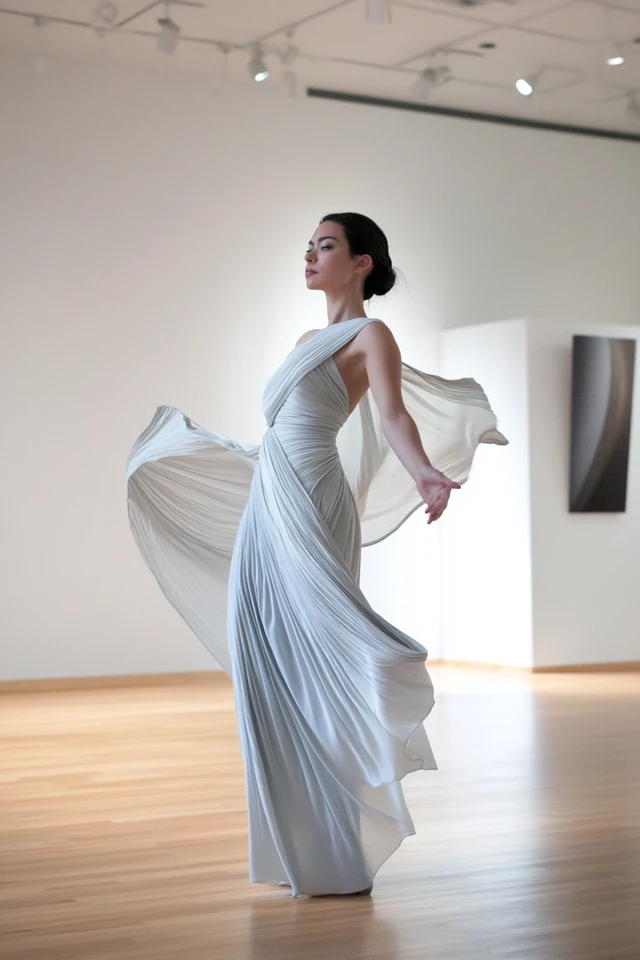
How to style asymmetrical draped dresses
The rule is balance. One feature leads, the rest supports.
- Keep jewelry simple. An off-center neckline already frames your face, so small earrings or a thin chain are plenty. Skip a big necklace when the neckline is the feature.
- Define the waist if the dress is loose. A narrow belt or sash over draped fabric adds structure without fighting the folds.
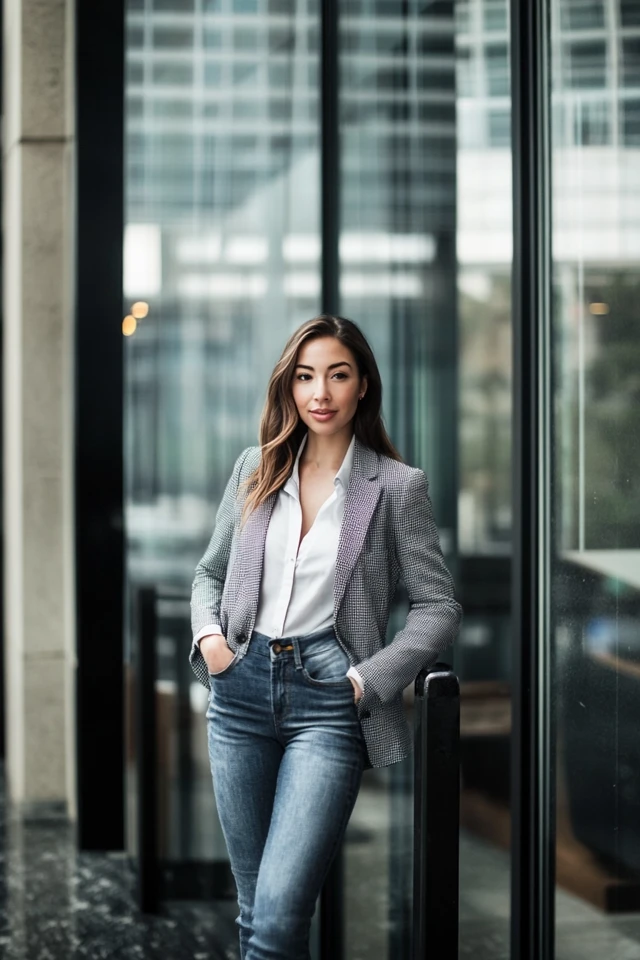
- Add structure on top. A tailored blazer or cropped jacket over a flowing dress gives a firm line against the soft one.
- Choose shoes to suit the hem. Strappy heels or sleek flats keep the eye on the dress; chunky sneakers make a draped dress feel casual.
- Carry a small structured bag or clutch.
As an architect trained in evidence-based design, I'd treat the neckline as the first thing the eye reads, so let it be the only bold element near your face.
Formal and occasion ideas
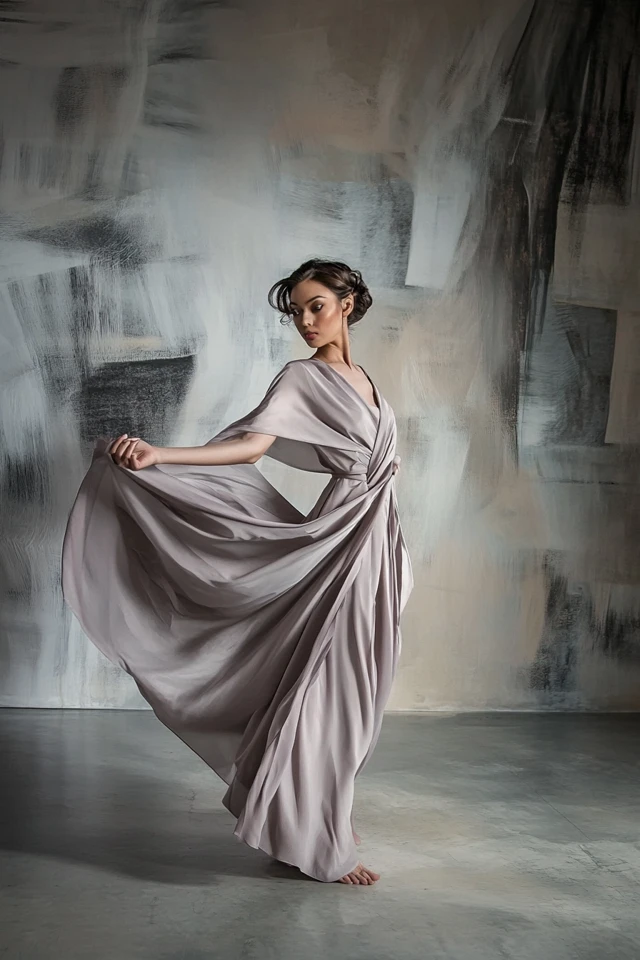
A formal gown asymmetrical dress in a heavy satin or crepe needs very little: a clutch, drop earrings and heels. For off-the-shoulder options, browse draped off-shoulder gowns, and for a bolder line see dramatic asymmetrical gowns. If you like a classical look, Grecian-inspired draped dresses are a good starting point.
Work
Choose a midi with a subtle slant, a muted color and a blazer. Avoid very sheer fabrics or deep side slits.
Day to night
Wear the dress with flats and a denim jacket by day. At night swap in heels, add earrings and carry a clutch. The dress stays the same and the accessories do the work.
Plus-size and curvy fit notes
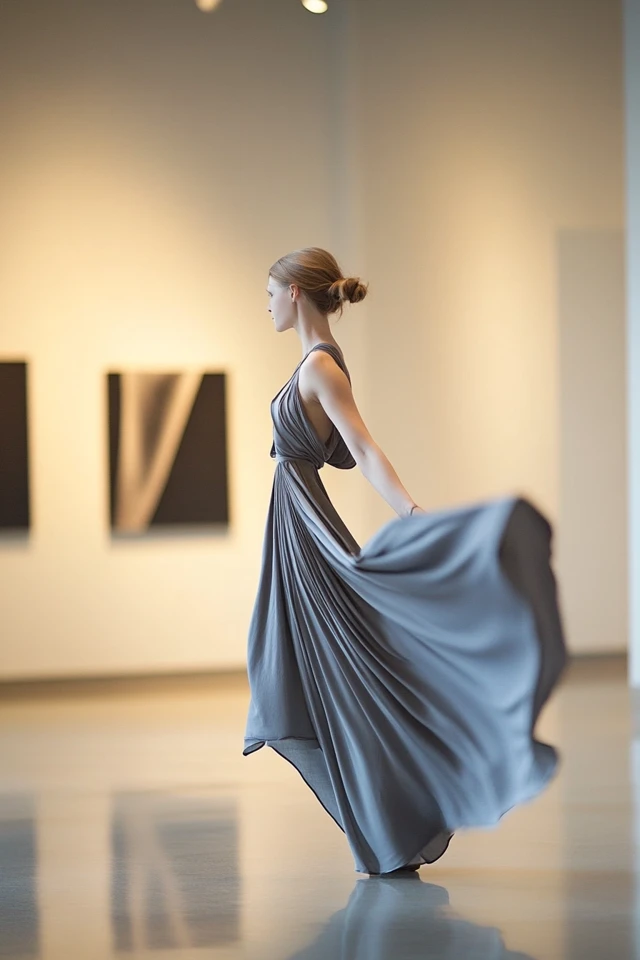
Plus size asymmetrical draped dresses can be especially flattering, since gathers and wraps adjust to the body. Look for stretch or a wrap closure, wide straps or a secure one-shoulder construction, and gathers placed at the side seam instead of directly across the stomach. A defined waist seam or sash gives shape without clinging.
Mistakes to avoid
- Piling on accessories until the dress competes with them.
- Pairing a loose draped dress with other oversized layers and no defined point.
- Ignoring fit at the shoulder and bust, where uneven cuts shift most.
- Buying a thin fabric that clings at the gathers without trying a slip underneath.
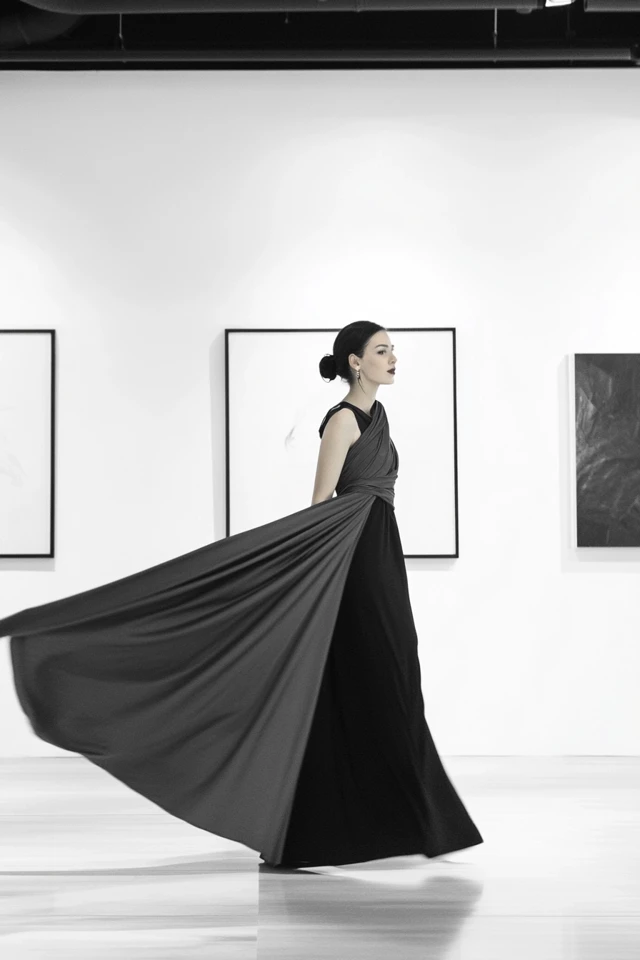
If you want more draped options, draped cape dresses and draped wrap skirts use the same principles in different shapes.
Frequently asked questions
Are asymmetrical dresses flattering?
Usually, yes. A diagonal neckline or hem leads the eye along an angle and can lengthen the look of the body, but fit at the shoulders and waist matters most.
What type of dress is most flattering for hiding a tummy?
Choose a dress with side ruching or a wrap front that falls loosely over the midsection, in a matte fabric with some weight. Avoid thin fabrics that cling at the gathers.
Are draped dresses in style?
Draped dresses are a long-running shape that returns in many seasons, so they rarely look dated. Choose a cut you like instead of chasing a specific trend.
How can I wear an asymmetrical dress without looking unbalanced?
Add one structured piece, such as a blazer, belt or firm handbag, and keep jewelry minimal. That gives the eye one clear focal point.
Filed under Style & Fit