Red Carpet Awards Gowns: Dramatic Asymmetrical Styles
- Words by
- Julio Arco
- Published
- Reading
- 5 min
Asymmetry is the quickest way to make a gown read as an event piece. A one-shoulder neckline, an uneven hem or a diagonal drape gives the eye a path to follow, which is why so many red carpet awards gowns use at least one off-balance detail.
If you want a gown that works for a gala, an awards-style night or a black-tie wedding, choose one asymmetrical feature and let the rest stay simple. Below: what counts as asymmetrical, which color and fabric to pick, how to match a cut to your frame, and how to finish the look.
What makes a gown asymmetrical?
An asymmetrical gown breaks the mirror-image balance of a traditional dress. The most common versions are a single shoulder, a hemline that rises on one side, a slit that sits off-center, or fabric draped diagonally across the body.
The effect is movement. Because the two sides do not match, the eye travels across the dress rather than resting in the middle.
- One-shoulder or off-balance necklines, which frame the neck and shoulder line.
- High-low or diagonal hems, which show off shoes and add motion when you walk.
- Draping, pleats or folds that add depth to the surface.
- Single cutouts at the waist or back.
- Fluid fabrics such as chiffon, satin or organza.
Chiffon has a long evening history: the ASU FIDM Museum notes that chiffon overlayers were popular for evening wear.
Which color should you choose?
Through the lens of evidence-based design, I'd think about color and surface together. A matte crepe and a liquid satin in the same shade do not read as the same color, because the surface changes how light reaches the eye.
- Black keeps attention on the shape of the cut. It is the easiest choice if the asymmetry is bold.
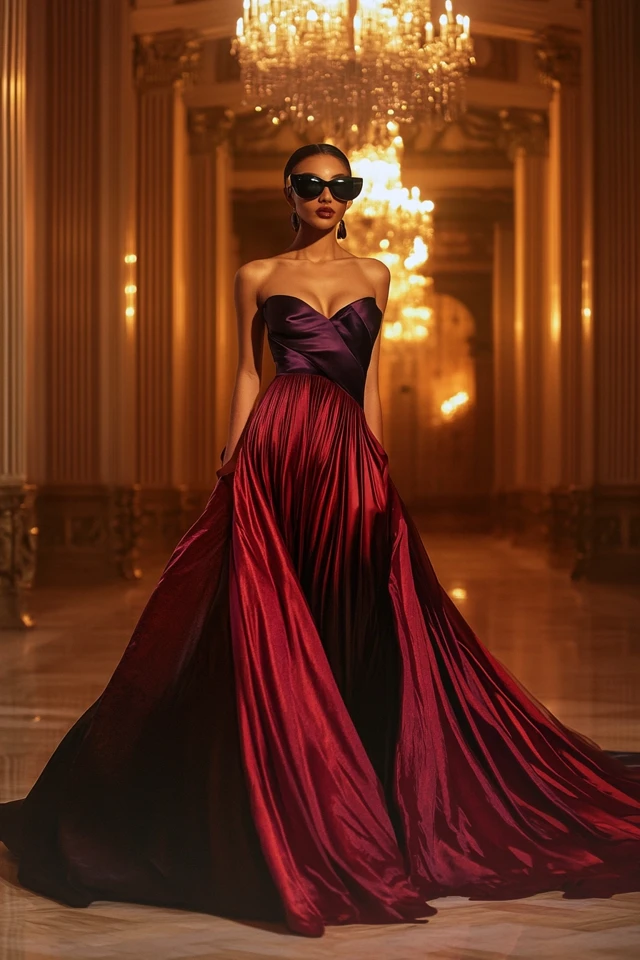
- Deep red, from scarlet to crimson, is the classic red carpet pick and reads as confident.
- Blush, lavender and powder blue suit soft, flowing drapes.
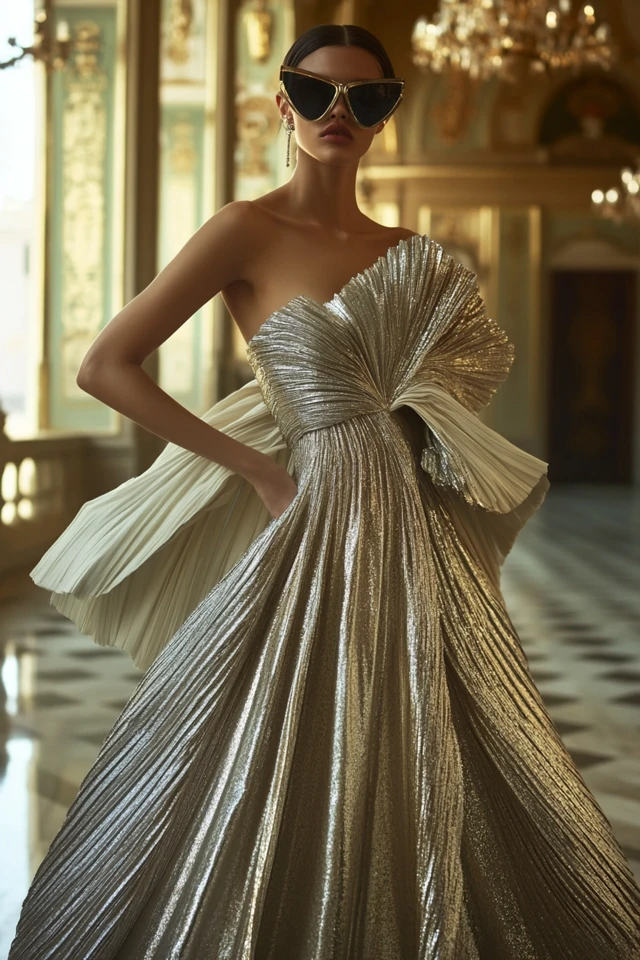
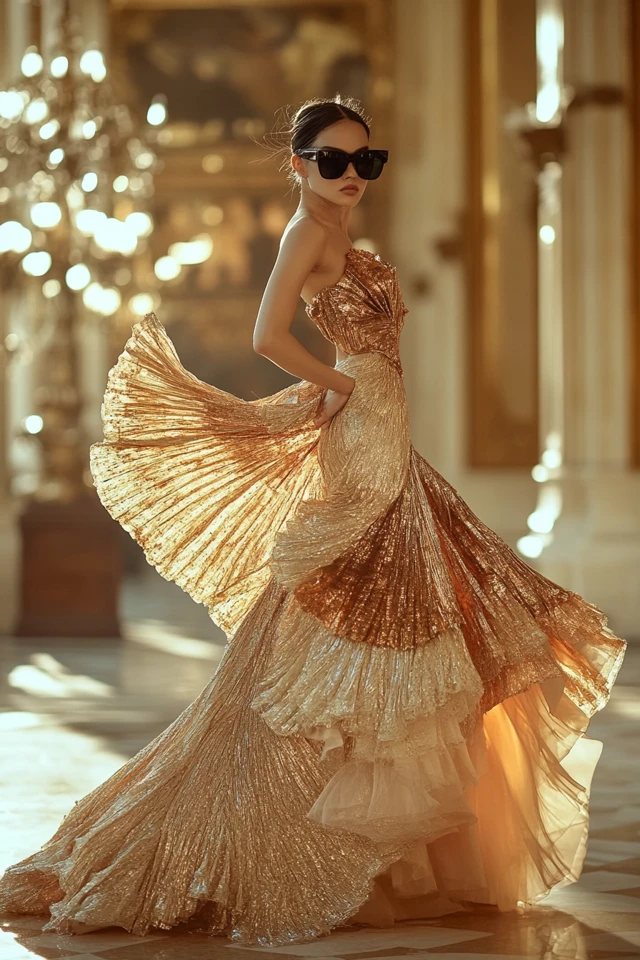
- Gold, silver and champagne catch light and suit black-tie rooms.
- Emerald, sapphire and amethyst look rich against most skin tones.
- Ivory, beige and taupe are quiet, and work well when beading or lace carries the detail.
For pairings that go beyond a single shade, see coral and midnight blue pairings for evening gowns.
How do you choose an asymmetrical gown for your frame?
A gown that pulls or gapes is a fit problem, not a you problem. Start with the asymmetrical detail, then check where it lands on your body. Designer sample gowns are cut small. As Stephany Greene, a fashion designer and stylist who teaches in Virginia Tech's fashion merchandising and design program, said: "Unless a gown is custom designed and fit for an actor, designer gowns are typically size 2 to 4, so actors must stay in shape or get in shape to fit into them." Yours should be fitted to you, not the other way around.
Petite frames
A high-low hem or a shorter asymmetrical skirt shows more leg and keeps the line long. Skip heavy layering, which can swallow a small frame, and wear heels if you like the added height.
Curvy figures
Ruching and draping that follows your curves works well. A one-shoulder neckline adds balance up top, and a fabric with some structure holds its shape.
Athletic frames
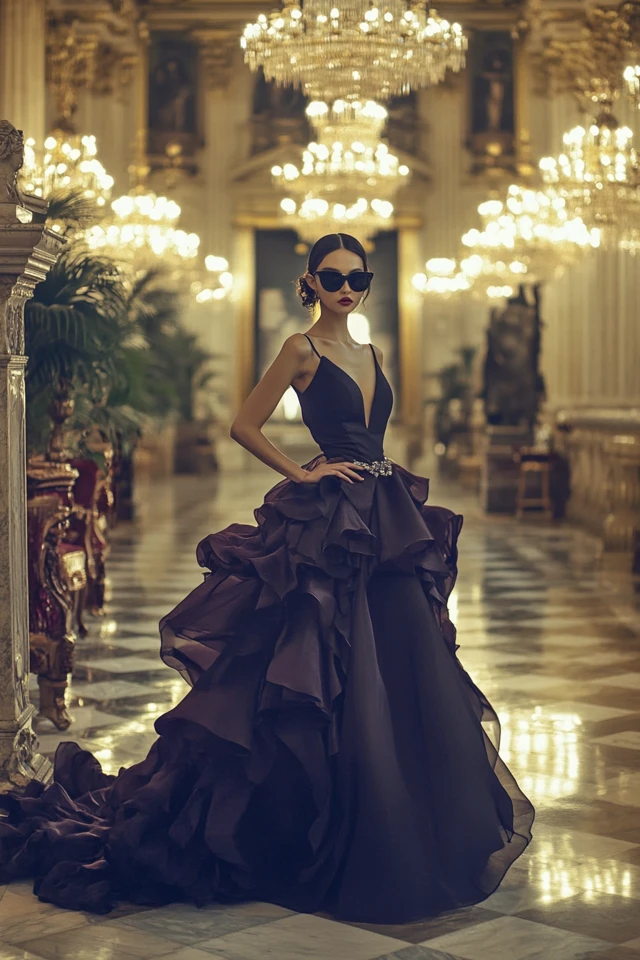
Volume helps: ruffles, layered skirts or a train. A cinched waist or a single cutout adds shape.
Taller frames
Floor-length styles with a sweeping train or a deep slit suit your height. Flat or low heels are fine, since the hem does the work.
Which silhouettes and details look current?
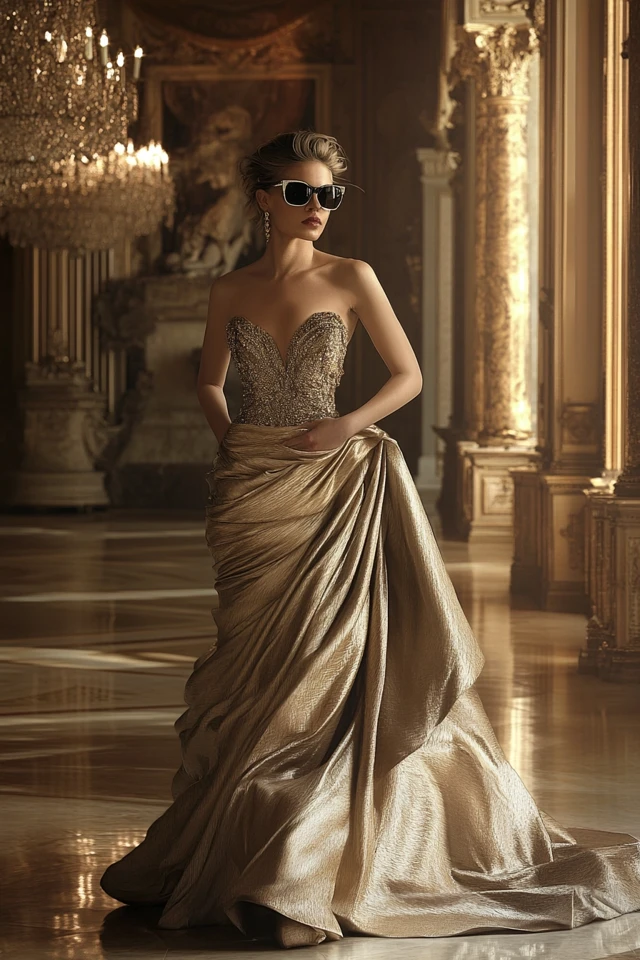
High-low hems with cascading ruffles, sheer panels in tulle or organza, and metallic fabrics are the details that feel current. Timeless versions are quieter: a clean one-shoulder neckline, a floor-length skirt, a structured cut in silk, satin or velvet.
Beading and sequins also have a long record. Kathryn Hennessy, editor of Fashion: The Ultimate Book of Fashion and Style, wrote of the early 1900s: "Sumptuous fabrics such as silk satin, damask, and chiffon, usually in light, soft colours, were decorated with lace, rhinestones, and spangles, often highlighting a part of the body or the face". An asymmetrical neckline does much the same job today.
If you like the idea of mixing materials, these are worth a look: mesh and sequins, velvet and chiffon, and one-shoulder dresses. For a longer, sculpted line, see fishtail gowns.
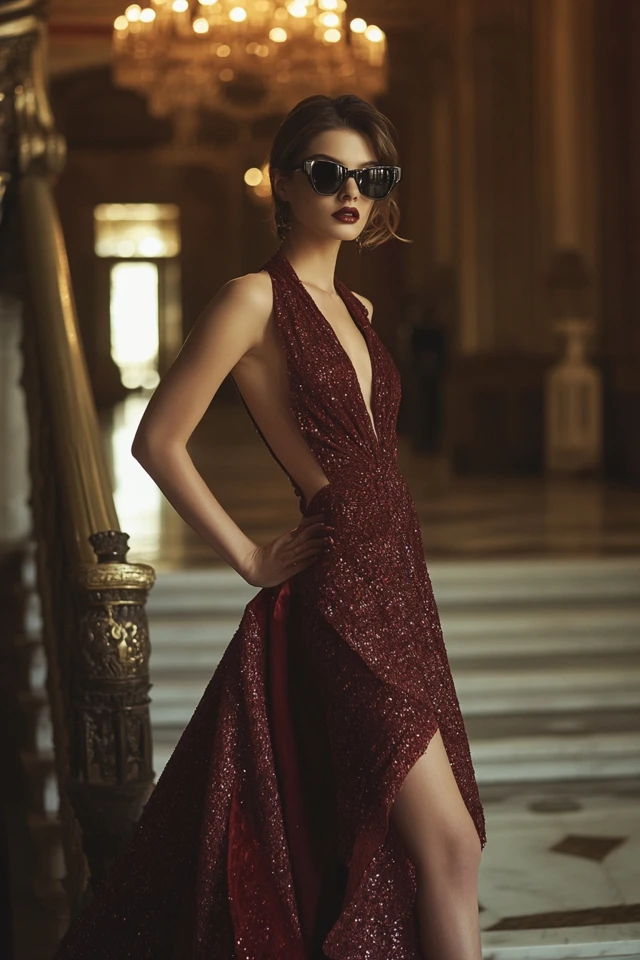
How do you style the gown?
Let the asymmetry lead and keep everything else calm. As an architect trained in evidence-based design, I'd treat the neckline as the first thing the eye reads, so jewelry should either echo it or stay out of the way.
Shoes and bags
- High-low hems show the shoe, so metallic heels or embellished pumps are worth it.
- Floor-length styles pair well with sleek, simple sandals or pumps.
- A clutch in a coordinating color or metallic finish is enough. More ideas are in how to style purses with evening gowns.
Jewelry, hair and makeup
- One statement earring or a cuff is plenty. A delicate necklace is optional, and skipping it avoids a clash with the neckline.
- With a one-shoulder gown, an updo or side-swept style keeps the shoulder line visible.
- A red lip or winged liner suits a bold gown.
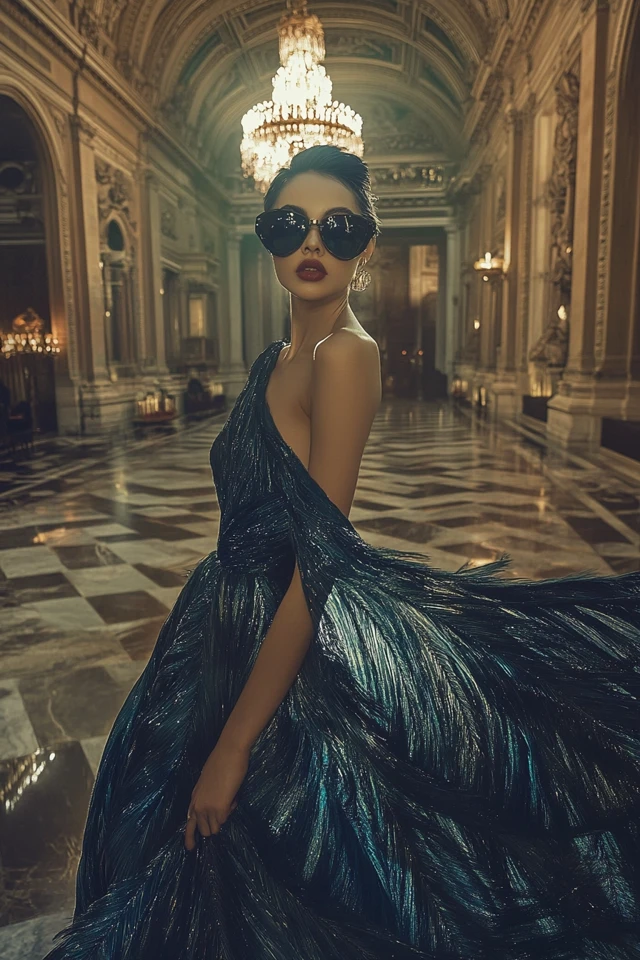
Layers for cold weather
A shawl or faux fur wrap works over a gown in winter, and a tailored blazer adds a sharper contrast. Closed-toe heels or tights add warmth.
How do you care for a delicate gown?
Store it in a breathable garment bag and follow the care label. Delicate fabrics often need professional dry cleaning. A steamer removes creases, but test it on a hidden spot first near beading or ruffles.
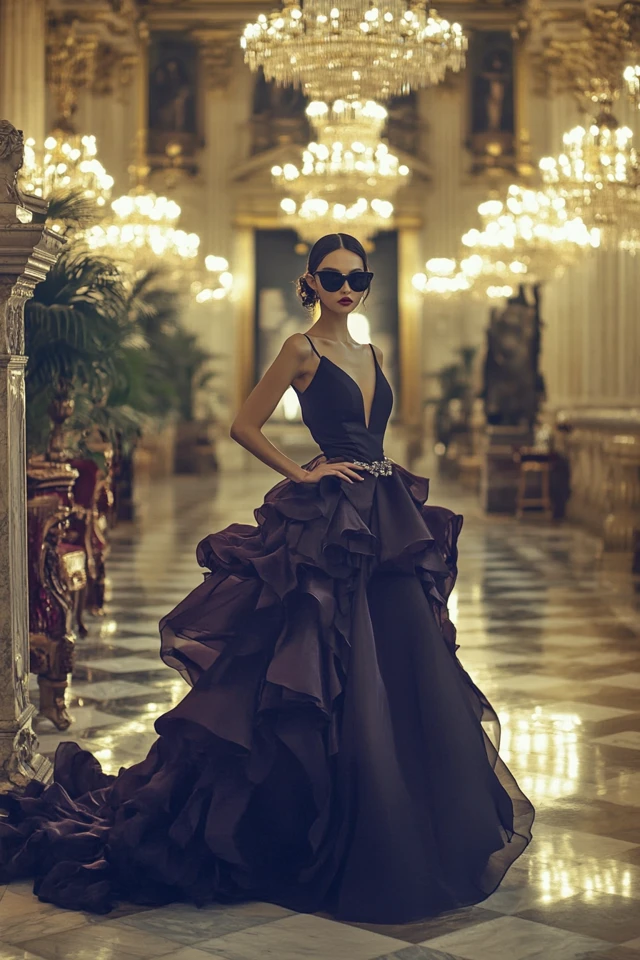
For a quieter route, a plain asymmetrical neckline in satin is easy to wear and still looks like an occasion.
Frequently asked questions
Are asymmetrical gowns flattering for all body types?
Most body types can wear them if the detail is placed well. A one-shoulder neckline, a draped waist or an off-center slit can each be adjusted to your proportions, and a good fit matters more than the cut.
Can you wear an asymmetrical gown to a less formal event?
Yes. Choose a shorter hem or a simpler design in crepe or jersey, which suits cocktail parties and semi-formal events.
What fabrics work best for asymmetrical gowns?
Chiffon, silk and satin move well and show off draping. Taffeta or velvet gives more structure and a bolder shape.
How do you walk in a gown with a train?
Practice in the gown before the event and lift the train slightly with your free hand when you move. Take shorter steps than usual.
Filed under Style & Fit