A-Line and Fit and Flare Dresses: Differences and Fit
- Words by
- Julio Arco
- Published
- Reading
- 6 min
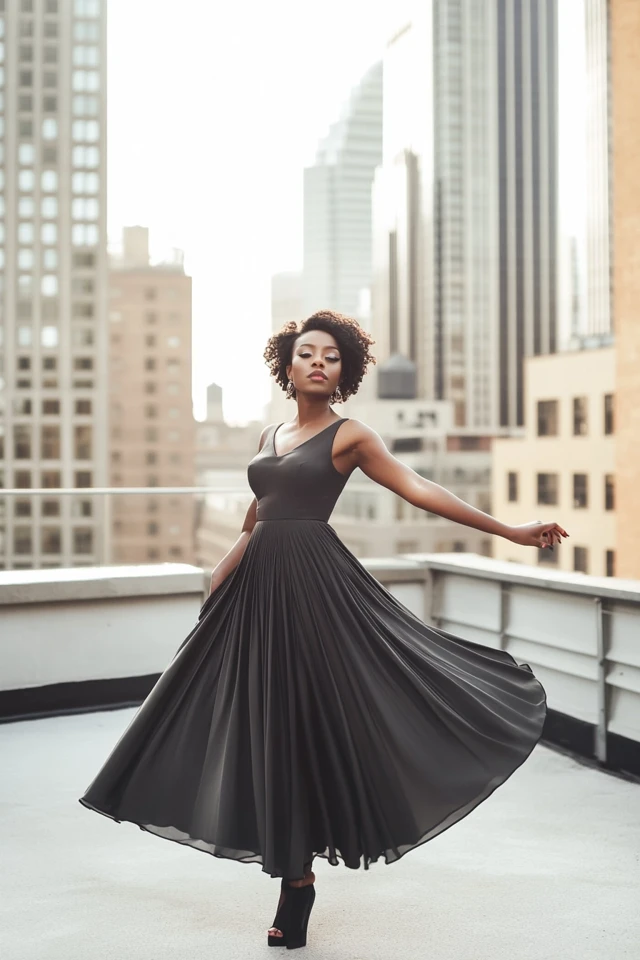
An A-line dress fits close at the shoulders and bust, then widens in a straight diagonal from there to the hem. A fit and flare dress is fitted through the waist and then flares out from it. Both skirts move easily and skim the hips, and most people can wear either. The choice comes down to where you want the eye to land.
Below: how the two cuts differ, which one suits which proportions, and how to pick length, sleeves and fabric.
What is the difference between an A-line and a fit and flare dress?
The difference is the waist. An A-line dress has no defined waist seam: the fabric falls in one clean line from the chest, so the shape is a triangle. A fit and flare dress has a seam or a gathered join at the natural waist, a snug bodice above it and a fuller skirt below. That gives you an hourglass shape, with a visible narrow point.
- A-line: easy through the middle, skirt starts higher, simpler lines.
- Fit and flare: defined waist, more contrast between top and skirt, a slightly more tailored feel.
- Skirt volume: a fit and flare skirt can be very full (circle or gathered), while an A-line stays closer to the body.
Shopping listings blur the two names, so look at the seam. If you can see a waistline, it is fit and flare.


What body type does an A-line dress fit?
Most of them, because the skirt does not cling anywhere. A few guidelines for the common shapes:
- Pear shapes: the skirt starts narrow at the bust and clears the hips, so it does not tug at them. Choose a fabric with some body, such as ponte or a cotton blend, so it hangs rather than clings.
- Apple or rounder midsections: the A-line's looser middle suits you well. Look for a high waist or an empire seam just under the bust.
- Hourglass: fit and flare shows your waist the most. An A-line works too if it has a little shaping at the sides.
- Athletic or straight builds: the flare adds curve at the hip. A fit and flare with a gathered skirt adds the most.
- Petite frames: keep the hem at or just above the knee, or choose a midi that ends mid-calf rather than at the widest part of the calf.

What body type can wear a fit and flare dress?
Nearly anyone, if the waist seam sits where your waist actually is. If the seam lands too high or too low, the dress looks off however good the fabric is. Try the dress on and bend your arms: the seam should sit at your narrowest point and not ride up.
If you carry weight in your midsection, choose a stretch bodice with some structure or ruching, and a skirt that falls from the seam without stiffness. If you are broad in the shoulders, a V-neck or scoop neckline softens the top half so the skirt does not have to do all the balancing.

Does an A-line dress hide belly fat?
It can drape over the midsection without clinging, which many people find more comfortable. Choose a mid-weight fabric with a matte finish, since shiny fabrics like satin catch light on every curve. Dark solids and small prints are generally easier on the eye than large horizontal stripes. As an architect trained in evidence-based design, I'd pay attention to surface here: a matte texture scatters light, so the eye reads the overall shape of the dress rather than each fold.
Comfort matters more than camouflage. A dress that fits well will always look better than one that is simply loose.

Choosing length: mini, knee, midi and maxi
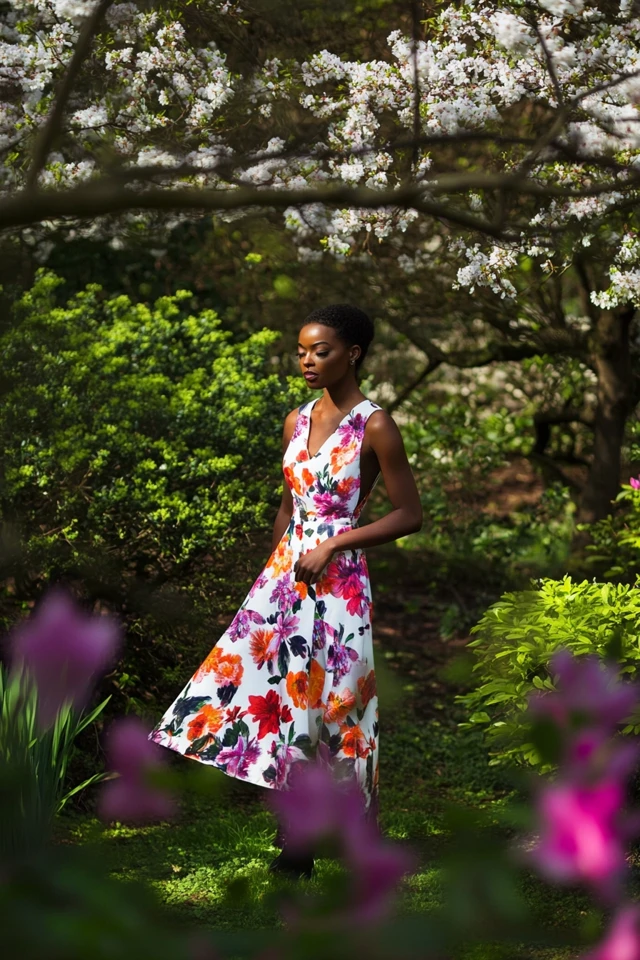
Length changes proportion more than most people expect.
- Knee length: the safest option for work and daytime events. A fit and flare dress at the knee is a classic and easy to dress up or down.
- Midi: midi A-line and fit and flare dresses are the easiest to wear across seasons. Aim for a hem just below the knee or mid-calf, and wear a shoe with a bit of height or a pointed toe if you want longer legs.
- Maxi: works well for formal evenings and warm weather. Check that the hem skims the top of your shoes, and shorten it if it does not.
- Mini: best in a structured fabric that keeps the flare from flipping up.

Sleeves and necklines
An A-line or fit and flare dress with sleeves is a good solution for offices, cooler months and anyone who prefers more coverage. Three-quarter sleeves balance a full skirt nicely. Cap sleeves suit narrow shoulders, and a set-in long sleeve gives a cleaner line than a dropped shoulder.
Check the shoulder seam: it should sit where your shoulder ends. A dress that pulls across the upper arm is a fit problem, not a you problem, and a size up with tailoring at the waist often fixes it.
For necklines, a V-neck or square neckline opens the chest and draws attention upward. A high neck on a full skirt reads vintage and works best on a fitted bodice.

Where to wear them, from casual to formal
Everyday and work
A knee-length A-line in cotton, jersey or a crepe with a bit of weight goes with a blazer, a denim jacket or a cardigan. Flats, loafers or ankle boots keep it practical. Navy, black and deep green are easy to pair with other pieces in your closet.
Weddings and formal events
A fit and flare dress for a wedding looks best in crepe, satin or a heavier chiffon. Choose a midi or maxi hem and add structure with a belt or a bodice with seaming. Avoid white, ivory and anything near it unless the couple has said otherwise. A fit and flare formal dress in a deep tone with metallic heels and a small clutch needs little else.
Seasonal changes
Lightweight cotton and linen keep the shape cool in summer. In winter, a wool or knit version with tights and boots works, and a belted coat over a flared skirt keeps the proportions intact.


How to choose the right one for you
- Decide how much waist definition you want. If you want it, choose fit and flare. If you prefer ease, choose A-line.
- Check where the dress hits your body when you sit and walk, not just when you stand still.
- Choose fabric by season and occasion. Stiffer weaves hold the flare, while softer ones drape and move.
- Try it with the shoes you plan to wear. The height of a heel changes how a hem falls.
For more shapes and combinations, see classic A-line dresses, the A-line dresses for every occasion guide, and wrap dresses if you like a cinched waist you can adjust. If you are building a closet around your proportions, the capsule wardrobe for every body type is a good next read. For dressier events, look at A-line dresses for luncheons.

Frequently asked questions
What body type does an A-line dress fit?
Most body types, since the skirt skims the hips instead of clinging. Pear shapes and rounder midsections tend to find it especially comfortable, particularly in a mid-weight fabric.
What body type can wear a fit and flare dress?
Nearly any, as long as the waist seam sits at your natural waist. A stretch bodice and a V or scoop neckline help if you want more balance up top.
What is the difference between an A-line and a fit and flare dress?
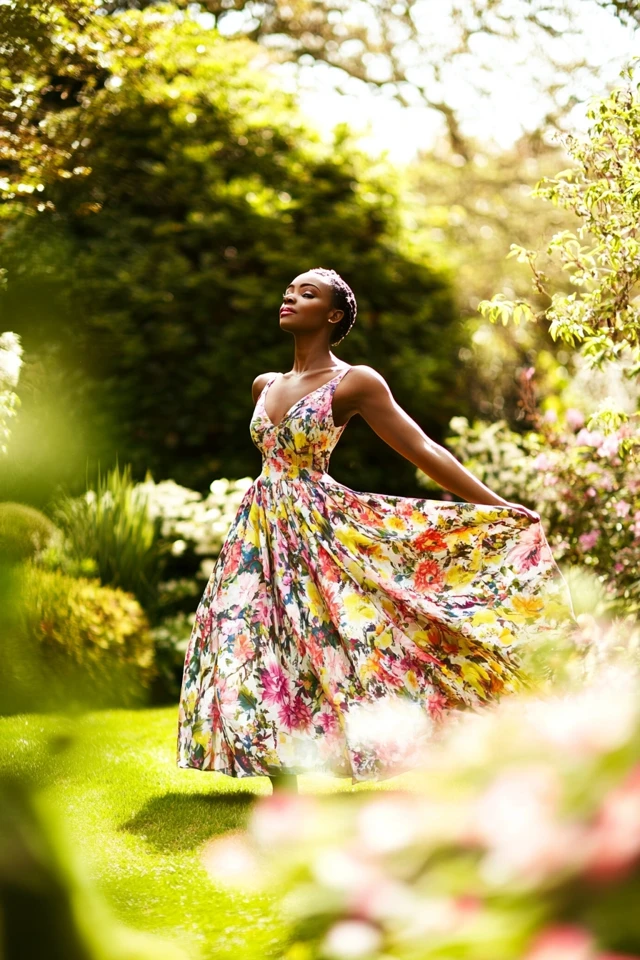
A fit and flare dress has a defined waist seam with a full skirt below it. An A-line dress widens in one straight line from the chest, with no waist seam.
Does A-line dress hide belly fat?
It drapes away from the midsection instead of clinging, which many people prefer. A matte, mid-weight fabric and a high or empire waist usually work best.
Filed under Style & Fit