Fabric Combination Dresses: What Pairs Well Together
- Words by
- Julio Arco
- Published
- Reading
- 5 min
A fabric combination dress joins two or more materials in one garment, for example a satin bodice with a chiffon skirt, or a cotton top with a tulle overlay. The pairings that work best share a similar weight or contrast on purpose, and they follow the occasion.
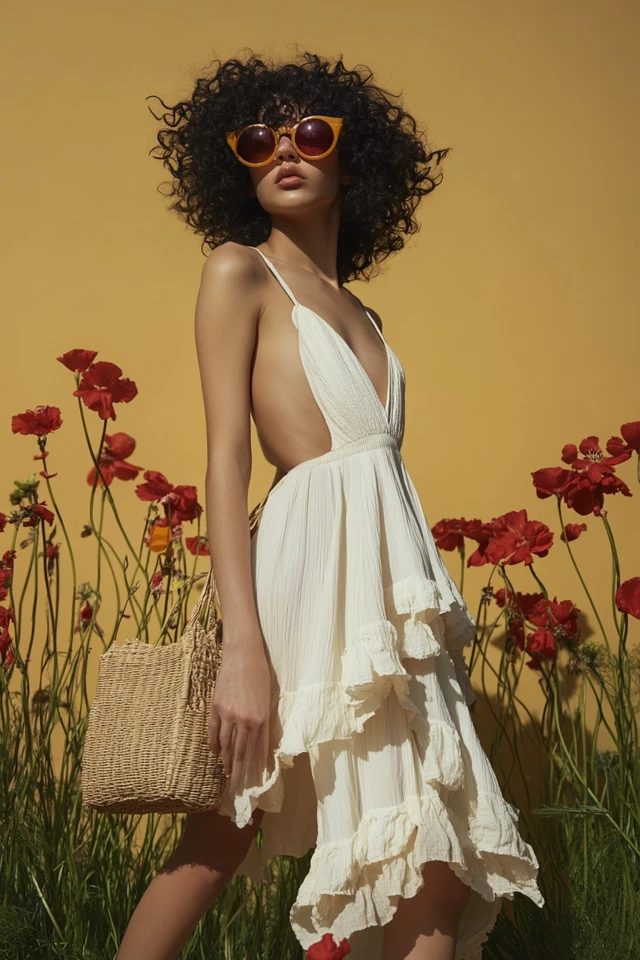
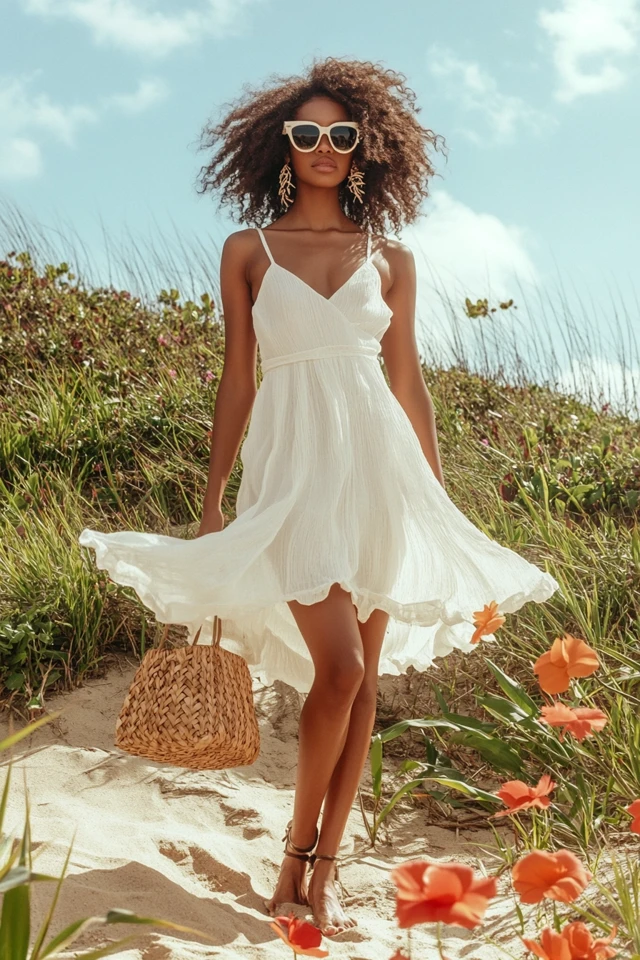
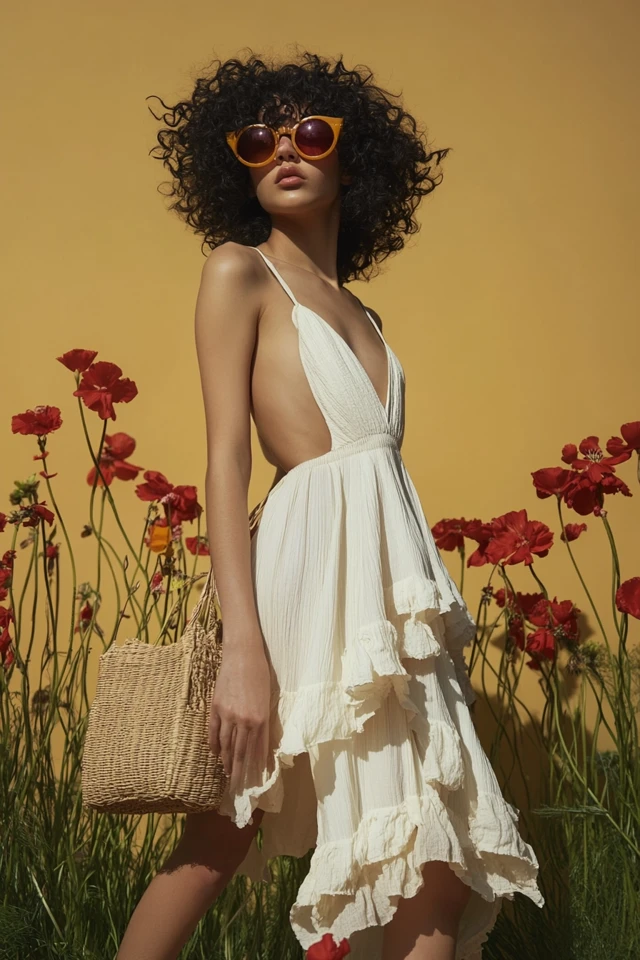
Below: what a combined fabric dress is, which fabrics pair well, how to choose for a wedding or a casual day, and how to style the result. The photos at the end of each section show dresses with mixed textures and layered, uneven hems.
What is a combined fabric dress?
It is a dress built from different materials in different zones. The split can be horizontal (bodice and skirt), layered (a sheer overlay over an opaque slip), or paneled (knit sides with a woven front). It is also called a mixed media dress.
The idea is old. The Kyoto Costume Institute describes an English day dress from the 1850s this way: "Considering that this mixed fabric of silk and wool is a material hard to print on, this dress with its bright and cheerful colors is a particularly fine example on how much cloth printing techniques had evolved." Mixing materials has long been a way to get something one fabric cannot give you.
Which fabrics pair well together?
Through the lens of evidence-based design, I'd think about two things first: how the surface handles light, and how the cloth moves. A glossy fabric next to a matte one makes the same color read as two shades, so contrast in finish does a lot of the styling for you.
- Satin with chiffon: the sheen of satin anchors the fitted part, and chiffon floats away from the body. A classic for evening.
- Velvet with satin or silk: both are dense, so the pairing feels rich. Keep the velvet in one area, such as a bodice or sleeves.
- Cotton with lace or eyelet: a crisp base with a delicate trim. Easy for daytime.
- Linen with cotton: similar breathability, slightly different texture. Good for hot weather.
- Jersey knit with a woven skirt: stretch where you need comfort, structure where you want shape.
- Tulle or organza over a solid slip: adds volume and a soft edge without much weight.
A quick check: pinch both fabrics together. If one feels three times heavier than the other, the seam may pull or ripple, so look for a lining or a gradual change in weight.
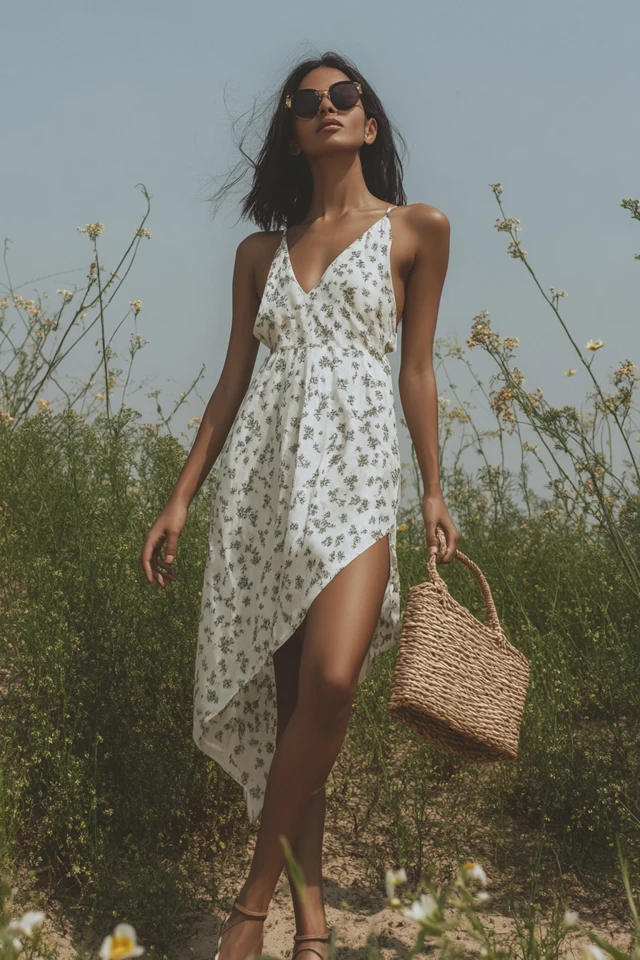
Chiffon, satin and velvet pairings
These three cover most dressy combinations. Chiffon is light and slightly sheer, satin is smooth and reflective, and velvet absorbs light and looks deep in color.
Satin and chiffon suit warm weather and summer events. Velvet works better in cool months, and I'd keep it to one area so the dress does not feel heavy. If you like movement at the hem, a chiffon layer cut in a diagonal or high-low line catches air as you walk. For more on that shape, see high-low hemlines for playful dresses and skirts.
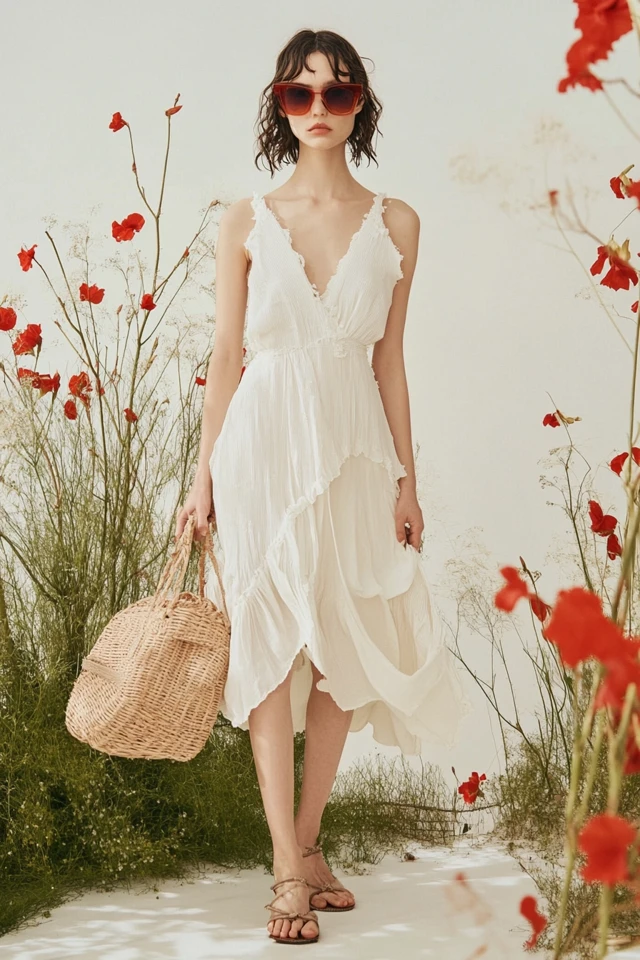
How do you choose fabric combinations for a wedding?
For fabric combination dresses for a wedding, whether you are a guest or the bride, think about the time of day, the season and how long you will sit, stand and dance.
- Summer or outdoor: chiffon or georgette over a smooth lining, with a satin or crepe fitted top.
- Evening or winter: satin with velvet details, or a structured bodice with a tulle skirt.
- Long day: pick a lining that feels soft on skin, and avoid stiff fabrics at the waist.
Among the best fabrics for special occasion dresses, satin, chiffon, crepe and silk-type weaves tend to photograph and drape well. For shapes that suit formal evenings, take a look at elegant asymmetrical dresses for formal dinners and dramatic asymmetrical gowns.
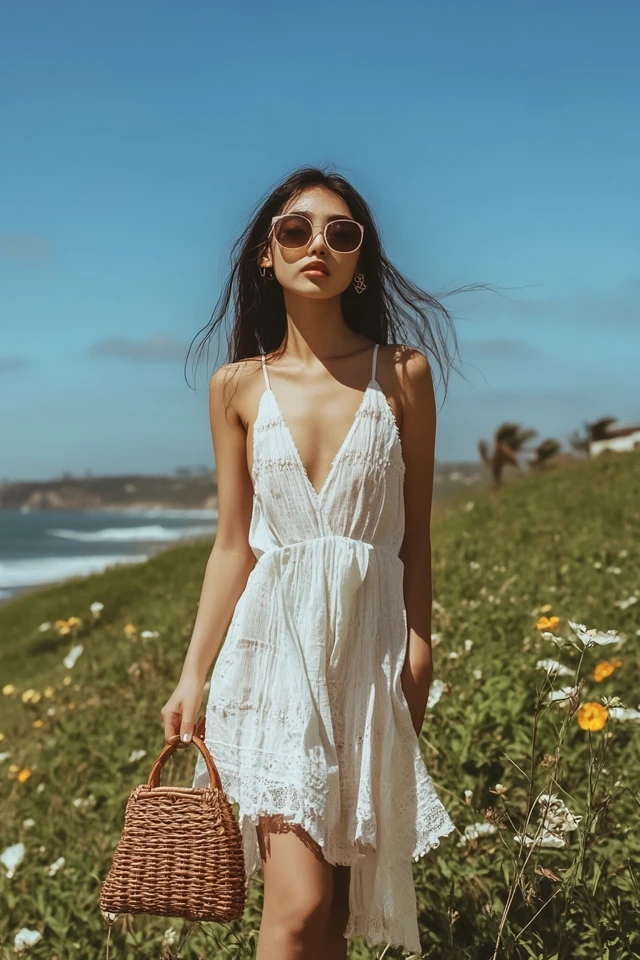
What are casual fabric combination dresses?
Casual fabric combination dresses lean on cotton, linen, jersey and light knits. Think a cotton bodice with a gathered, tiered skirt, a knit top half joined to a woven skirt, or a linen dress with eyelet panels.
Mixed fabric dress ideas for everyday wear:
- A floral cotton dress with a plain jersey yoke, worn with flat sandals.
- A knit dress with a layered woven hem, worn with sneakers or ankle boots.
- A denim-look top half with a flowing printed skirt, finished with a belt.

How do you style a mixed fabric dress?
Let the dress carry the interest. If the texture contrast is strong, keep accessories simple and in one metal tone.
- Pick one fabric in the dress and match your shoes or bag to its finish. A satin panel pairs well with a smooth leather heel.
- Balance volume. A full chiffon or tulle skirt looks better with a fitted top layer, such as a belt or cropped jacket.
- Keep the neckline in mind. As an architect trained in evidence-based design, I'd treat the neckline as the first thing the eye reads, so choose earrings or a necklace to suit it rather than compete. See elegant asymmetrical necklines for ideas.
- Limit prints. When fabrics already contrast, one print is plenty.
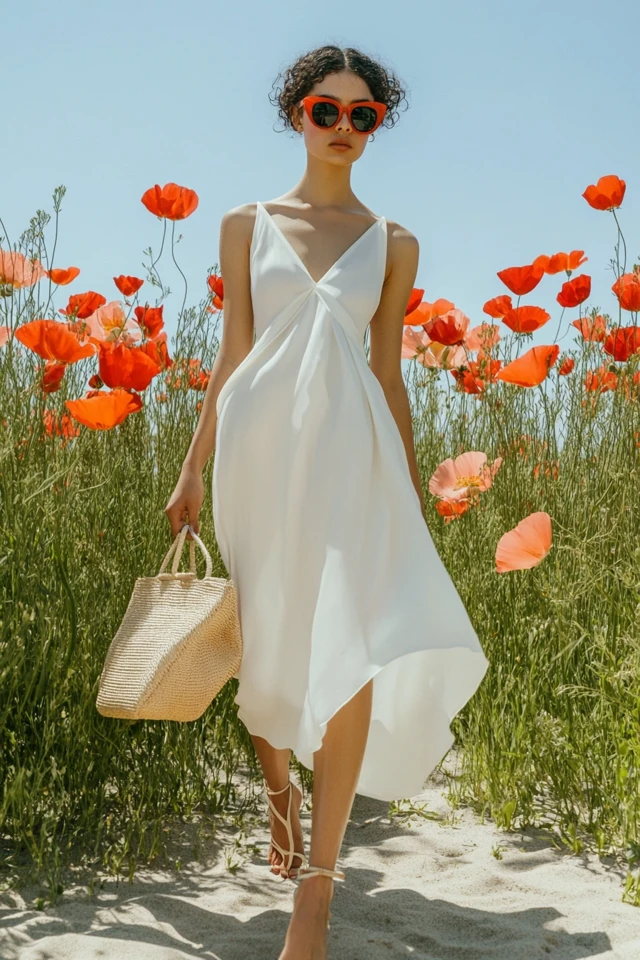
Which combinations suit each season?
| Season | Pairings to look for |
|---|---|
| Spring | Cotton with lace, chiffon over crepe |
| Summer | Linen with cotton, chiffon with satin, light jersey |
| Autumn | Knit with woven skirts, satin with velvet trim |
| Winter | Velvet with satin, heavier crepe with tulle |
Delicate combinations such as chiffon and satin are best stored in a garment bag, and the care label should decide how you wash them, since two fabrics can need different handling.
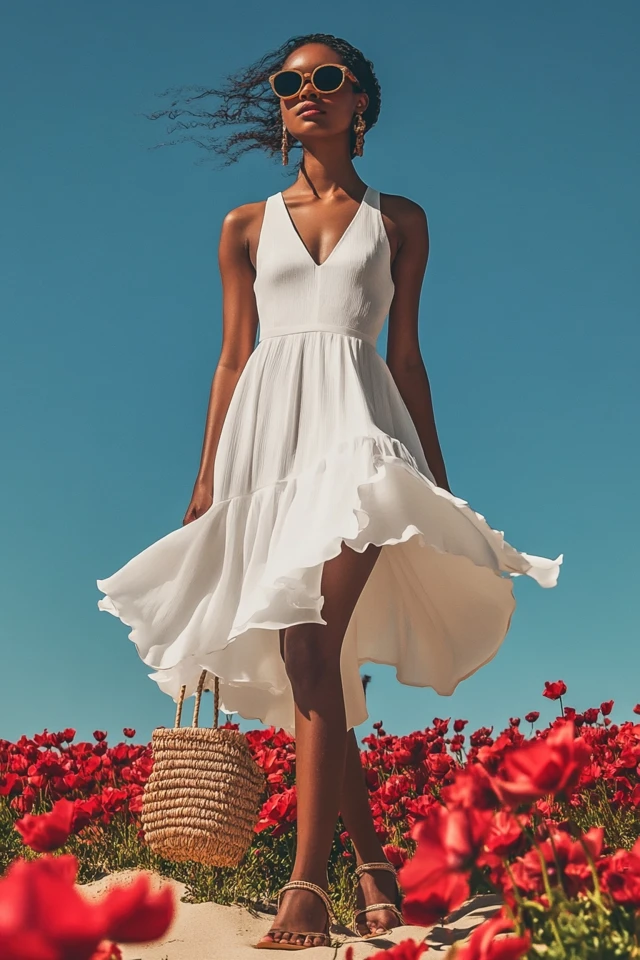
For another take on playful layered shapes, sleek asymmetrical dresses show how cut and fabric work together.
Frequently asked questions
What is a combined fabric dress?
It is a dress made from two or more different materials, such as satin with chiffon or cotton with lace. The fabrics may be layered or joined in separate panels.
What fabrics pair well together?
Satin and chiffon, velvet and satin, cotton and lace, and linen and cotton are common pairings. Fabrics of similar weight sit more smoothly at the seams.
What is the 3-3-3 rule for clothing?
It usually means building an outfit set from three tops, three bottoms and three pairs of shoes that all mix together. It is a wardrobe planning idea rather than a fixed rule.
Can I wear a mixed fabric dress to a wedding?
Yes. Satin with chiffon or velvet details are common choices, and the season and time of day should guide the weight.
Filed under Seasonal Trends