Structured Long Coats: 6 Styles and How to Choose
- Words by
- Julio Arco
- Published
- Reading
- 5 min
A structured long coat has a firm shoulder, a defined line through the body and a hem that falls somewhere between the knee and the calf. If you want one coat that works over a suit, a sweater and jeans, start with a tailored wool coat in a neutral color, then choose a variation (belted, double-breasted, oversized or funnel neck) based on your proportions.
Below: the main styles, how each one changes your silhouette, what to check in the fit, and how to wear and care for the coat.
Which structured long coat styles are worth knowing?
Tailored wool coat
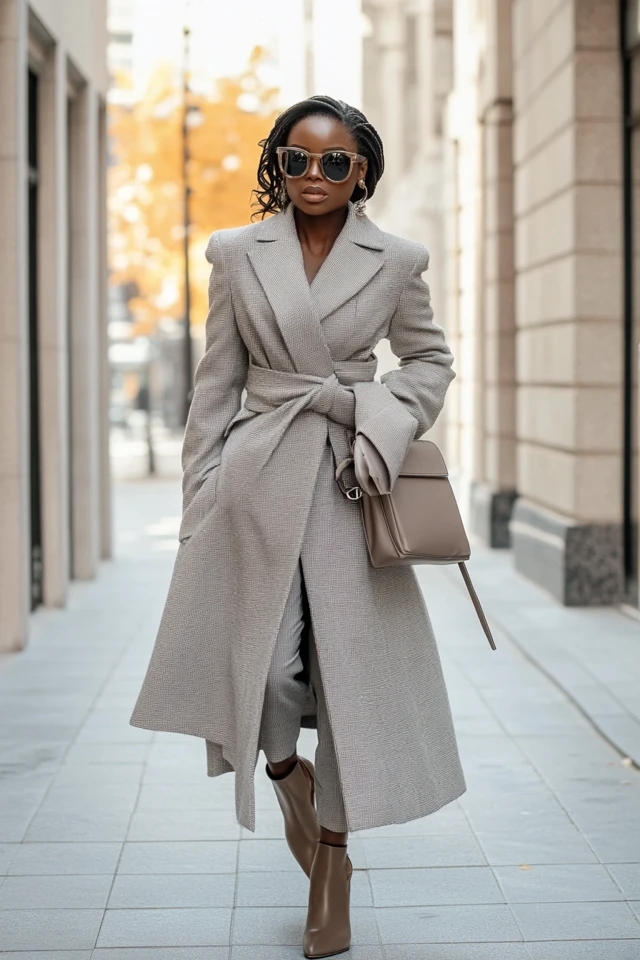
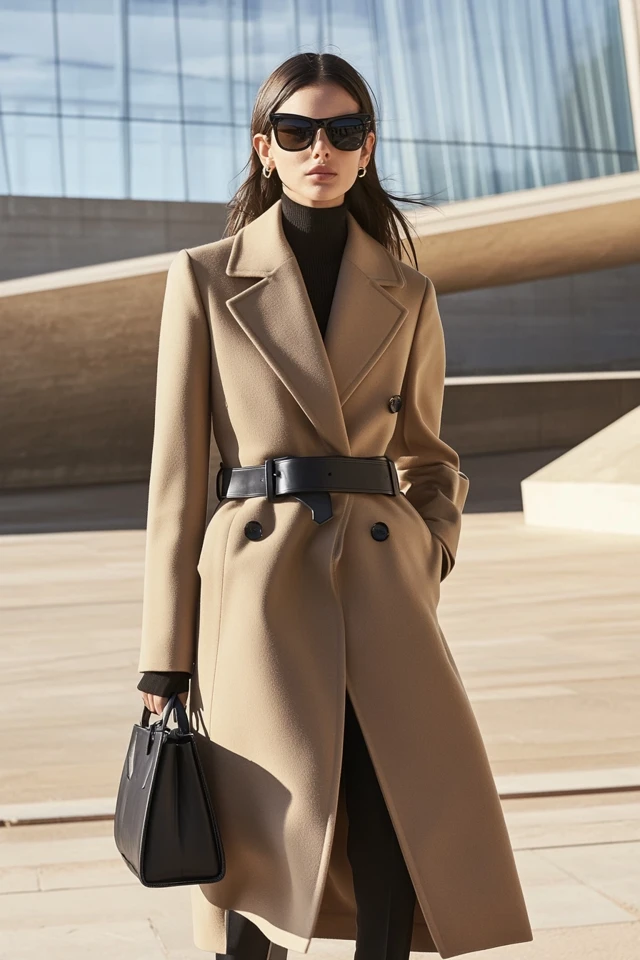
The classic. A tailored wool coat has a single-breasted front, notch lapels and a straight or slightly shaped body. It is the easiest to wear with everything, which is why it is the sensible first purchase. A long wool coat for women in camel, charcoal, navy or black will cover most occasions.
Belted long coat
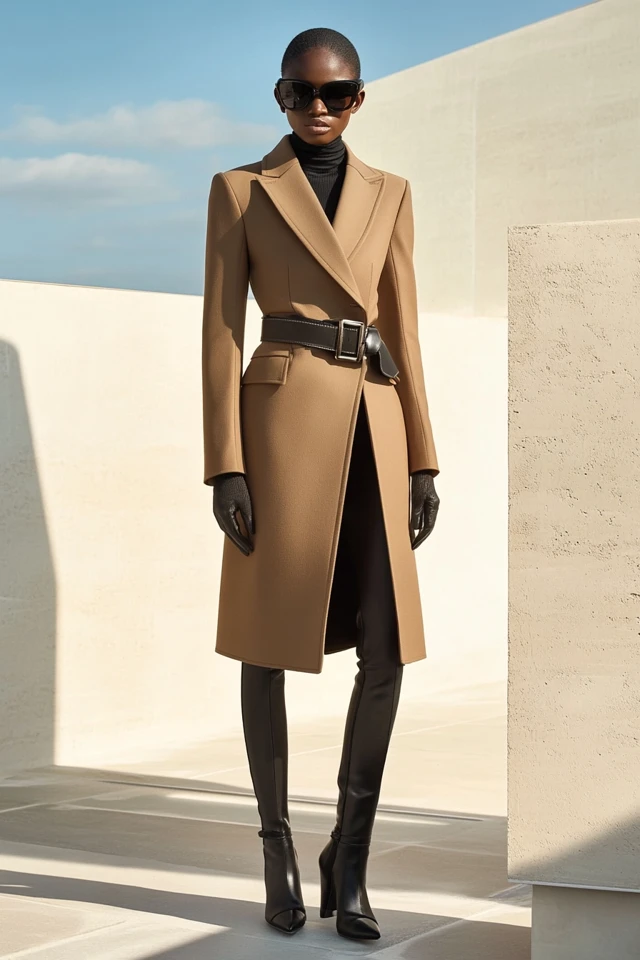
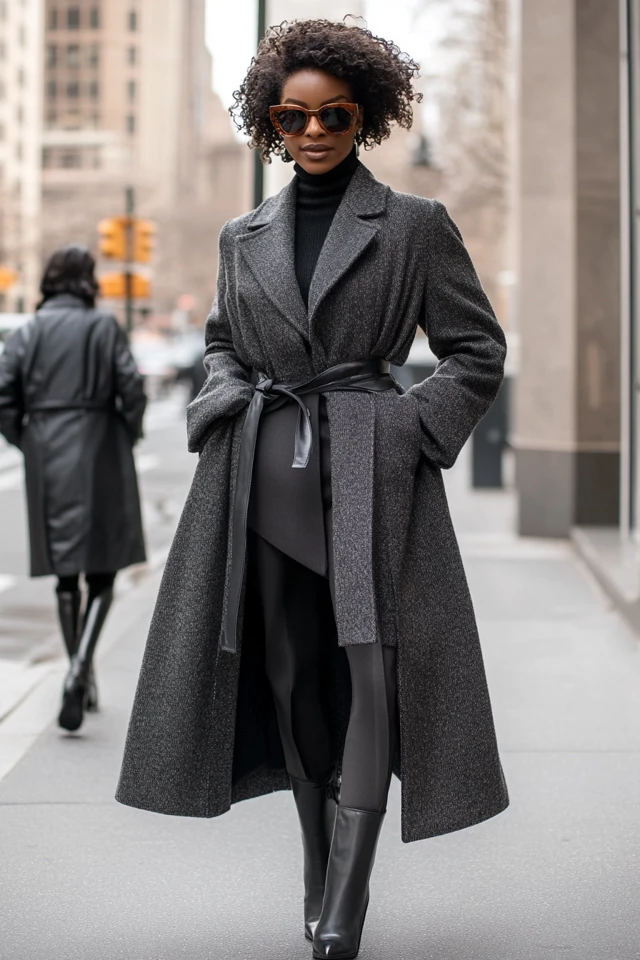
A belted long coat marks the waist and gives a clear vertical break in the outfit. It suits you if you like a defined shape or if a straight coat feels shapeless on you. For more on this cut, see structured belted coats for flattering silhouettes. Tip: a belt you can remove gives you two coats in one.
Double-breasted long coat
A double breasted long coat has overlapping fronts and two rows of buttons. The extra fabric across the chest adds visual weight at the top, so it balances narrow shoulders and can feel heavy on a very petite frame. Choose a lower button position if you want to lengthen the torso.
Oversized wool coat
An oversized wool coat keeps the structure through the shoulder and lapel but gives you more room in the body and sleeves. It layers well over chunky knits. The trade-off is volume, so keep what is underneath slimmer: straight trousers or a narrow skirt and a fitted knit.
Funnel neck wool coat
A funnel neck wool coat swaps lapels for a tall, rounded collar. It looks clean and minimal, and it covers your neck on windy days, so you may skip the scarf. It works best with simple outfits, since the collar is already the detail.
Maxi and A-line shapes
If you want drama, a calf-to-ankle hem is the next step. Look at structured maxi coats or the softer flare of structured A-line coats. Longer hems need flat or low boots to keep the proportions calm.
How should a structured long coat fit?
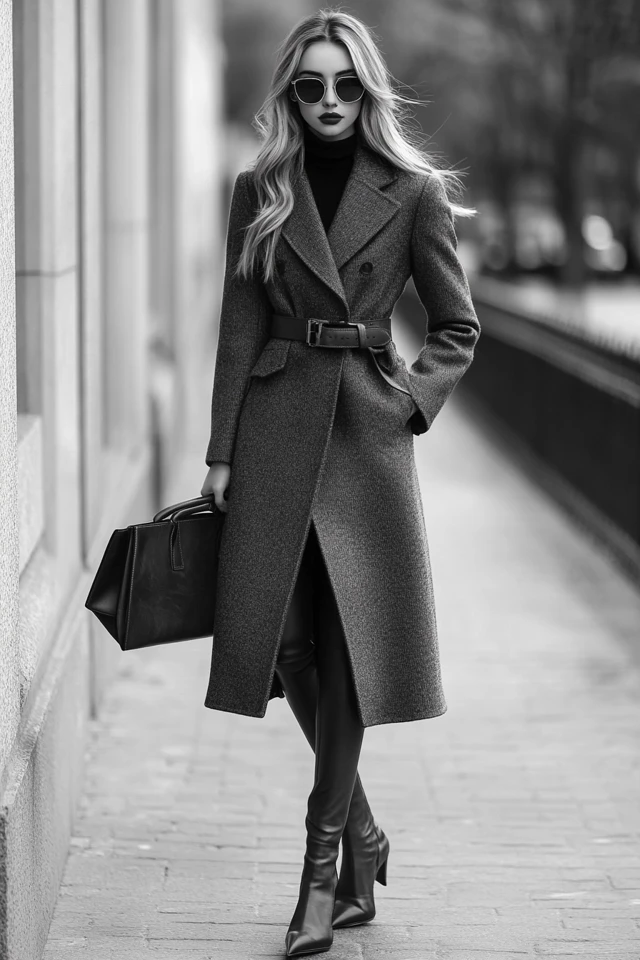
A coat that pulls at the shoulders is a fit problem, not a you problem. Check these points in order:
- Shoulder seam sits where your shoulder ends, not on your arm.
- You can button it over the thickest sweater you plan to wear without strain across the chest or back.
- Sleeves end at the wrist bone or just past it, with room for a knit cuff.
- You can reach forward and sit down without the back feeling tight.
Shoulders are the one area a tailor cannot easily fix, so judge them first and treat sleeve length and hem as adjustable.
What length suits your height?
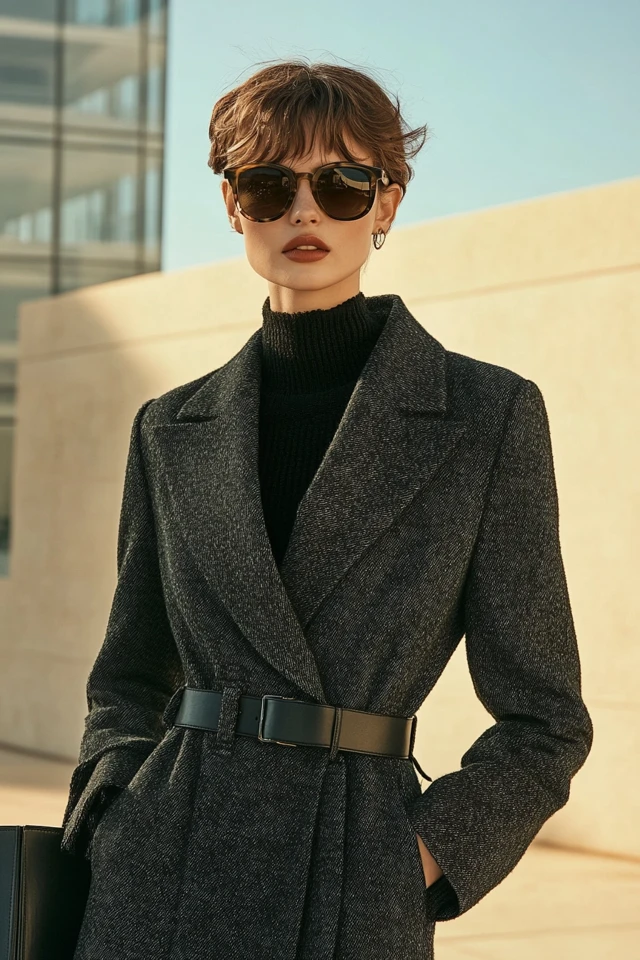
Length changes proportion more than any other detail. If you are petite, a hem at or just below the knee keeps your legs visible and stops the coat from swallowing you. If you are tall, a mid-calf hem looks deliberate, and a belt or double-breasted front breaks up a long line. For a middle path, longline coats with structured silhouettes sit between a blazer and a full-length coat.
If you have curves, a belted or shaped coat follows your waist, while a very boxy cut can hide it. If you have an athletic build, defined lapels and a belted waist add shape without extra bulk.
What color should you choose?
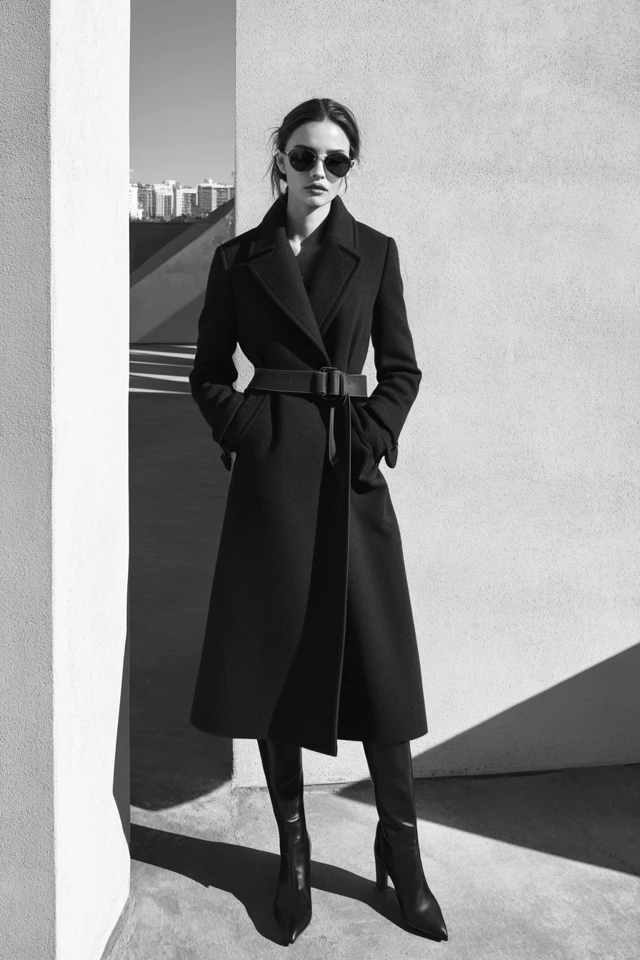
Neutrals are the safest base: camel, charcoal, navy and black go with most of what you own. Through the lens of evidence-based design, I'd look at the fabric surface as well as the color. A brushed wool absorbs light and reads softer and deeper, while a smooth, tightly woven wool looks sharper and more formal in the same shade.
Olive, burgundy and chocolate are good second coats and still pair easily with neutrals. If you want brighter shades, long wool coats in bright colors shows how to wear them. Keep the rest of the outfit quiet and let the coat lead.
How do you style and layer a long coat?
- Casual: jeans, a plain tee or knit, and clean sneakers or ankle boots.
- Work: a fine-gauge sweater or blazer, straight trousers and loafers or low heels.
- Evening: a slip dress or tailored dress with the coat open, plus a structured bag. See how to style structured bags.
Layering under a fitted coat works best with thin, warm layers. If you are also walking or exercising in the cold, Howdy Health at Texas A&M advises avoiding cotton against the skin, because it absorbs moisture and can keep it next to your skin, making you cold. A thin merino or synthetic base layer under your knit is a practical swap. For very windy days, see layered long coats for windy city walks.
How do you care for a structured coat?
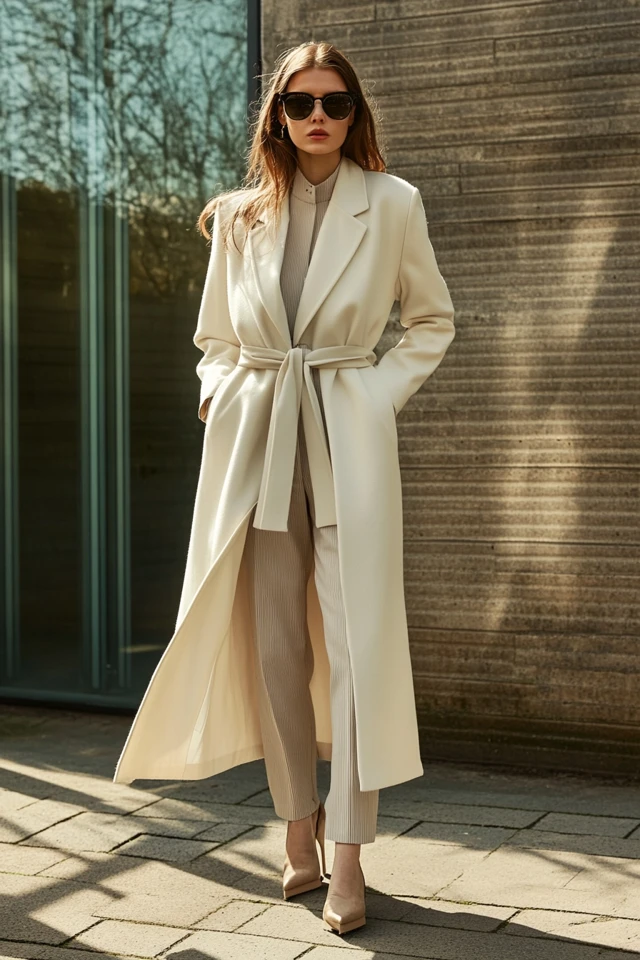
- Follow the label. Many structured wool coats need dry cleaning, and you usually need it only once a season.
- Hang it on a wide, sturdy hanger so the shoulders keep their shape.
- Brush off lint and dust with a soft clothes brush, and fix loose buttons early.
- Store off-season in a breathable garment bag, not plastic.
Frequently asked questions
Can I wear a structured long coat casually?
Yes. Over jeans, a plain tee and sneakers, the tailored shoulder and long line make a simple outfit look put together.
What fabric is warmest for a long winter coat?
Wool and wool-cashmere blends are warm, especially with a full lining. Check the fabric label and the lining, since a thin lining can make a heavy-looking coat feel cooler.
Are long coats good for short women?
They can be. Choose a hem at or just below the knee, a single-breasted front and minimal detailing so the coat does not overwhelm your frame.
Can I wear a wool coat in mild weather?
Choose an unlined or lightweight wool, or a cotton-blend coat, and keep the layers underneath thin so you do not overheat.
Filed under Wardrobe Basics