Classic Knit Sweater Styles and How to Wear Them
- Words by
- Julio Arco
- Published
- Reading
- 4 min
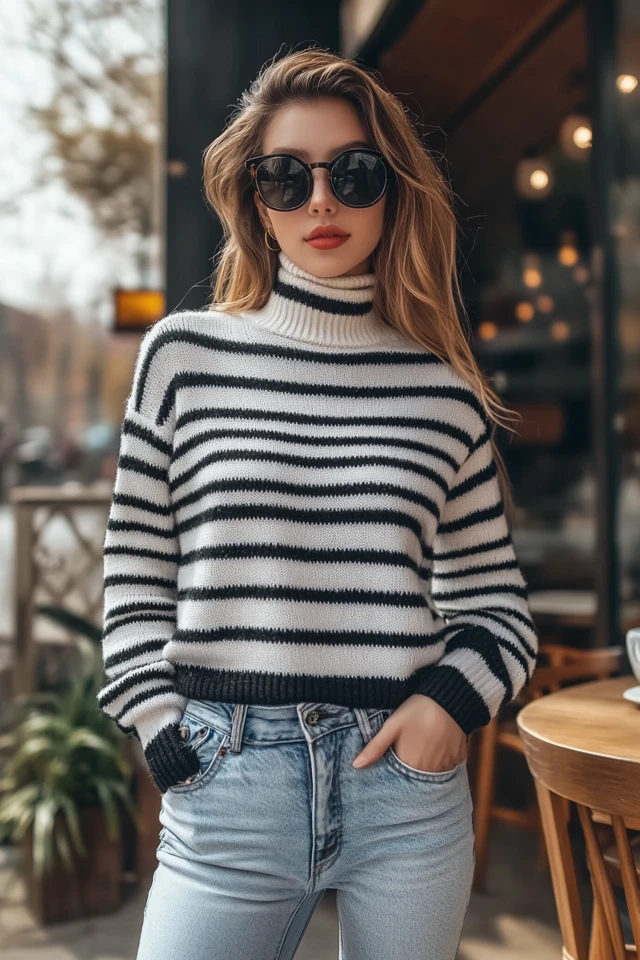
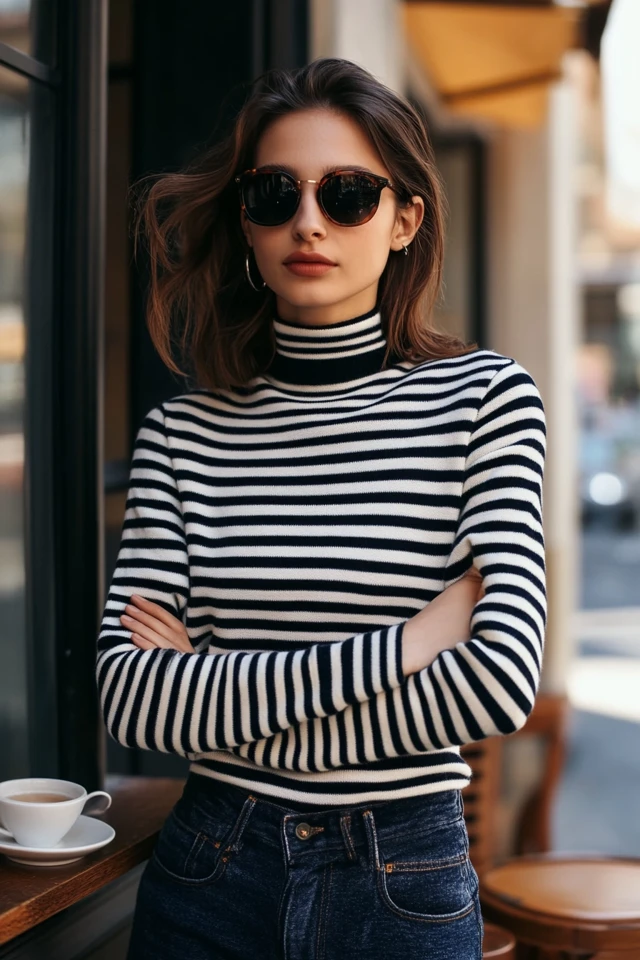
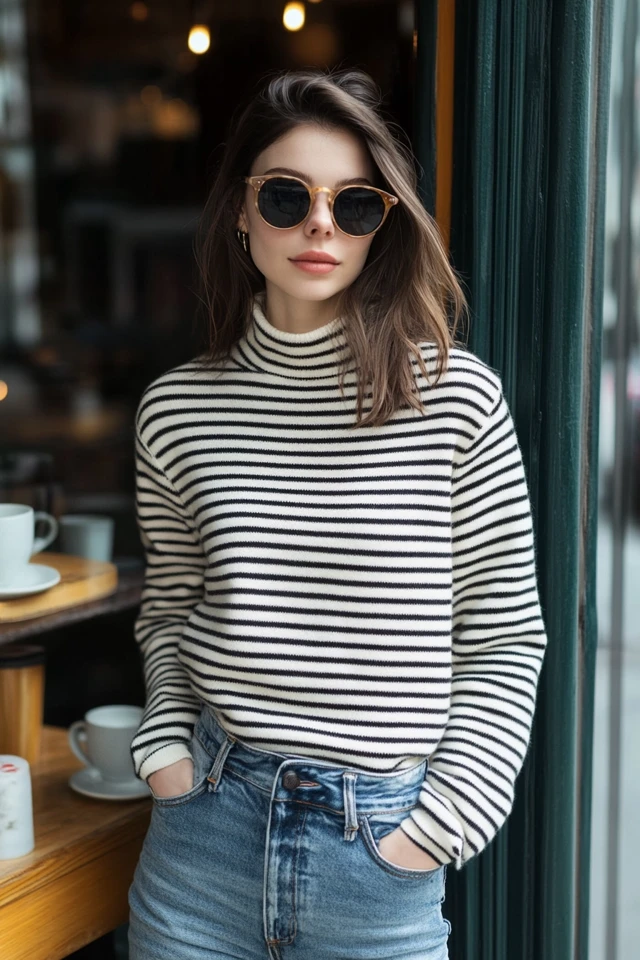
The classic knit sweater styles worth knowing are the crewneck, the cardigan, the turtleneck, the cable knit and the fisherman. Stripes can sit on any of them, so a striped crewneck or a striped cardigan is often the easiest way to add print to a basic knit.
Below is a short tour of the main types of knit sweaters, how each one fits, and how to style and look after them. Everything here applies to both women's and men's wardrobes, since the cuts are shared.
What are the classic types of knit sweaters?
The classic crewneck sweater
A classic crewneck sweater has a round, close neckline and no collar. It is the most flexible knit you can own, because it works alone, over a collared shirt or under a jacket. Pick a fine gauge for layering and a mid-weight one for wearing by itself.
Cardigan
A cardigan opens down the front with buttons or a zip, which makes it the easiest knit to add and remove through the day. A fitted, hip-length version sits well over dresses. A longer, looser one suits wide trousers.
Turtleneck and mock neck
A turtleneck folds over at the neck, while a mock neck stands up without folding. Both frame the face and replace the need for a scarf. Under a blazer, a thin turtleneck keeps the line clean.
Cable knit and fisherman sweaters
A cable knit sweater has twisted columns of stitches that stand out from the surface. The fisherman style is the chunky, usually cream version of this idea. The raised texture catches light and shadow, so the sweater reads as more detailed even in one plain color.
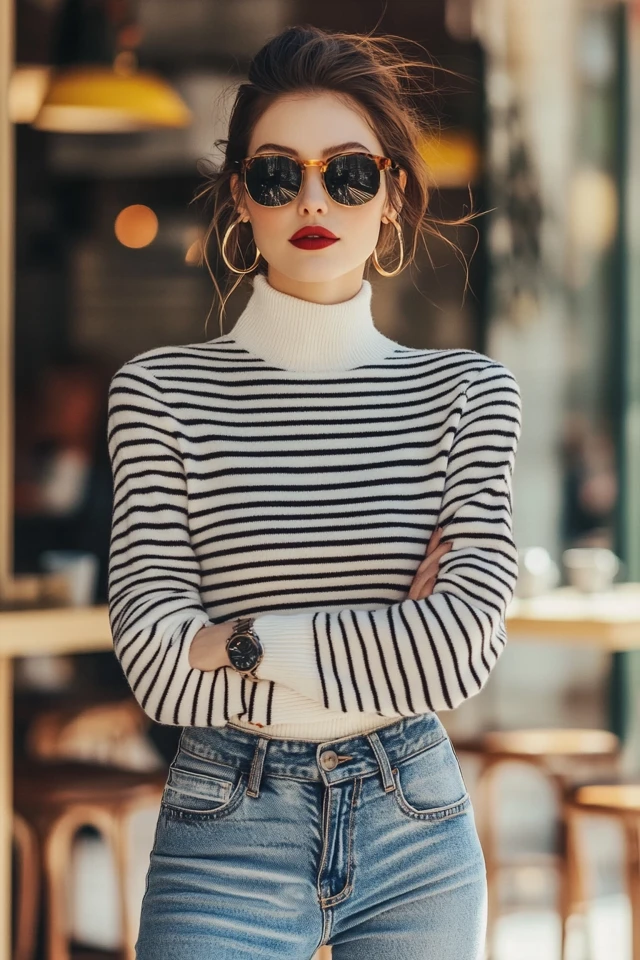

Which essential sweaters does every wardrobe need?
If you are building the essential sweaters every wardrobe needs, start small. A navy or charcoal crewneck, one cardigan in a neutral, and one textured knit (cable or chunky) cover most days. Add a turtleneck once those are worn in. A striped piece comes after the basics, not before.
The same list works as classic knit sweater styles for women and classic knit sweater styles for men. The differences are mostly in fit: women's cuts are often shorter and more tapered, men's straighter and longer. Try on either and choose what sits right on your shoulders.
How should a knit sweater fit?
Check the shoulder seam first. It should sit where your shoulder ends. A sweater that pulls across the upper back or drops far down the arm is a fit problem, not a you problem.
Sleeves should reach the wrist bone, and the hem should land at the hip or just below, unless you want a cropped or oversized shape. Chunky knits add visual volume, so many people size down in those. Fine knits can be worn closer to the body.
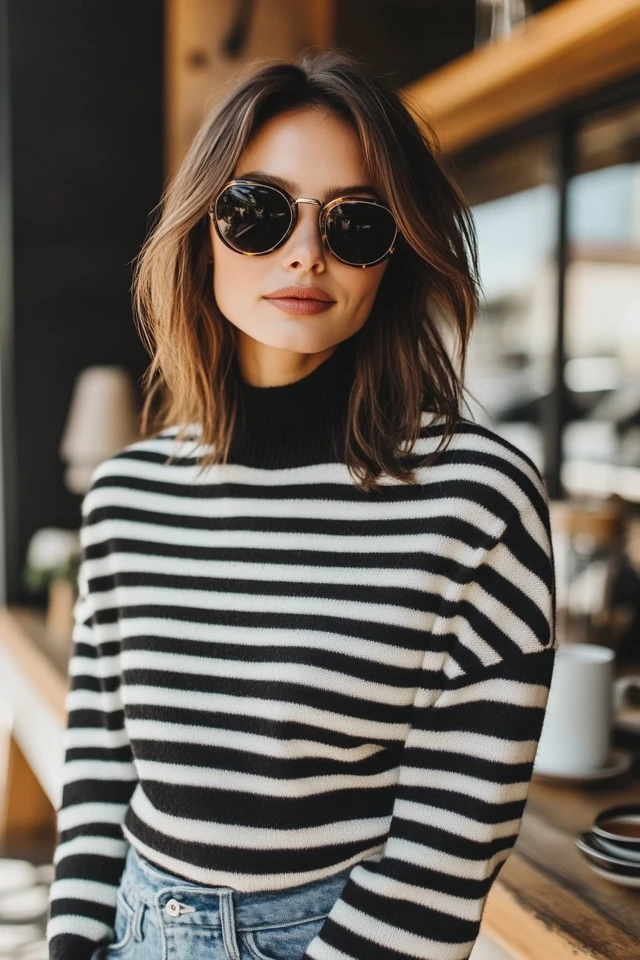
How do stripes change a classic knit?
Stripes started on nautical uniforms and reached everyday wear through the French Breton shirt. On a sweater they work like a pattern you can read from a distance, so the width and contrast matter more than the color name.
- Narrow stripes in navy and white look traditional and quiet.
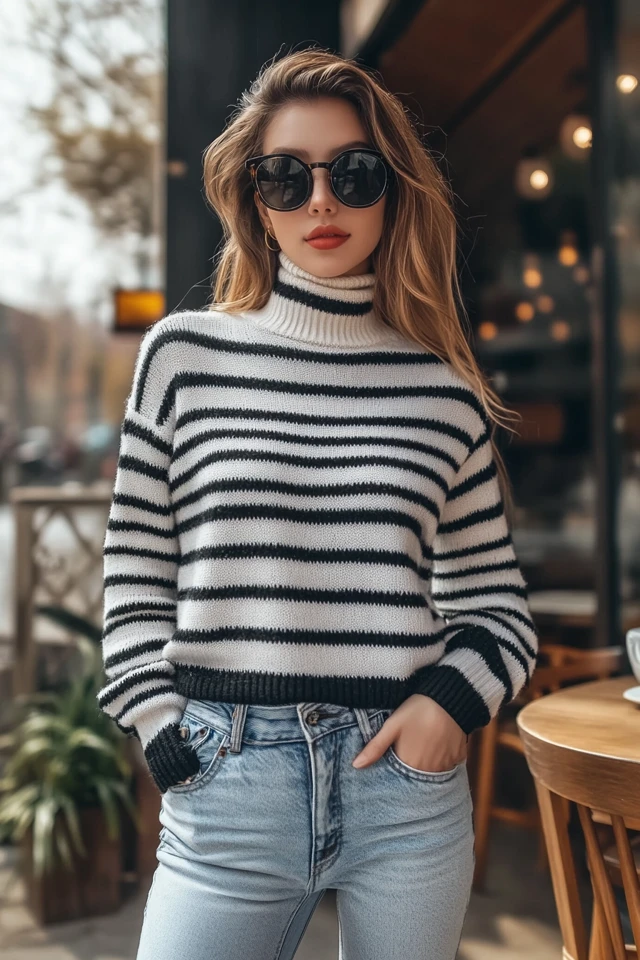
- Wide stripes look relaxed and work well on chunky knits.
- Low-contrast stripes, such as oatmeal and cream, read almost as a texture.
- Bright pairs, such as red and white, become the focus of the outfit.
Horizontal stripes usually feel casual and vertical ones a little more formal and lengthening. Through the lens of evidence-based design, I'd treat stripe width as a proportion tool: narrow lines blend into a softer overall tone, wide ones draw the eye to where they sit on the body.
For more striped basics, see striped Breton tops for classic style and the Breton shirt.
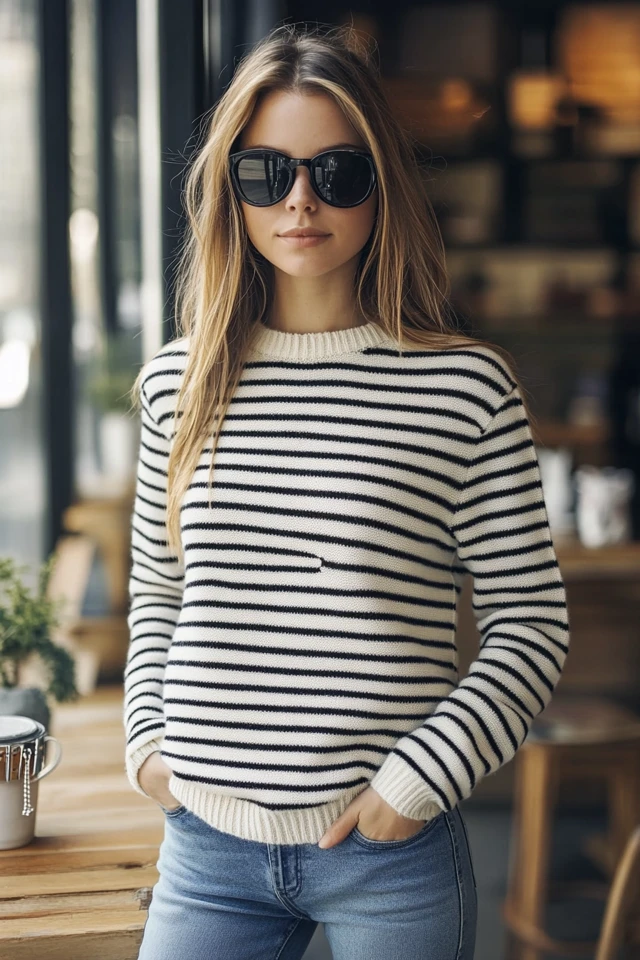
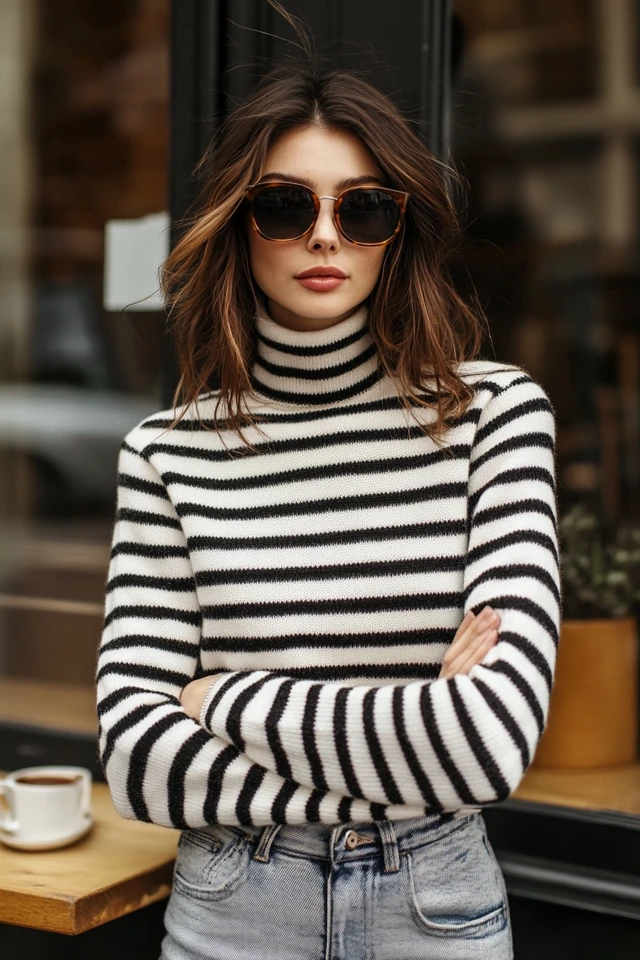
How do you style knit sweaters?
- Weekend: a striped crewneck with straight jeans and ankle boots.
- Office: a fine neutral knit under a blazer, tucked into tailored trousers.
- Evening: a thin turtleneck with a midi skirt and heeled boots.
- Layering: a crewneck over a collared shirt, or a cardigan under a trench.
As an architect trained in evidence-based design, I'd pair a chunky knit with a smooth fabric such as leather or wool trousers. Texture contrast makes each surface easier to read, and the knit looks deliberate instead of bulky.
If you want a print with your knits in warmer months, striped tees follow the same logic in a lighter weight.
How do you care for a knit sweater?
Follow the care label, since wool, cashmere and cotton knits are treated differently. Many knits do best washed by hand or on a gentle cycle, then dried flat. Fold them instead of hanging, which stretches the shoulders. A fabric shaver removes pilling.
If a stain happens, act fast. For blood, the University of Georgia Extension says to treat immediately, because stains set by heat will be difficult to remove. The same page warns that ammonia damages silk and wool, so skip it on those fibers or dilute it with equal parts water and use it sparingly.
Frequently asked questions
What are some popular styles of knitted sweaters?
The crewneck, cardigan, turtleneck, cable knit and fisherman sweater are the most common. Each can come in solid colors or stripes.
What are the different types of knit styles?
Sweaters are usually described by neckline (crew, turtleneck, V-neck), opening (pullover or cardigan) and texture (fine jersey, cable, chunky). Combining one from each group describes most sweaters.
Can striped sweaters work for formal occasions?
Yes, if the knit is fine and the stripes are narrow and low in contrast. Wear it with tailored trousers or a pencil skirt.
Do horizontal stripes make you look wider?
Not by themselves. Stripe width, contrast and the fit of the sweater matter more, and thin or dark stripes tend to look quieter.
Filed under Wardrobe Basics