Structured Long Coats: How to Choose a Belted Style
- Words by
- Julio Arco
- Published
- Reading
- 5 min
A belted long coat is the easiest way to get a defined waist over bulky winter layers. Pick a structured cut with a firm shoulder, a belt that sits at your narrowest point, and a hem that suits your height, and the coat will hold its shape all season.
Below: why the belt works, which cut fits which proportions, how to style it, and what to check in the fabric before you buy.
Why does a belted coat flatter so many shapes?
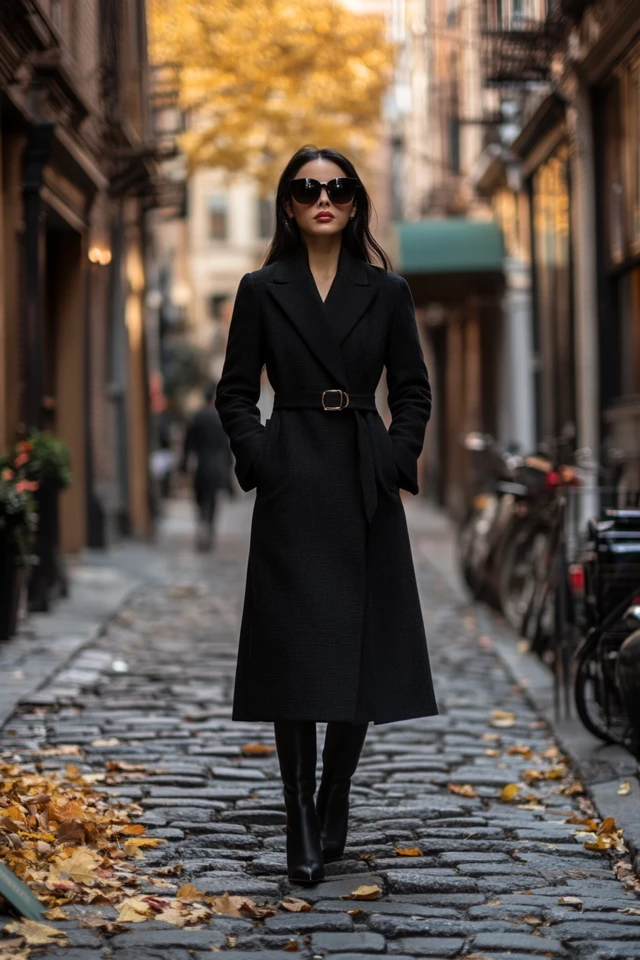
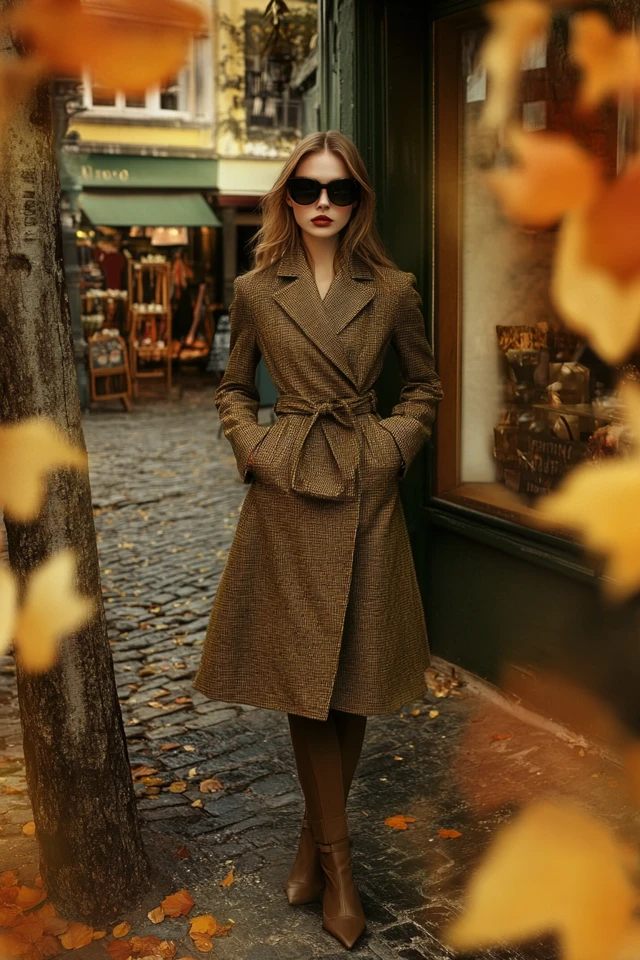
A belt marks the waist with a clear horizontal line, and the coat flares or falls straight from there. The eye reads that line first, so the torso looks more defined even when the coat itself is roomy. It works on most builds because you control where the line sits and how tight it is.
Through the lens of evidence-based design, I'd treat the belt as the focal point of the whole outfit. Everything else, from lapel to hem, should support that one line instead of competing with it.
The belt is also practical. Worn loose, the coat has room for a chunky knit. Cinched, it closes gaps at the waist where wind gets in.
How to choose the right cut for your proportions
Body-type labels are only a starting point. What matters more is where the coat's structure sits compared with your shoulders, waist and hips.
If you have broad hips
Look for a defined shoulder, with a seam that sits where your shoulder ends, and a skirt that flares gently from the belt. The structure at the top balances the volume below.
If you carry weight at your midsection
Choose a coat that skims the torso instead of clinging. Try the belt a little above your natural waist and tied loosely, so the line reads as a waist without pulling the fabric tight.
If you are petite
A narrower belt and a hem at or just below the knee keep the coat from swallowing your frame. A very long coat can work, but a single color from collar to hem helps keep the line unbroken.
If you are tall
You can carry a full-length hem, a wide belt and larger lapels. A structured maxi coat is a natural fit.
Which belted coat styles are worth knowing?
Wrap coat
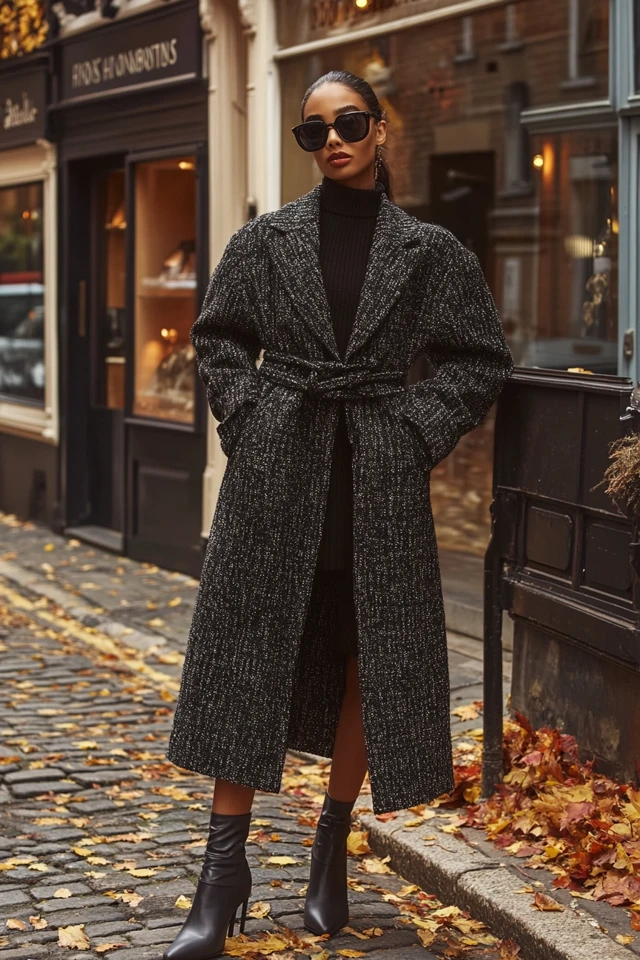
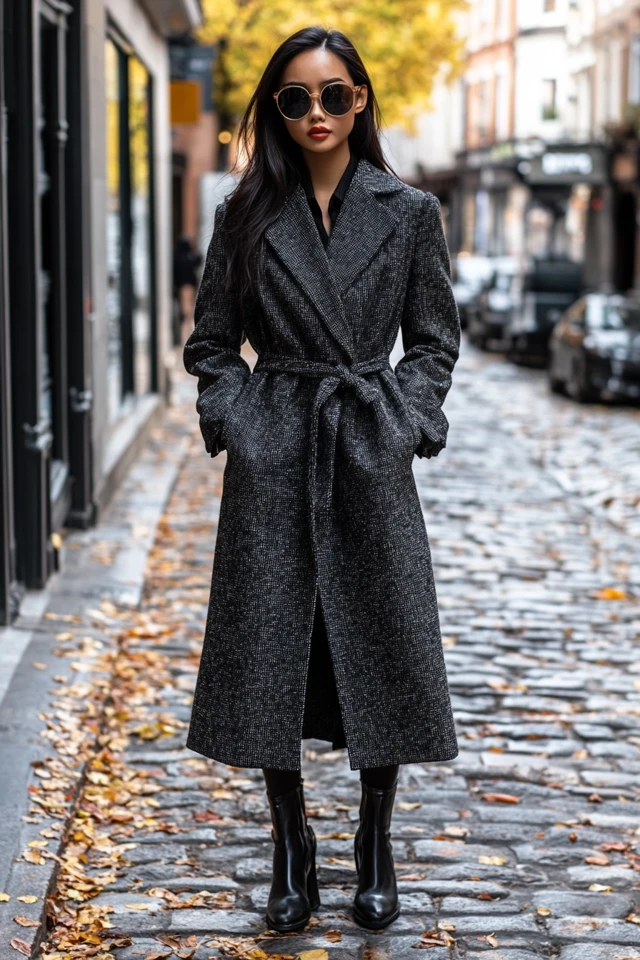
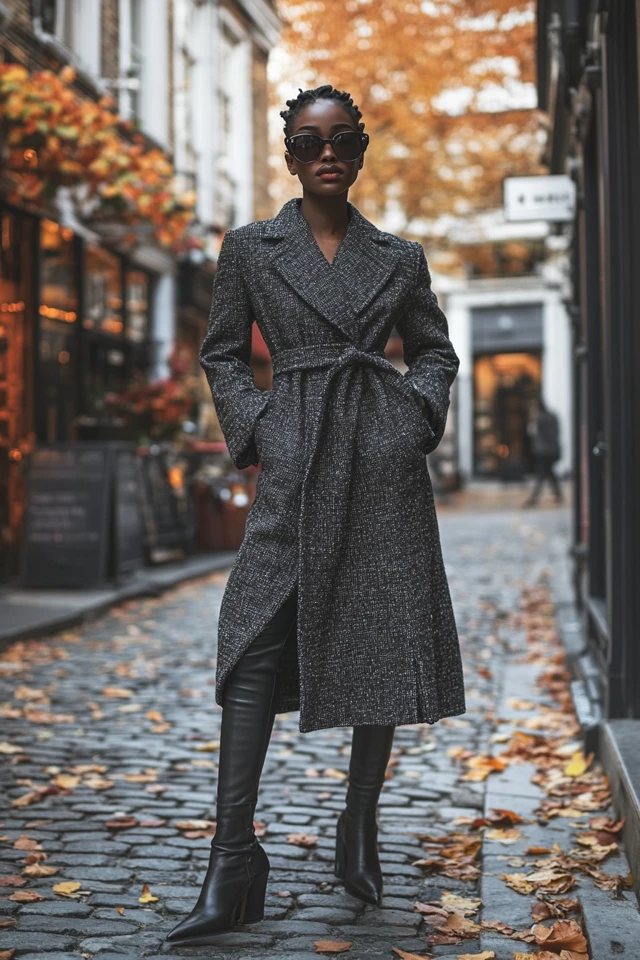
There are no buttons, just a tie closure and a soft drape. It is the easiest to adjust, and it looks best over slim bottoms so the volume stays in one place.
Double-breasted belted coat
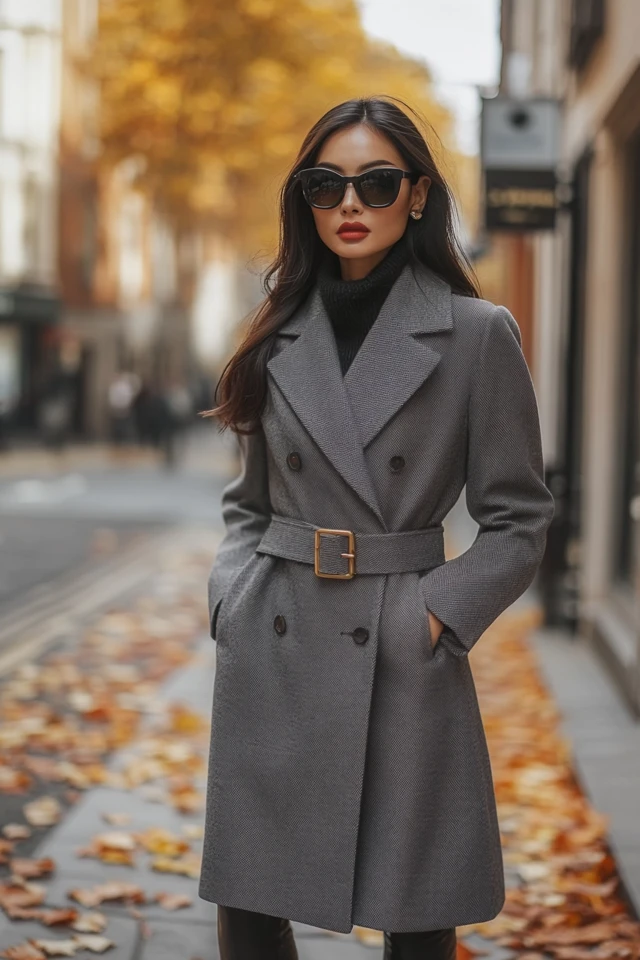
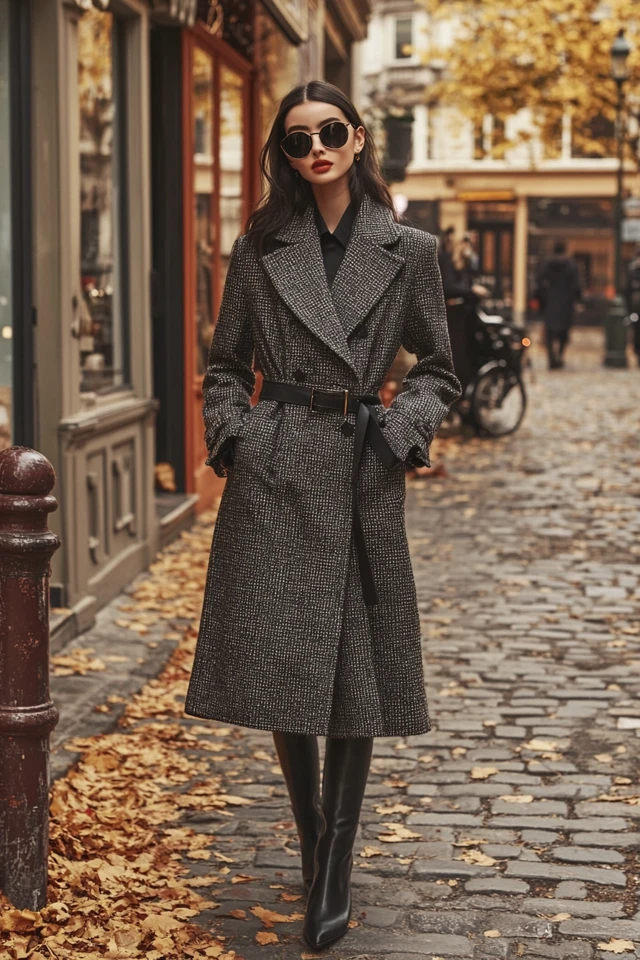
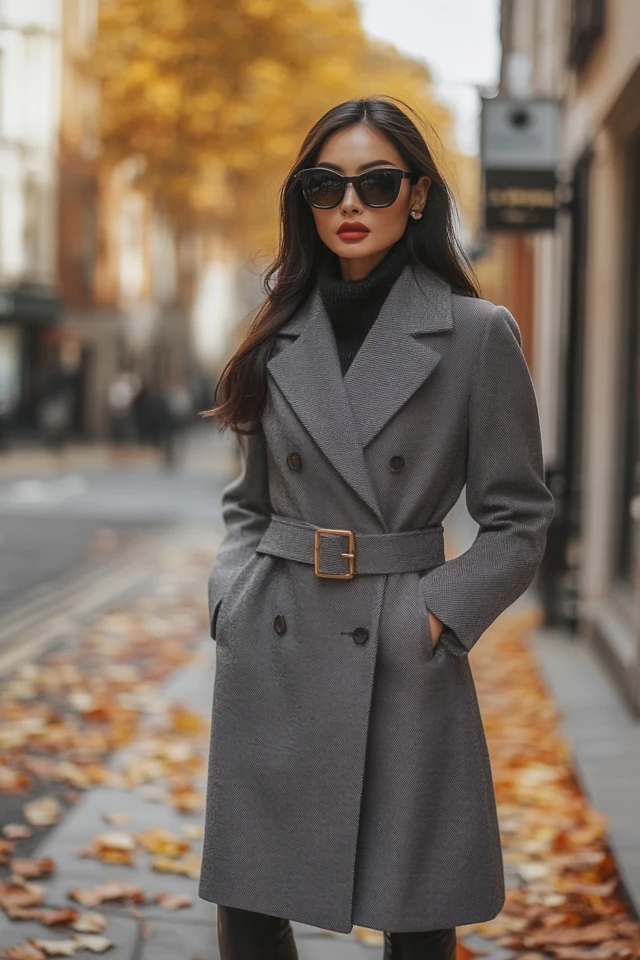
A double breasted long coat has a formal, symmetrical front. Add a belt and it keeps its shape over suiting or knitwear. It suits office days and anyone who likes a sharper silhouette.
Trench
Lighter than wool, a trench suits autumn and spring. Camel, beige and navy are the usual choices because they go with almost everything.
Tailored wool coat with a removable belt
A tailored wool coat with a detachable belt gives you two coats in one: fitted when belted, straight when open. For more shapes in this family, see structured A-line coats and longline coats.
How to style a structured long coat
- Everyday: chunky sweater, straight or slim jeans, ankle boots. Tie the belt loosely.
- Office: tailored trousers, a button-up blouse, loafers or heeled boots. Belt it snugly for a cleaner line.
- Weekend: turtleneck, wide-leg trousers and sneakers. Keep the coat's color simple so the trousers carry the volume.
- Evening: a black wrap coat over a fitted dress and heels. Leave the belt in a soft knot.
If the coat has volume, keep the layer underneath slimmer. If the coat is slim, you can add a bulkier knit. One voluminous piece per outfit reads as deliberate.
What to check before you buy
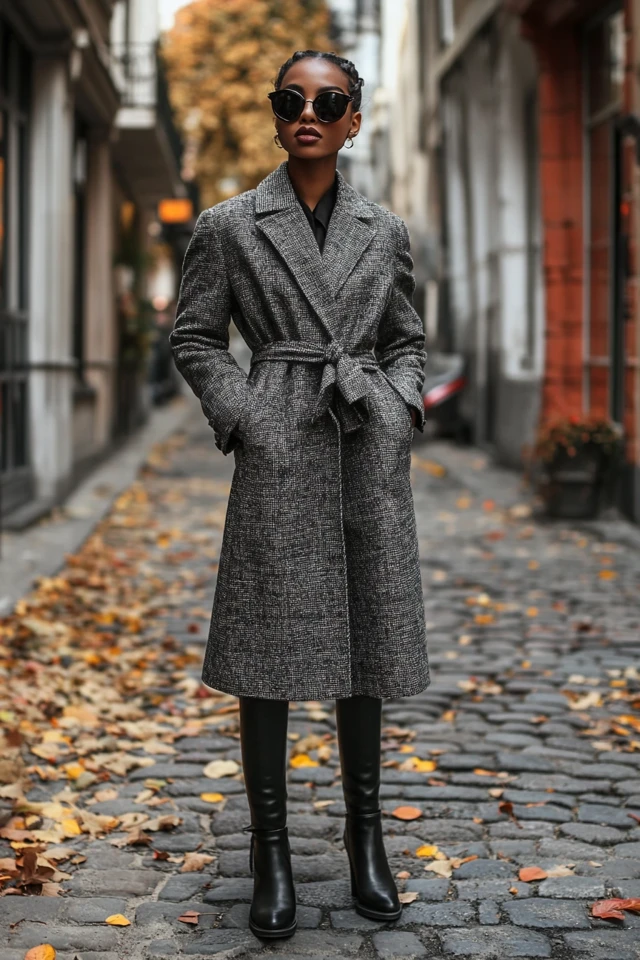
A long wool coat for women should feel dense and spring back when you squeeze a handful of fabric. Wool and wool blends insulate well and hold structure better than thin synthetics, which is why most long winter coats for women use them.
- Shoulders: the seam sits at the edge of your shoulder, and you can raise your arms without the whole coat lifting.
- Sleeves: leave room for a sweater, and check they still reach your wrist bone.
- Lining: a full lining helps the coat slide on over knits and keeps its drape.
- Belt: belt loops and a sturdy buckle or tie last longer than a flimsy strip of fabric.
For a first coat, a neutral color in a classic cut gives you the most outfits per coat.
Are you warm enough under it?
The coat is only one layer. If you will be outside for a long time, the base layer matters. Texas A&M's Howdy Health advises that the layer closest to your skin should be made of moisture-wicking materials, and to avoid cotton because it absorbs moisture and can keep it next to your skin, making you cold. That guidance is written for cold-weather exercise, but the same logic applies on a long walk in a heavy coat.
If you want a lighter, sportier take on the idea, see belted puffer jackets.
How to care for a structured coat
- Check the care label. Many wool coats need dry cleaning, but not often.
- Hang it on a wide, padded hanger so the shoulders keep their shape, and leave space in the closet.
- Spot clean small marks with a damp cloth, testing a hidden area first.
- Refresh wrinkles with a handheld steamer instead of an iron.
Looking for more options in this shape? Browse structured long coats for sophisticated style.
Frequently asked questions
Can belted coats work for casual outfits?
Yes. Pair one with jeans, sneakers and a simple knit, and tie the belt loosely. The structure of the coat dresses the outfit up without making it formal.
What's the best way to tie the belt on a coat?
A simple knot with the ends left hanging is the easiest and looks relaxed. For a neater line, tie a small bow or tuck the belt through the loops and buckle it.
Can I wear a belted coat over bulky layers?
Yes, if the coat has enough room. Size for the sweater you will wear, and tie the belt loosely so the fabric does not pull across the back.
Is a belted coat good for petite frames?
Yes. Choose a narrower belt and a hem at or just below the knee, and keep the coat in one color to keep the line long.
Filed under Wardrobe Basics