Quilted Jackets: How to Choose One That Stays Warm
- Words by
- Julio Arco
- Published
- Reading
- 4 min
Quilted jackets are warm because the stitched grid holds insulation in small pockets, so it stays spread evenly instead of sliding to the bottom of the jacket. They are lighter than a classic winter coat, which makes them a good layer for cool days and a solid outer layer for mild winters.
Below: what the style is, which versions to look at, how to match one to your proportions, and how to wear and care for it.
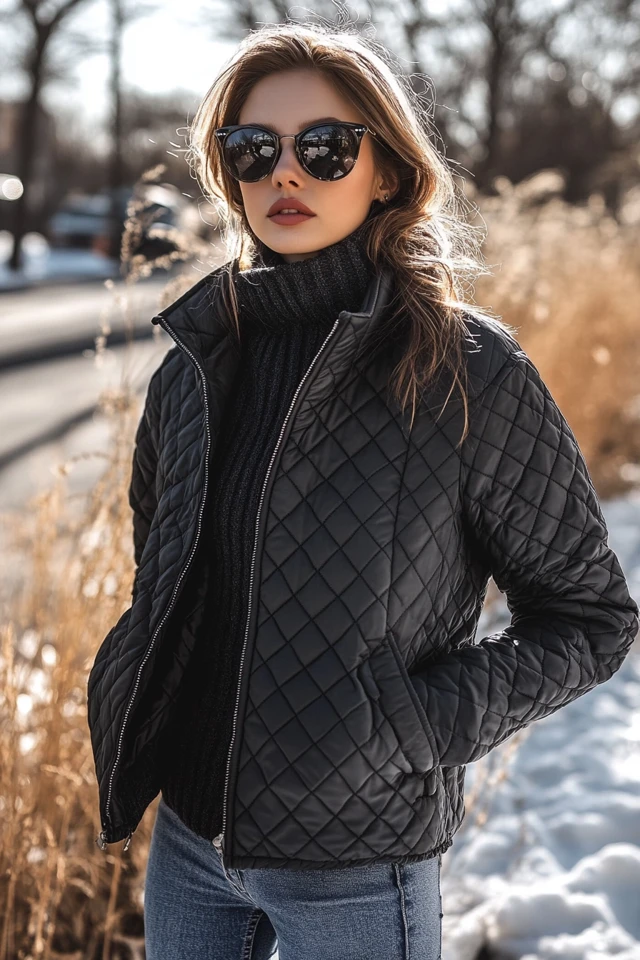
What is a quilted jacket?
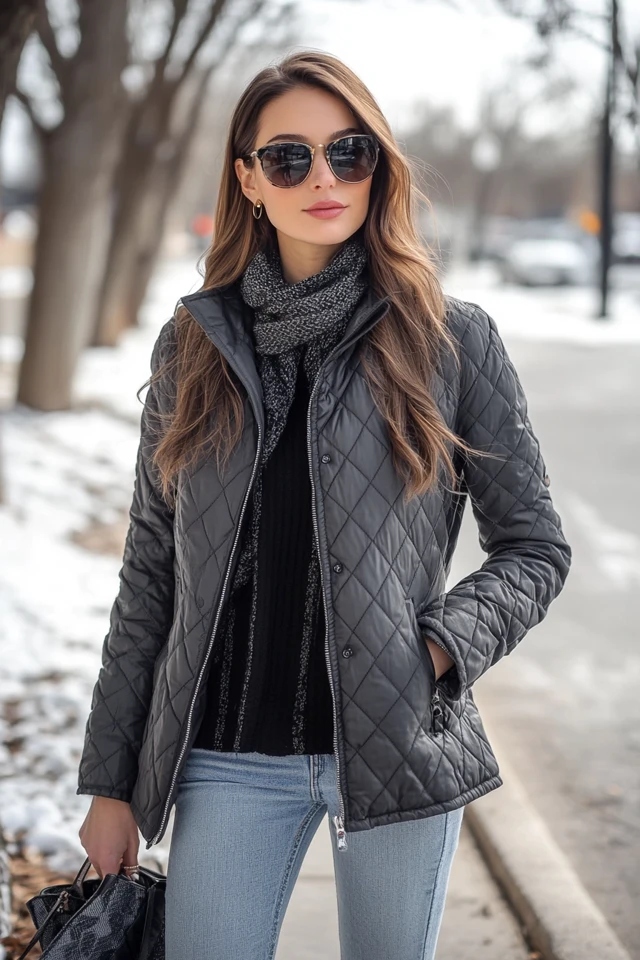
A quilted jacket has two layers of fabric stitched together with padding in between, usually in diamonds, squares, channels or chevrons. The stitching is what keeps the fill in place. The padding can be down or synthetic fiber, and the choice affects weight, warmth and how the jacket behaves when damp.
Check the label for the fill type. If the jacket will be your main coat, look for one with a firm outer fabric and even stitching, with no bare, thin patches between the lines.
Are quilted jackets still in fashion?
Yes. The shape has stayed in rotation for a long time because it is simple and easy to layer. What changes from year to year is the details: bigger quilting lines, longer hems, mixed fabrics or a bolder color. A black or navy jacket with classic diamond stitching rarely looks dated, and I would buy that one first.
If you like something louder, see quilted jackets in vibrant colors or bold printed versions.
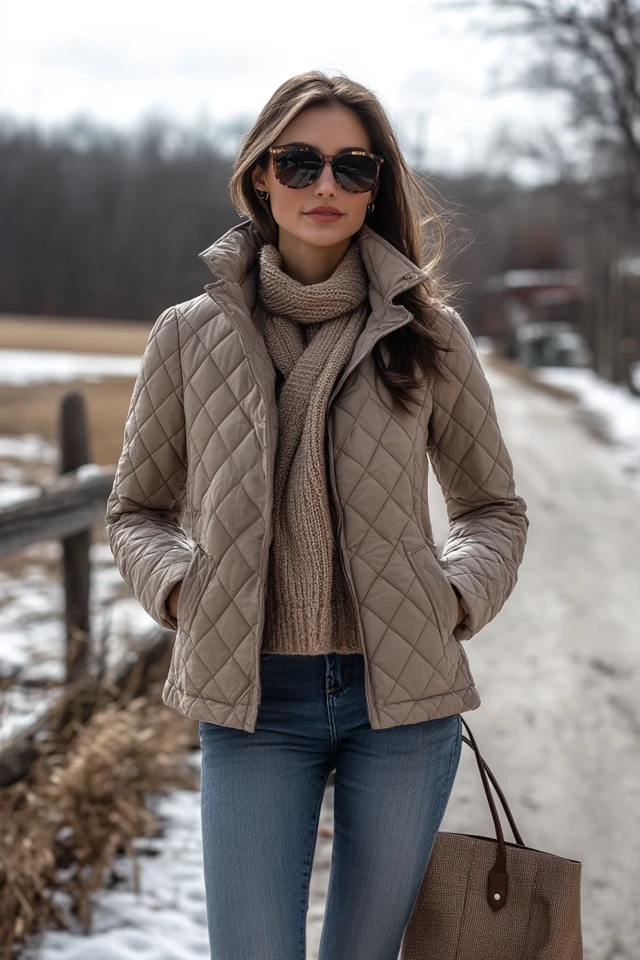
Which style should you choose?
Lightweight quilted jacket for women
A thin, lightly filled jacket works for spring, fall and as a mid-layer under a coat. It packs down small and goes over a shirt or a knit without bulk. For more on that weight, read about quilted jackets for transitional weather and lightweight puffers.
Quilted jackets with a hood
A hood adds warmth at the neck and some protection from wind. It also suits sporty outfits with leggings and sneakers. Check that the hood sits comfortably when it is up and does not pull the collar back when it is down.
Patchwork quilted jacket
A patchwork quilted jacket mixes fabric panels, so it reads as a statement piece. Keep the rest of the outfit plain: solid trousers, a simple knit, and one or two colors pulled from the jacket.
Longline and barn-style jackets
Longer cuts cover more of your hips and thighs, which helps on windy days. A shorter jacket is easier to wear with a long skirt or dress.
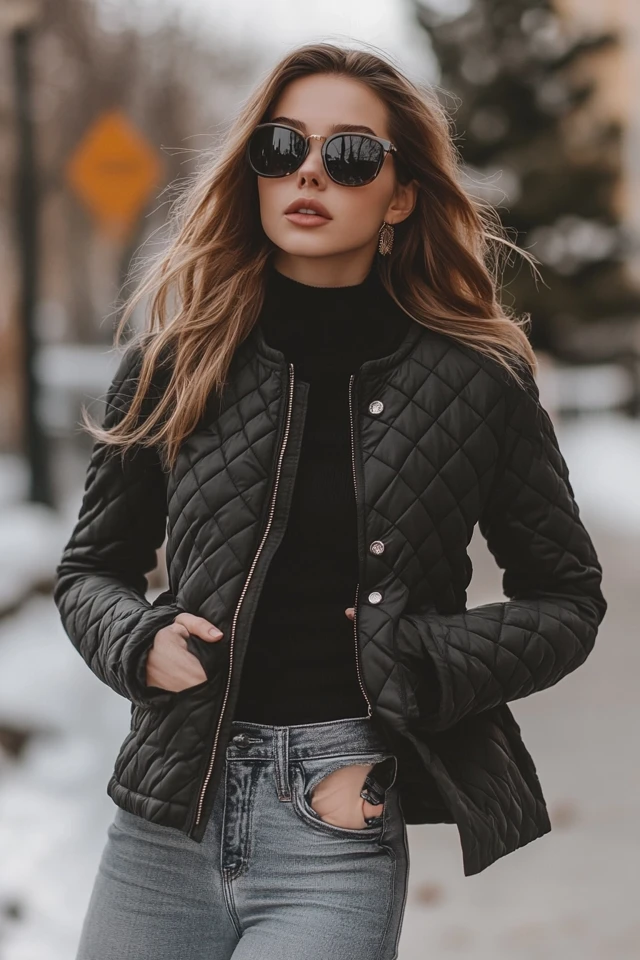
How do you choose a quilted jacket for your shape?
A jacket that pulls at the shoulders or restricts your arms is a fit problem, not a you problem. Start with the shoulder seam, which should sit where your shoulder ends, then check that you can add a sweater underneath.
- Petite frames: a cropped or hip-length cut with narrower quilting lines keeps the jacket from swallowing you.
- Curvy figures: a belted or shaped waist defines the middle, and slimmer channels look less puffy than wide ones.
- Athletic builds: an A-line cut or a hood and collar add softness at the neckline.
- Tall frames: longline cuts and larger quilting suit the extra length.
Through the lens of evidence-based design, I'd treat the quilting lines as the first thing the eye reads. Horizontal channels widen, vertical ones lengthen, and small diamonds look finer than large squares.
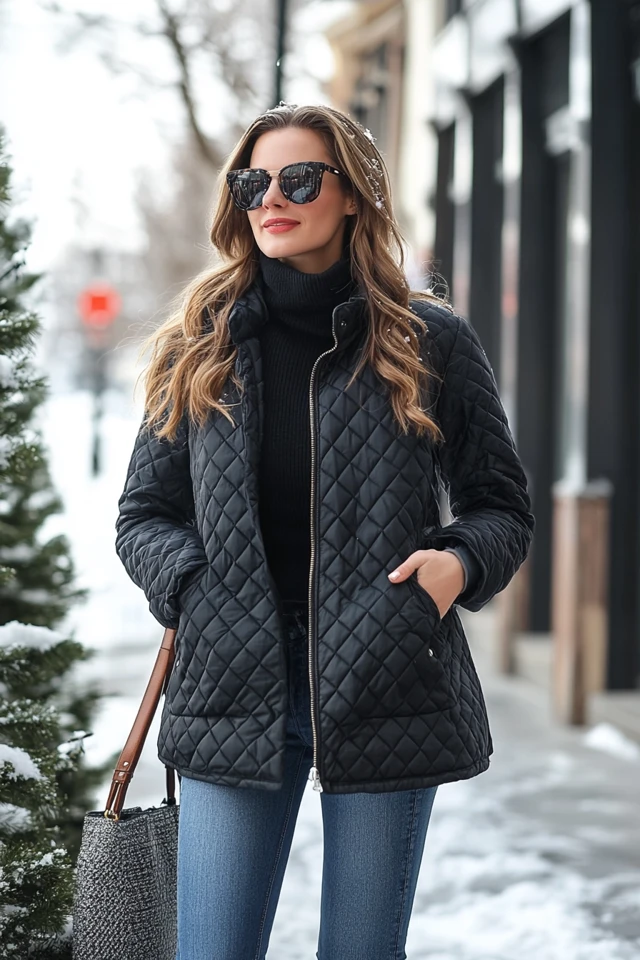
Which color works best?
Black, navy and olive go with almost everything. Camel, beige and rust look warmer next to skin and sit well with denim and knits. Mustard, red and emerald stand out on gray days. Pastels read softer and lighter.
Texture changes color too. A matte quilted fabric looks deeper and calmer than a glossy one in the same shade, because the surface changes how light reaches your eye. If you want a jacket that works with most of your closet, choose matte in a neutral.
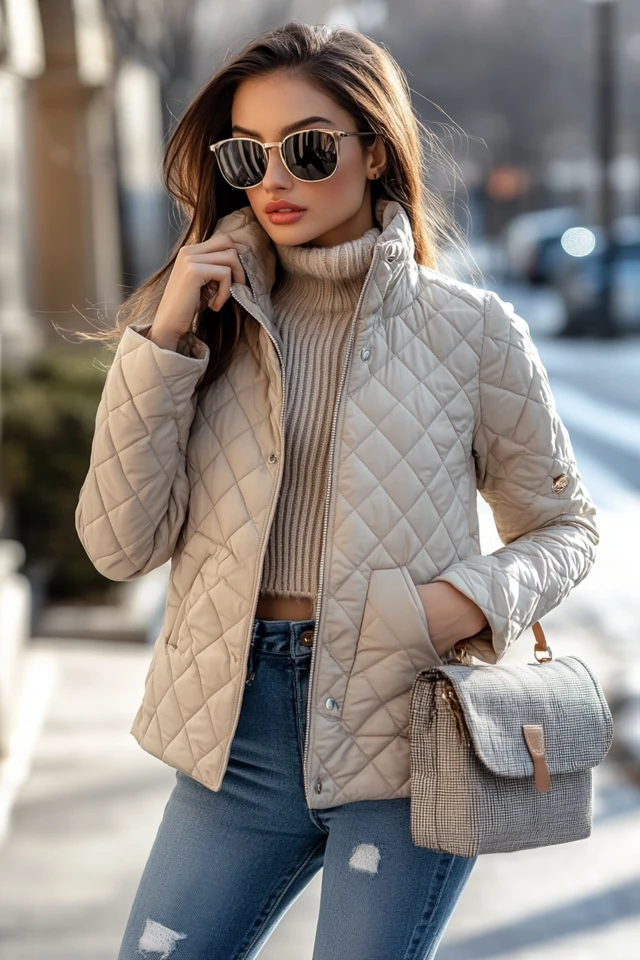
How to wear a quilted jacket
- Casual: jeans, a tee and sneakers.
- Polished: a turtleneck, tailored trousers and boots.
- Cozy: a chunky knit underneath, slim bottoms to balance the volume.
- Sporty: leggings, a beanie and a hooded jacket.
On a cold day, what you wear under the jacket matters as much as the jacket. Texas A&M's Howdy Health advises that the layer closest to your skin should be moisture wicking so sweat is drawn away from the skin, and it recommends avoiding cotton because it absorbs moisture and can keep it next to your skin. That advice is aimed at exercise, but it is useful for long walks too.
Need something warmer on top? Add a scarf like the ones in this winter scarf guide, or go for a faux shearling jacket in deep cold.
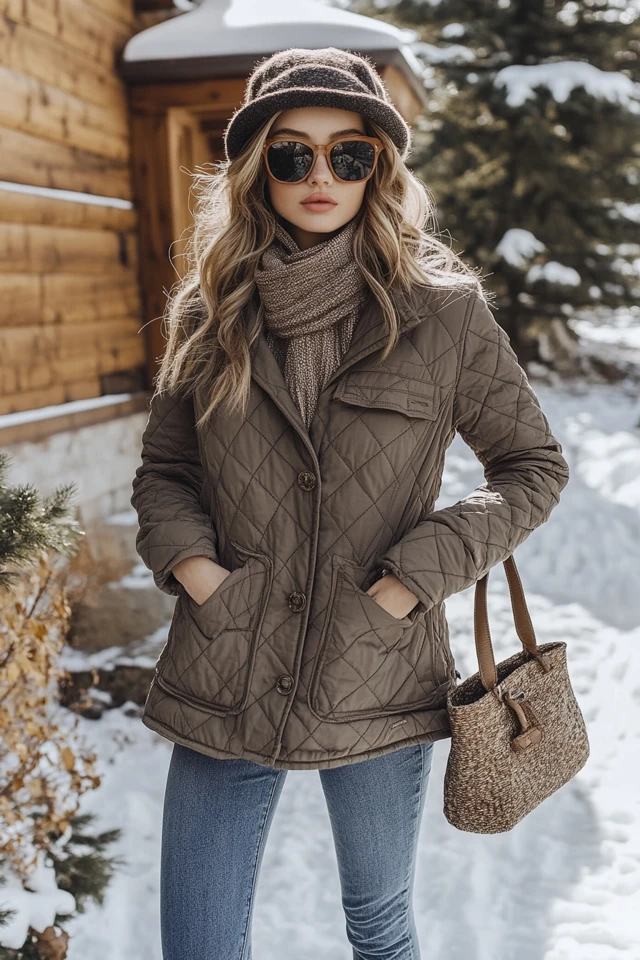
How to care for a quilted jacket
- Read the care label first. Many jackets can be machine washed, but not all.
- Use a gentle cycle and low heat so the shape and fill hold up.
- If the fill flattens, tumble on low with a couple of clean dryer balls to loosen it.
- Store on a sturdy hanger, or fold it loosely if space is tight.
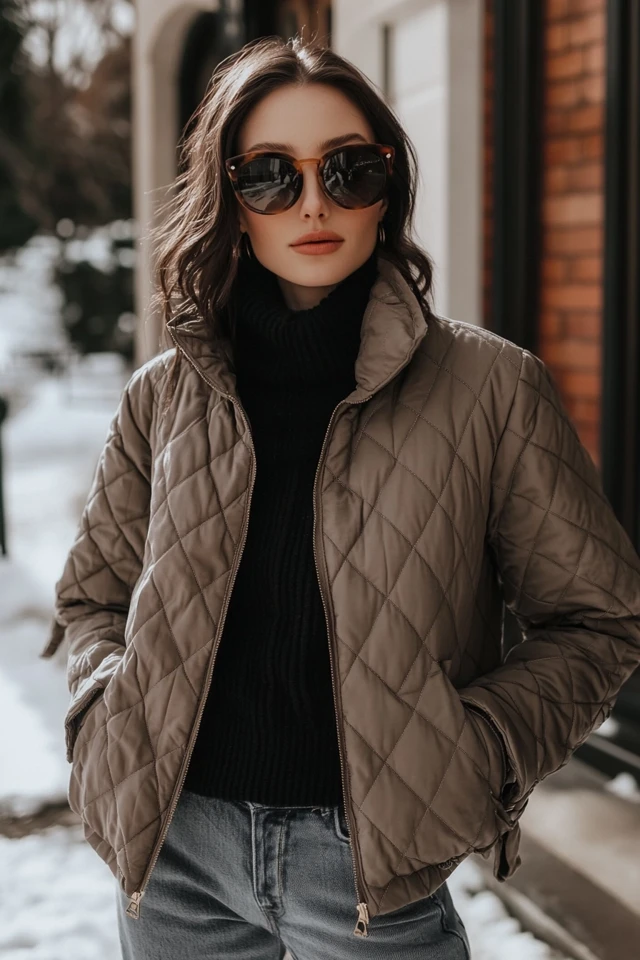
A well-fitted quilted jacket also pairs well with other fall layers, such as the ideas in quilted jackets for crisp autumn mornings.
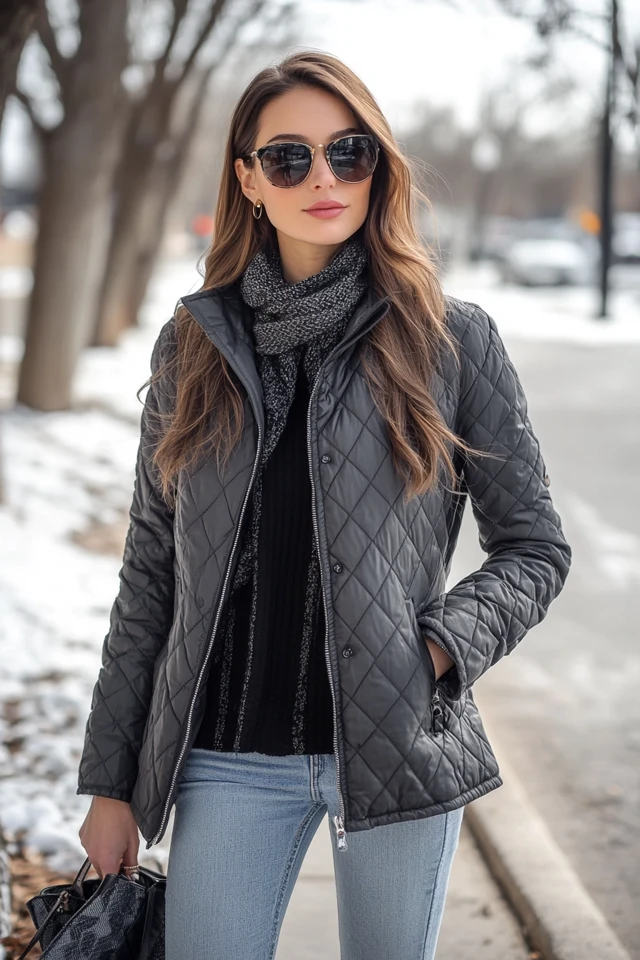
Frequently asked questions
Are quilted jackets still in fashion?
Yes. The classic diamond-stitched jacket in a neutral color stays in rotation, while details such as larger quilting, longer hems and mixed fabrics change from season to season.
What does the term "quilted jacket" mean?
It is a jacket made of two fabric layers stitched together with padding between them. The stitching forms a pattern and keeps the insulation from shifting.
Are quilted jackets warm enough for winter?
In mild winters, yes, especially layered over a knit. In very cold weather, choose a heavier fill or a longer cut, or wear it under a warmer coat.
How do I avoid looking bulky in a quilted jacket?
Pick narrower quilting lines or a belted waist, and wear slimmer bottoms to balance the volume.
Filed under Wardrobe Basics