Cape Coats: How to Choose and Style One This Fall
- Words by
- Julio Arco
- Published
- Reading
- 4 min
A cape coat is an outer layer that drapes from the shoulders with openings for your arms instead of full sleeves. For fall, a wool cape coat in a clean, mid-length cut is the easiest version to wear: it layers over knits, and the shape does the styling for you.
Below: what these coats are called, which styles exist, how to match one to your proportions, and what to wear with it.
What are cape coats called?
You will see the same piece sold under several names: cape coat, cape jacket, poncho coat or capelet coat. The differences are mostly length and structure. A cape jacket is cropped to the hip or waist, a cape coat usually reaches the knee or below, and a poncho is a looser, often knitted, pull-on shape.
Capes also have a long history as practical outerwear. The FIT Fashion History Timeline describes the carrick coat, which layered three to five capelets that covered the shoulders to the line of the Empire waist. So the idea of a coat with shoulder capes is old, not a passing novelty.
Are cape coats still in style?
Yes, they keep coming back in tailored form, usually in wool and in quiet colors. I wouldn't call it a forecast, just an observation: the versions that look current are structured, with a clear shoulder line, rather than costume-like. Anything that reads as dress-up tends to date quickly.
Which cape coat styles are worth knowing?
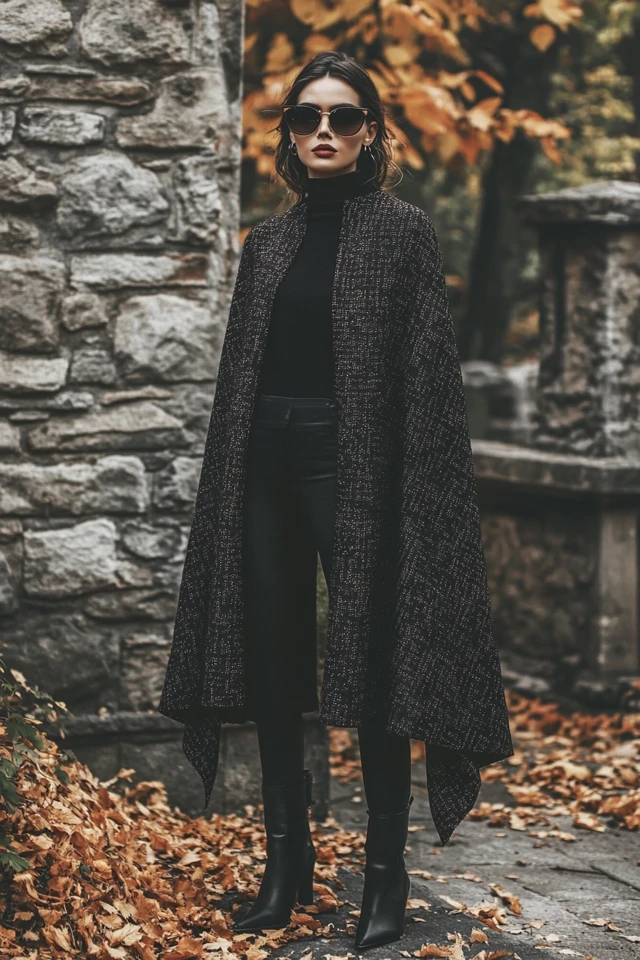
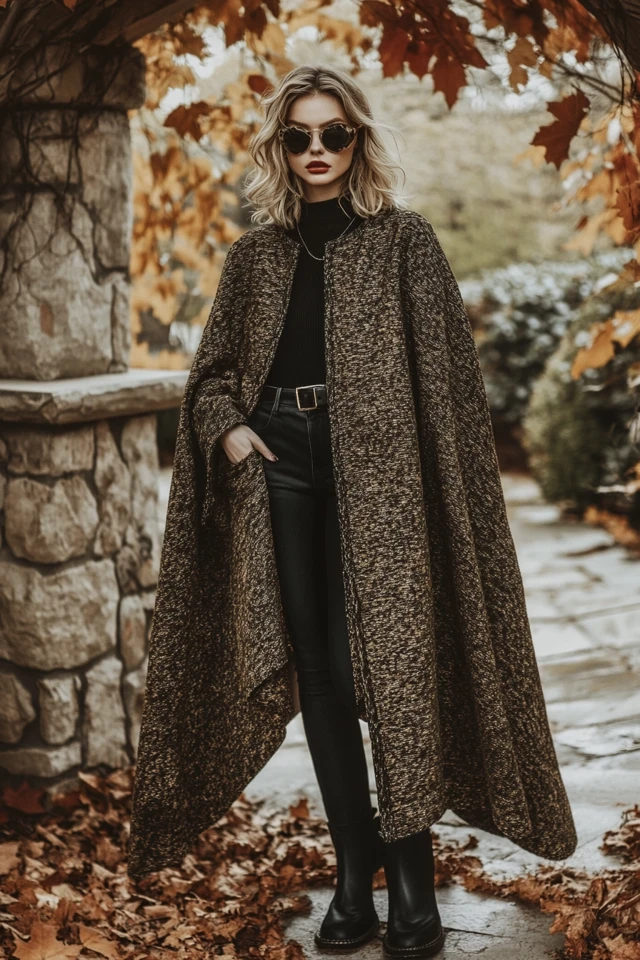
Wool cape coat
The classic. Wool holds its shape, so the cape hangs cleanly instead of collapsing around you. If warmth matters, choose a denser weave. For more on this one, see wool capes for timeless fall outerwear.
Cape coat with sleeves
Some cape coats have a cape layer over real sleeves, or slits that become sleeves. If you carry a bag, drive, or simply dislike cold arms, this is the practical pick. The cape effect stays, but your hands are free.
Cropped cape jackets
Hip-length capes sit well over high-waisted trousers and dresses. They show off your lower half and add less bulk.
Belted and tailored capes
A belt gives the shape a waist and makes it read like a coat. It's a good fix if a full cape feels shapeless on you.
Rainy-day capes
If you live somewhere wet, look at water-repellent capes. Plain wool is warm but not built for a downpour.
How do you choose a cape coat for your build?
Fit is about proportion. Capes add volume at the top, so you balance it below.
- Petite: a cropped or knee-length cape with a structured shoulder, worn over slim trousers, keeps your leg line long.
- Curvy: pick a belted cape or one with a defined neckline, and avoid very boxy cuts. Gentle drape follows the body better than stiff fabric.
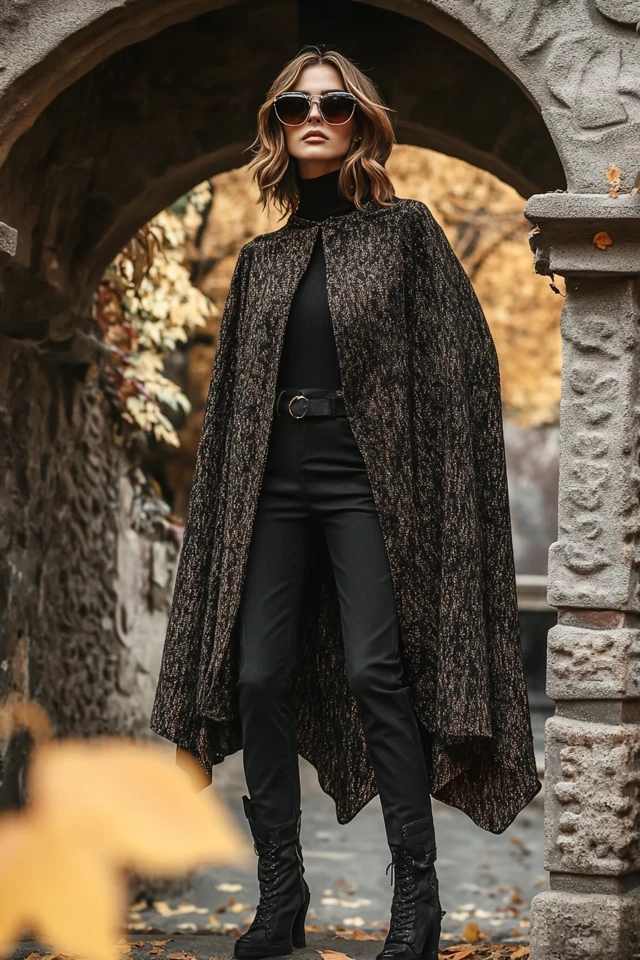
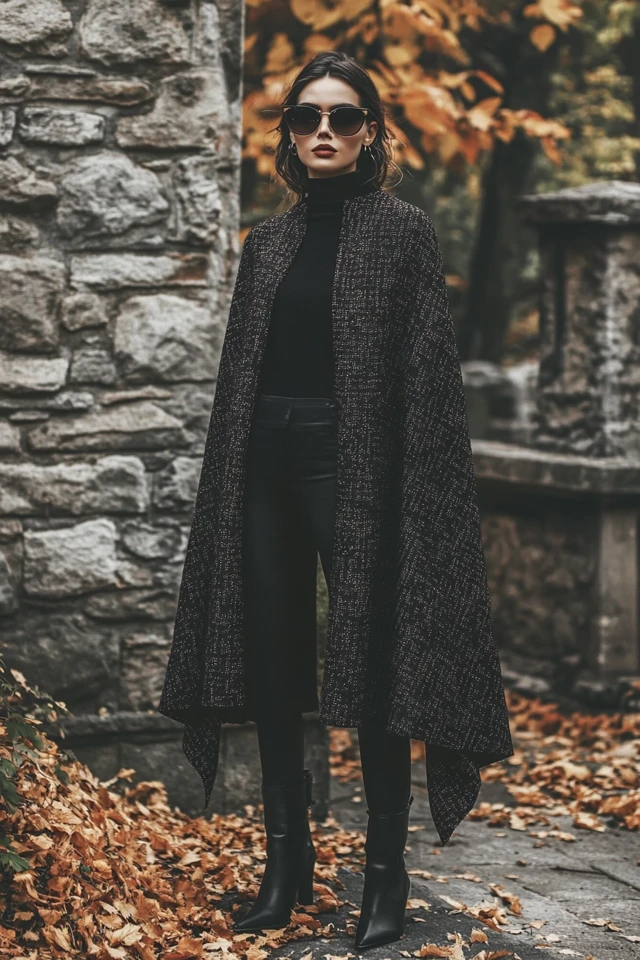
- Tall: longer, floor-grazing or asymmetrical hems suit your height.
- Athletic: softer fabrics, pleats or a little embroidery add movement to a straight frame.
A quick test for any cape coat for women: raise your arms to reach for something. If the whole cape lifts and exposes your sides, you want a version with sleeves or a closure at the front.
Through the lens of evidence-based design, I'd think about the neckline and shoulder first. They sit closest to your face, so they shape how the whole coat is read.
What color cape coat should you buy?
Texture changes how a color reads, so look at the fabric as well as the shade. A matte wool in camel looks calm; a brushed or glossy finish looks dressier.
- Camel, black or gray: the easiest to pair, and good for work.
- Olive, rust or mustard: warmer, and they suit fall light well.
- Emerald, sapphire or deep red: stronger evening colors. Keep the rest of the outfit plain.
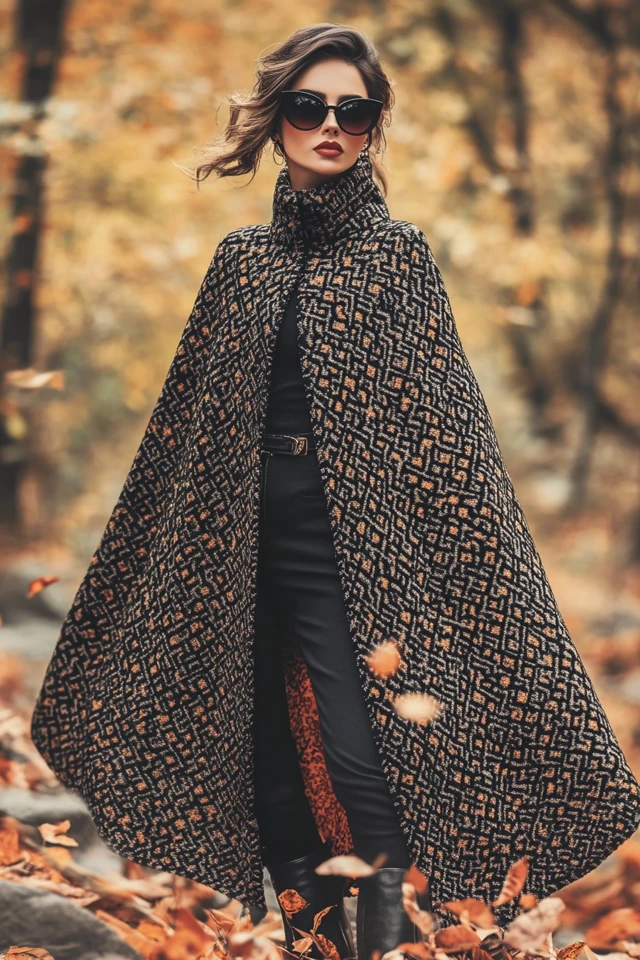
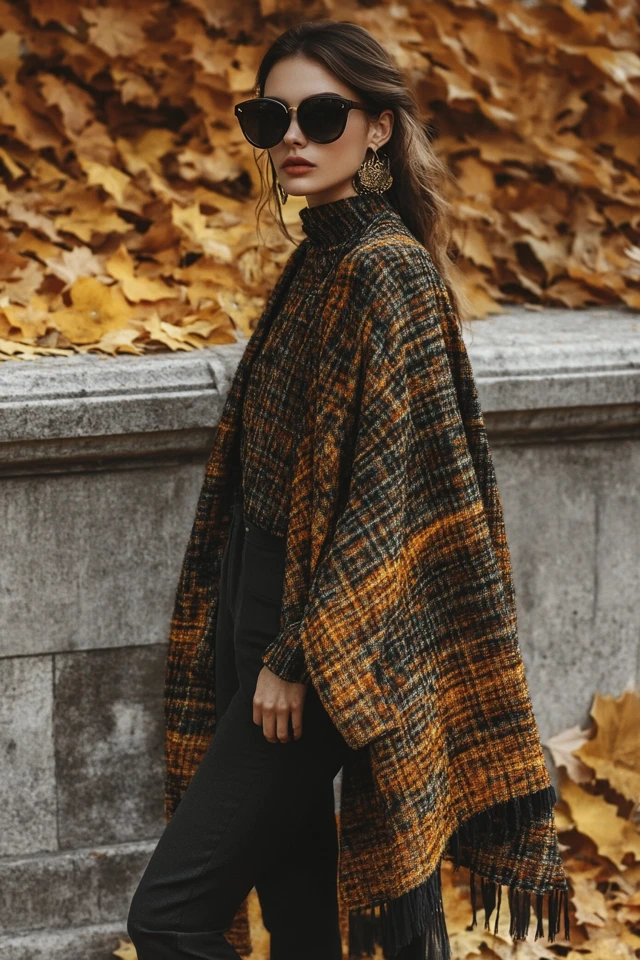
- Plaid or houndstooth: a pattern is enough of a statement, so keep shoes and bag simple.
How do you style a cape coat?
Pair volume on top with something slimmer underneath. That's the single rule that fixes most cape outfits.
Everyday
A plaid or camel cape over a turtleneck, dark jeans and ankle boots. Keep the layer under the cape thin, since the cape already adds bulk.
Office
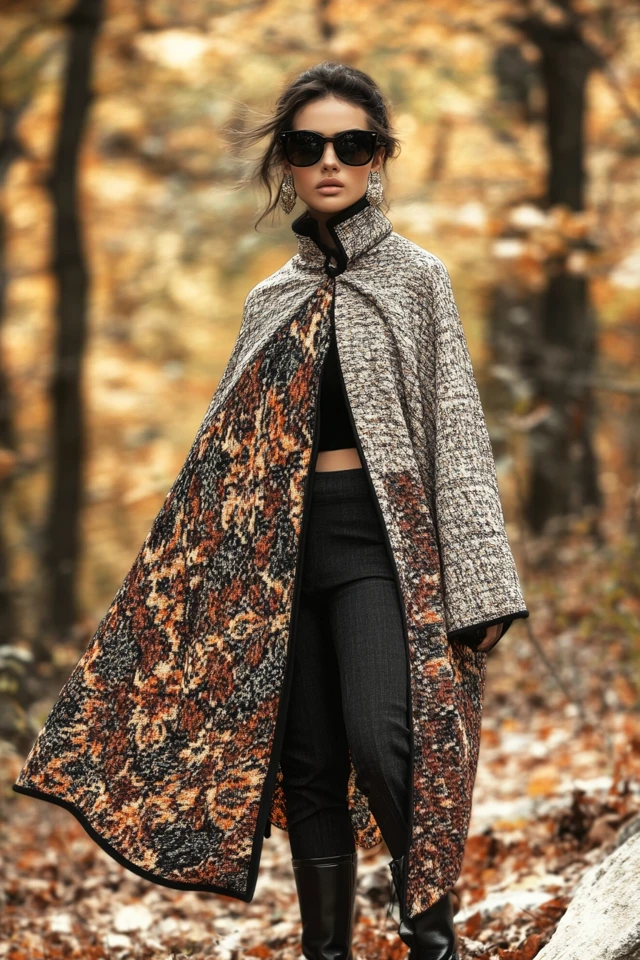
A structured cape with tailored trousers, a crisp shirt and loafers. If you like a smaller accent, add a structured statement handbag.
Evening
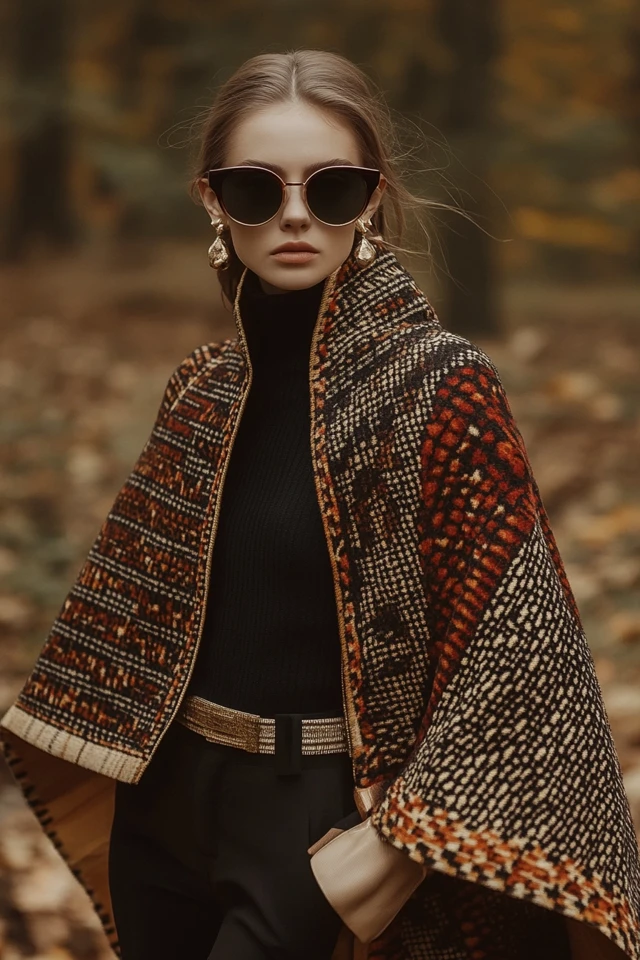
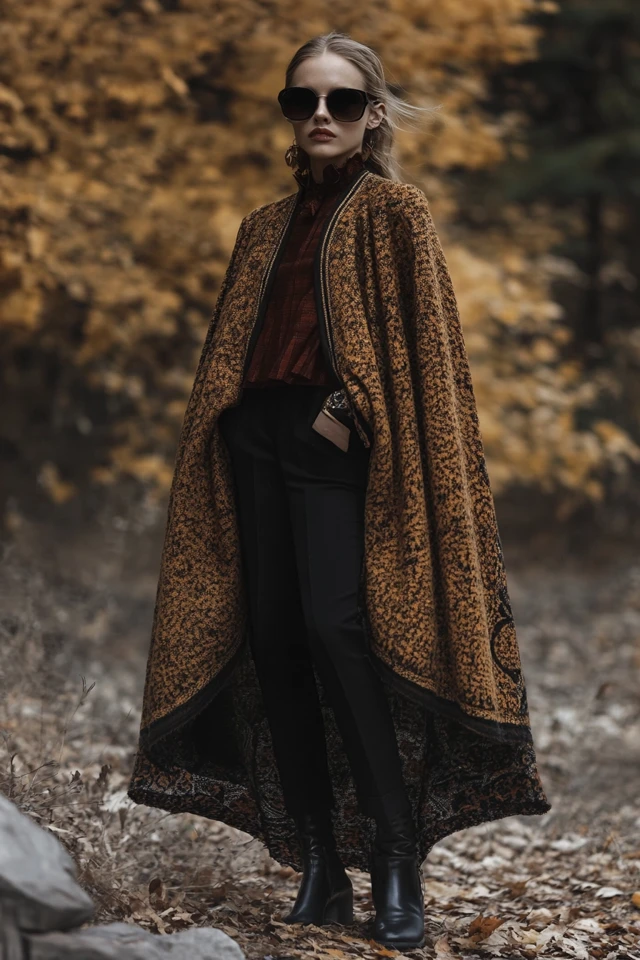
A black or deep-colored cape over a slip dress with heeled boots. For richer fabrics, see silk and velvet capes. Since the cape covers your shoulders, a bolder earring or statement jewelry still shows.
Lighter layers
If you'd like the cape look without a full coat, an asymmetrical cape blouse is a lighter option for early fall.
What should you check before buying?
- Fabric: wool, cashmere blends or tweed hold shape and warmth. Thin, floppy fabric tends to droop.
- Length: hip-length for a casual feel, knee or longer for drama.
- Arm access: openings, sleeves or a belt, so you can move comfortably.
- Closures: buttons or a clasp keep the cape from sliding off your shoulders.
Frequently asked questions
What are those cape coats called?
They are usually called cape coats, cape jackets or poncho coats. Cape jackets are cropped, cape coats run to the knee or longer, and ponchos are looser pull-on shapes.
Are cape coats still in style?
Tailored versions in wool and neutral colors keep returning each fall. Structured shoulders and clean lines look current, while costume-like shapes date quickly.
What shoes work best with a cape coat?
Ankle boots, knee-high boots and loafers all work. Choose a simple shoe so the cape stays the focus.
How do you layer under a cape without looking bulky?
Wear slim tops or thin sweaters underneath, since the cape adds its own volume. Add a scarf or gloves for warmth instead of a thicker knit.
Filed under Seasonal Trends