Silk and Velvet Capes: How to Choose and Style One
- Words by
- Julio Arco
- Published
- Reading
- 4 min
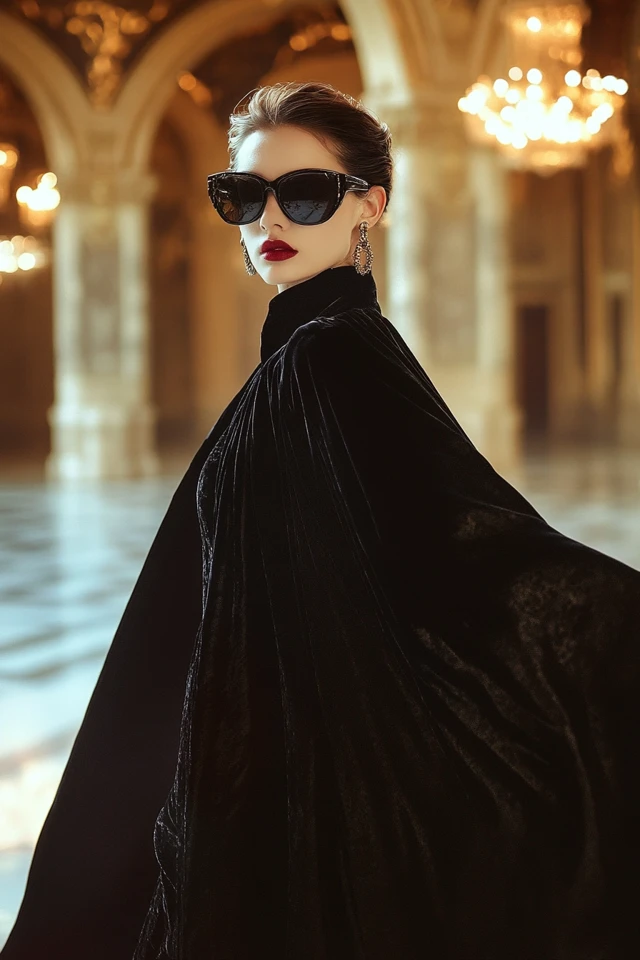
A silk and velvet cape works because the two fabrics do opposite things with light. Velvet is dense, matte and warm. Silk is smooth, fluid and shiny. Put velvet on the outside and silk on the lining, and you get a garment that looks deep from the front and flashes color when it moves.
For most evening events, choose a velvet exterior in a deep color, a silk lining that is either a close tone or a deliberate contrast, and a length that matches the dress code. The rest of this post covers how to decide each of those.
Why do silk and velvet look so good together?
Through the lens of evidence-based design, I'd start with texture before color. Velvet's short upright pile traps light, so the color reads darker and softer. Silk reflects light in a smooth sheet, so the same shade looks brighter and cooler. Side by side, each makes the other look more distinct.
There is a practical split too. Velvet gives the cape body and warmth, so it holds a shape at the shoulders. Silk gives the lining slip, so the cape glides over a gown instead of grabbing it.
Which cape length should you choose?
Length sets the formality more than any other detail.
- Shoulder length (a capelet) adds drama over cocktail dresses and tailored suits without hiding the outfit.
- Waist to hip length is the easiest to wear. It moves well and works in a car, a coat check line or a crowded room.
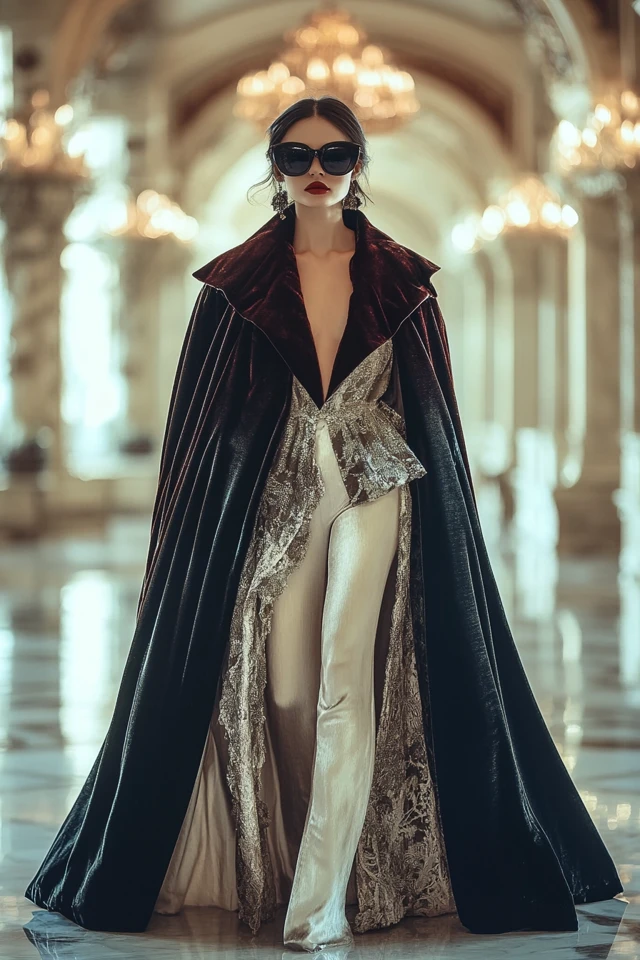
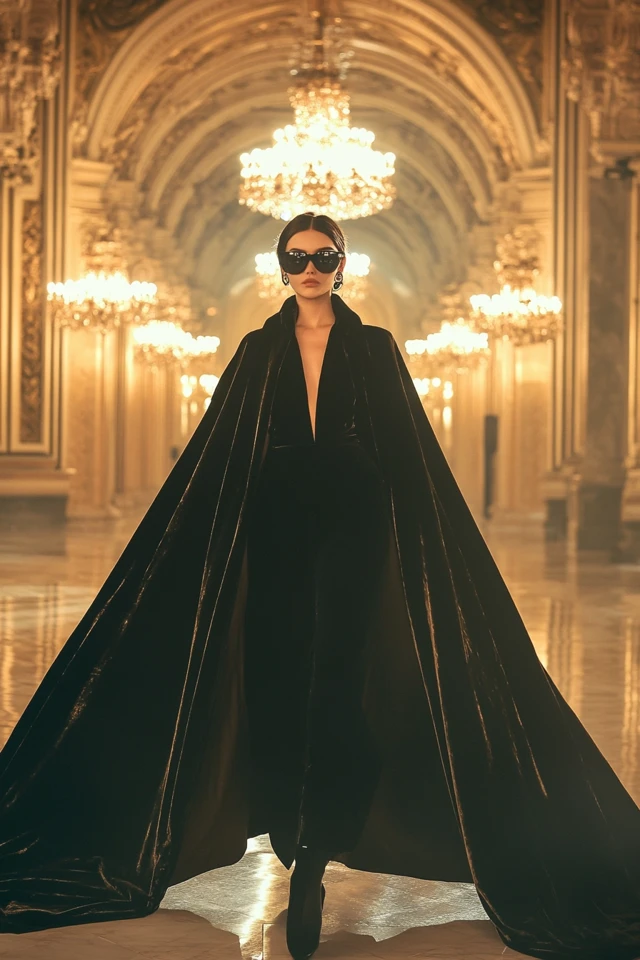
- Full length, down to the floor, belongs at black-tie events and over a floor-length gown.
- High-low cuts, shorter in front and longer behind, show off what is underneath while keeping some sweep.
If you are unsure, go shorter. A cape that trails the floor is hard to manage on stairs, and you will spend the night holding it.
What colors work for a silk and velvet cape?
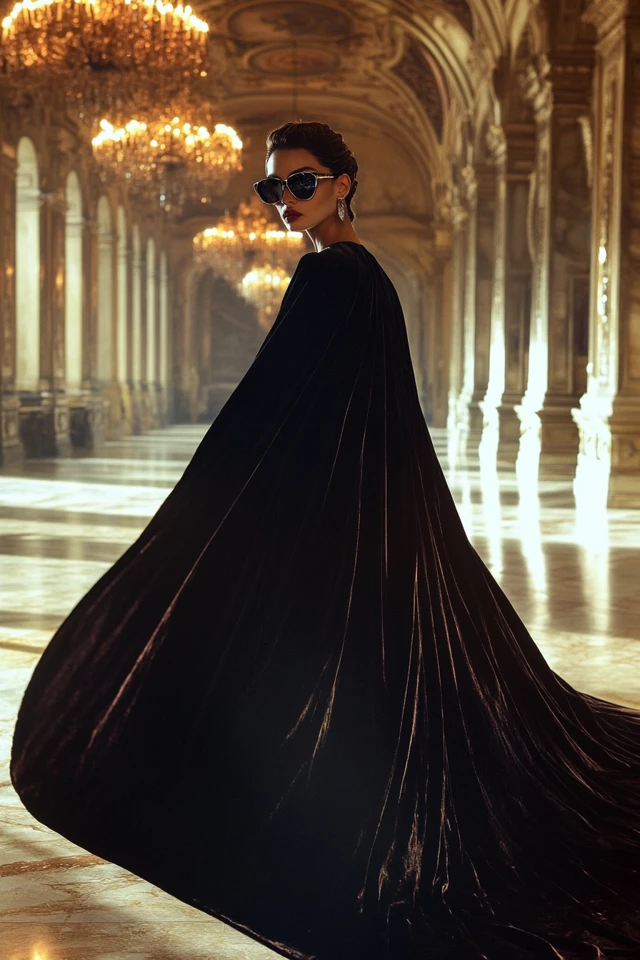
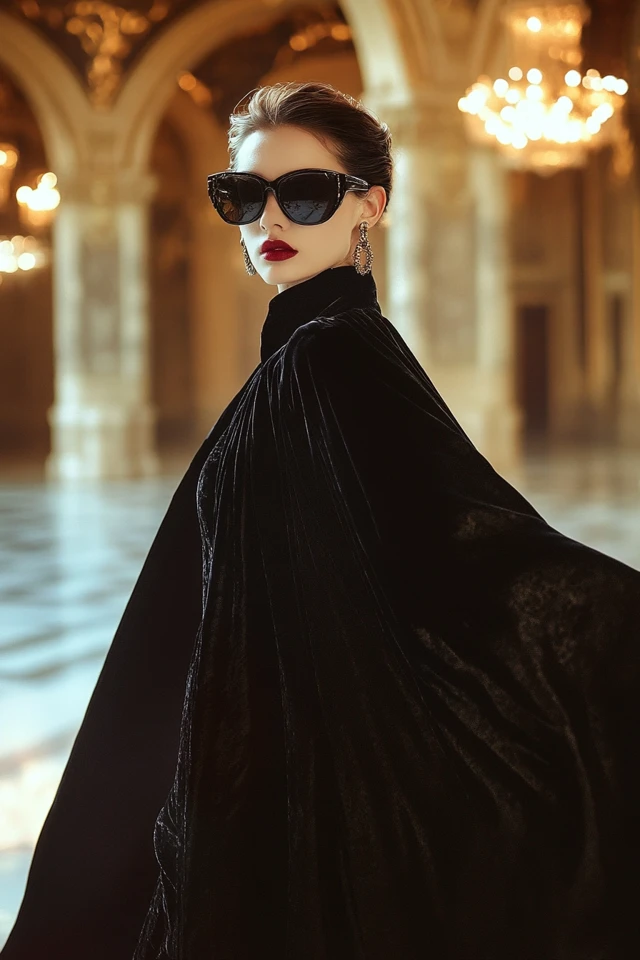
Deep colors suit velvet best, because the pile makes them look saturated. Emerald, sapphire, ruby, burgundy and midnight blue all read as rich. Black is the safe choice and goes with everything, though it shows lint and dust more than you might expect.
Lighter shades like ivory or champagne look softer and more bridal or romantic. They suit daytime or spring events better than a winter gala.
How to pick the lining color
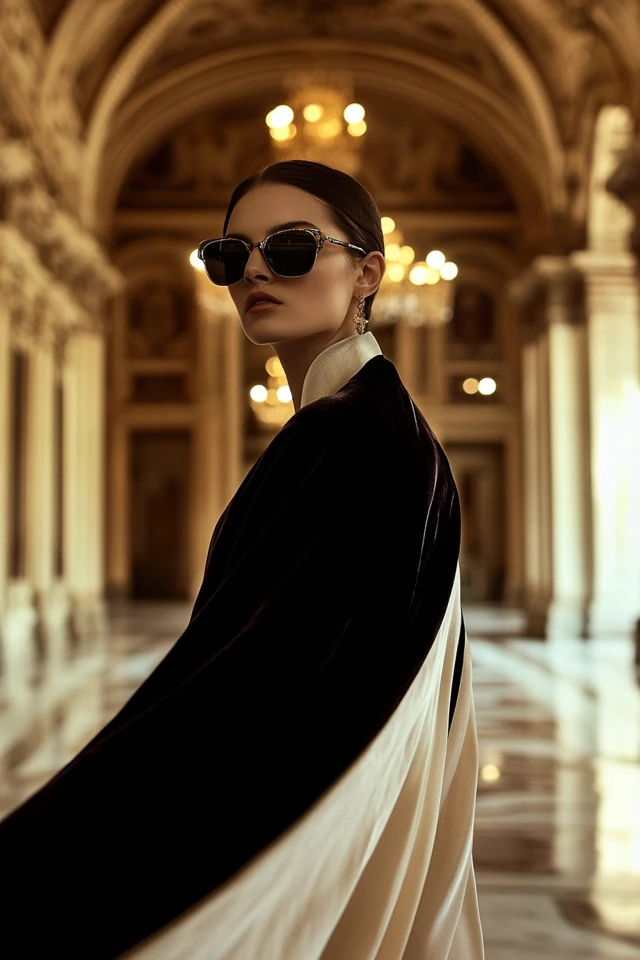
A lining in a tone close to the exterior looks polished and quiet. A contrasting lining, such as gold under burgundy or silver under midnight blue, shows only when the cape swings or you open it. I'd treat the lining as an accent: a flash of contrast is more convincing than a cape that is bright on both sides.
Which details are worth having?
Look at the construction before the decoration.
- A full silk lining, so the cape feels smooth against your arms and slides over a dress.
- A secure closure, such as a clasp, hook or tie at the neck, so the cape stays on your shoulders.
- Arm slits, if you want your hands free for a clutch and a glass.
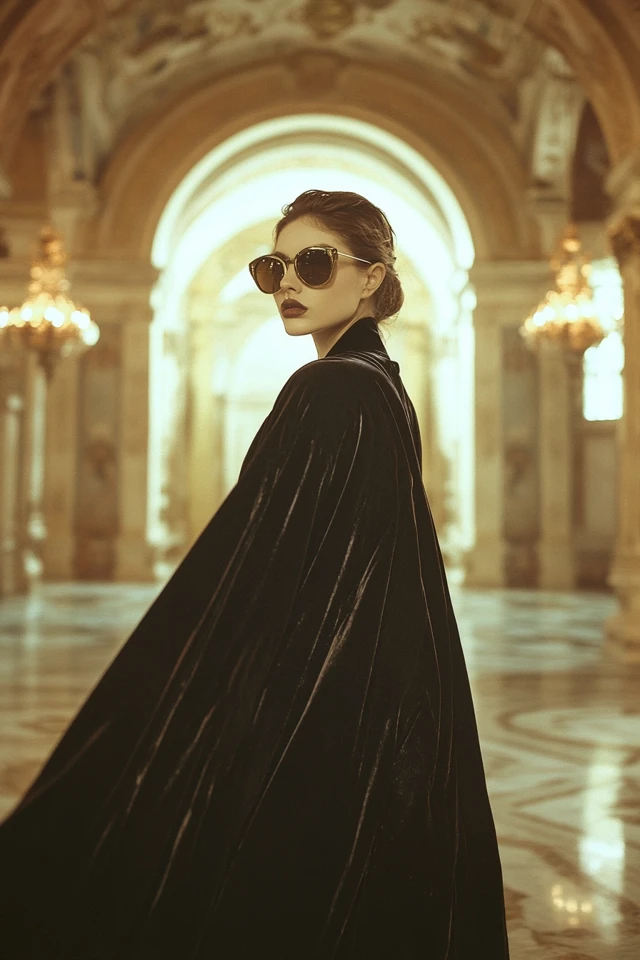
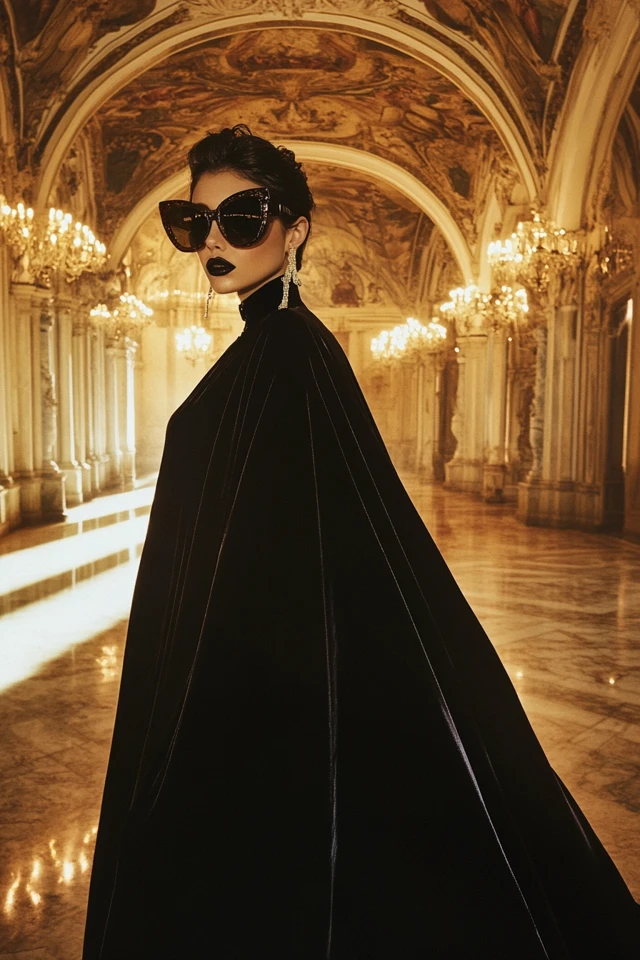
- A collar or neckline that suits your hair and jewelry. A high collar looks best with hair up.
Embroidery, beading and faux fur trim add interest, but one is usually enough. Tonal embroidery looks understated. Metallic thread and sequins add sparkle at the edges. If the cape is heavily decorated, keep the outfit under it simple.
How do you style a silk and velvet cape?
A cape adds volume at the shoulders, so wear something fitted underneath. A column gown, a sleek jumpsuit or a slim cocktail dress all balance it. A monochrome outfit in the cape's color makes the whole look read as one long line.
The outfit can also contrast: a pale jumpsuit under a dark velvet cape is crisp and modern. Our guide to tailored cape coats for winter covers the more structured, daytime side of the same silhouette, and cape dresses are the option if you want the drama built into the dress.
Accessories
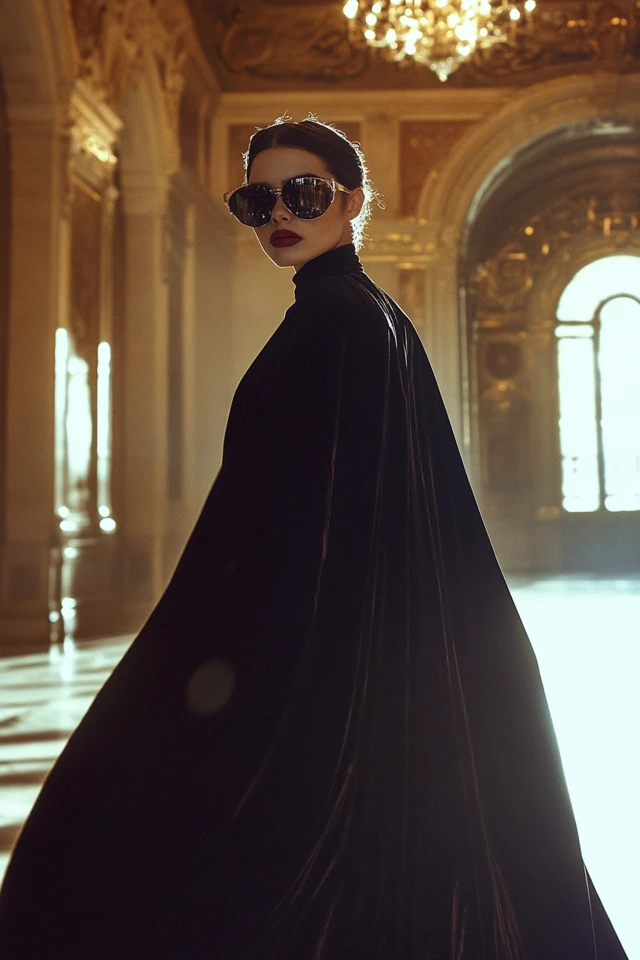
Keep them simple, since the cape is already the statement. Earrings do more work than necklaces here, because a necklace can catch on the collar or clasp. A small structured clutch is easier to carry than a large bag under a cape. Long gloves suit a full-length cape if you like a vintage touch. With an open-front cape, a belt at the waist adds shape.
Shoes and hair
Heeled sandals or pointed pumps suit a gown. Heeled ankle boots work with a jumpsuit or a shorter cape. For hair, an updo shows off a detailed collar, while loose waves soften a plainer neckline.
If you like this pairing of textures elsewhere in your wardrobe, silk and velvet holiday dresses and velvet blazers use the same idea at a smaller scale.
Three outfit combinations
- Winter formal: a burgundy velvet cape with a gold silk lining over a black column gown, gold earrings and a low bun.
- Modern evening: a midnight blue high-low velvet cape with a silver lining over a white tailored jumpsuit and metallic heels.
- Soft and romantic: an ivory cape with a velvet collar over a blush A-line gown, pearl studs and nude heels.
Caring for the cape
Follow the label. Velvet and silk are both delicate, and most capes in this mix call for professional cleaning. Store it on a wide, padded hanger so the shoulders keep their shape, in a cool, dry place with room around it so the pile does not get crushed.
Frequently asked questions
Can you wear a silk and velvet cape during the day?
Yes, if you keep it light. A shorter length in a lighter or softer color looks suited to daytime, while full-length deep jewel tones read as evening wear.
Is a silk and velvet cape too warm for mild weather?
Velvet is a warm fabric, so it suits cool evenings best. For milder weather, look for a lighter velvet and a silk lining, or choose a shorter capelet.
What should you wear under a cape?
Fitted pieces work best, such as a column gown, slim dress or sleek jumpsuit. They balance the volume at the shoulders and keep the cape from looking bulky.
Filed under Fabrics & Textures