Shaggy Coats for Winter: How to Pick and Style One
- Words by
- Julio Arco
- Published
- Reading
- 4 min
A shaggy coat does the styling for you: the long, textured pile is the statement, so the rest of the outfit can stay simple. Pick a length that suits your height, keep the pieces underneath slim, and choose a color you will actually reach for.
Below: how color and texture read, which length flatters which frame, what to wear with one, and how to look after the pile.
What makes a coat shaggy?
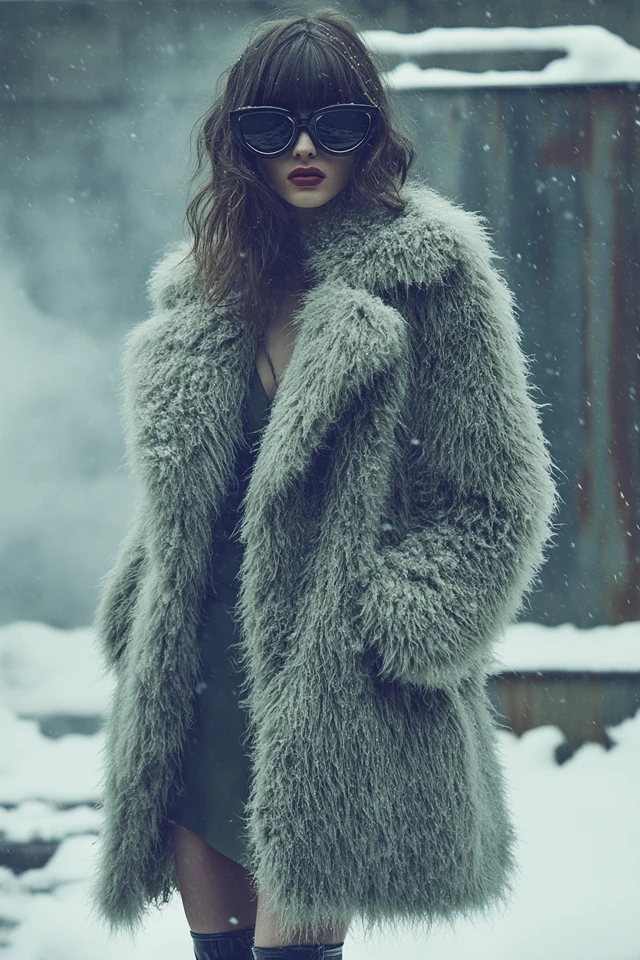
Shaggy coats are made from long-pile fabrics, usually faux fur, sometimes shearling or a bouclé-style textile. The pile traps air, which is why these coats feel warm, and it adds visual volume, which is why they feel dramatic.
Because the silhouette is already big, a shaggy coat works best when it is the one loud thing in the outfit. Check the label for fiber content and weight if warmth matters to you, since a light shag and a heavy one behave very differently in deep cold.
How do color and texture change the look?
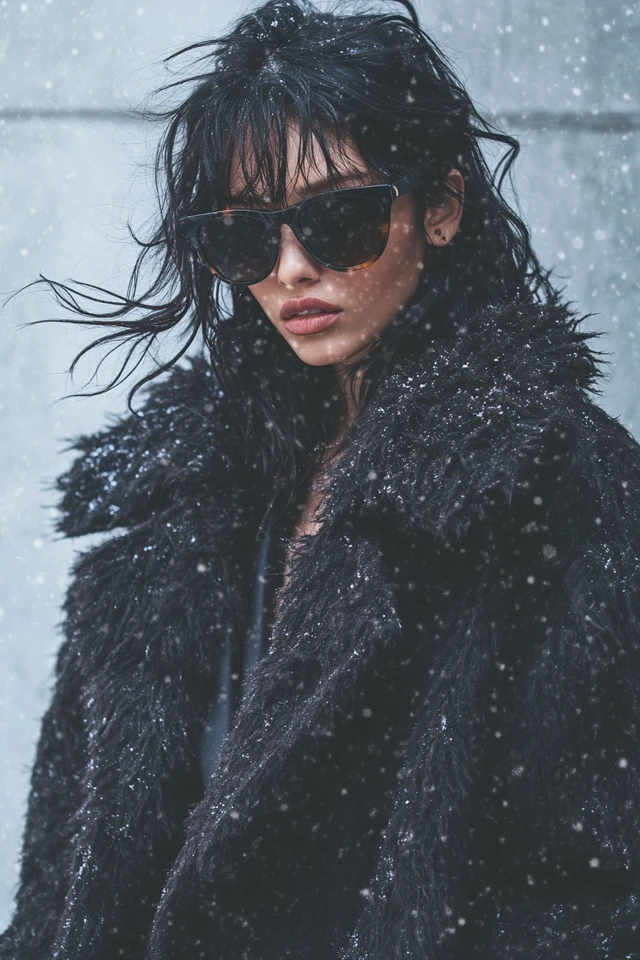
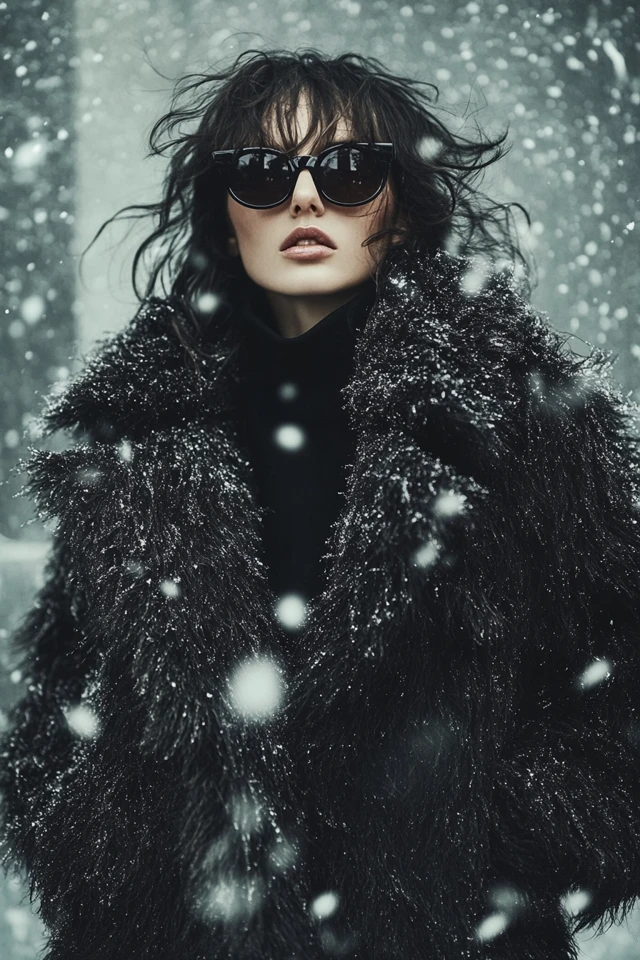
Through the lens of evidence-based design, I'd start with texture before color. A long pile scatters light, so the same shade looks softer and slightly paler on a shaggy coat than on a smooth wool one. Cream reads warm and quiet, black reads deeper and less flat, and a saturated red or green looks richer because the fibers catch light at different angles.
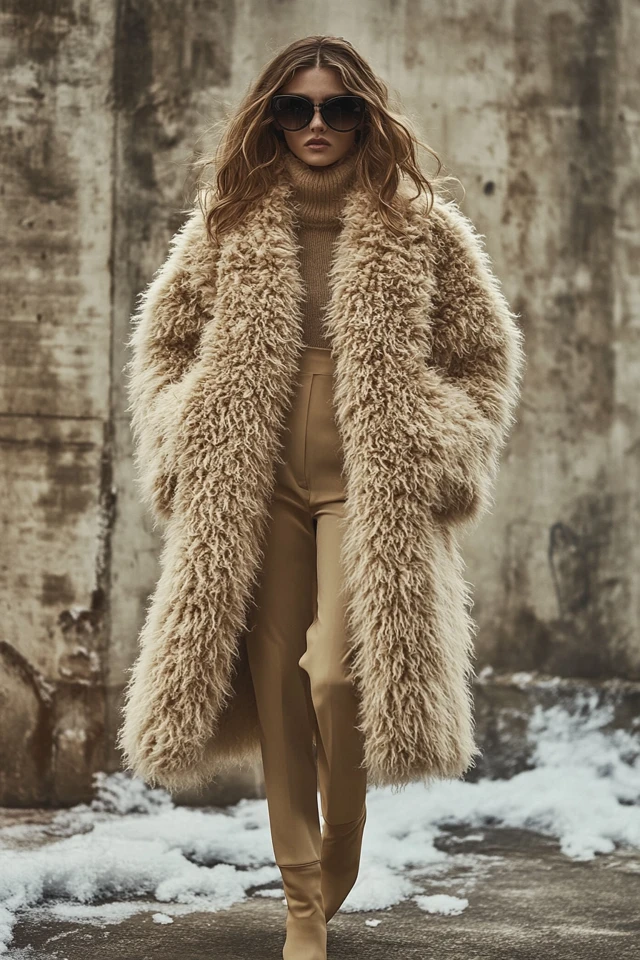
- Neutrals (cream, beige, gray) go with almost everything and suit daytime outfits.
- Bold colors like ruby, emerald or cobalt turn the coat into the focal point, so keep the rest of the outfit in one quiet shade.
- Pastels such as blush or lavender look soft against winter light and pair well with gray or white knits.
- Black is the easiest option for work and evenings, and the texture keeps it from looking severe.
Which length suits your frame?
A coat that fights your proportions is a fit problem, not a you problem. These are starting points, not rules.
- Petite: a cropped or mid-thigh length keeps the volume from swallowing your legs.
- Curvy: a belted style or one with a defined waist shows your shape. A lighter pile adds less bulk.
- Tall: longline coats that reach mid-calf or lower look balanced and add drama without overwhelming your height.
- Athletic builds: a thicker pile or an oversized cut adds softness, and lapels or color blocking add structure.
Check the shoulder seam first. It should sit near the end of your shoulder, unless the coat is intentionally dropped-shoulder. Then raise your arms: sleeves should still cover your wrists over a sweater.
What do you wear under a shaggy coat?
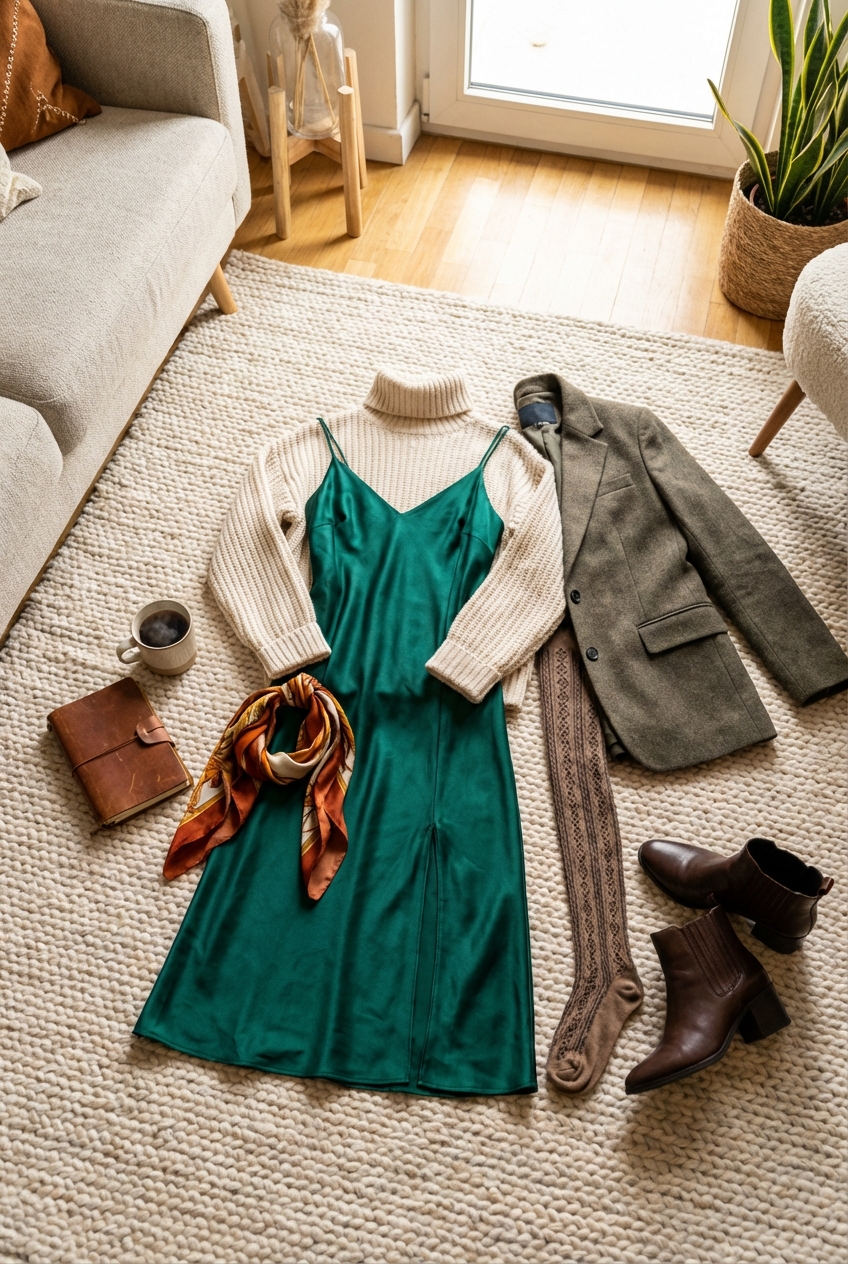
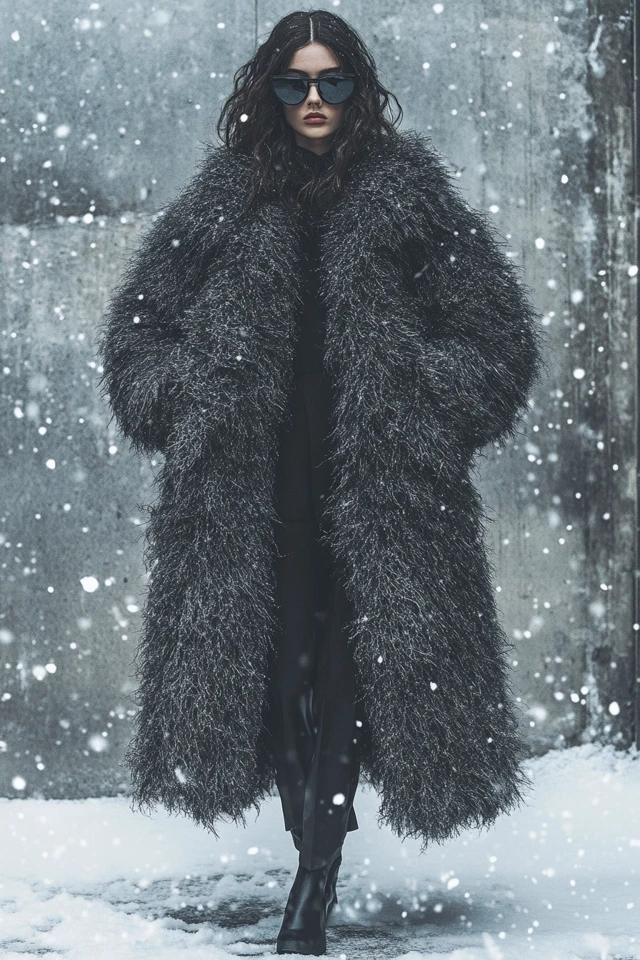
Keep the volume on the outside and the lines slim underneath. Skinny jeans or straight trousers with ankle boots let the coat lead. A turtleneck under wide-leg trousers gives a retro shape that suits longer coats. A midi dress with heeled boots works for evenings.
Accessories should stay quiet. A hat or earrings is plenty, since a chunky scarf competes with the collar pile. If you do want a scarf, choose a smooth, thin one in a shade that matches the coat.

Easy outfit formulas
- Daytime: neutral shag, straight jeans, a plain knit and sneakers.
- Evening: a bold shag, satin slip dress, heeled boots and a metallic bag.
- Office: black shag, tailored trousers, white blouse and loafers.

Is there a shaggy version of the cape?
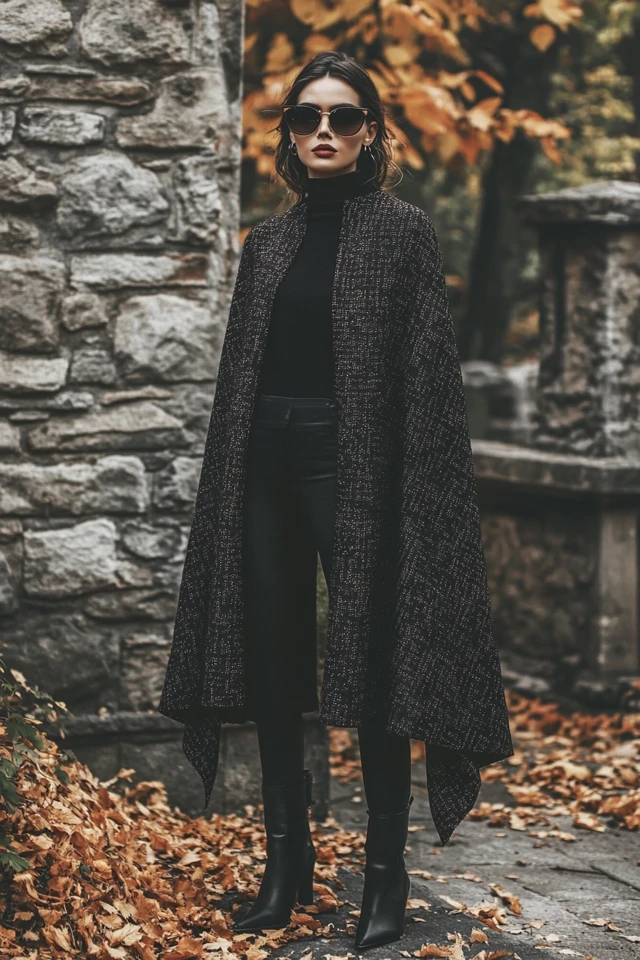
Yes. Some of the most wearable shaggy pieces borrow the cape shape: a wide, draped body with openings for the arms. If you are browsing cape coats for women, a cape coat with sleeves is the practical pick, since it keeps the drama of the shape and still lets you carry a bag or drive. A looser cape jacket coat in a short pile suits milder days, while a winter cape coat in a heavier shag handles real cold.
The same fit logic applies. Capes add width at the shoulders, so keep what is underneath narrow. Our guides to warm wool coats and sleek maxi coats show smoother alternatives if you want the long line without the pile.
How do you shop for one?
- Material: faux fur and long-pile textiles give the look without animal fur. Read the label for fiber content.
- Length: cropped looks casual, longline looks dramatic.
- Weight: a heavier coat suits very cold climates and a light one suits mild winters.
- Lining: a smooth lining makes it easier to slide on over knits.
If you like a sturdier, plainer shape, compare it with neutral oversized coats or oversized plaid coats before deciding.
How do you care for the pile?
Follow the care label. Many shaggy coats can only be spot-cleaned or professionally cleaned, so ask a cleaner you trust. Store the coat on a wide hanger in a breathable garment bag, and let it dry fully away from direct heat if it gets damp.

For snow days or heavy rain, a puffer will usually be the better tool, and the shaggy coat can wait for dry evenings.
Frequently asked questions
Can I wear a shaggy coat to a formal event?
Yes, if you choose a longer cut in black, cream or a deep jewel tone. Pair it with a sleek dress and heels so the coat is the only textured piece.
Can I wear a shaggy coat in a mild winter?
A lightweight pile or a cropped cut gives you the look without overheating. Wear a thin layer underneath and open the coat indoors.
What shoes go with a shaggy coat?
Ankle boots, heeled boots and clean sneakers all work. For dressier outfits, pointed-toe pumps or strappy heels keep the lines sharp against the texture.
Do shaggy coats make you look bigger?
They add volume, so balance it with slim trousers or a fitted dress underneath. A cropped length or a belt can also help define your shape.
Filed under Seasonal Trends