Cape Coats for Wet Fall Days: Water-Repellent Picks
- Words by
- Julio Arco
- Published
- Reading
- 4 min
For wet fall days, the best cape coats are cut from a tightly woven, water-repellent synthetic such as treated polyester or nylon, fall between the hip and the knee, and have a hood or a high collar. They layer over a sweater without squeezing it, and they let your arms move freely.
Water-repellent means the fabric sheds light rain and drizzle. It does not mean waterproof, so in a steady downpour you will still want sealed seams or an umbrella. Here is how to pick one, how to wear it and how to keep it working.
What are cape coats called?
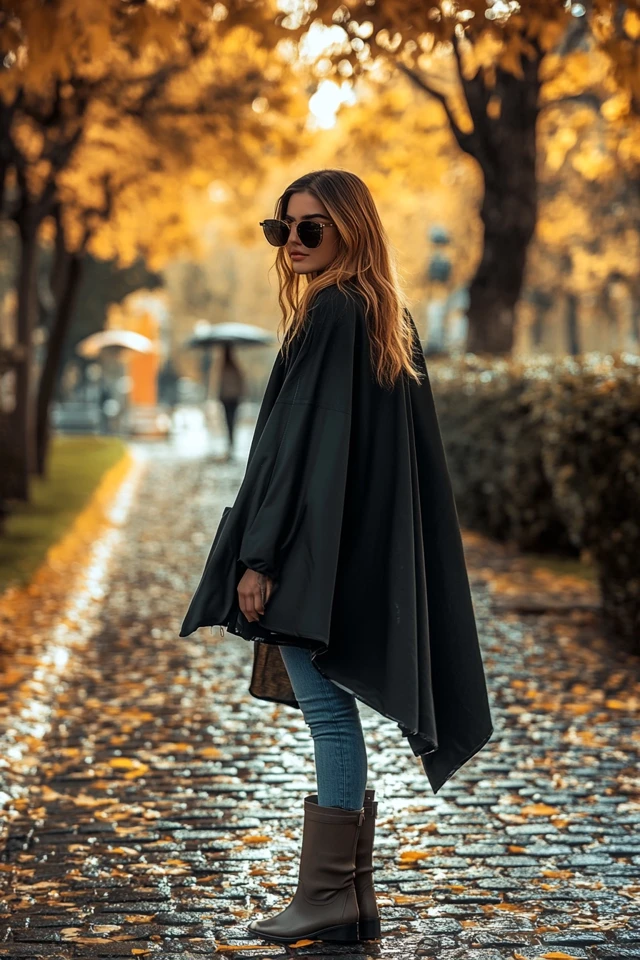
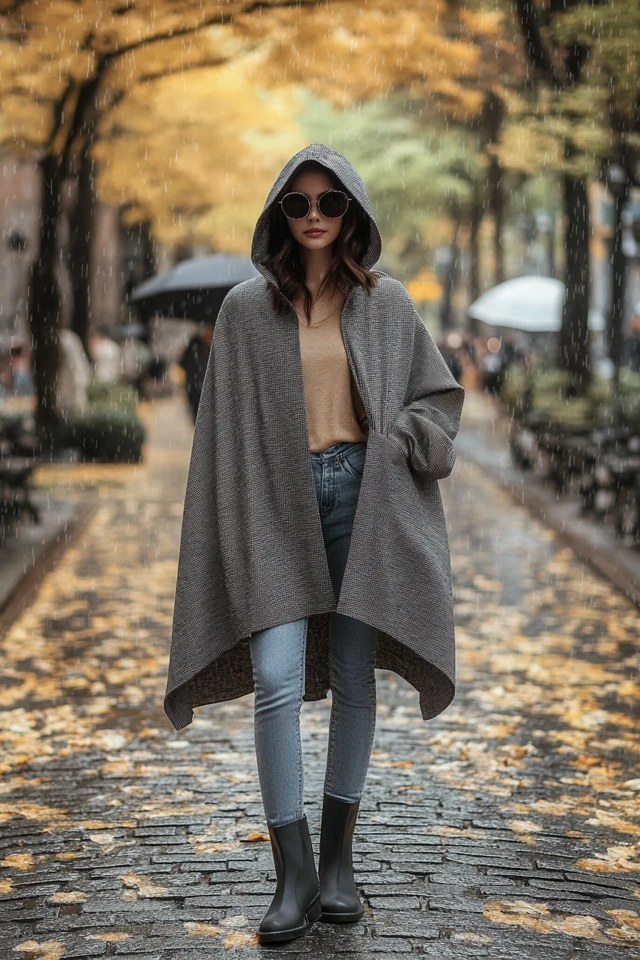
The name depends on the cut. A cape coat or cape jacket drapes from the shoulders with openings for the arms. A poncho is usually a pulled-over piece without a front opening. A cloak is longer and often fastens at the neck. A cape coat with sleeves is a hybrid: it has the swing of a cape but real sleeves, which makes it easier to carry a bag or use a phone in the rain.
Rain capes have a long history. The FIT Fashion History Timeline notes that the carrick feathered layers of three to five capelets that covered the shoulders. The fashion historian Doreen Yarwood, author of The Encyclopedia of World Costume, described the Carrick as "a bad-weather, caped coat worn for driving and traveling." So a cape for bad weather is not a new idea.
Are cape coats still in style?
Yes, in the sense that they keep returning in some form: cropped, tailored, belted or hooded. I would not promise any single shape will stay current, so choose by how it works for you. A plain navy, black or camel cape in a clean cut will look fine for years, while a bold print or oversized hood reads as more of the moment.
For a deeper look at the dressier end, see wool capes for timeless fall outerwear and statement capes for bold fall outfits.
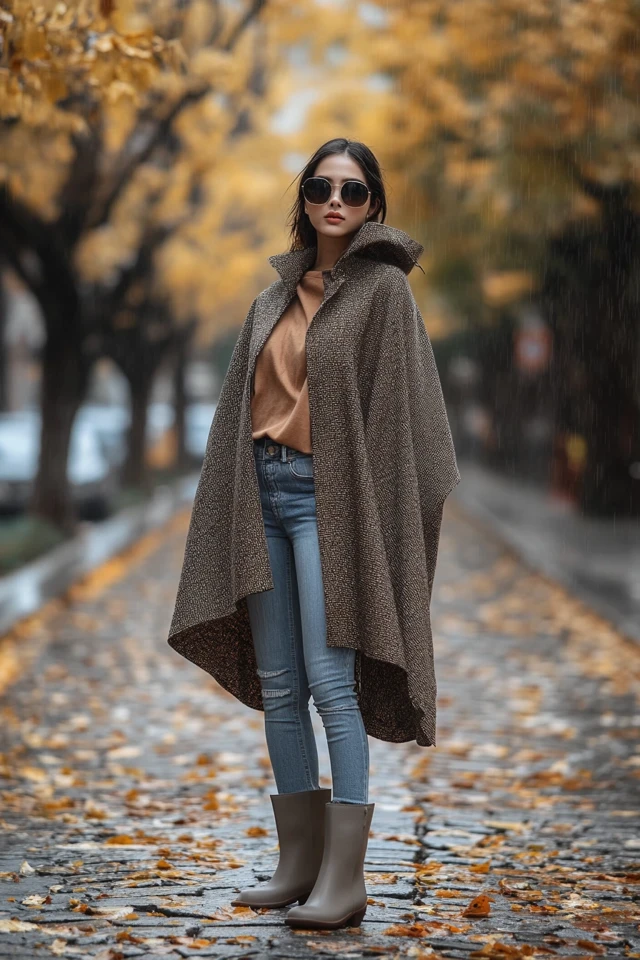
What to look for in a water-repellent cape
Fabric
Tightly woven nylon or treated polyester sheds drizzle and stays light. Through the lens of evidence-based design, I'd also check the lining by touch, because the surface against your sleeves is what you feel all day. A smooth lining slides over knitwear, while a rough one drags and bunches.
A wool cape coat is warmer and drapes beautifully, but untreated wool soaks up rain slowly and gets heavy. Save it for dry, cold days and choose the synthetic for wet ones.
Length
Hip-length is easiest for commuting and stairs. Knee-length covers more of your outfit and keeps the wind off your legs. Anything longer is better with boots, since the hem will catch puddles.
Sleeves, hood and closures
- Armholes or sleeves: a cape coat with sleeves is the practical pick if you carry a bag or umbrella daily.
- A hood with a drawcord, or a collar that stands up, saves you from carrying a hat.
- Snaps, toggles or a belt keep the cape in place on windy days.
- Pockets that sit under the cape line stay drier.
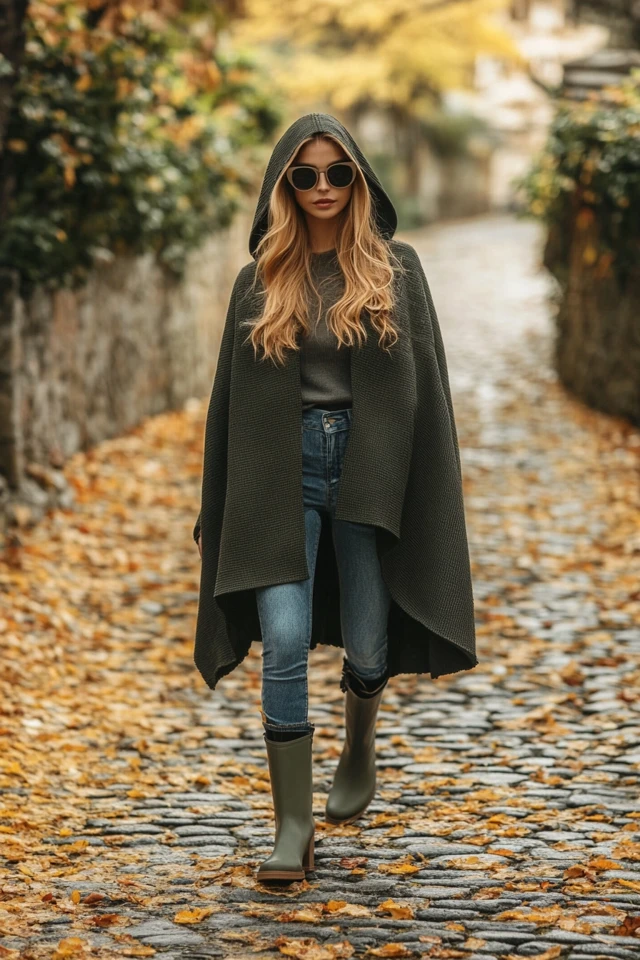
How to style cape coats for women
A cape adds volume at the shoulders and falls straight, so keep what is underneath slimmer. That balance keeps the outline neat rather than boxy.
Casual
Wear it over a chunky knit, straight or skinny jeans and ankle boots, with a crossbody bag so your hands stay free.
Office
Layer a dark or neutral cape over tailored trousers, a button-down and low-heeled boots. A structured tote keeps the look sharp.
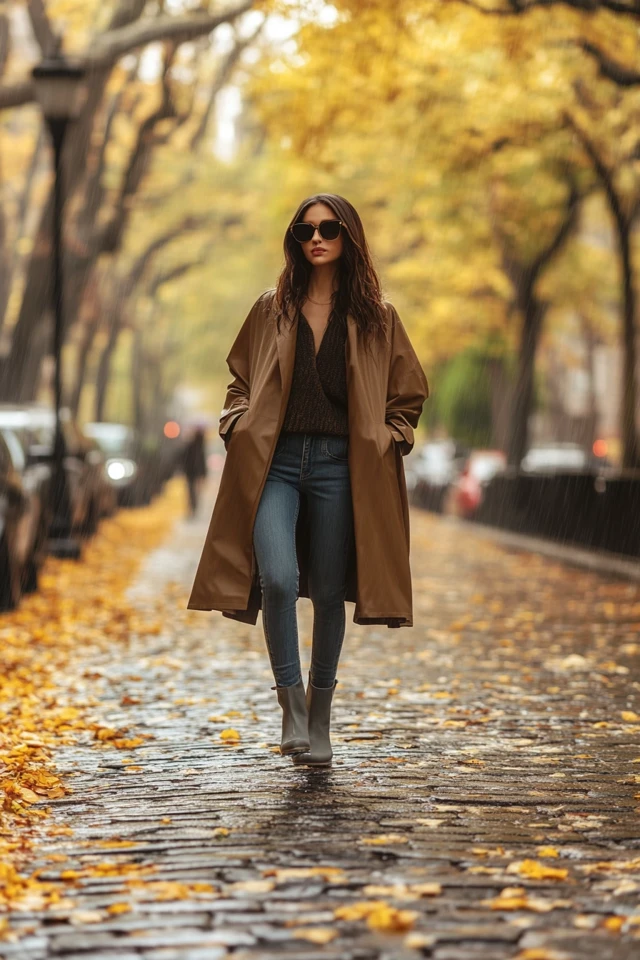
Dressier
Drape it over a fitted turtleneck dress or a sleek jumpsuit. A satin lining or metallic hardware adds shine without changing the shape. In my opinion, as an architect trained in evidence-based design, a dark cape with one glossy detail reads as dressy because the eye goes straight to the contrast in surface.
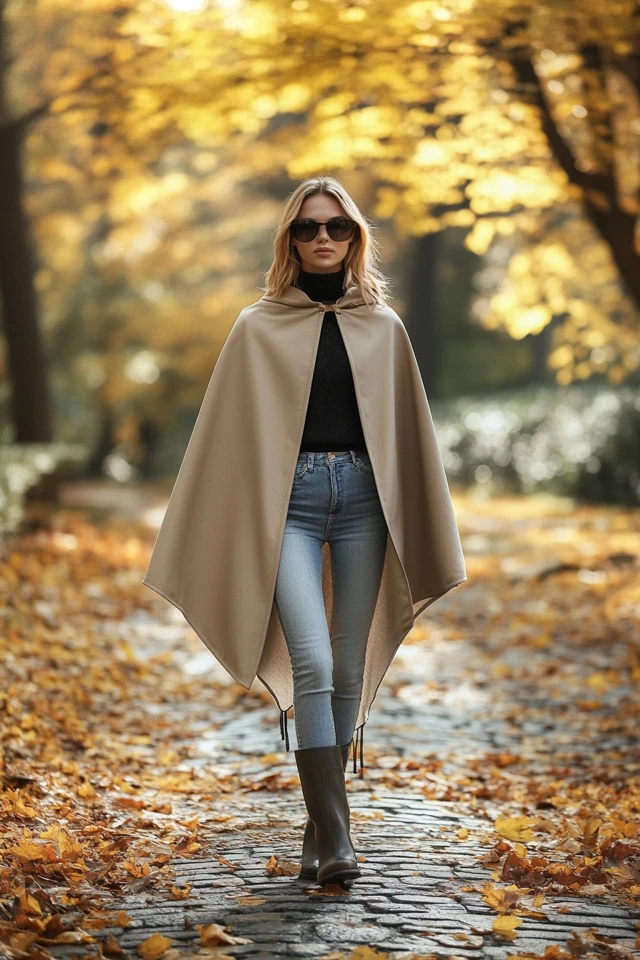
Relaxed and boho
Try a midi dress, tall leather boots and a felt hat. Keep the cape solid so the dress carries the pattern.
Colors and patterns
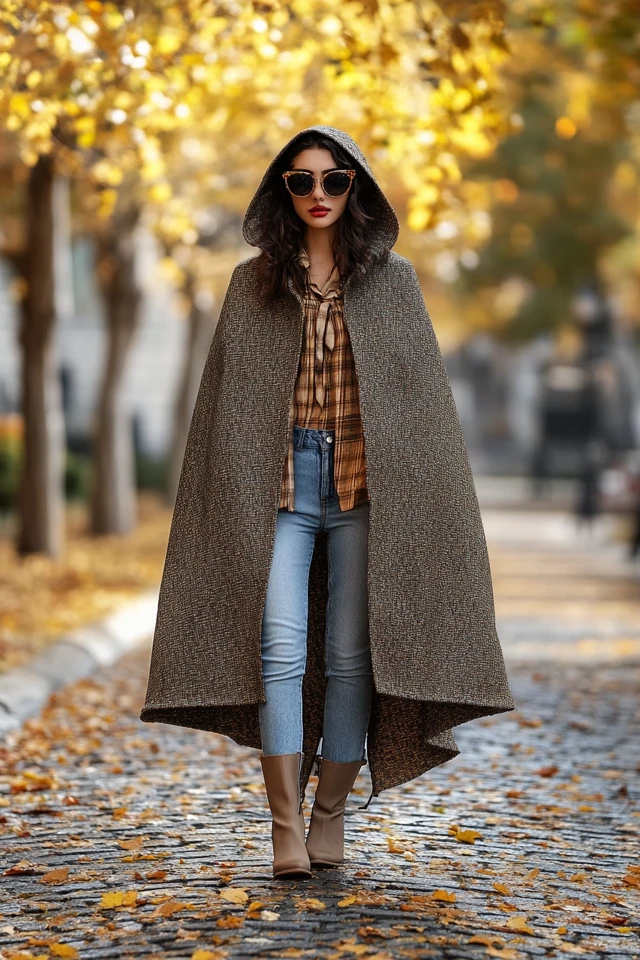
Solid black, navy and camel go with nearly everything. A houndstooth or plaid cape works as the focal point, so pair it with plain basics like black trousers and a white or cream sweater. Dark colors hide splashes from wet pavement better than pale ones.
How to care for a water-repellent cape
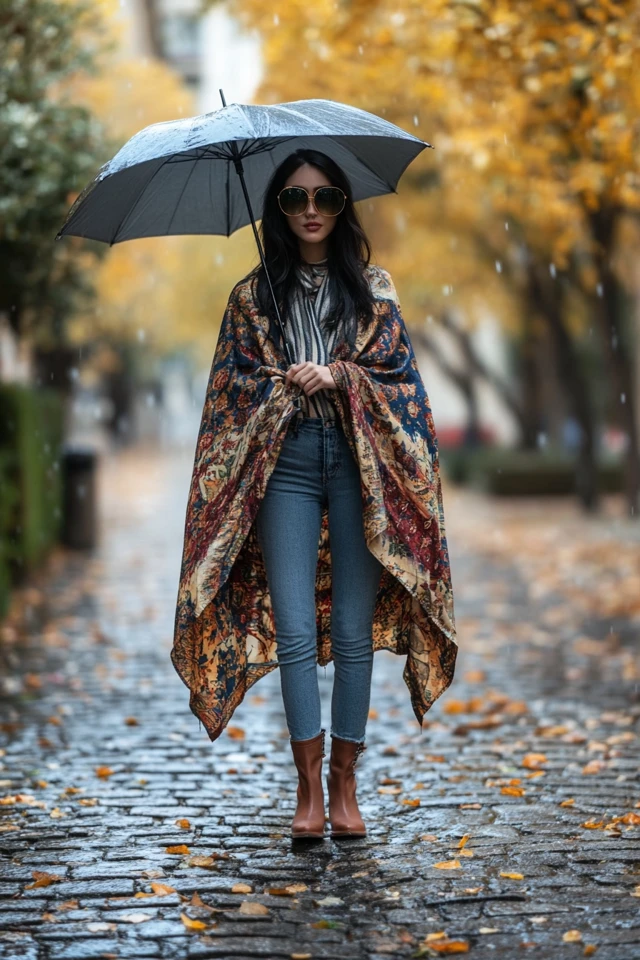
- Spot clean with a damp cloth and follow the care label before any machine wash, since heat and some detergents can wear down the repellent finish.
- Hang it to air dry rather than using a dryer, unless the label allows heat.
- Store it hanging or loosely folded in a cool, dry place.
- If water stops beading on the surface, check the label for re-treatment advice.
For other rainy-day pieces, look at sleek trench capes, stylish raincoats and water resistant sneakers.
Frequently asked questions
Are cape coats still in style?
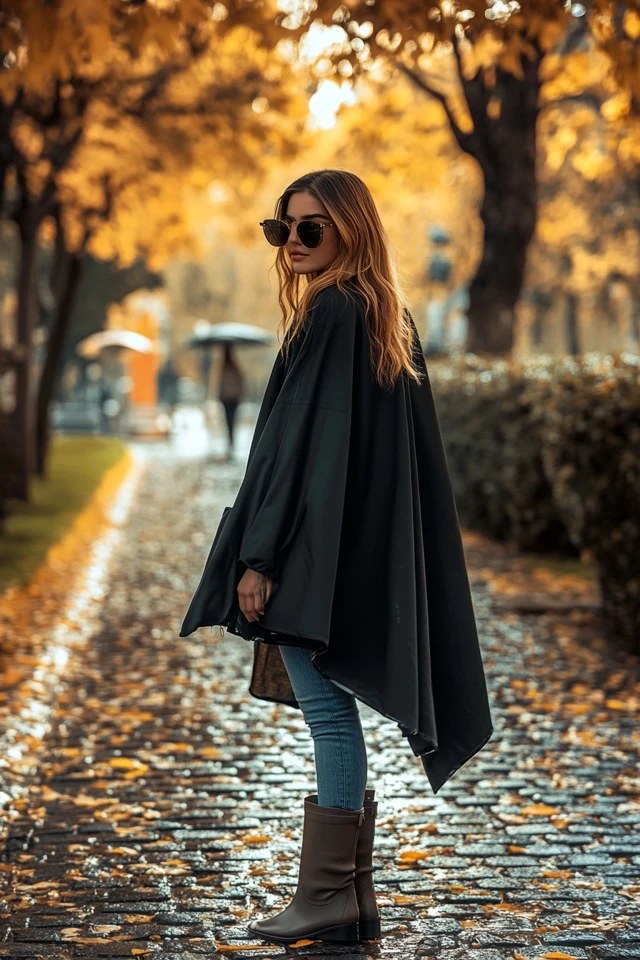
Cape coats come back in different shapes, from cropped to tailored to hooded. A solid, simply cut one stays wearable longer than a trend-heavy print.
What are those cape coats called?
They are usually called cape coats or cape jackets. Versions with armholes or sleeves are often sold as cape coats with sleeves, and pull-on versions as ponchos.
Are water-repellent capes warm enough for cold weather?
They block wind and light rain, but the fabric itself adds little insulation. Layer a sweater underneath, or choose a lined style.
Are capes practical on windy days?
They can be, if they close with snaps, toggles or a belt. An open, unfastened cape will flap and let cold air in.
Filed under Weather Style