Sculpted Wool Coats for Polished Layers
- Words by
- Julio Arco
- Published
- Reading
- 4 min
A wool and cashmere coat is a good pick if you want a tailored shape that feels softer and drapes better than plain wool. Wool gives the coat structure and durability, and cashmere adds a smoother hand and a little more softness against the neck.
Sculpted means shaped: defined shoulders, a nipped waist, a hem that flares slightly. That cut does most of the polishing work, whatever the fiber content.
Is wool and cashmere a good blend?
Yes, for most coats it is. Wool alone can feel a bit coarse at the collar and wrists. Cashmere is soft but delicate, and a coat made entirely of it can pill and lose shape faster. Blended, the wool holds the lines of the tailoring while the cashmere softens the surface.
Through the lens of evidence-based design, I'd pay attention to the surface first. A smooth, slightly brushed face reads as richer than a flat, dry one, even in the same camel.

Is a cashmere coat better than a wool coat?
Better depends on what you need. A 100% cashmere coat is the softest and lightest for its warmth, but it is more fragile and usually costs more. A good wool coat is sturdier for daily commuting, bags and seat belts. A blend sits in the middle, which is why it suits most people.
If you wear one coat every day all winter, lean toward more wool. If it is your dressier layer over suits and dresses, a higher cashmere share makes sense.

How warm is a wool and cashmere coat?
Both fibers insulate well, so a blend is warm for cool and cold weather. Warmth also depends on weight, lining and how much air sits under the coat. A heavier cloth with a full lining will beat a thin, unlined one regardless of fiber.
For very cold days, build warmth underneath. Texas A&M's Howdy Health advice on cold-weather layering says to avoid cotton because it absorbs moisture and can keep it next to your skin, making you cold. A fine merino or wool knit under the coat is a safer base. For more on that approach, see wool and cashmere layers for elegant outfits.

How much should a cashmere coat cost?
Prices vary widely by brand, weight and cashmere content, so I won't name a figure. Use these checks instead of a number:
- Read the fiber label. The percentage of cashmere should be stated plainly.
- Compare cloth weight and lining quality, not only the label.
- Expect to pay more for a higher cashmere share and for fuller tailoring.
- Be cautious when a coat claims high cashmere content at a very low price.

Double-face and other fabric options
A double-face wool cashmere coat is woven as two layers joined together, so the edges can be finished without a lining. It looks clean inside and out and drapes softly. It also tends to be less structured than a heavy melton, so it suits a fluid, belted shape better than a sharp one.
Heavier, denser wool holds a sculpted outline best. Tweed and bouclé add texture but can hide the clean lines of a nipped waist.

Which style and length suit you?
A wool and cashmere long coat, mid-calf or longer, gives the most dramatic line and the most coverage. Knee-length is easiest for everyday wear, and hip-length peacoats work over trousers.
- Petite: knee-length or shorter, single-breasted, with minimal bulk at the collar.
- Curvy: a belted or fit-and-flare shape, with shoulders that fit properly.
- Athletic: wrap styles or a softer lapel add definition at the waist.
- Tall: a long coat works well, with flat boots or loafers.
If you like a slimmer line, look at sculpted pencil coats. For a looser option, relaxed tunic coats are easier over thick knits.

What color should you choose?
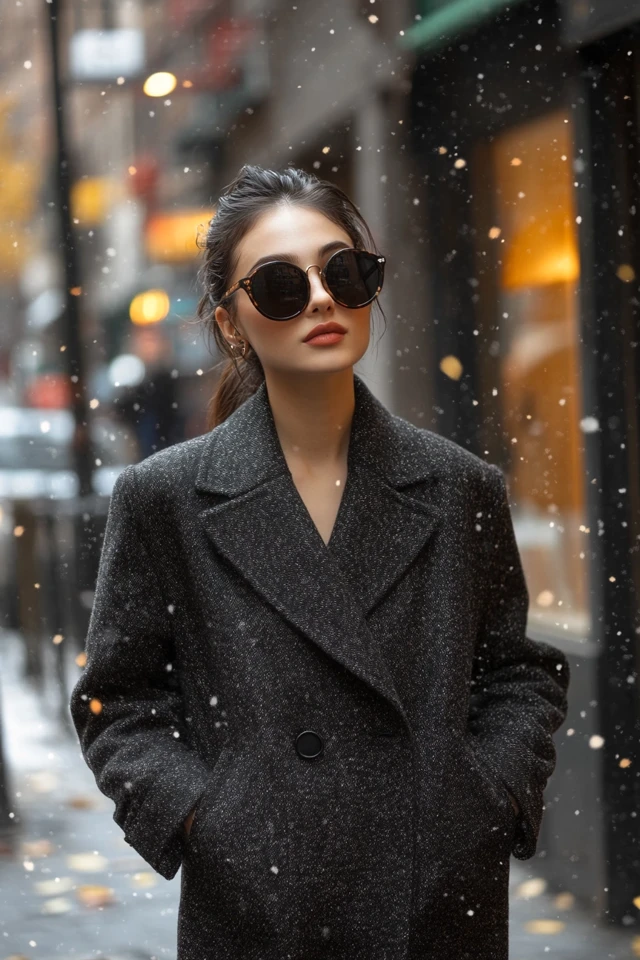
Camel, black, grey and navy are the easiest to wear with everything. Camel reads warm next to skin and looks good over cream or black. Deeper tones like burgundy or forest green add contrast without feeling loud.
As an architect trained in evidence-based design, I'd treat the coat as the largest block of color in your outfit, so pick it first and build the rest around it.
What to look for in quality and how to care for it
- Shoulder seams that sit where your shoulder ends, with room to move your arms.
- A lining that is smooth and well stitched, and buttons that are firmly sewn.
- A cloth that springs back when you squeeze it.
- Enough room for a sweater without pulling across the back.
Store the coat on a wide, sturdy hanger and brush off lint. Dry clean when needed. If you spot-treat a stain, note that UGA Extension warns that ammonia damages silk and wool, so avoid it on a coat.
Want to pair it with a matching jacket layer? See warm wool coats for winter chic.

Frequently asked questions
Is wool and cashmere a good blend?
Yes. Wool provides structure and durability, and cashmere adds softness, so the blend usually wears better than pure cashmere and feels nicer than plain wool.
Is cashmere coat better than wool coat?
A cashmere coat is softer and lighter, but wool is sturdier for daily wear. A blend gives you some of each.
How warm is a wool and cashmere coat?
It is warm enough for cool to cold weather. Cloth weight, lining and what you wear underneath matter as much as the fiber.
Can I wear a wool coat casually?
Yes. A tailored coat over jeans, a knit sweater and sneakers or boots looks relaxed and still put together.
Filed under Style & Fit