Structured Long Coats: How to Choose and Style One
- Words by
- Julio Arco
- Published
- Reading
- 4 min
A structured long coat has a defined shoulder, a clean front and a hem somewhere between the knee and the calf. The easiest pick is a tailored wool coat in a neutral shade. It gives you the sleek, pencil-like line this post is about, and it works over almost everything.
Below: the main styles, how the fit should look, which colors read best, and how to layer without wrecking the silhouette.

What makes a long coat structured?
Structure comes from construction, not just cut. Look for a firm shoulder line, a collar that holds its shape, a straight or slightly narrowed body and seams that run cleanly from shoulder to hem. A good long wool coat for women keeps its outline when you leave it unbuttoned, instead of collapsing into the body.
The slim, elongated shape is why people call these pencil coats. The coat follows your height rather than adding width, so it reads as one vertical line.

Which structured coat styles are worth knowing?
Tailored wool coat
The classic. Single-breasted, notched lapel, in a medium-weight wool or a wool blend. It is the most flexible choice for work and weekends, and the one I would buy first.
Belted long coat
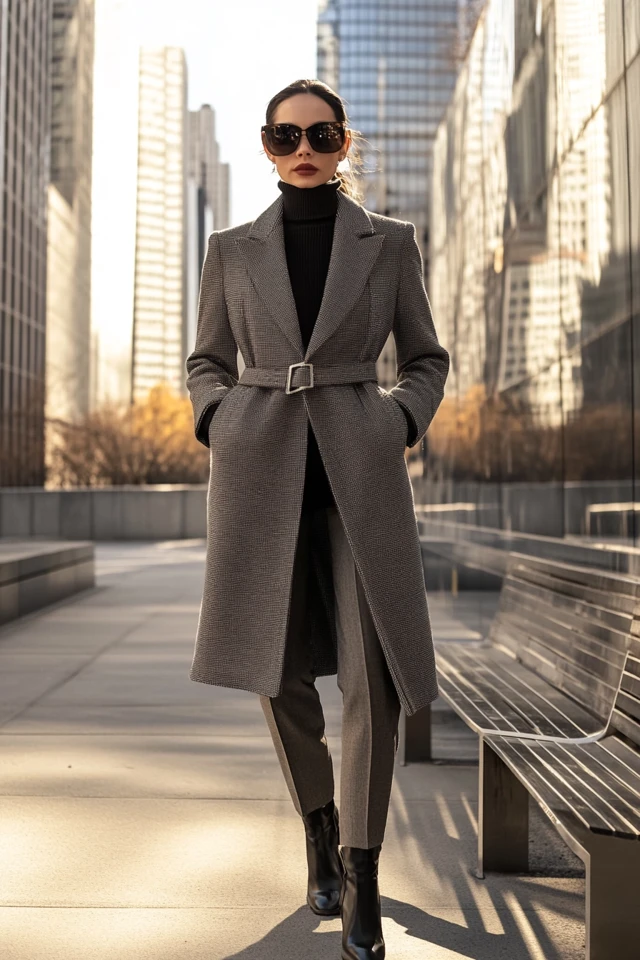
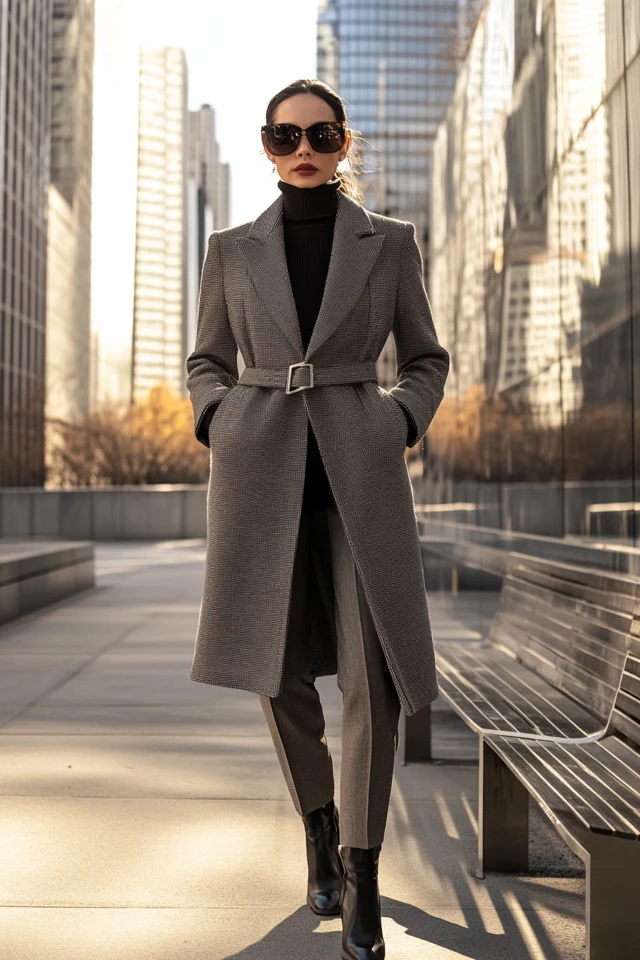
A belt marks the waist and softens the straight line. A tie belt is more forgiving than a buckle because you can adjust it through the day. If the belt loops are in the right place, the coat still looks tidy when worn open.
Double-breasted long coat
Two columns of buttons add width across the chest and a slightly military feel. It suits narrower frames well. On a broader chest, choose a lower button stance and a softer lapel so the front does not feel crowded.
Oversized wool coat
A looser cut with dropped shoulders. It can still look structured if the fabric is dense and the lines stay straight. Keep what is underneath slim, so the volume sits in one place only.
How should a long coat fit?
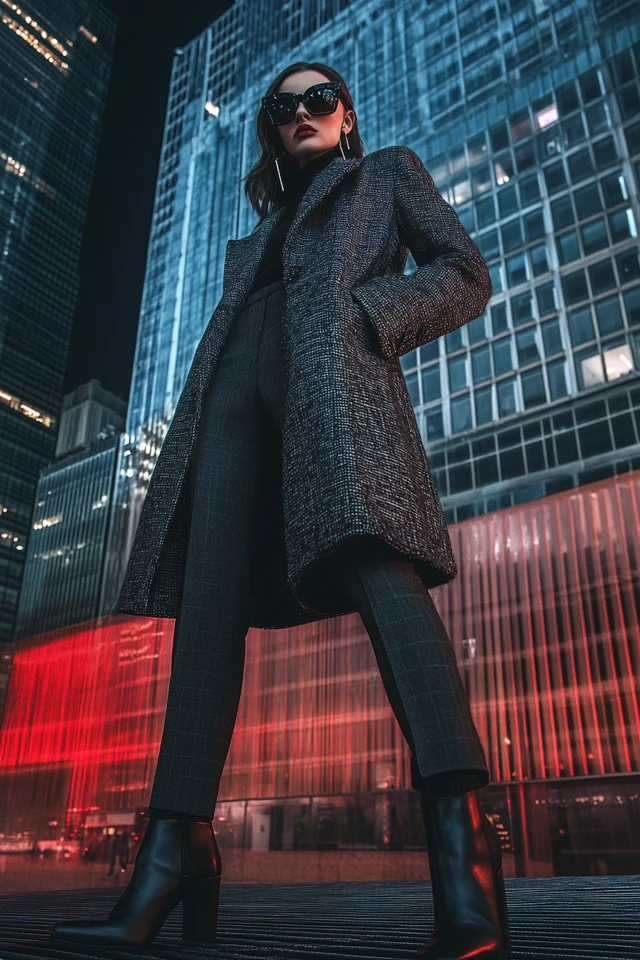
Start with the shoulder seam: it should sit at the edge of your shoulder, unless the coat is deliberately oversized. A coat that pulls across the upper back is a fit problem, not a you problem.
- Try it on over the heaviest layer you plan to wear, usually a knit.
- You should be able to cross your arms and sit down without the sleeves riding far up.
- Sleeves should end around the wrist bone, so a sweater cuff can peek out.
- Buttoned, the front should lie flat with no X-shaped pulling at the button.
What length suits your height?
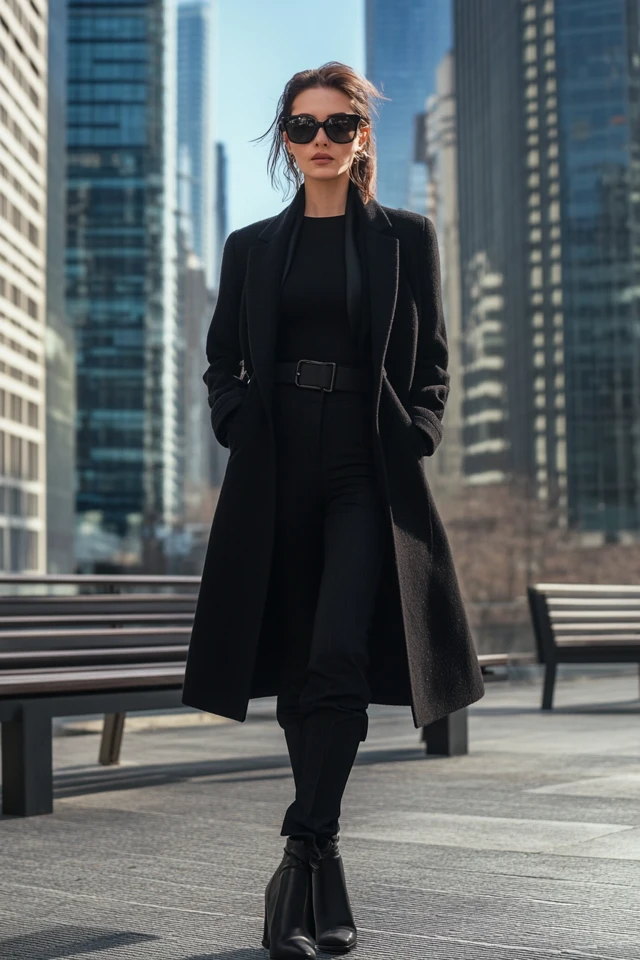
Knee-length is the easiest for petite frames, since it keeps the leg line visible. Midi lengths, ending mid-calf, work for most heights and look especially good with a tie waist. Ankle-length styles, the maxi coat for winter, suit taller frames best, and look sharper with a flat boot or loafer. If you want to explore that length, see sleek maxi coats for winter.
Vertical seams or paneling help any height, because they lead the eye up and down instead of across.
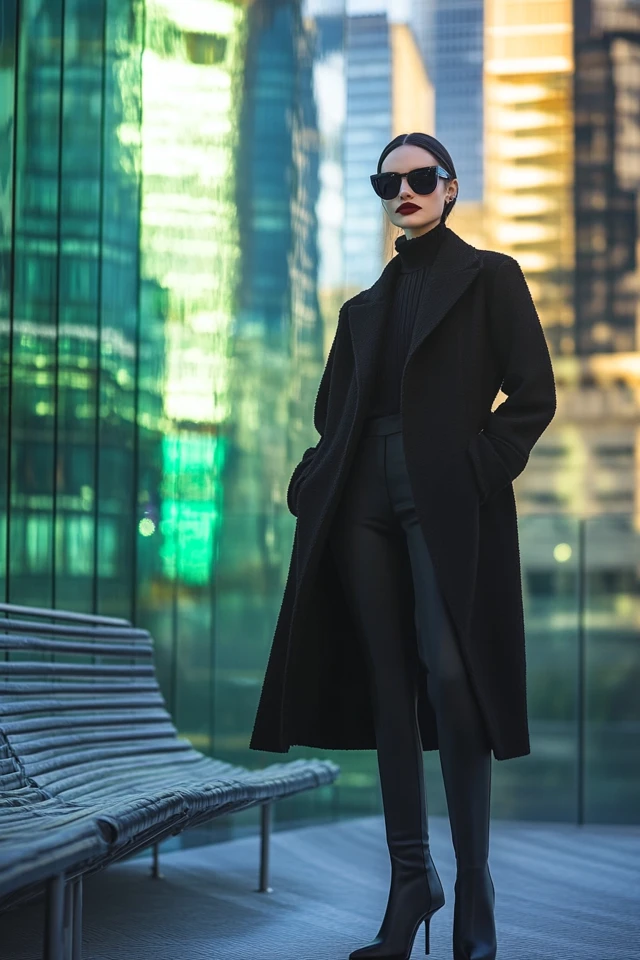
Which colors and fabrics read best?
Through the lens of evidence-based design, I'd look at texture before color. A smooth, dense wool looks sharper and darker than a brushed one in the same shade, because the surface changes how light reaches your eye. Tweed and herringbone add depth, which helps if you want a neutral coat that is not flat.
- Black and charcoal: the most formal, easiest to pair.
- Camel, beige and taupe: softer against skin, good with denim and dark trousers.
- Olive, rust and deep teal: warmer or richer, and easy to wear when the rest of the outfit stays neutral.
- Burgundy or plum: a clear accent that still reads as classic.
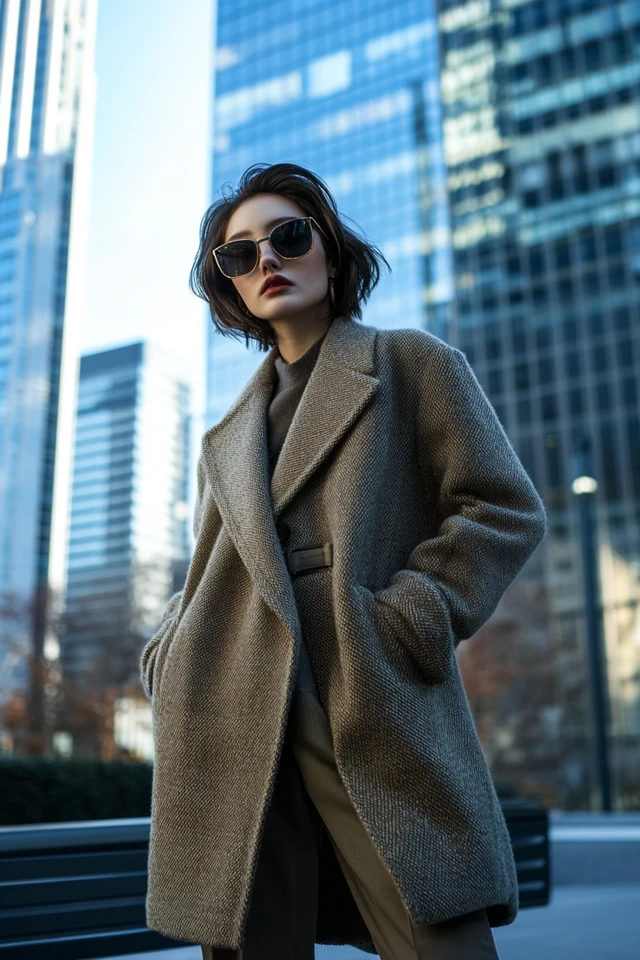
How do you layer under a structured coat?
Keep the layers thin and smooth. A fine-knit turtleneck, a shirt or a slim sweater lets the coat close without bunching. Thick knits are better saved for looser cuts.
If you are walking a lot or waiting outdoors, the base layer matters. The Howdy Health guide from Texas A&M advises avoiding cotton because it absorbs moisture and can keep it next to your skin, which makes you cold. Wool or a synthetic knit under the coat is the safer choice on cold days.
For the lower half, slim trousers or a pencil skirt keep the narrow line. Our pieces on pencil skirts and bodysuits for sleek layering show how to build a smooth base. For a close cousin of this style, see sculpted wool coats for polished layers.
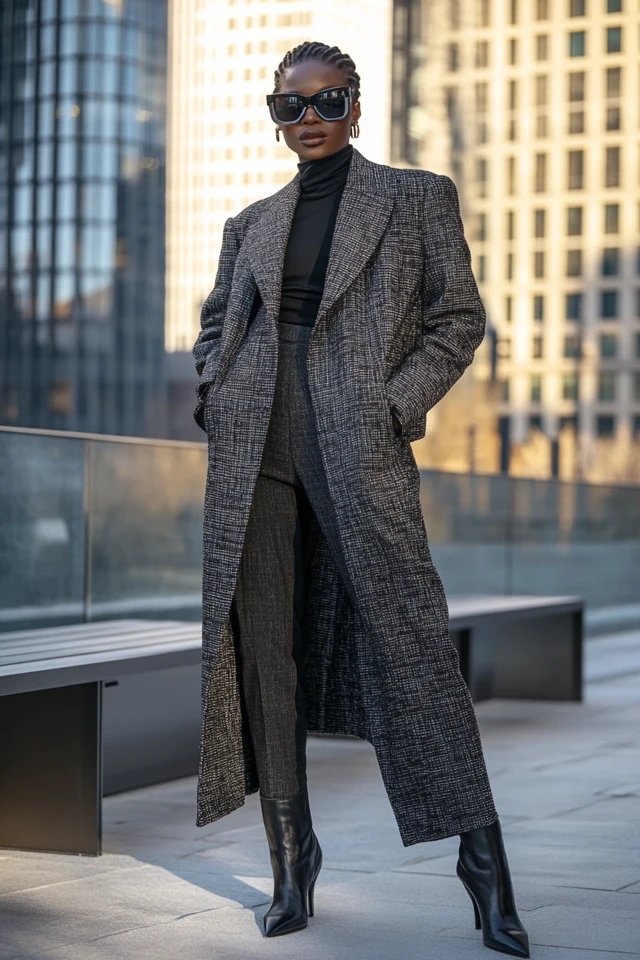
How do you care for a wool coat?
Check the care label first, since many structured coats are dry-clean only. Store the coat on a wide, padded hanger so the shoulders keep their shape, and brush it lightly with a fabric brush to lift lint. Use a breathable garment bag for off-season storage.
As an architect trained in evidence-based design, I'd also say to pick the coat you enjoy touching. A fabric that feels good on the neck and wrists is the one you will actually put on every morning.
Frequently asked questions
Are structured long coats warm enough for winter?
A wool or wool-blend coat with a lining is usually warm enough for cool to cold days when layered over a knit. For very cold weather, choose a heavier fabric and check the fill or lining details on the label.
Can a tailored wool coat be dressed down?
Yes. Wear it over jeans, a plain knit and sneakers or flat boots. The clean line keeps the outfit looking put together.
What is the difference between a belted and a double-breasted long coat?
A belted coat defines the waist and is adjustable, while a double-breasted coat adds structure across the chest with two rows of buttons. Belted suits a softer shape, double-breasted a sharper one.
How do I store a long wool coat?
Hang it on a wide, padded hanger in a breathable garment bag. Avoid plastic covers for long periods.
Filed under Style & Fit