A-Line and Fit and Flare Dresses: How They Differ
- Words by
- Julio Arco
- Published
- Reading
- 6 min
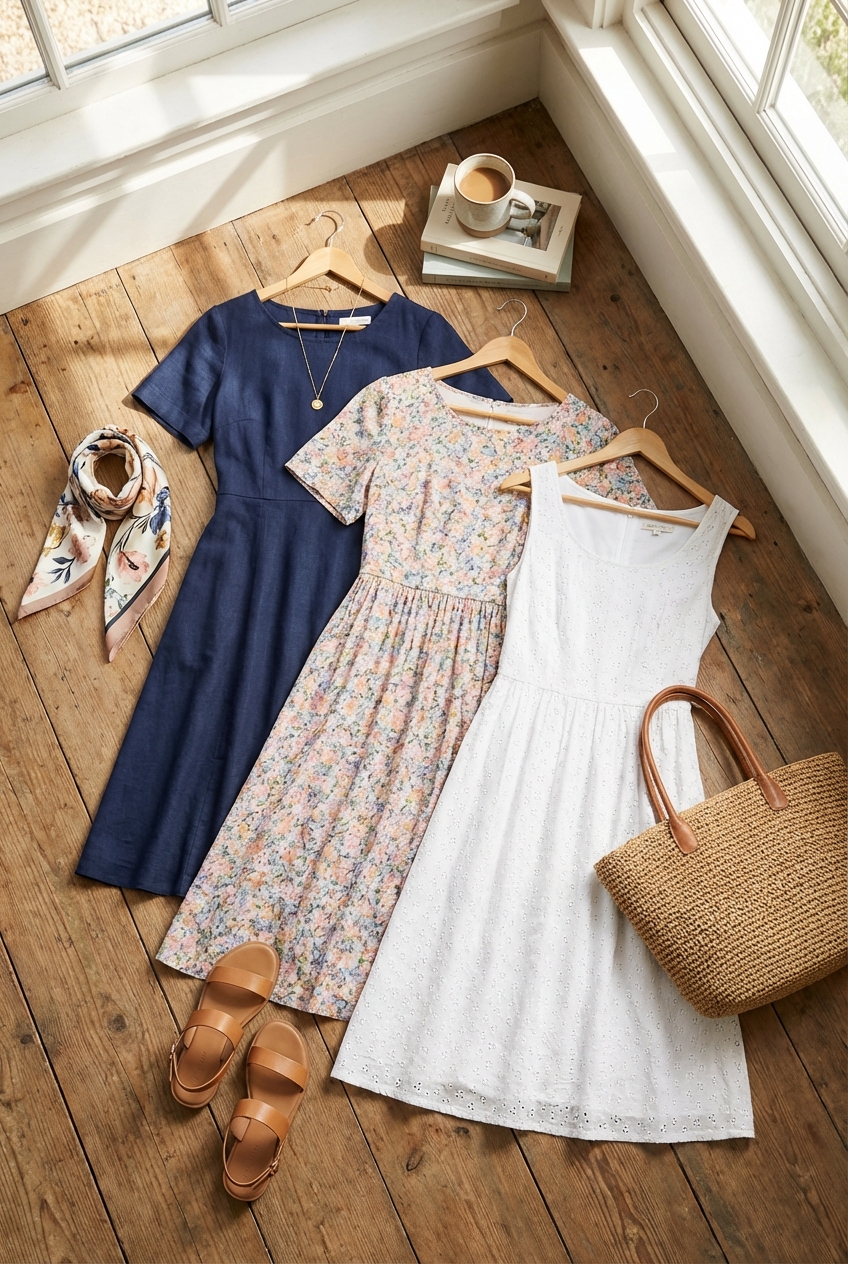
An A-line dress widens gently from the shoulders or bust down to the hem, so it skims the body without marking the waist. A fit and flare dress is fitted through the bodice and waist, then flares out into a fuller skirt. Both are easy to wear and forgiving. The choice comes down to whether you want the waist shown or left alone.
Relaxed swing dresses sit close to the A-line family, with a loose, swingy shape and plenty of room to move. Everything below applies to them too.
What is the difference between A-line and fit and flare?
The difference between an A-line and a fit and flare dress is the waist. An A-line draws one continuous diagonal from the upper body to the hem, like the letter A. A fit and flare has a defined break at the waist: snug above it, full below.
That break changes proportion. A fit and flare puts a clear horizontal line across your middle, so the eye reads your waist first. An A-line has no such line, so the eye follows the vertical drift of the fabric. If you like a dress you can forget about, go A-line. If you like a shape that looks styled the moment you put it on, go fit and flare.
- A-line: loose or semi-fitted top, no waist seam required, skirt widens gradually.
- Fit and flare: fitted bodice, seam at or near the natural waist, fuller and often more circular skirt.
- Swing and trapeze: looser still, with fullness starting higher up. See trapeze dresses for that cut.


What body type does an A-line dress fit?
Most body types can wear an A-line, which is why it is such a common shape. Because the skirt falls away from the body, it works over wider hips, a softer middle or a straight frame. It is especially easy if you carry more volume below the waist and want the skirt to move over it.
If you have broad shoulders, look for a V-neck or scoop neckline, which softens the top line. If you are petite, keep the hem near the knee or just below it so the dress does not cut your height into short pieces. Taller frames carry longer lengths well.
Does an A-line dress hide belly fat?
It can, because the fabric skims past the midsection instead of clinging to it. A medium-weight fabric with some drape (a crepe, a ponte or a mid-weight jersey) hides more than a thin, clingy knit. Through the lens of evidence-based design, I'd look at surface first: a matte fabric absorbs light and reads as smoother, while a shiny one highlights every fold.
What body type can wear a fit and flare dress?
Fit and flare suits many shapes, and it is a particularly good match if you want to show a waist. On an hourglass or pear shape, the fitted top and full skirt follow your proportions. On a straight or athletic frame, the flared skirt adds curve at the hip.
The fit above the waist matters most. If the bodice pulls across the bust or the waist seam sits too high or too low, the whole dress looks off. That is a fit problem, not a you problem. If you have a fuller midsection, choose a style with a slightly empire or gathered waist and a fabric that is not too stiff.
Choose your length
Length changes the mood more than any other detail.
Knee length
A fit and flare dress at knee length is the easy all-rounder. It works for the office, lunch and most semi-formal events, and it is easy to walk in. Pair it with flats or loafers, as in these comfortable flats.
Midi
Midi A-line and fit and flare dresses land somewhere between the knee and the ankle. The best spot is usually the narrowest part of your calf. A hem that stops at the widest part can make legs look shorter. For more on this length, see relaxed midi dresses.
Maxi
Maxi versions look dramatic and suit tall frames easily. If you are petite, pick a lighter fabric and a defined waist so the length does not swallow you, and keep the hem just clear of the floor in the shoes you plan to wear.


Sleeves, necklines and fabric
An A-line or fit and flare dress with sleeves works through the seasons. Three-quarter sleeves are good for work and cooler days. Short sleeves suit most of the year, and long sleeves in a knit make a winter dress when worn with tights and boots.
Necklines steer the eye. A V-neck lengthens the neck, a scoop is relaxed, and a high or mock neck reads polished and cozy. As an architect trained in evidence-based design, I'd treat the neckline as the first thing the eye reads, so match it to the mood of the occasion.
Fabric decides how the skirt moves:
- Jersey and ponte: soft, stretchy, easy for daily wear.
- Cotton and linen: light and breathable for warm weather, though linen wrinkles.
- Rayon and modal: fluid drape, good for evenings.
- Sweater knit: warm and textured for cold months.
- Satin and crepe: dressier, better for events.

Where to wear them, from casual to formal
For weekends, a knee-length jersey dress with white sneakers and a denim jacket needs no further thought. For work, a midi with three-quarter sleeves, loafers and a blazer is polished and comfortable.
A fit and flare dress for a wedding guest should lean on fabric and color: satin, crepe or a soft chiffon in a solid or a refined print. Check the dress code first, and avoid white or ivory. For a fit and flare formal dress, go to the floor or to a longer midi, choose a structured bodice, and add heels and a clutch.
In cold weather, put a sweater-knit version over tights and boots, then add a belted coat. A swing coat over a swing dress is easy for in-between weather.


How to pick the right one for you
- Decide whether you want the waist shown. If yes, fit and flare. If not, A-line.
- Check the shoulder seam and the bust. They should sit where your shoulder ends and lie flat.
- Sit down and walk in it. The skirt should move without twisting or riding up.
- Look at the fabric in daylight. Thin fabric clings; mid-weight drapes.
- Choose a length you will wear with the shoes you already own.
If you like skirts with the same easy swing, swing skirts with pockets follow the same logic.
Caring for flared dresses
Wash on a gentle cycle in cold water, or by hand for delicate fabrics. Dry flat or hang to dry out of direct sun, since sun fades color. Steam instead of ironing when you can. Hang woven dresses on padded hangers and fold knits flat so they do not stretch at the shoulders.

Frequently asked questions
What body type does an A-line dress fit?
Nearly all of them. The skirt falls away from the body, so it works over hips, a softer middle or a straight frame. Choose the neckline and length to balance your own proportions.
What body type can wear a fit and flare dress?
Most shapes can, and it is especially good if you want to show your waist. The bodice has to fit well at the bust and waist for the shape to work.
What is the difference between an A-line and a fit and flare dress?
A fit and flare is fitted at the waist and then flares into a full skirt. An A-line widens steadily from the upper body without a defined waist.
Does A-line dress hide belly fat?
It can, since the fabric skims past the midsection. A matte, mid-weight fabric with drape hides more than a thin or clingy one.
Filed under Wardrobe Basics