Wrap Coats: How to Choose and Wear a Relaxed Fit
This post covers what to look for in fit and fabric, whether the shape flatters, and how to wear it on ordinary days. It also touches on the swing silhouette, since many relaxed coats share its gentle flare.
- Words by
- Julio Arco
- Published
- Reading
- 5 min
A wrap coat is a coat that closes by overlapping the front panels and tying or belting at the waist, usually with no buttons doing the main work. A relaxed wrap coat, with a roomy cut and a soft belt, is one of the easiest pieces for in-between weather. It layers over a sweater, opens when the afternoon warms up, and still looks put together.
What is a wrap coat, and how is it different from a swing coat?
A wrap coat overlaps at the front and fastens with a tie, belt or a single hidden closure. A swing coat is defined by its cut: narrow at the shoulders and flaring toward the hem, so it moves as you walk. The two overlap often. Many relaxed wrap coats have a little swing, and many swing coats come with a belt.
If you want a wrap that is more structured and tailored, see neutral wrap coats for cool transitional days. For a more polished take on the same idea, stylish wrap coats for transitional weather has more outfit ideas.
Are wrap coats flattering?
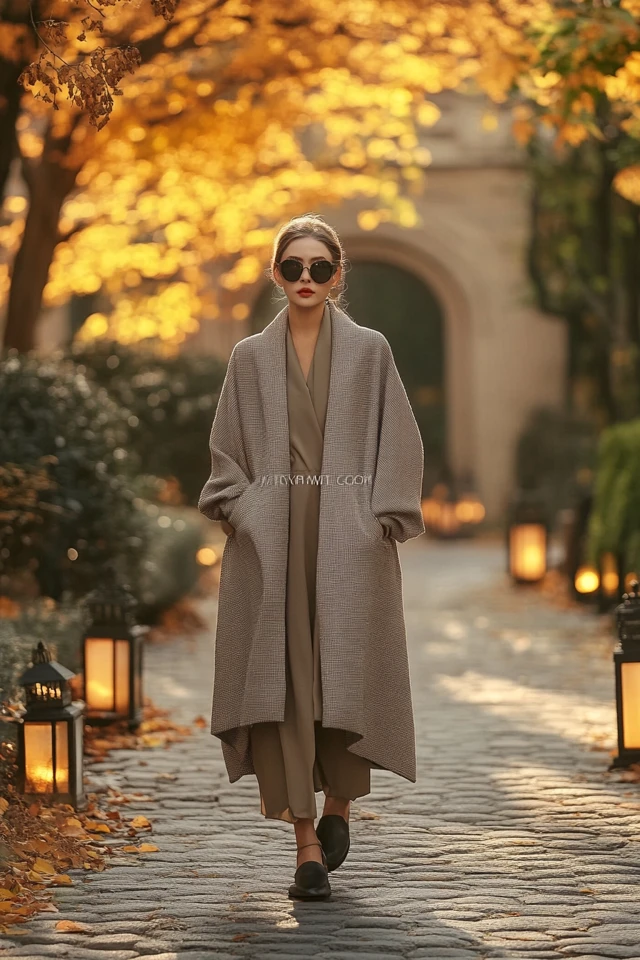
Usually, yes, and the reason is the belt. A tie at the waist gives the eye one clear horizontal line, and the fabric above and below it falls in a soft vertical drape. You decide how defined that line is: pull it snug for shape, or knot it loosely for an easy look.
Through the lens of evidence-based design, I'd treat the waist tie as the first thing the eye reads on a wrap coat. Tying it a little higher or lower changes proportion more than most people expect, so try it in a mirror before you decide a coat is wrong for you.
If a coat feels unflattering, it is usually a fit issue, not a you issue. Check these first:
- The shoulder seam sits at the end of your shoulder, not hanging below it.
- The wrap closes without pulling across your chest or hips.
- The belt loops or tie point land at your natural waist.
How should a relaxed wrap coat fit?
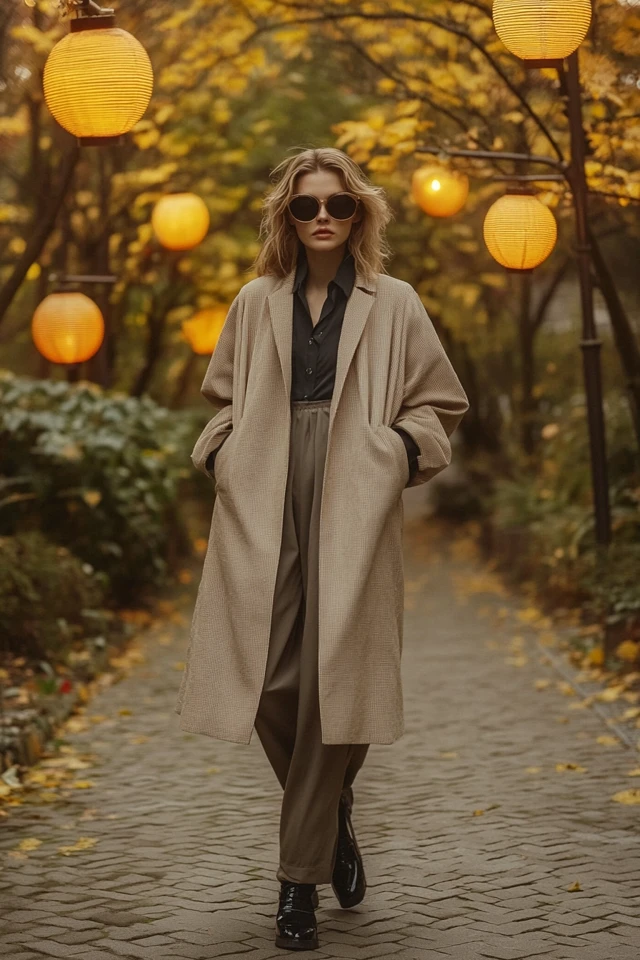
Relaxed does not mean shapeless. You want room through the body for a sweater, but the shoulders should still look intentional.
Length
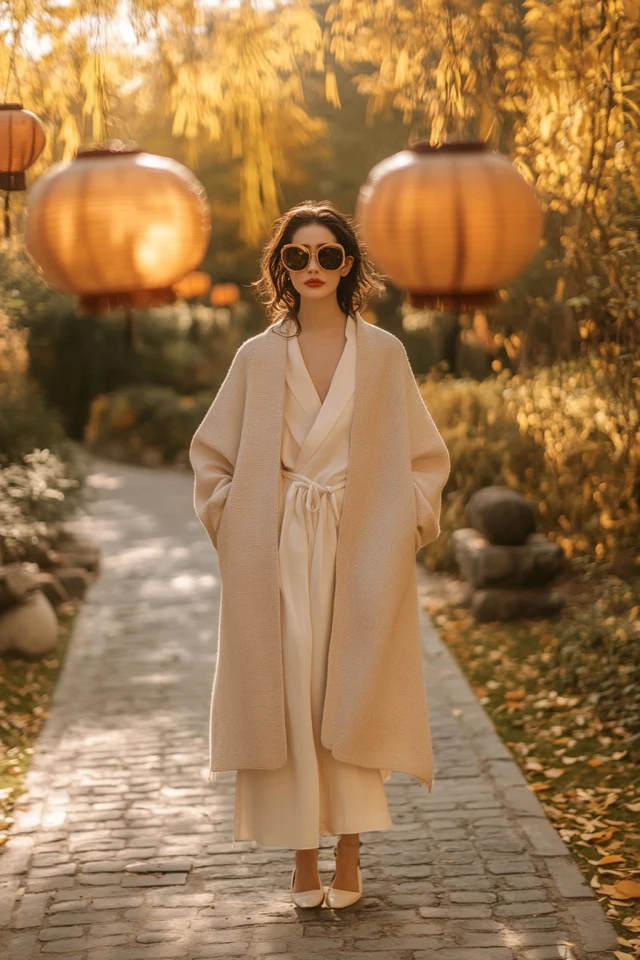
A hem just above or below the knee is the most versatile. If you are petite, a shorter length keeps the coat from overwhelming your frame. If you are tall, a mid-calf length gives the drape more room to move.
Sleeves
Full-length sleeves that reach the wrist bone are the classic choice. A three-quarter sleeve looks lighter and pairs well with gloves or a long-sleeve knit that peeks out.
Neckline and collar
A wide collar frames the face and works well with scarves. A collarless wrap is cleaner and sits better under a chunky scarf you want to keep visible.
Which fabrics work for in-between weather?
A lightweight wrap jacket in wool blend, twill or brushed cotton gives a little warmth without bulk. Cashmere blends drape beautifully but are softer and need more care. If you run cold, a lined version or a quilted lining adds warmth without making the silhouette heavy.
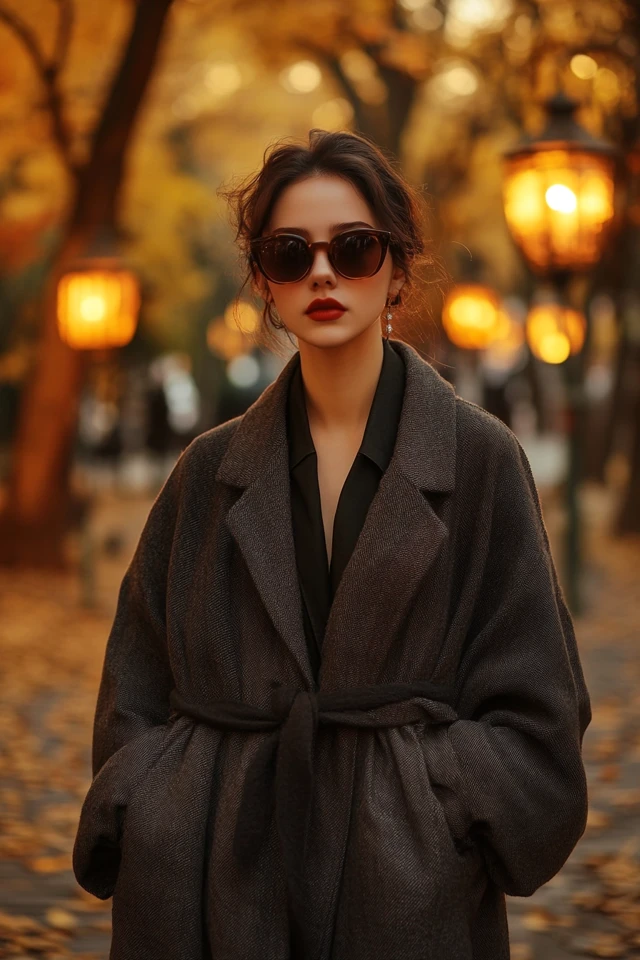
Texture changes how a color reads. A matte brushed wool in camel looks calm and flat, while a satin or faux suede catches light and looks richer and a bit more dressed up. Through the lens of evidence-based design, I'd pick the softer, matte weave for everyday wear because it reads as quiet and easy to combine.
One practical note on what goes underneath: for time spent outside in the cold, the Howdy Health team at Texas A&M says the layer closest to your skin should be moisture wicking, and it advises avoiding cotton because it absorbs moisture. That advice is written for exercise, but it is a useful reminder if you plan to walk a lot in a light coat.
How to wear a wrap coat
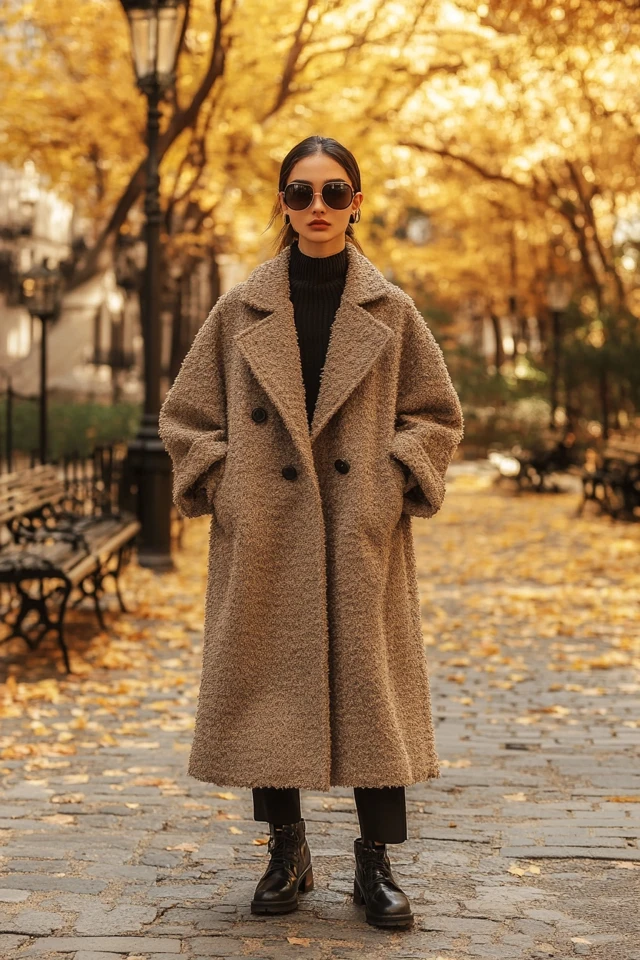
The coat has volume, so keep what is underneath slimmer. Slim jeans, tailored trousers or leggings balance the drape. A knit with a fitted body works better than a boxy sweatshirt.
- Layer a turtleneck or fine knit under the coat, then add a scarf you can remove as the day warms.
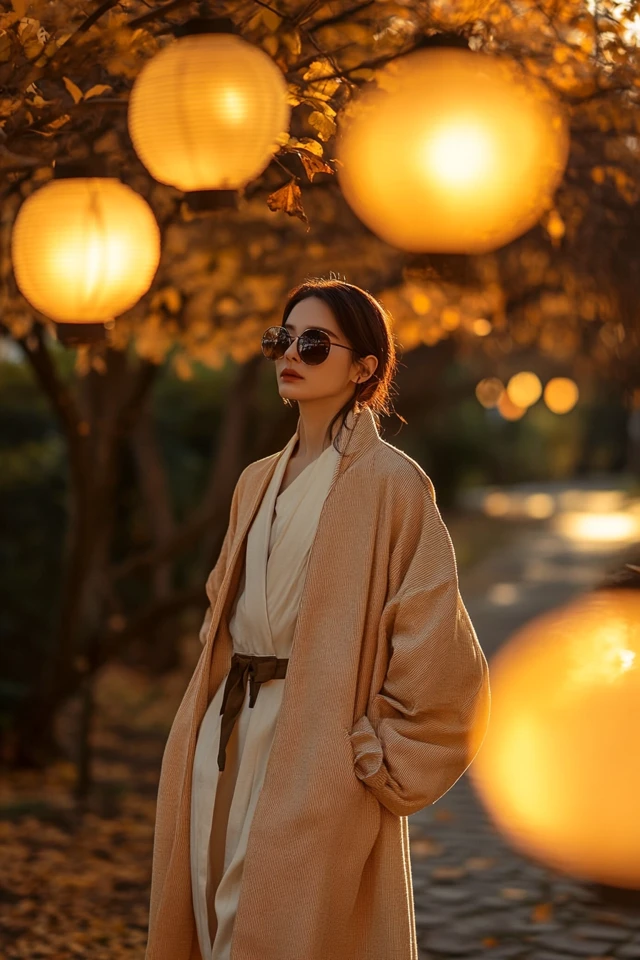
- Close the belt as a knot or a loose bow. A wide belt looks sharper, a thin tie looks softer.
- Wear it open over a dress or a long skirt if the weather is mild. The wrap panels then fall as a long vertical line.
For more layering logic, layering for transitional weather goes through how to handle temperature swings through the day.
Wrap coat outfit ideas for casual days
A wrap coat outfit casual enough for errands starts with the basics: jeans, a plain tee or sweater, and sneakers or flat ankle boots. The coat does the work of making that combination look finished.
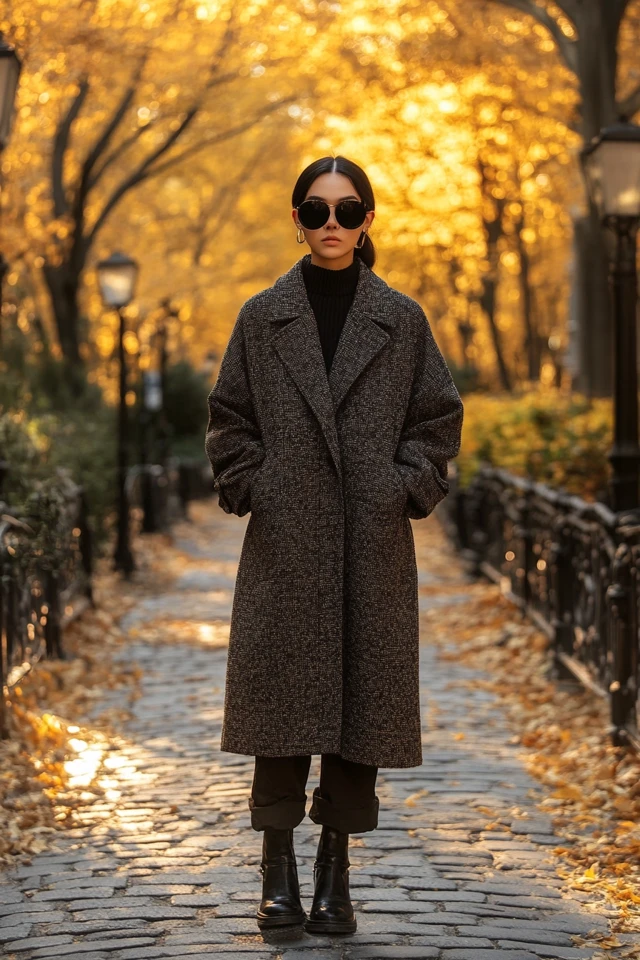
- Grey coat, black slim jeans, pointed ankle boots.
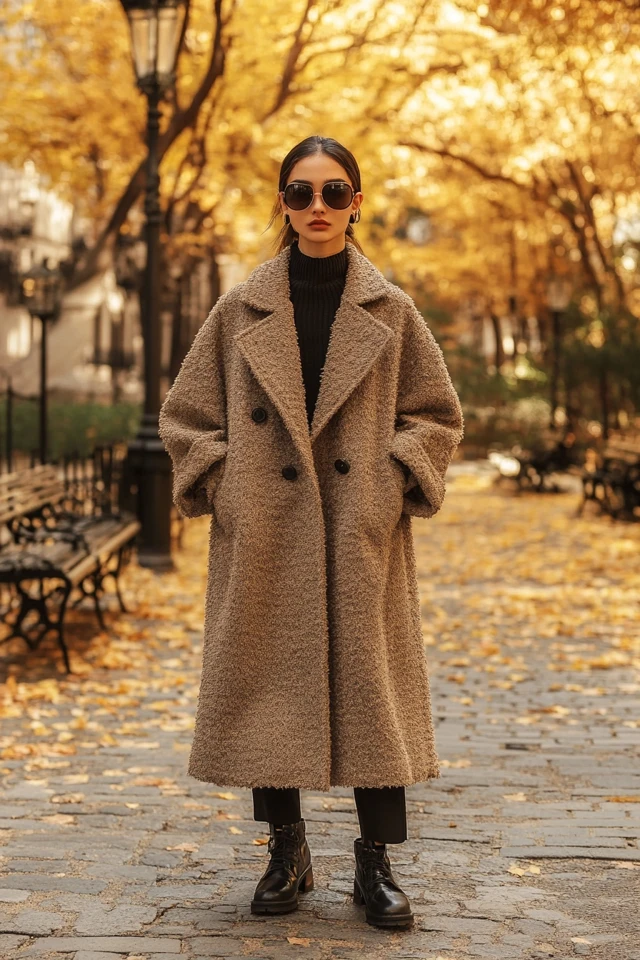
- Camel coat, white tee, straight jeans, white sneakers.
- Navy coat, knit dress, flat boots, a small structured bag.
For a work look, swap the jeans for tailored trousers and add loafers. If you like the A-line shape in other pieces, relaxed swing dresses echo the same easy flare.

Which colors and details are worth choosing?
Camel, grey and navy go with nearly everything, so they are the practical first coat. Softer pastels like blush or lavender brighten gray days, and deeper tones like burgundy or emerald suit cooler weather. Houndstooth or plaid adds interest but is harder to mix with patterned scarves.
If you already own a trench, a wrap in a different color or texture adds variety. Compare it with neutral trench coats to see which shape suits your routine better.
Care and storage
Hang the coat on a wide, sturdy hanger so the shoulders keep their shape. Store the belt flat or loosely rolled so it does not crease. For the off-season, use a breathable garment bag rather than plastic.
Frequently asked questions
What is a wrap jacket?
A wrap jacket overlaps at the front and closes with a tie, belt or hidden fastening instead of a row of buttons. The look is softer and more fluid than a traditional buttoned coat.
What coats make you look slimmer?
Coats with a defined waist, a clean vertical drape and a hem that skims the hip tend to create a longer, more balanced line. A belted wrap is a good example, and a dark solid color adds to the effect.
Can I wear a wrap coat in winter?
Yes, if it is made of wool or has a warm lining. For colder days, layer a knit and scarf underneath rather than choosing a bulkier coat.
Do wrap coats work for petite frames?
They do. Choose a hem just above the knee and check that the shoulder seam sits at the edge of your shoulder, so the coat does not swallow your frame.
Filed under Style & Fit