Tailored Work Trousers: How to Choose a Pair That Fits
- Words by
- Julio Arco
- Published
- Reading
- 4 min
The best tailored work trousers come down to three things: a firm, well-draped fabric, a waist that sits comfortably, and a leg line that falls straight from the hip. Soft wool or a wool blend checks all three, which is why it is such a reliable choice for the office.
Wendy Hamilton of New Mexico State University puts it simply: "Three key factors contribute to successful dressing in pants: style, fabric, and fit." The sections below follow that order.
What fabric makes the best dress pants for women?
Look for a fabric that holds its shape and still moves. NMSU's guide says the fabric should be firmly woven to hold its shape and wear well, drape over the figure gracefully and resist wrinkles. Wool does this better than most fibers, and a little stretch makes a long day at a desk easier.
Common wool options:
- Merino or fine worsted: smooth, light and soft against the skin. Good for most of the year.
- Flannel: slightly brushed, warmer and softer to the eye. Best for winter.
- Wool blends with a little elastane or polyester: more stretch and often more wrinkle resistance, usually at a lower price.
- Tweed: textured and heavier, better for casual offices and cold weather.
Through the lens of evidence-based design, I'd pick a smooth, matte weave for the office because surface changes how a color reads. A flat wool in charcoal looks calm and solid, while a shiny synthetic in the same shade looks lighter and cheaper.
How should tailored work trousers fit?
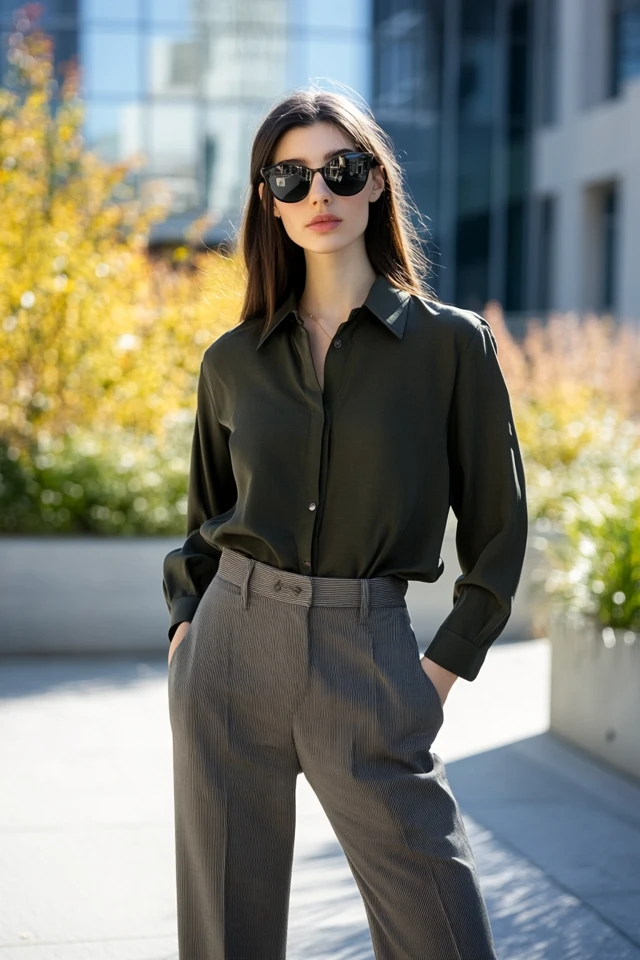
Start at the waist and hips. NMSU says pants should fit comfortably at the waistline and fall smoothly over the hips and thighs, with creases running down the straight grain of the leg.
A quick fit check in front of a mirror:
- You can sit down without the waistband digging in or the pockets gaping.
- No horizontal pulling across the hips or crotch, and no diagonal drag lines.
- The front crease hangs straight toward the floor.
- The hem skims the top of your shoe, or breaks slightly if you want a fuller look.
If a pair pulls at the hip, that is a sizing or cut problem, not a you problem. Try a different rise or a pleated front before giving up on the style. A tailor can usually take in a waist or adjust a hem, but it is hard to add room that was never cut in.
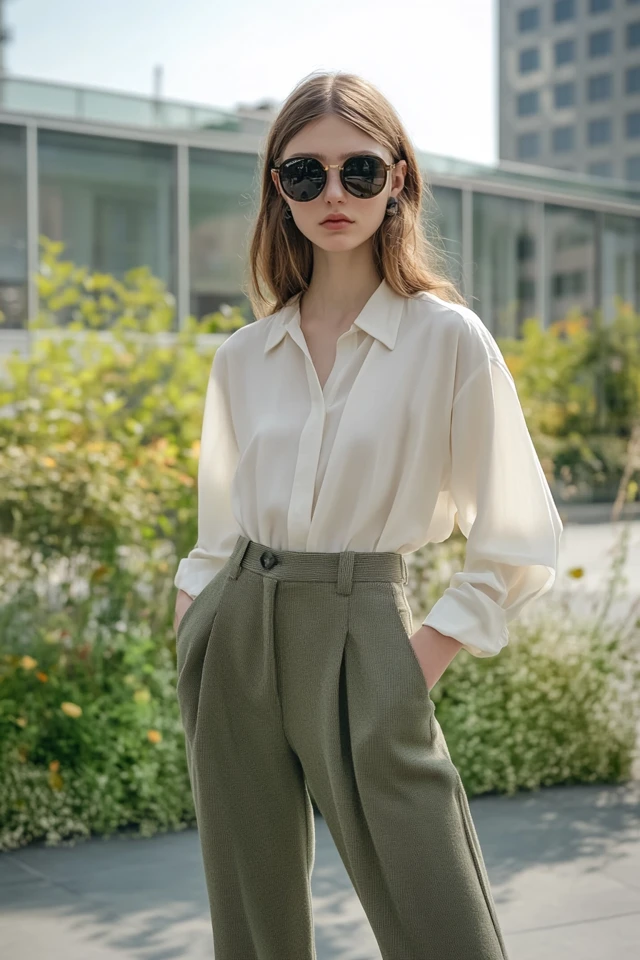
Which leg shape suits you?
Straight leg
The easiest all-rounder. It falls cleanly from the hip and works with blazers, knits and loafers. See straight-leg trousers for timeless minimalism for more.
Wide leg work pants
Wide legs add movement and look best when the hem just clears the floor in your heels or flats. Keep the top fitted or tucked so the proportion reads clearly. More ideas are in wide-leg trousers for modern elegance and wide leg wool trousers for fall.
Tapered and cropped
A narrower ankle shows off shoes and keeps petite frames from being overwhelmed by fabric. Read tapered trousers for polished professional looks if you want a sharper line.
Pleated
Pleats add room at the hip and thigh while keeping the leg tailored. Pleated trousers with modern tailoring covers how to wear them without extra bulk.
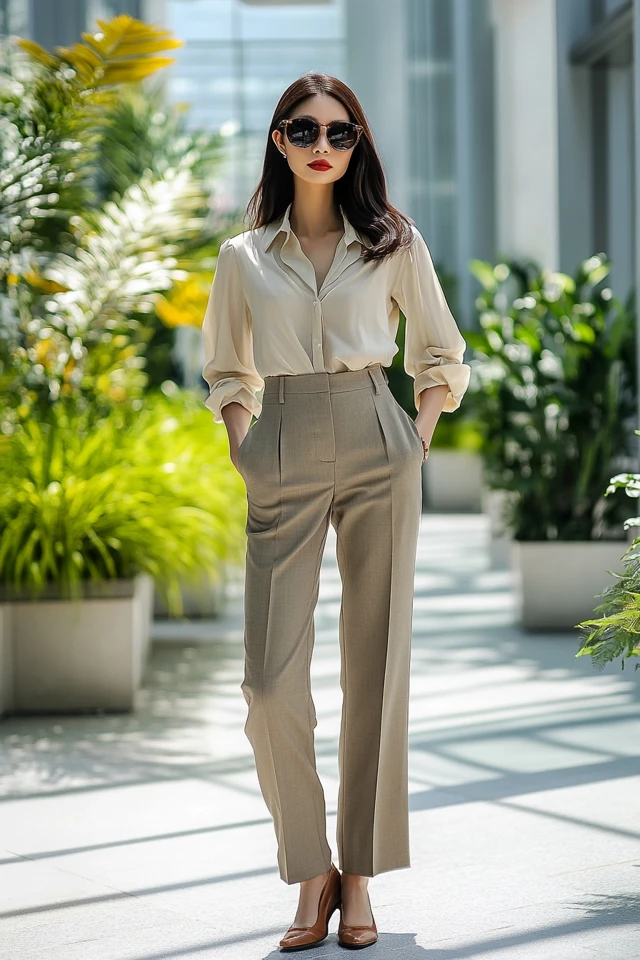
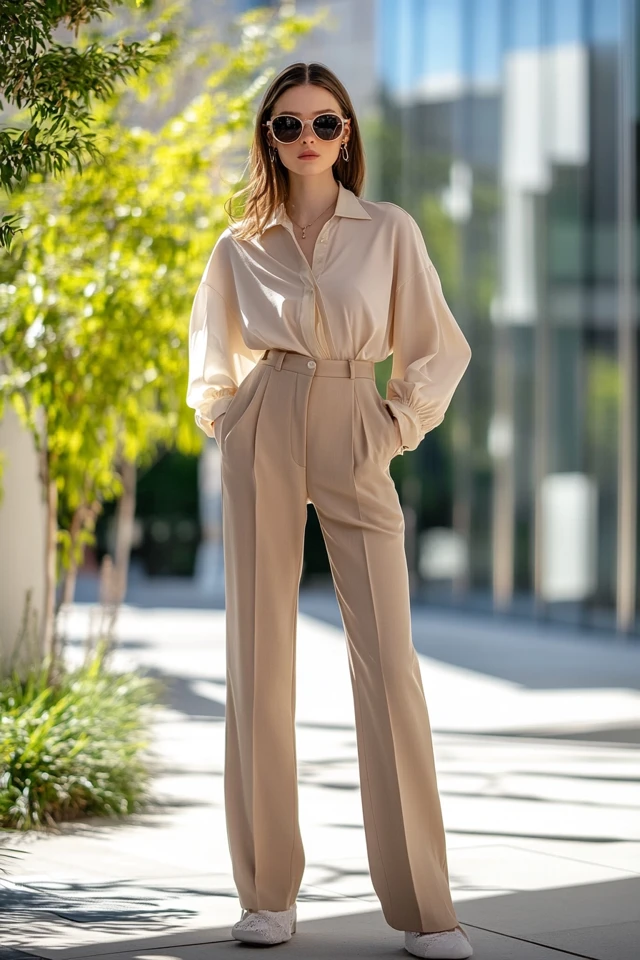
Is a high waist worth it?
Tailored trousers with a high waist sit at or just above the natural waist, so they define the middle and lengthen the leg line. They also stay in place when you sit, which matters for a workday. If a very high rise feels tight when you sit, a mid-high rise gives the same effect with more comfort.
Tuck in a shirt or fine knit, and add a thin belt only if the waistband has loops and you like the break in color.
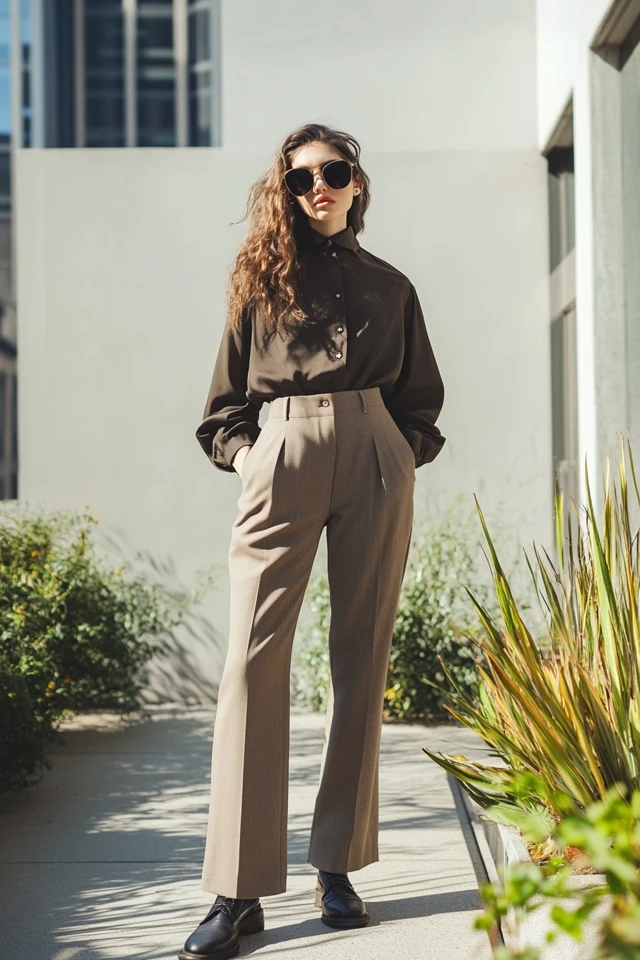
Why pockets matter
Work trousers with pockets are more useful, but the pockets have to lie flat. Side-seam pockets disappear best. Slanted front pockets should close when you stand and not flare open at the hip. If you plan to carry a phone, test the pair by sitting with it in your pocket before you commit.
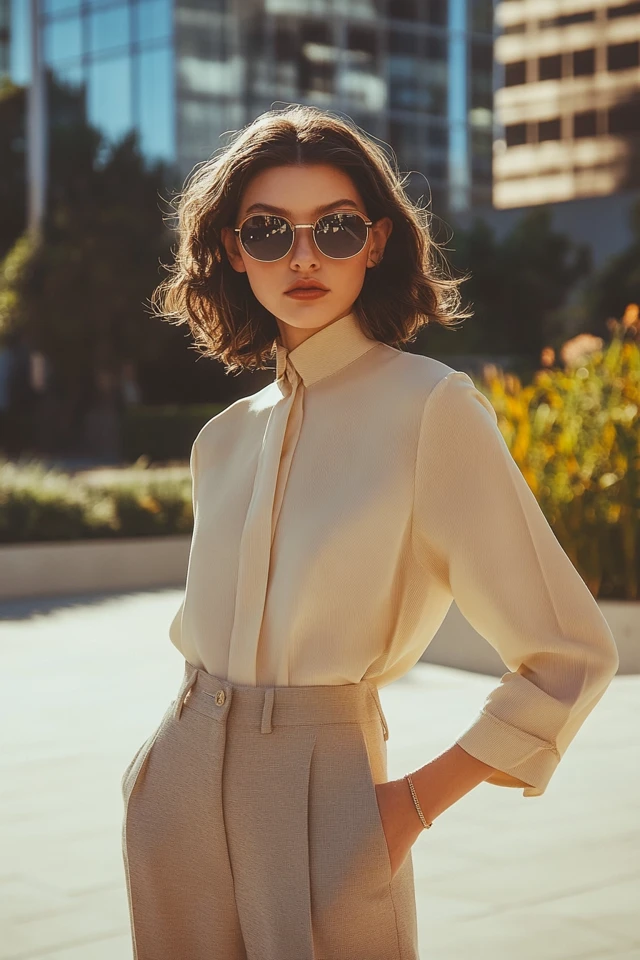
How to style soft wool trousers for the office
- Classic: a tucked button-up, a blazer in a close shade and pointed flats or low heels.
- Softer: a fine-gauge turtleneck under the trousers' waistband, with loafers. Our guide to soft turtlenecks under wool coats helps with layering.
- Cold days: add a long coat. Warm wool coats keep the line clean.
Clothes also change how we feel and act. In one study published in Frontiers in Psychology, wearing a military uniform increased the sense of agency in the free condition, as compared to civilian clothing. That study looked at uniforms, not trousers, so treat it as a reminder that what you wear can affect how you carry yourself, not as a promise about any one pair.
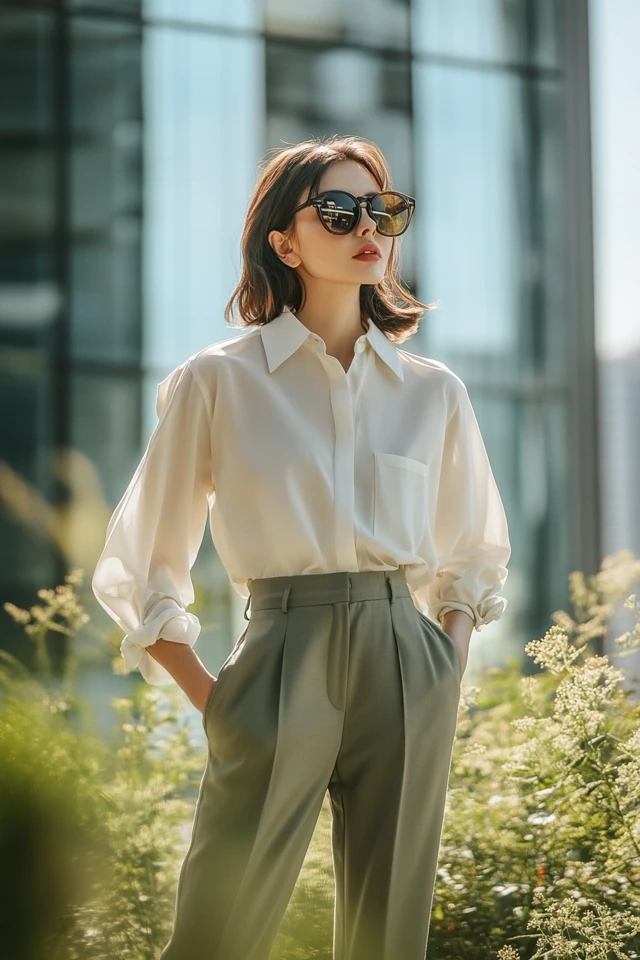
Care and a simple wardrobe plan
Follow the care label first. Wool generally does best with spot cleaning, airing out between wears, a steamer for wrinkles and a padded or clip hanger. Dry clean only when needed. If you are building a small work wardrobe, one pair in charcoal or navy and one in a lighter neutral covers most outfits, as in this capsule wardrobe for everyday elegance.
Frequently asked questions
Can wool trousers be worn in warmer weather?
Yes, if you choose a lightweight worsted or fine merino, or a wool blend. Look for a smooth, open weave and skip heavy flannel or tweed.
How do I prevent wool trousers from pilling?
Pilling is most common where fabric rubs, such as the inner thigh. Remove pills gently with a fabric comb or shaver, and check the care label for cleaning.
Can I machine wash wool trousers?
Only if the care label says so. Many pairs need dry cleaning or careful hand washing to avoid shrinking or losing shape.
What should I look for in women's trousers for work?
A firm fabric with good drape, a waistband that stays comfortable when you sit, a smooth line over the hip and a hem length that works with your usual shoes.
Filed under Wardrobe Basics