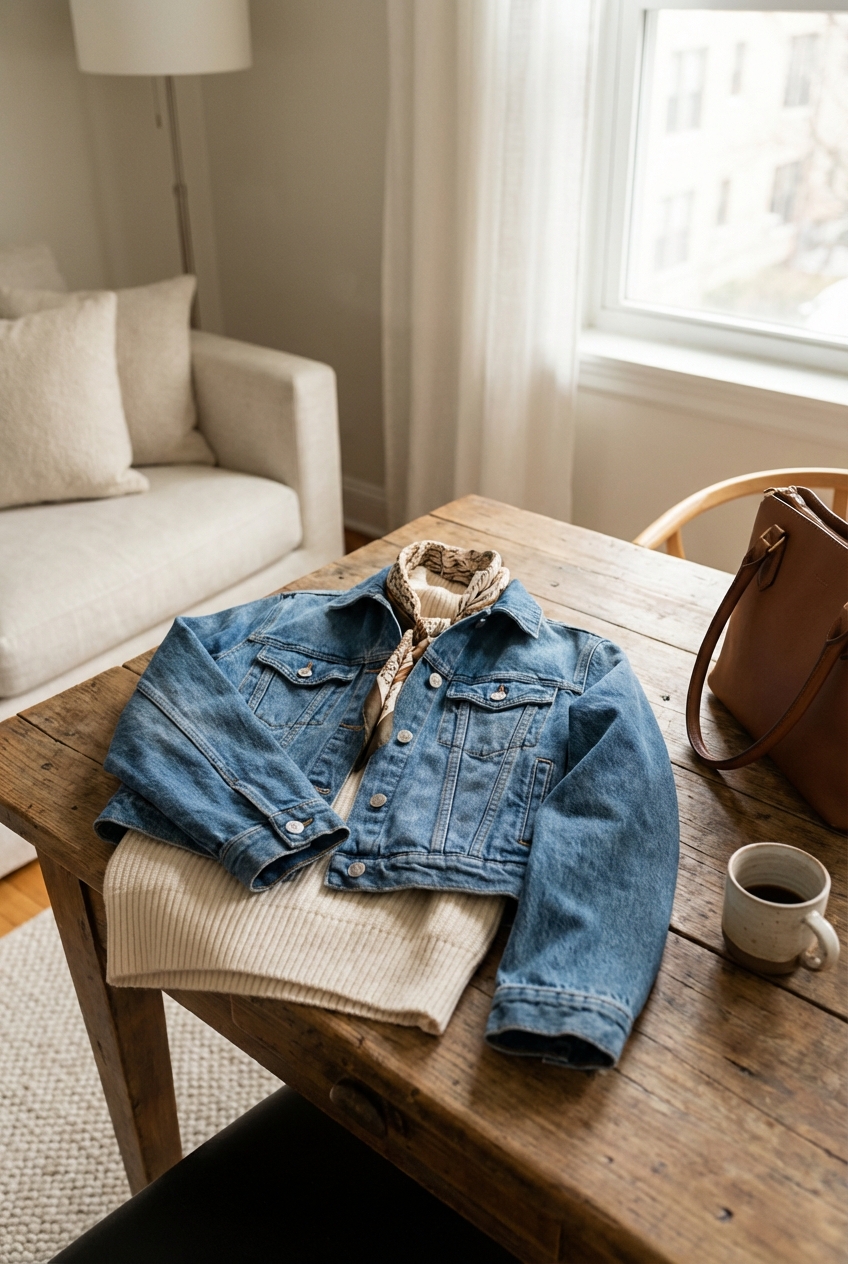
Midi Dresses: Relaxed Styles for Summer and Beyond
- Words by
- Julio Arco
- Published
- Reading
- 5 min
A relaxed midi dress is the easiest one-piece outfit for warm weather: pick a loose cut in cotton, linen or viscose, check that the hem lands between just below the knee and mid-calf, and add shoes to suit the occasion. Flat sandals make it casual. A heel and a belt make it dressier.
Below you'll find how to choose the length and fit for your height, which fabrics behave best, and how to adapt one dress for the beach, the office, a wedding or a cooler evening.
What makes a midi dress relaxed?
The hem sets the category: a midi sits anywhere from just below the knee to mid-calf. The cut sets the mood. A relaxed version skims the body instead of clinging, with a straight, A-line or gently gathered skirt and little structure at the waist.
That looseness is why these dresses are forgiving. If a fitted dress pulls at the hips or bust, that is a cut problem, not a you problem. A relaxed shape leaves room to move, sit and eat lunch comfortably.

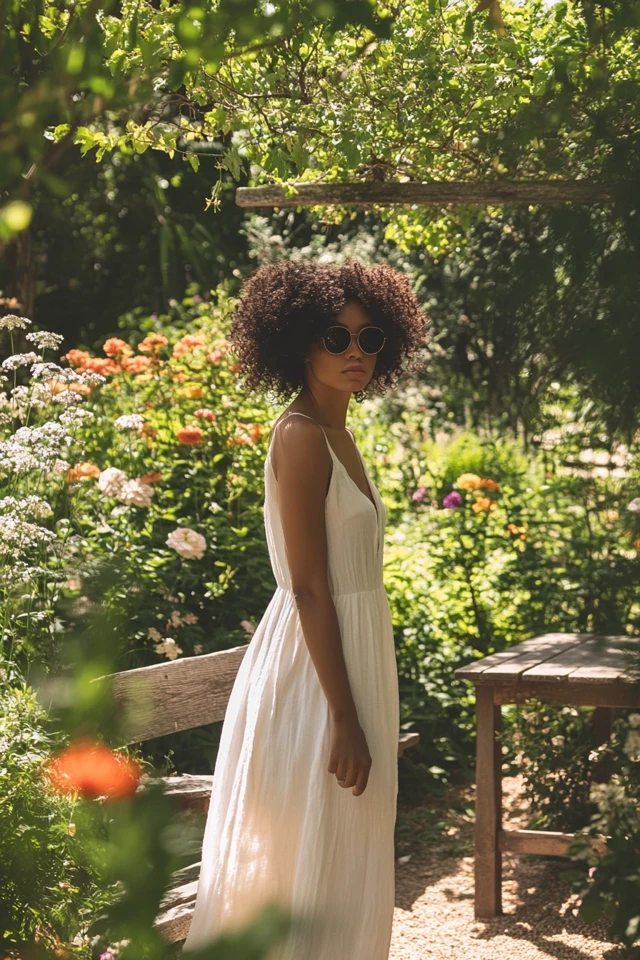
Which fabrics work best for casual midi dresses?
Fabric decides how the dress drapes and how it feels at 3 p.m. in the heat.
- Cotton is breathable and easy to care for. Poplin holds a crisp shape, while voile and gauze float.
- Linen is airy and gets softer with wear. It wrinkles, so accept some creasing as part of the look.
- Viscose and rayon drape fluidly and feel cool on skin, but they can cling when it's humid.
- Satin and chiffon move beautifully and suit dressier plans.
- Fine knits are comfortable for travel and cooler days, though they show the body's outline more.
Through the lens of evidence-based design, I'd think about texture before color. A matte linen and a glossy satin in the same shade do not read as the same color, because the surface changes how light reaches the eye. Matte reads quieter and more casual. Sheen reads dressier.
How should a midi dress fit your height and shape?
Hem placement changes proportion more than anything else, so start there.
If you're petite
Aim for a hem just below the knee, where the leg line stays visible. A small heel, a wedge or a pointed flat extends the line further. Vertical details such as a button placket or narrow stripes help as well.
If you're tall
Mid-calf hems and tiered skirts suit you well, and flat sandals look balanced. Dropped waists and generous volume are easier to carry with extra height.
If you have curves
A defined or adjustable waist, such as a wrap, a tie or an elastic back panel, gives the fabric a place to fall from. Choose a skirt with fluid movement over stiff volume.
If you have an athletic build
Ruffles, pleats, smocking and wrap fronts add softness and the look of a waistline. Prints also help break up long straight lines.
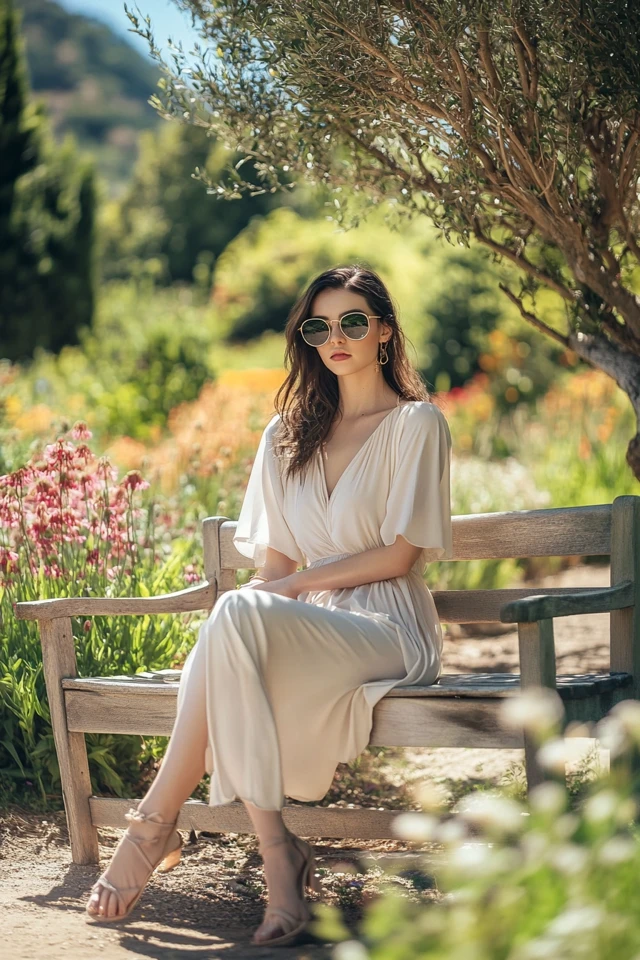

How do you wear a midi dress to a wedding?
For midi dresses for a wedding, move up in fabric rather than in fuss. Satin, crepe, chiffon or a fine jacquard reads formal even in a simple cut. Add a block heel or dressy flat, a clutch and one statement piece of jewelry.
Check the invitation for the dress code and the venue. Outdoor ceremonies on grass favor block heels over stilettos. Avoid white and very pale ivory unless the couple has said otherwise. For an evening cocktail event, deeper shades such as navy, bottle green or burgundy look polished, and our navy midi dress guide shows how that works in colder months.
Midi dresses with sleeves and modest options
Midi dresses with sleeves cover a wide range: puff sleeves, elbow-length, three-quarter and long sleeves. In summer, look for sleeves cut in the same breathable fabric as the dress, since a thin cotton or linen sleeve stays comfortable in warm weather.
Modest midi dresses usually combine a mid-calf hem, a neckline that sits at or near the collarbone and sleeves that reach at least the elbow. A loose cut helps here, because it covers without feeling heavy. If you want more coverage on a sleeveless dress, a lightweight cardigan, a denim jacket or a cropped blazer layers on easily and comes off when it warms up.
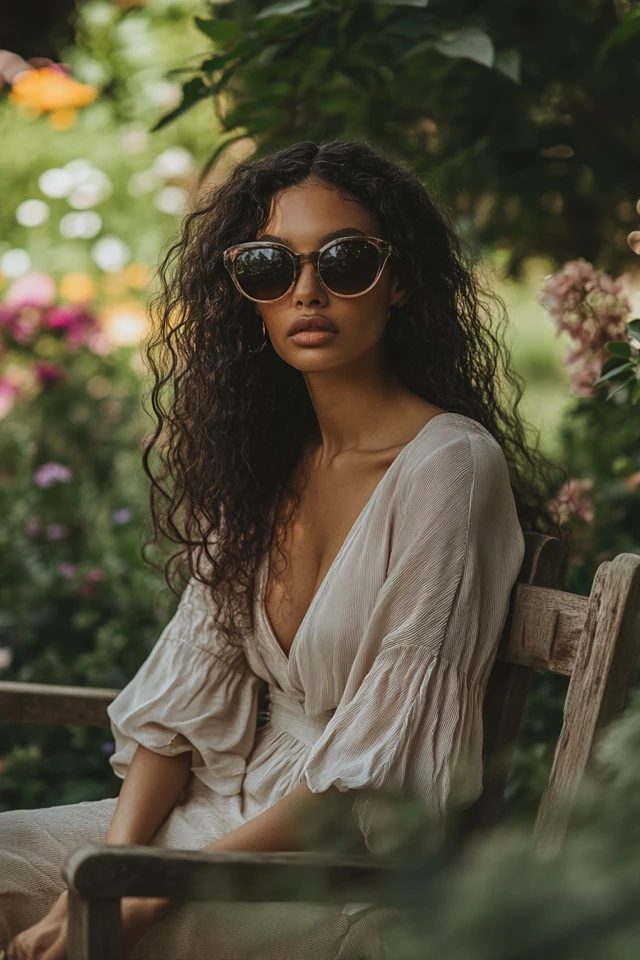
What are good midi dresses for older ladies?
There is no age cutoff for any hemline, so choose by comfort and the occasions you dress for. Women of any age tend to like the same features:
- A soft, breathable fabric that does not cling.
- Sleeves that reach the elbow or three-quarter length, if you prefer more coverage.
- A neckline that is easy to get on and off, such as a V-neck, a button front or a wrap.
- A hem at mid-calf or just below the knee, with a comfortable flat or low block heel.
Elegant midi dresses in solid colors or small prints with a subtle waist tie are an easy starting point and dress up well with a scarf or good earrings.

How do you style a midi dress for different occasions?
Shoes and layers do most of the work.
- Day and errands: flat sandals, espadrilles or clean sneakers, with a woven or canvas bag.
- Office: a tailored blazer and closed-toe shoes. Choose an opaque fabric and a hem at or below the knee.
- Evening: heeled sandals or wedges, a belt to add shape and bolder earrings.
- Cooler weather: a denim jacket or cardigan, plus ankle boots or loafers.
As an architect trained in evidence-based design, I'd treat the waist as the thing the eye reads first on a loose dress. A thin belt on a flowy dress gives structure, and leaving it off gives a softer silhouette. Both are fine, so decide by the mood you want.
For more ideas, see our summer capsule wardrobe, the color-blocked midi dresses post and midi accessory ideas. If you prefer a straighter line, relaxed swing dresses are a close cousin.

How do you care for a linen or cotton midi dress?
Follow the care label first. As a general rule, wash natural fabrics gently in cool water and hang them to dry, which helps keep the shape. Store the dress on a hanger to limit creases, and steam it lightly if linen looks too rumpled.

Frequently asked questions
Who has the best midi dresses?
There is no single best brand, because it depends on your budget, fit and fabric preferences. Check the fabric content, the hem length against your height and the return policy before you buy.
What are some good midi dresses for a 70-year-old woman?
Look for breathable fabrics, elbow or three-quarter sleeves, an easy neckline such as a wrap or button front, and a hem around mid-calf. A relaxed cut with a tie waist is comfortable and polished.
Can I wear a midi dress to work?
Yes. Choose an opaque fabric with a hem at or below the knee, then add a tailored blazer and closed-toe shoes.
Are midi dresses flattering on petite frames?
They can be. Keep the hem just below the knee, choose a streamlined or vertical pattern and add a small heel or pointed flat to extend the leg line.
Filed under Style & Fit