Quilted Puffers for Windy and Freezing Days: The Ultimate Winter Essential
- Words by
- Julio Arco
- Published
- Reading
- 4 min
For puffer jackets and vests in cold weather, pick the jacket when wind and freezing temperatures are the plan, and the vest when you only need to warm your core under or over other layers. Look for a wind-resistant shell, insulation you can trust (down or synthetic), and a length that covers what you want to keep warm.
Below: how to choose, what a vest can and cannot do, what to wear underneath, and six outfit formulas.
Do puffer vests keep you warm?
Yes, for your torso, which is where warmth matters most for comfort. A vest leaves your arms free, so it suits brisk walks, layering under a coat, or mild-to-cool days. On a windy, freezing day, a vest alone leaves your arms exposed, so wear it over a knit or under a coat instead.
A jacket is the better pick for sustained cold. Sleeves, a hood and a longer hem all hold heat in.
What to look for in a puffer
Insulation: down or synthetic
Down is light and very warm for its weight. Synthetic fill usually costs less and copes better with damp conditions. If you walk in wet snow or drizzle, synthetic is the safer bet. If it is dry and cold, down is hard to beat.
Shell fabric
Nylon and polyester shells block wind well, and many have a water-repellent finish. Check the label: water-resistant is not waterproof, so a downpour will still get through.
Length
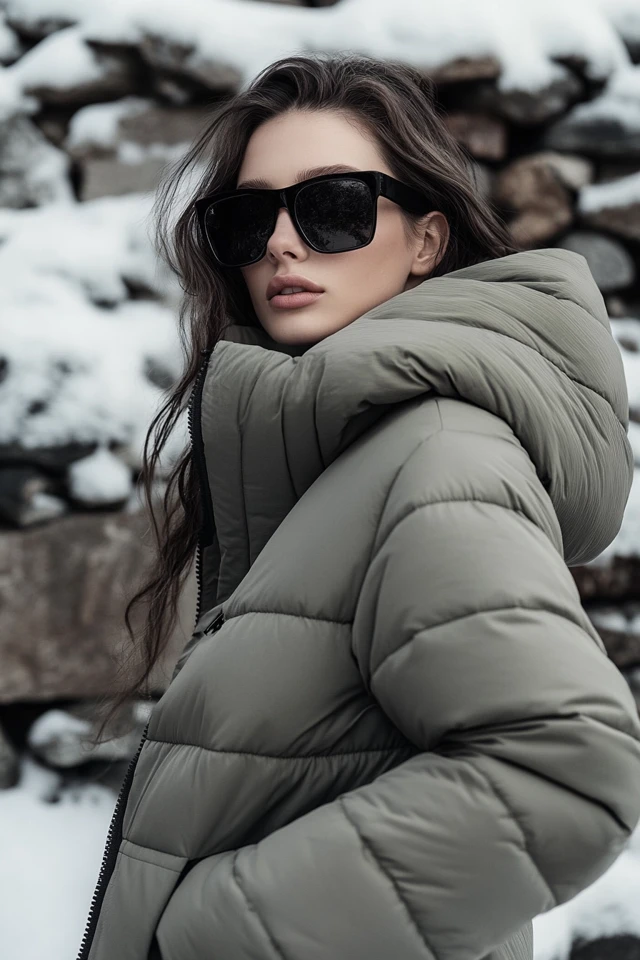
Cropped puffers move easily and look good with high-waisted bottoms, but they leave your hips open to wind. Mid-length covers more. A long puffer, or a women's puffer vest long enough to reach mid-thigh, adds coverage without sleeves.
Hood, cuffs and hem
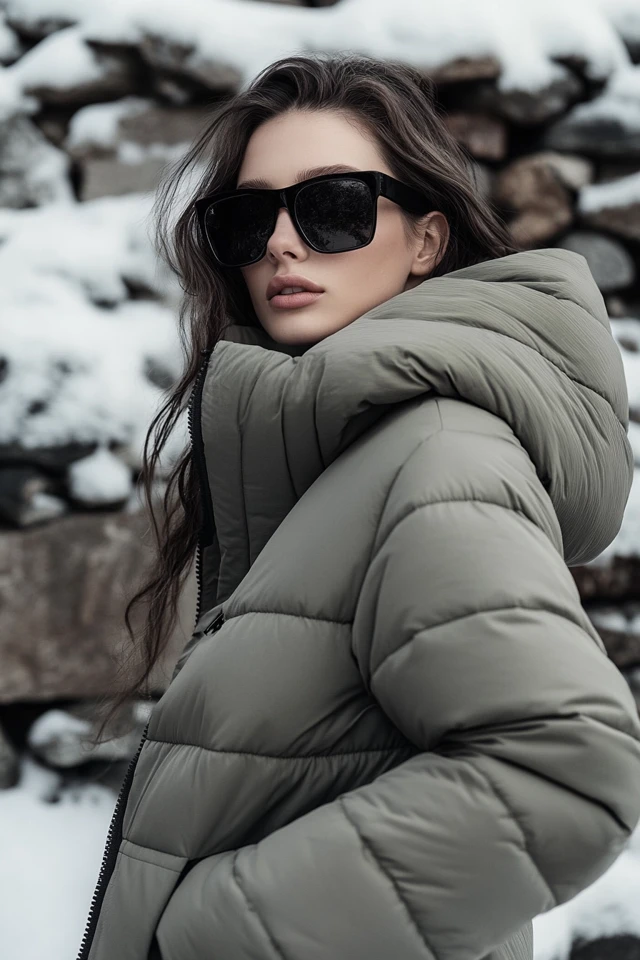
A hood is worth having for wind. A men's puffer jacket with hood, or a women's one, should have an adjustable hood that stays up without blocking your side view. Elastic cuffs and a drawcord hem stop warm air escaping.
How to choose a fit that works
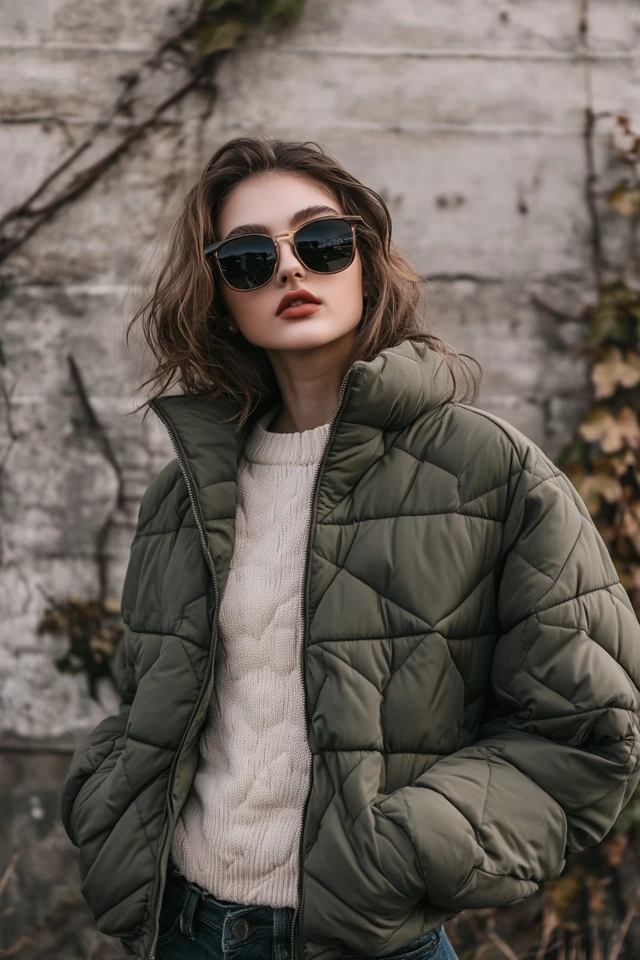
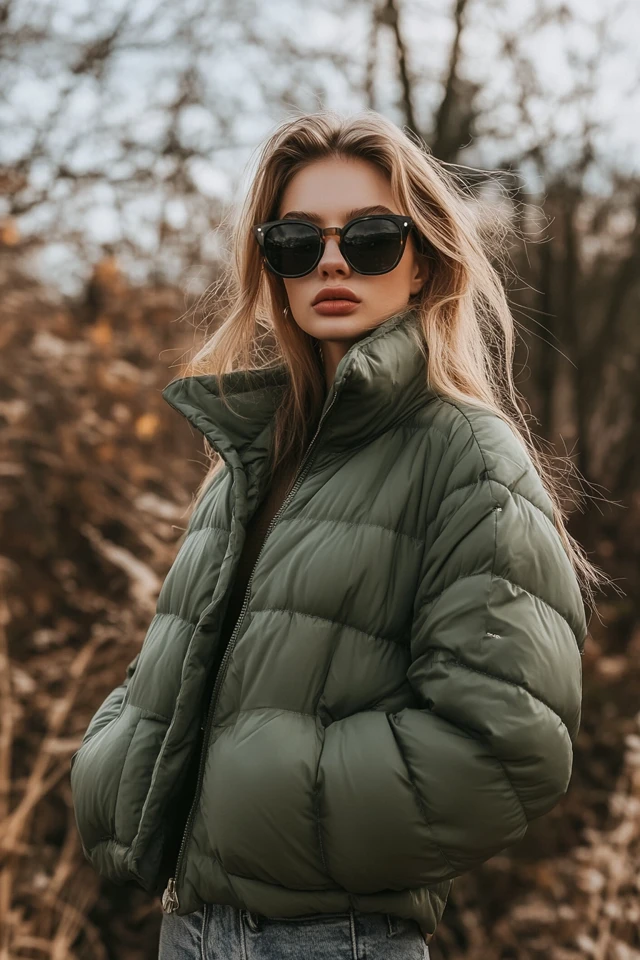
Check the shoulder seam first: it should sit where your shoulder ends. A puffer that pulls across the back or shoulders is a fit problem, not a you problem, so size up or try another cut.
Leave room for one thin knit underneath, but not so much that the jacket balloons. Through the lens of evidence-based design, I'd treat the silhouette as the first thing the eye reads: a big puffer with slim bottoms looks balanced, while volume on both halves reads shapeless.
What to wear under a puffer
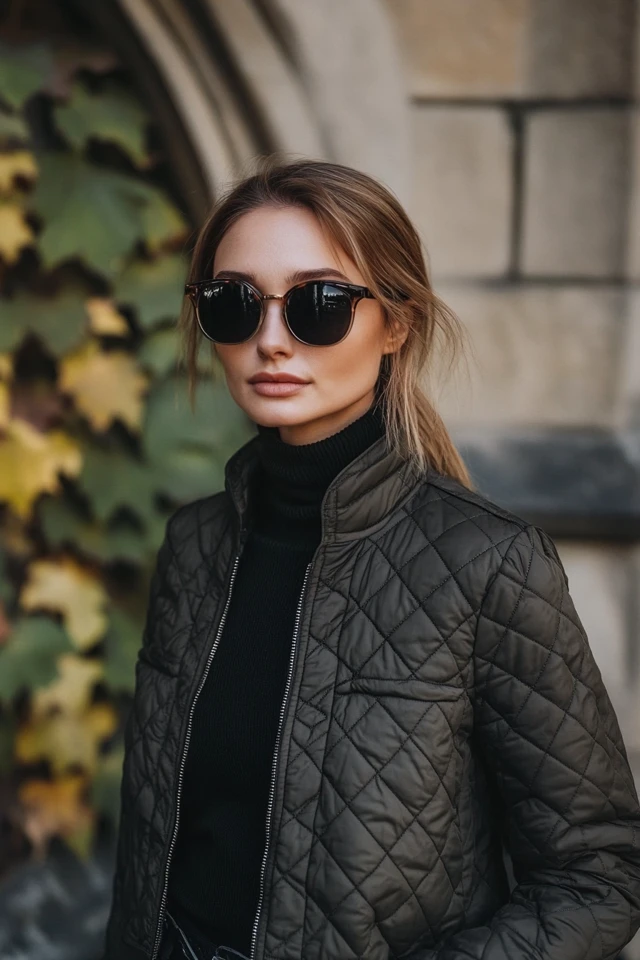
The layer against your skin matters as much as the jacket. Texas A&M's Howdy Health advises that the layer closest to your skin should be moisture-wicking material that draws sweat away. It also says to avoid cotton, because it absorbs moisture and can keep it next to your skin, which makes you cold. That advice is written for exercise, but it applies to long walks in a puffer too.
For legs, fleece-lined leggings pair well with a longer puffer. Add quilted mittens and warm earmuffs when the wind picks up.
Six outfit formulas
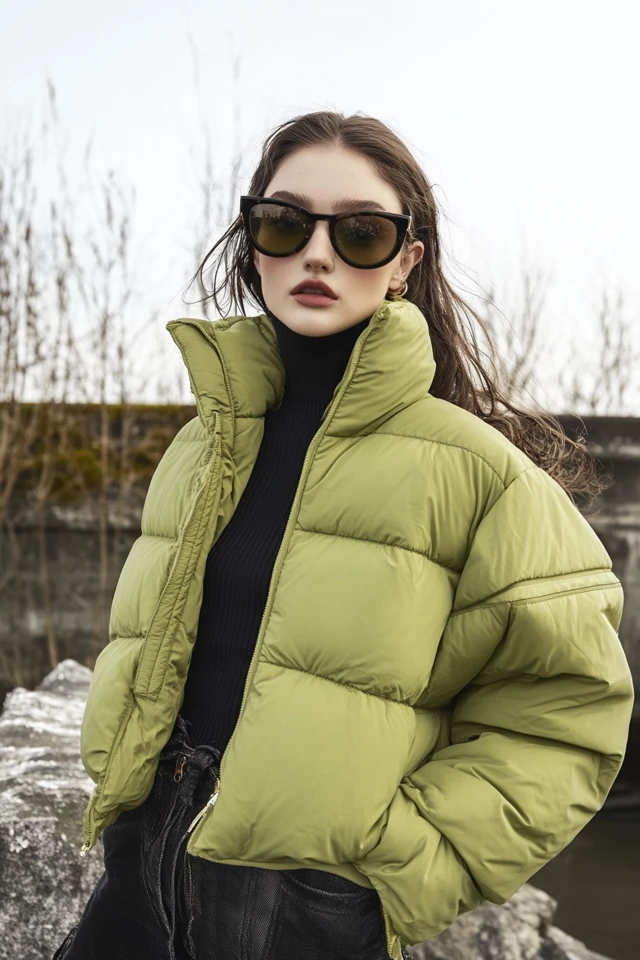
Casual weekend
Cropped black puffer, high-waisted jeans, chunky knit sweater, combat or snow boots, and a beanie. The knit adds texture next to the smooth shell.
Winter commute
Mid-length navy puffer, tailored trousers, a turtleneck and ankle boots. Add a belt at the waist for a cleaner line.
Outdoor day
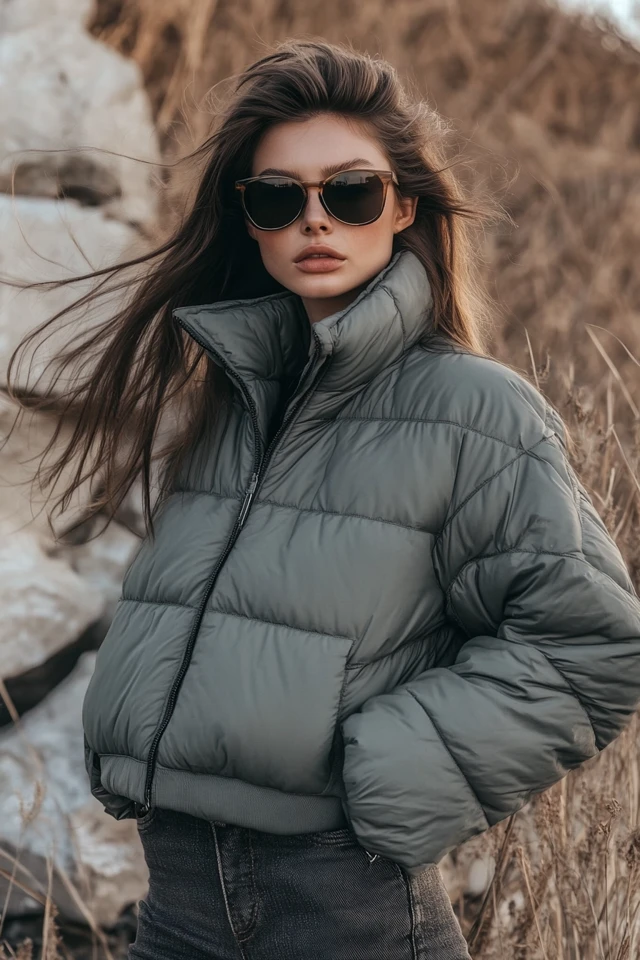
Long olive puffer, thermal leggings, a fleece layer and waterproof boots. Choose a hood you can adjust.
Street style
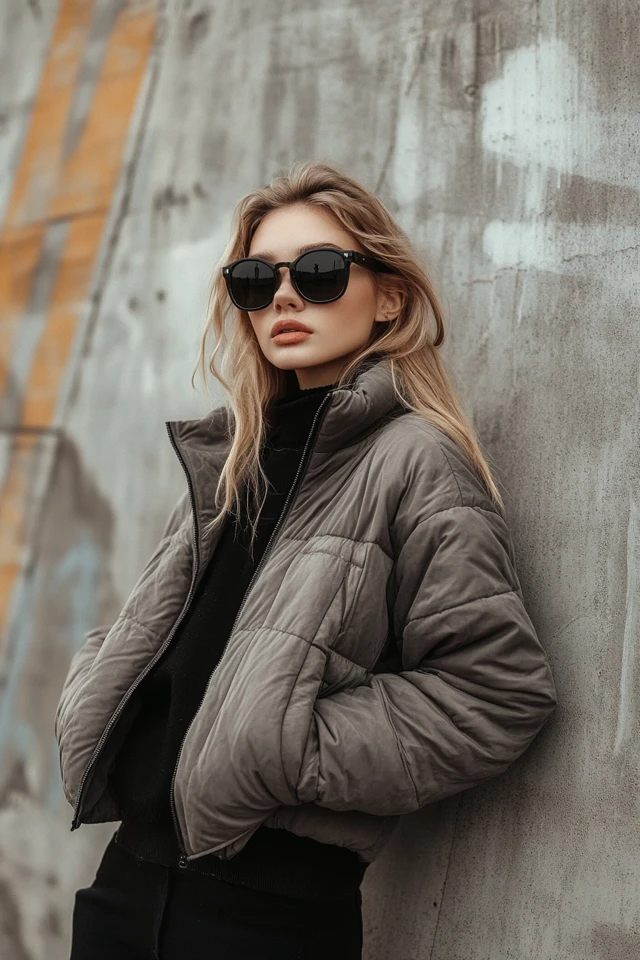
Metallic silver puffer with faux leather pants and a graphic sweatshirt. Leave it unzipped for a relaxed shape, and keep the rest matte so the shine stands out.
Errands
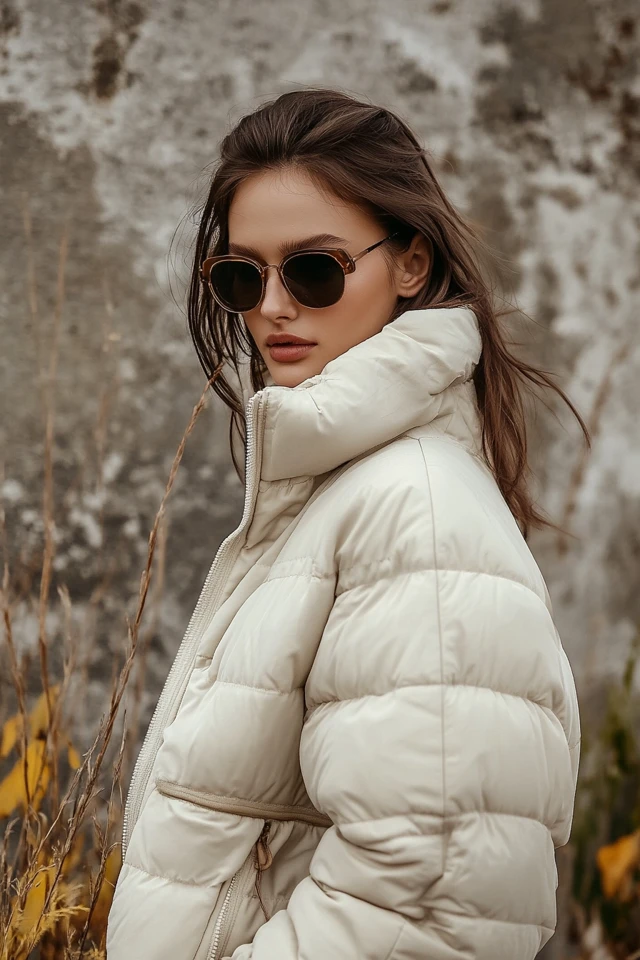
Beige puffer with a soft lining, leggings and an oversized sweatshirt, finished with slip-on snow boots.
Date night
Fitted black puffer with a cinched waist over a knit midi dress and knee-high boots.
Styling tips that make a puffer look intentional
- Wear fitted layers underneath to avoid bulk.
- Pair an oversized puffer with slim bottoms.
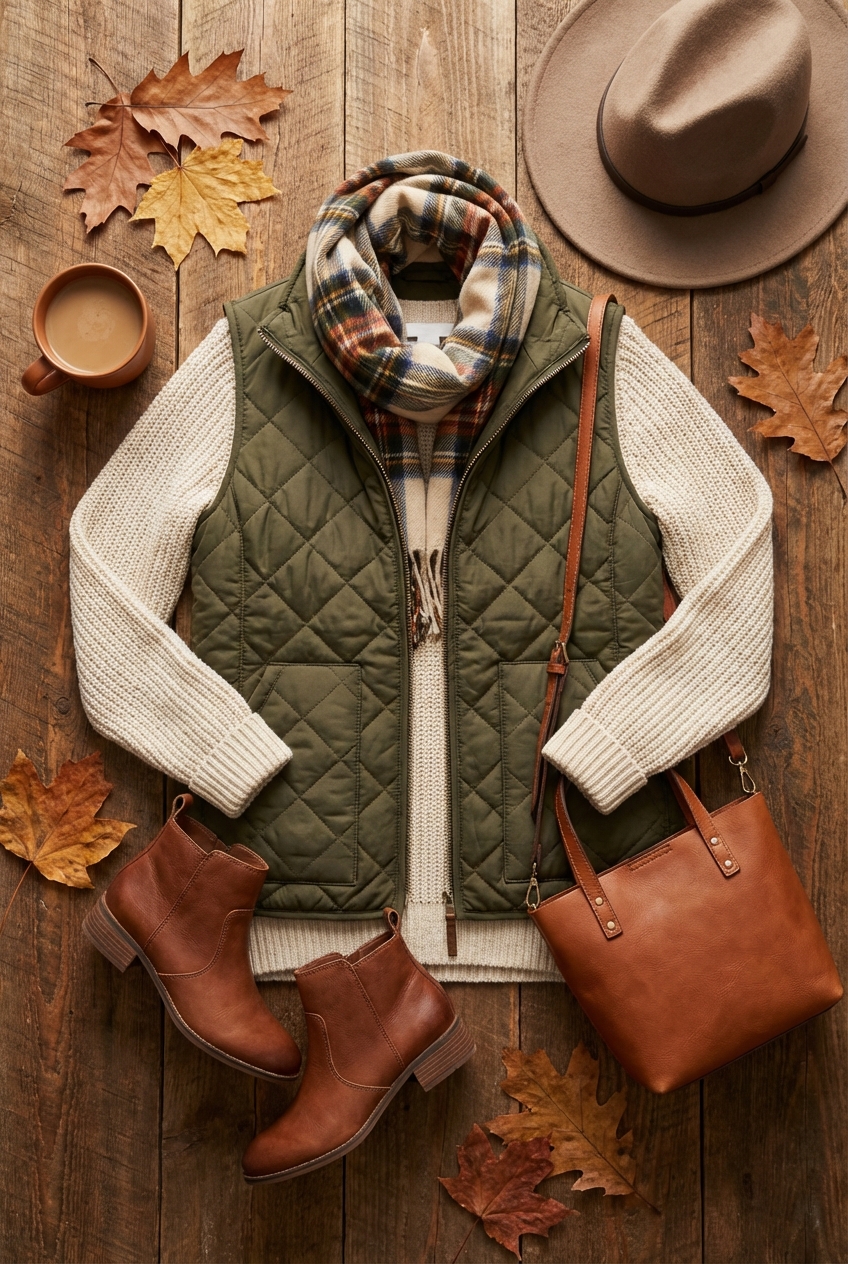
- Use hats, scarves and gloves for color and texture.
- Neutrals like black, navy and beige are easy to repeat; red or metallic works as a single statement piece.
For more options, see oversized puffers, warm down jackets and quilted jackets in bold colors. For desk days, a wool overcoat is the dressier alternative.
How to care for a puffer
Follow the care label. Many puffers can go in the washer on a gentle cycle with mild detergent, then tumble dry on low with a couple of clean tennis balls to restore loft. If the label says dry clean only, do that.
Frequently asked questions
Are puffer vests still in style?
Yes. Vests remain easy to layer over knits and under coats, and classic neutrals and longer cuts are the safest picks if you want one to last.
Are quilted puffers suitable for extreme cold?
Choose a well-insulated jacket with a hood, snug cuffs and a longer hem, and layer a wicking base underneath. For extreme conditions, check the manufacturer's temperature guidance.
What is the difference between down and synthetic insulation?
Down is light and very warm for its weight. Synthetic fill is usually cheaper and handles damp weather better.
Can a puffer be worn for formal occasions?
A sleek, fitted puffer in black or navy with minimal detailing works over tailored pieces.
Filed under Weather Style