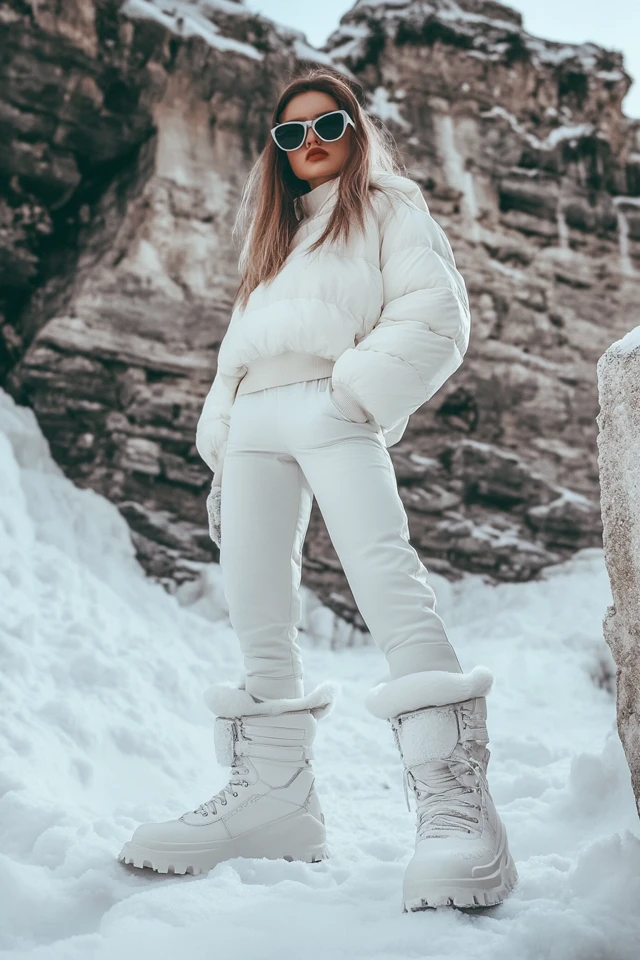
Puffy Snow Boots for Slushy Winter Streets: Stay Warm, Dry, and Stylish
- Words by
- Julio Arco
- Published
- Reading
- 6 min
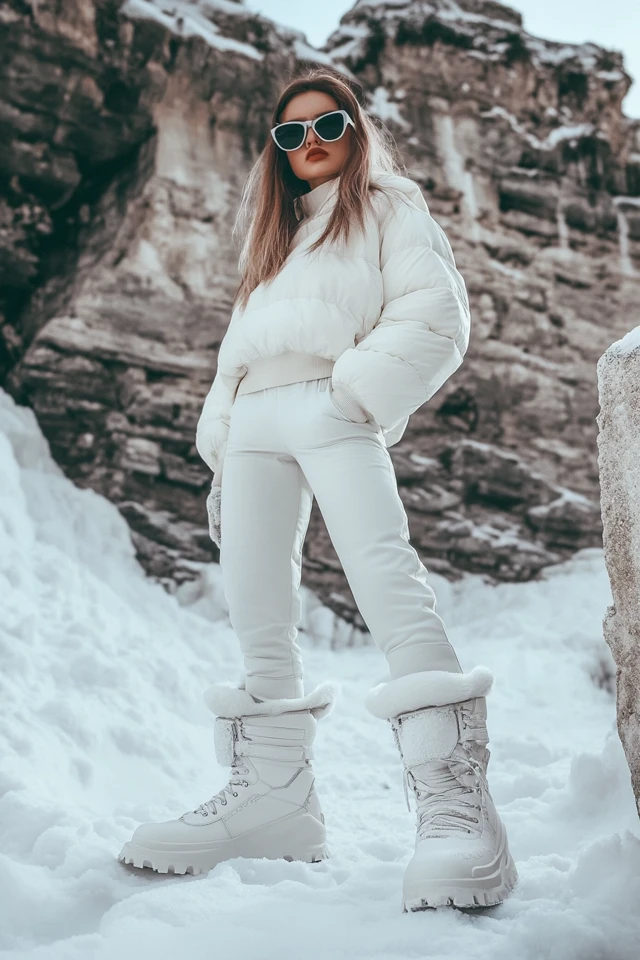
Wear snow pants over the top of your boots when the snow is deep, wet or loose, and tuck them inside only when the pants are slim and the boots are short. That one rule keeps snow out of your boots and your legs dry on slushy streets.
The rest is a matter of fit, layers and boot choice. Here is how to pair puffy snow boots with snow pants, and with regular pants when the weather is less extreme.
Should snow pants be tucked into boots?
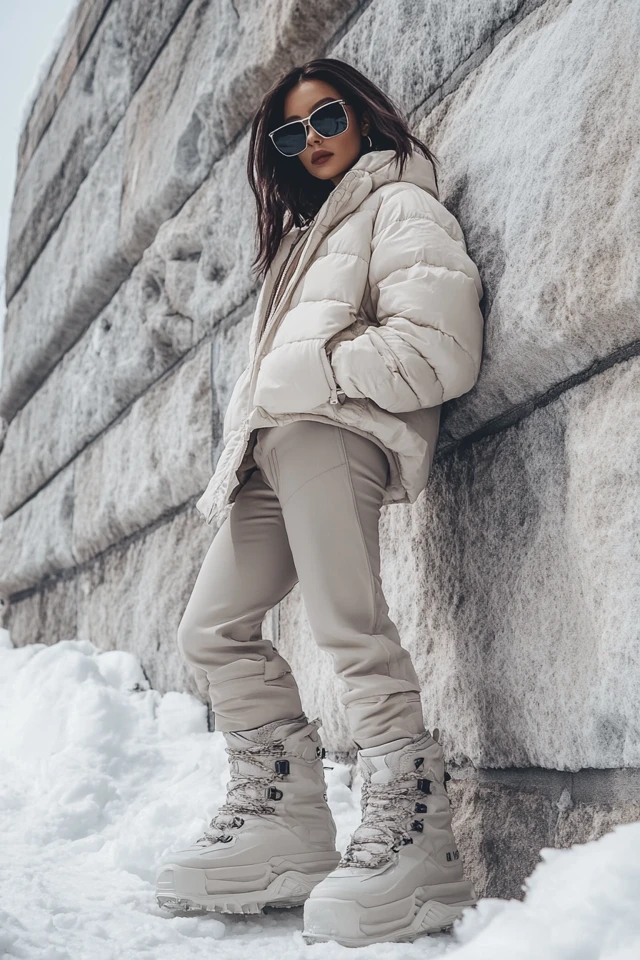
Usually, no. Snow pants are cut with a wide, slightly long leg so they can fall over the boot shaft and shed snow and slush down and away from the opening. Tucked in, the cuff can funnel melting snow straight into the boot.
There are exceptions, and they are about fit:
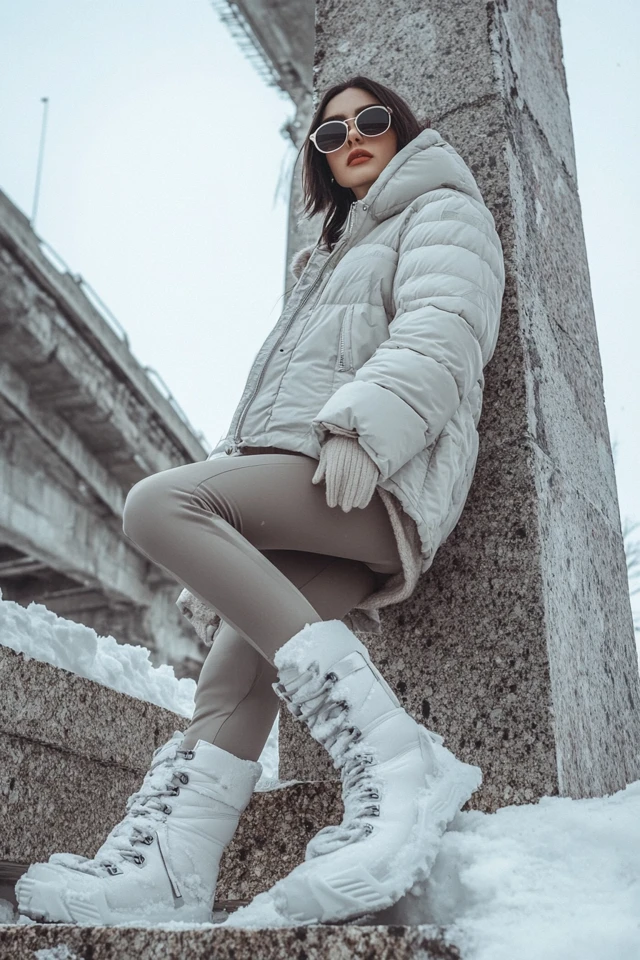
- Slim, stretchy snow pants with an elasticated or gaiter-style hem can go inside a tall boot without bunching.
- Low ankle boots are easy to cover, so wear the pants over them.
- If your boot has a drawstring top, pull the pants over it and cinch the boot cuff snugly below the hem.
If the pants bunch at the ankle when tucked, that is a cut problem, not a you problem. Untuck them and let the hem fall.

How to wear snow pants with boots
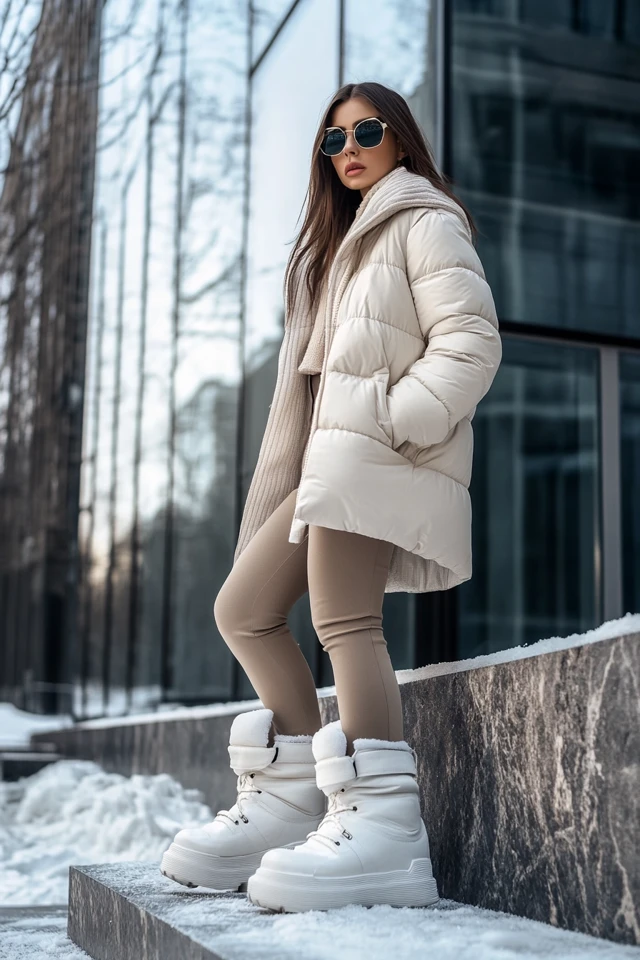
Start with the boot height. A mid-calf puffy boot with a drawstring top pairs well with snow pants worn over it, because the hem hides the opening and the cinch seals it. Short ankle boots work too, but check that the hem does not drag in puddles.
Then check the hem length. It should reach the top of the boot's laces or shaft without pooling on the ground. Many snow pants have snaps or cinches at the hem that let you adjust this.
Last, look at proportion. Snow pants and puffy boots are both bulky, so keep the top half simpler: a fitted base layer, one mid-layer and a jacket that ends at the hip or below. Through the lens of evidence-based design, I'd keep the volume lower on one half of the outfit, because the eye reads two big shapes at once as heavy.
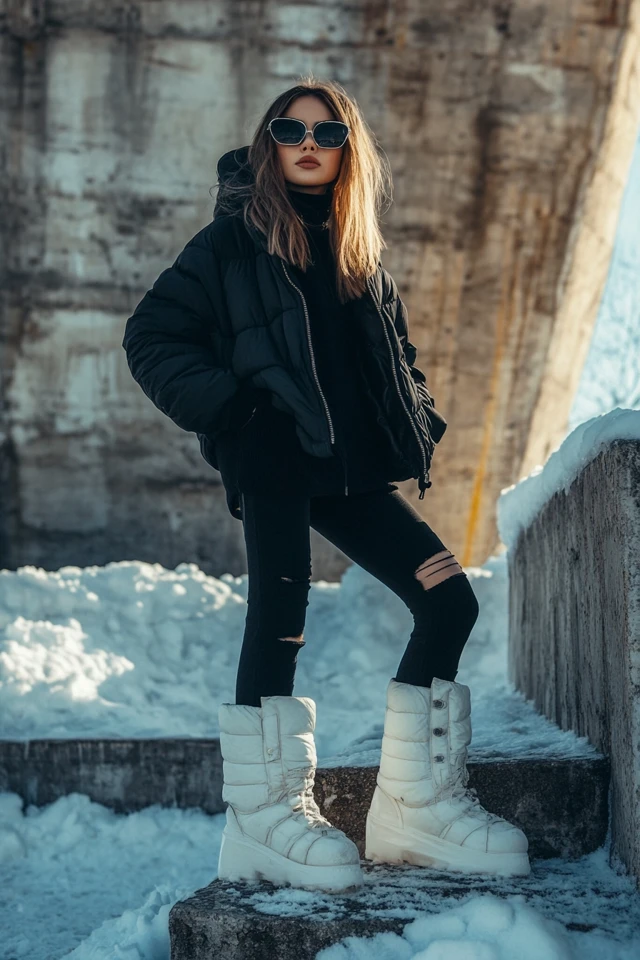
What to wear under snow pants
Keep it thin and close to the skin. The base layer should wick moisture: Texas A&M's Howdy Health notes that the layer closest to your skin should be moisture wicking materials that draw sweat away from your skin.
The same page also advises avoiding cotton, including undergarments, because it absorbs moisture and can keep it next to your skin, making you cold. Wool or synthetic leggings work well here.
For a very cold day, add fleece leggings or thermal bottoms over the base layer. Insulated waterproof snow pants already carry warmth, so you rarely need more than two thin layers under them. Too many layers compress the insulation and can leave you sweaty.
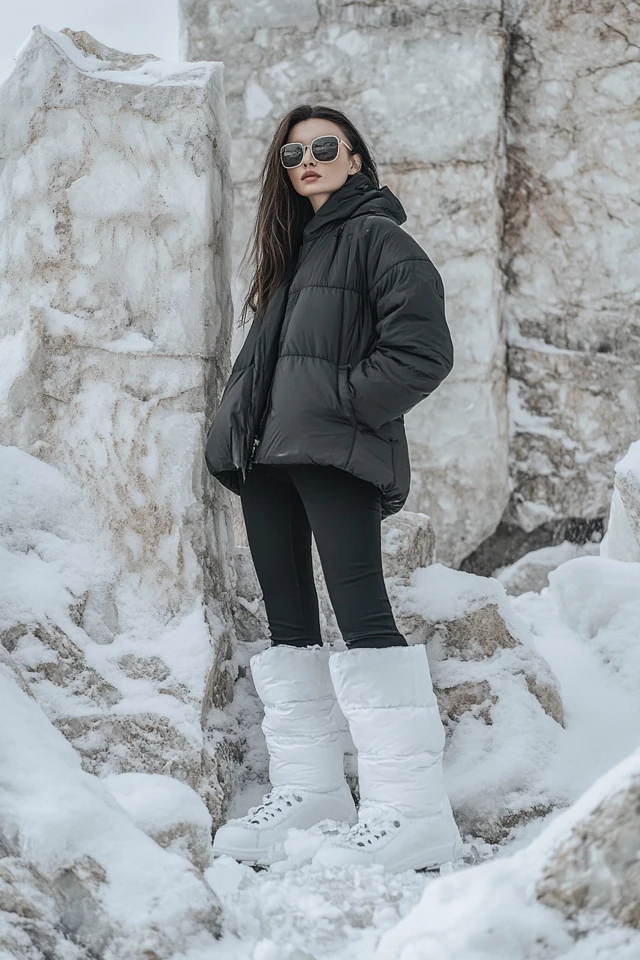
What pants to wear with winter boots when you skip snow pants
For city streets and light slush, you do not need snow pants. The question is what pants to wear with winter boots so the look stays balanced.
- Skinny or straight jeans tucked into the boots give a sleek line and keep hems out of slush.
- Cropped wide-leg pants show off the boot and stay clear of puddles.
- Leggings with a longline vest or hoodie make an easy casual outfit, and tall socks can peek out at the top.
- A midi sweater dress with thick tights suits a heeled or low-profile snow boot.
As an architect trained in evidence-based design, I'd treat the boot as the heaviest visual element and choose slimmer bottoms to balance it. Texture helps too: a knit, wool or faux fur piece breaks up the smooth, glossy surface of a nylon boot.
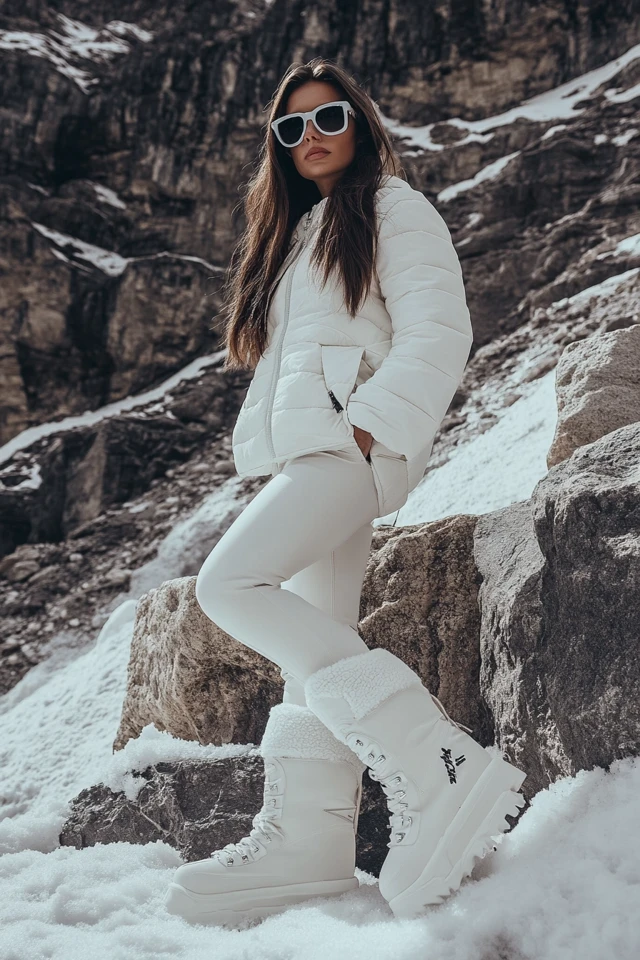
What to look for in puffy snow boots
Insulation and waterproofing
Choose a lining of fleece, faux fur or a synthetic insulation, and an upper of rubber, nylon or treated leather. A waterproof lower section matters more than anything else on wet streets.
Traction
Look for a deep, patterned rubber tread. Icy sidewalks are the reason to buy snow boots, so flip them over before you buy.
Fit
Leave room for a thicker sock. Harvard Health advises at least a quarter- to a half inch of space between your longest toe and the end of the shoe. Atrium Health Wake Forest Baptist describes sensible shoes as fitting the heel snugly, with plenty of room for the toes, a firm sole and arch support.
Heel height
Heeled snow boots look polished for dinner, but the same Harvard Health page says the most comfortable women's shoes are low-heeled, no higher than three-quarters of an inch. For long walks in slush, stay near that.
Easy on and off
Side zippers, pull tabs and adjustable laces make a difference when you are doing this several times a day. A drawstring top also helps keep snow out.
Snow pants and winter boots for women, men and kids
The fit principles are the same across sizes, but a few details change.
- Women's: look for a longer rise and a hem you can cinch, so the pants sit over a mid-calf boot cleanly.
- Men's: a straight leg with an adjustable hem handles bulkier boots without bunching.
- Kids: choose pants with a snap or elastic hem and a boot with a wide opening, so they can dress themselves. Allow a little growing room, but not so much that the boot slips at the heel.
Whatever the size, look for insulated waterproof snow pants with taped or sealed seams for wet snow. Check the care label for washing instructions, because waterproofing needs gentle care.
Keep your boots working longer
Wipe off slush and salt with a damp cloth after each wear, let boots dry away from direct heat, and reapply a waterproof spray when water stops beading. Podiatrist Gina Hild, DPM, told the Cleveland Clinic: "Shoes typically only last about six months or so depending on the activity level of the individual." If your boots have lost their cushioning or grip, it is time to replace them.
If you have foot pain, look for cushioning plus heel and arch support, and check with a podiatrist for anything persistent.
Finishing the outfit
A crossbody bag keeps your hands free on slippery sidewalks. A knit beanie and gloves add warmth, and thermal socks help in freezing weather. For outerwear, see our winter coats guide. If you want a lighter, fuzzier boot for dry cold days, try fluffy snow boots, and for trails look at warm hiking boots.
For the layers on top, cozy knitwear layering covers how to build warmth without bulk, and fleece joggers are an easy bottom half when you skip snow pants.
Frequently asked questions
Should snow pants be tucked into boots?
Usually not. Worn over the boot, the hem sheds snow and slush away from the opening. Tuck only slim, stretchy pants with a short or tall boot that seals well.
What pants do you wear with winter boots?
Skinny or straight jeans, leggings and cropped wide-leg pants all work. Slimmer bottoms balance the bulk of a puffy boot, and tucking them in keeps hems out of slush.
What should I wear under my snow pants when I ski?
A thin moisture-wicking base layer, in wool or a synthetic, with an optional fleece layer on very cold days. Avoid cotton, which holds moisture against your skin.
Are puffy snow boots suitable for all-day wear?
They can be, if the fit is right. Look for cushioned insoles, a snug heel and enough toe room, and try them with the socks you plan to wear.
Filed under Weather Style