Warm Winter Scarves: Heavy Wool and What to Look For
- Words by
- Julio Arco
- Published
- Reading
- 5 min
The warmest scarf is usually a large, densely knit or woven wool scarf, long enough to wrap twice around your neck and wide enough to cover your chin. Merino and cashmere blends are softer on the skin, and heavier weaves block more wind.
If you want one scarf for a windy winter, pick a heavy wool in a neutral color, around 70 inches long or more, and wrap it close. The rest of this post explains why, and how to style it.
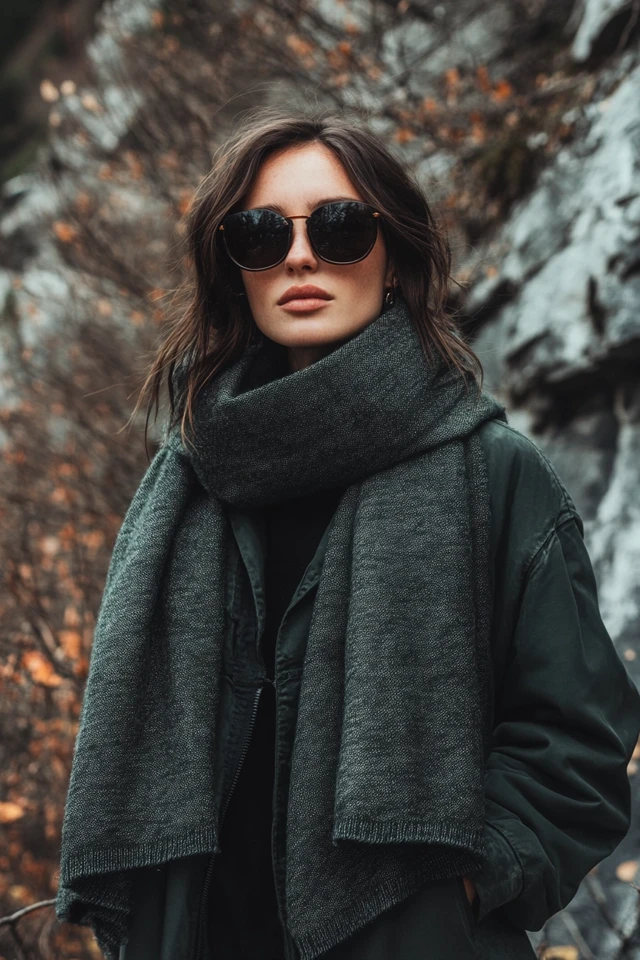
Which scarf is best for winter?
For most people, a heavy wool scarf. Wool traps air in the fibers, which is what slows heat loss, and a thick cable knit or tight woven twill also stops wind from passing straight through. A thin, loose knit in the same fiber feels cozy indoors but lets gusts in.
Weight and weave matter as much as the fiber. A dense herringbone or a chunky rib will usually beat a lightweight scarf with a higher cashmere label.
Wool, merino or cashmere: which is warmest?
Coarser wool is sturdy and warm but can itch. Merino has finer fibers and feels softer against the neck. A winter scarf cashmere option is the softest of the three and very warm for its weight, though it is thinner and more delicate, so it suits dry, cold days more than a wet gale.
Through the lens of evidence-based design, I'd think about how a fabric feels on the skin before its label. A scarf that scratches ends up in a drawer, and a slightly less fancy one you actually wear is warmer in practice. If you want a deeper look at the softer end, see cashmere scarves for wind chill protection or wool and cashmere combinations.
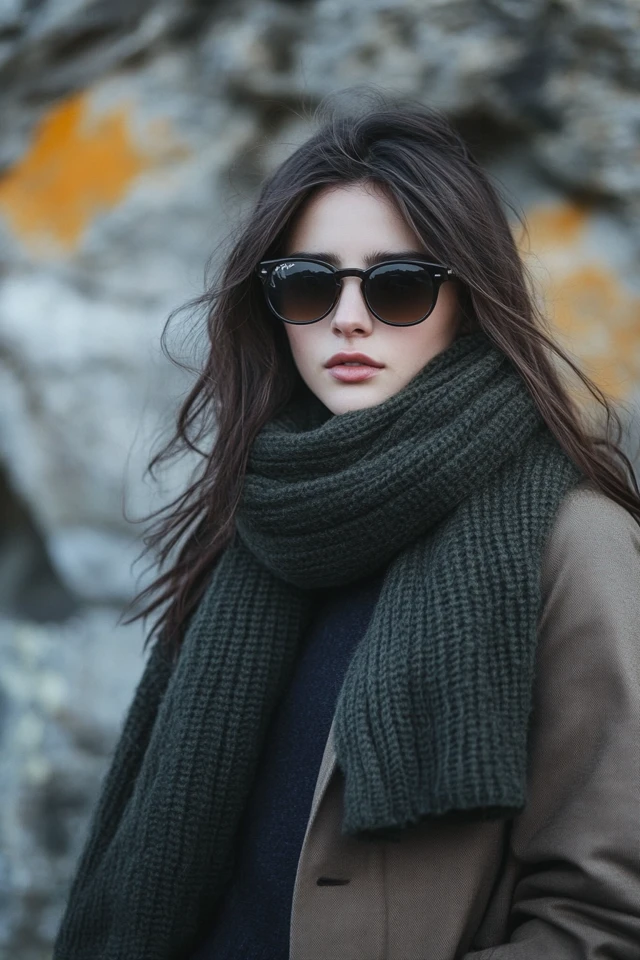
What to look for in a heavy scarf
- Size: about 60-80 inches long and 10-14 inches wide for a standard scarf, or a larger blanket style if you like to wrap it up to your nose.
- Weave: dense knits, ribs, twills and herringbones block more wind than open knits.
- Feel: run it along your neck or jaw in the shop. If it itches for ten seconds, it will itch all day.
- Fiber: 100% wool, merino, or a wool-cashmere blend. Blends with some synthetic fiber can be cheaper and hold up well.
- Edges: fringe is decorative and fine, but make sure the ends are finished so they do not unravel.
Be careful with cotton scarves in wet or snowy weather. Texas A&M's Howdy Health notes that cotton absorbs moisture and can keep it next to your skin, making you cold. That advice is written for exercise, but the same logic applies to a damp scarf at your throat.
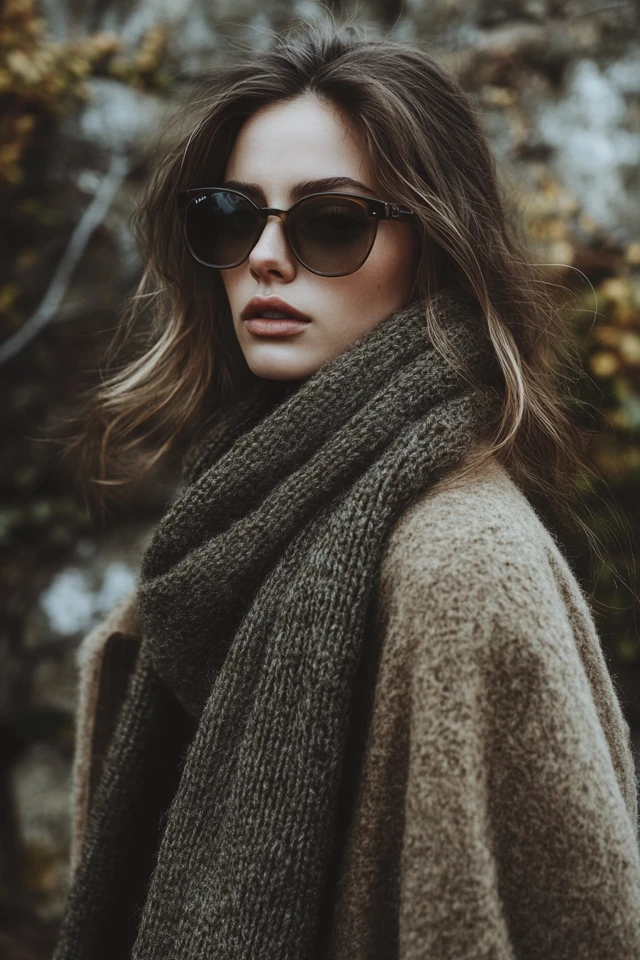
Which scarf styles are warmest?
Oversized and blanket scarves
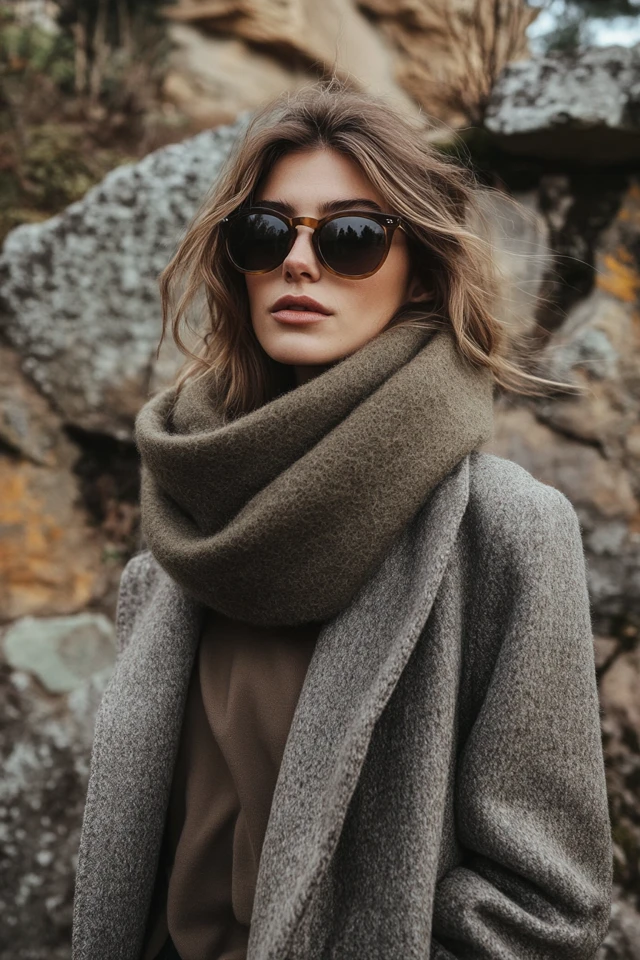
These give the most coverage. You can wrap them over the chin, drape them over your shoulders, or tuck the ends into your coat.
Infinity and tube scarves
A closed loop has no loose ends to flap in the wind, which makes it easy for commuting. Doubled over, it covers the neck well. Try soft infinity scarves if you prefer something you can throw on without tying.
Fluffy and brushed scarves
Brushed fibers add loft and a softer look. They are cozy, though a brushed scarf in a thin base may not block wind as well as a dense knit. More in fluffy scarves for extra winter warmth.
Pashmina-style wraps
Lightweight and elegant, these suit evenings and mild days. They are a layer, not your main defense against a hard wind.
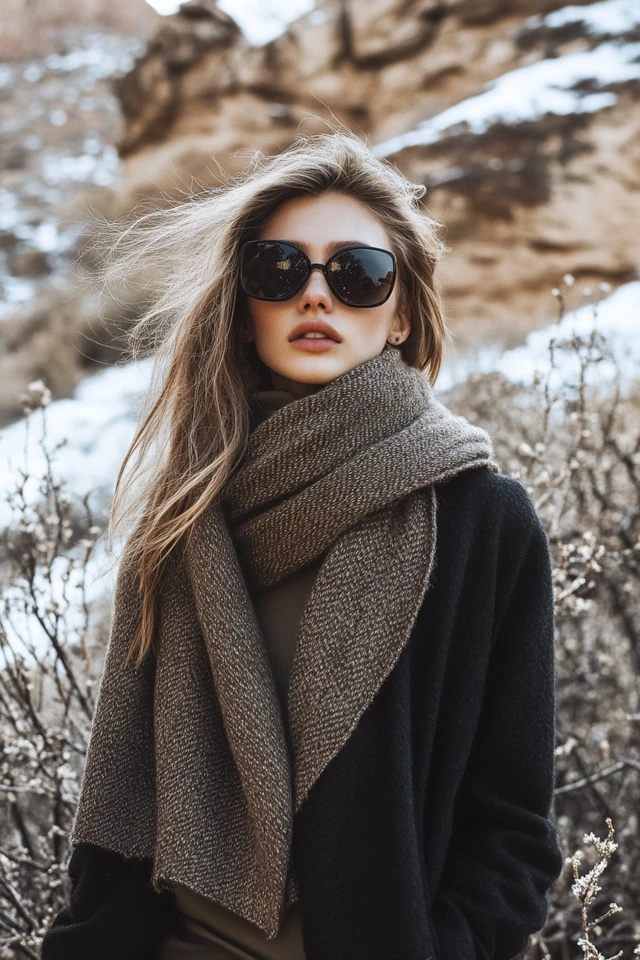
How to wrap a scarf for wind
- Fold a long scarf in half and loop it around your neck, pulling the ends through the loop for a snug hold.
- For stronger wind, wrap twice and tuck the ends inside your coat so nothing blows loose.
- With an oversized scarf, drape it around the neck once and pull one layer up over your chin.
- With a high collar coat, wear a slimmer scarf underneath so the collar can close over it.
Texture matters when you mix pieces. A chunky scarf against a smooth wool coat reads as contrast, while a chunky scarf over a chunky sweater can look bulky near the face. As an architect trained in evidence-based design, I'd treat the neckline as the first thing the eye reads, so keep that area simple and let the scarf be the one textured piece.
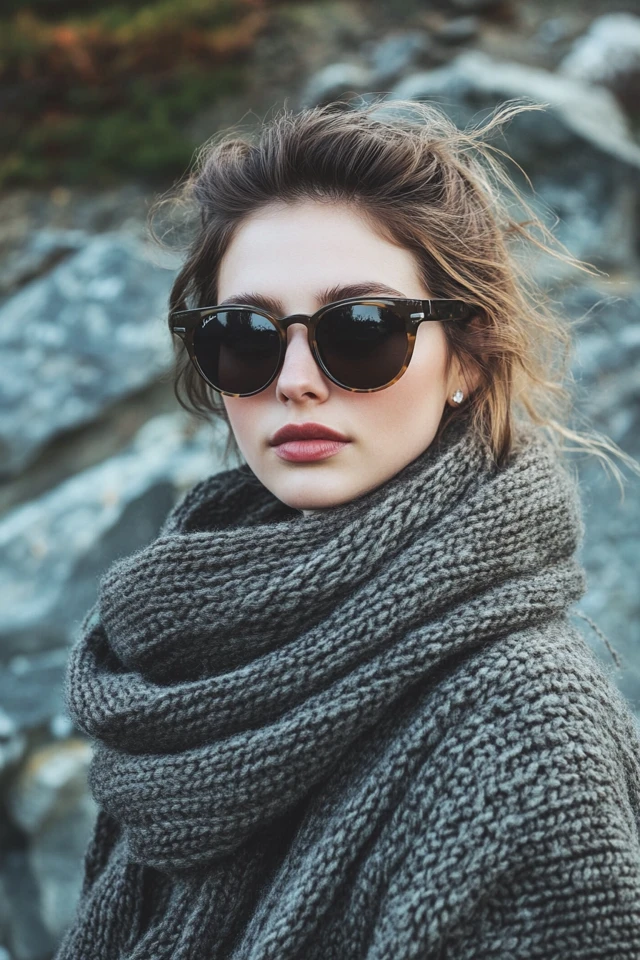
Outfit ideas with a heavy wool scarf
- A gray scarf with a black tailored coat and slim trousers. The scarf adds texture to an otherwise sleek, single-color outfit.
- An oversized plaid scarf with a chunky sweater and dark jeans, draped like a shawl for a casual day.
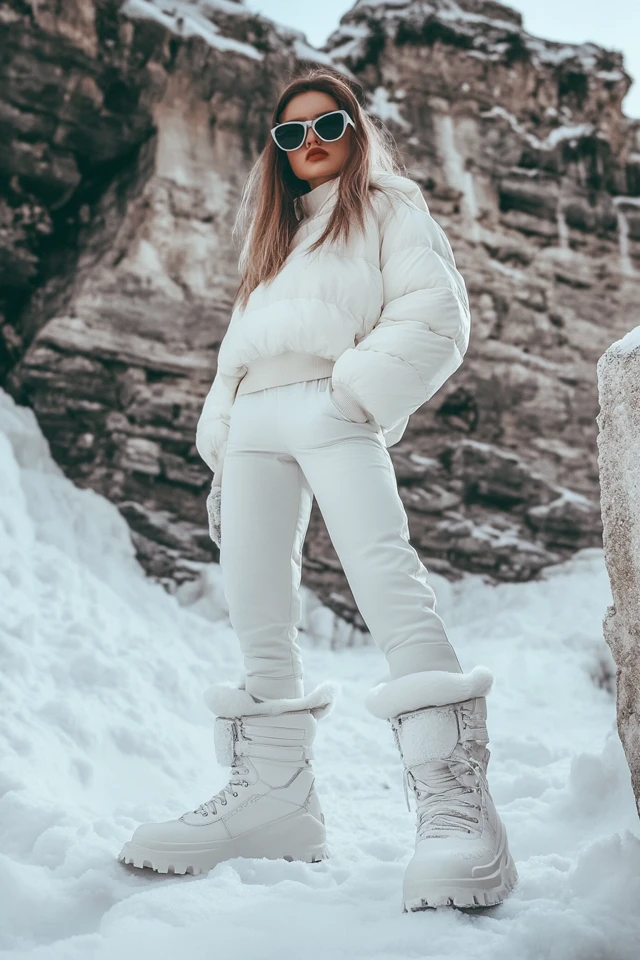
- A beige scarf with a puffer jacket and sneakers, looped once with the ends hanging.
- A black cashmere-blend scarf with a camel coat and wide-leg trousers, knotted at the front for the evening.
- A forest green rib with a parka and snow boots, wrapped several times for a long walk outside.
- A burgundy scarf over a belted wool coat and a midi sweater dress, worn loose for dinner.
Neutral colors such as gray, black and beige go with most coats. A deep green or burgundy works as a single color accent. For more layering ideas, see turtlenecks under wool coats and chunky knit beanies.
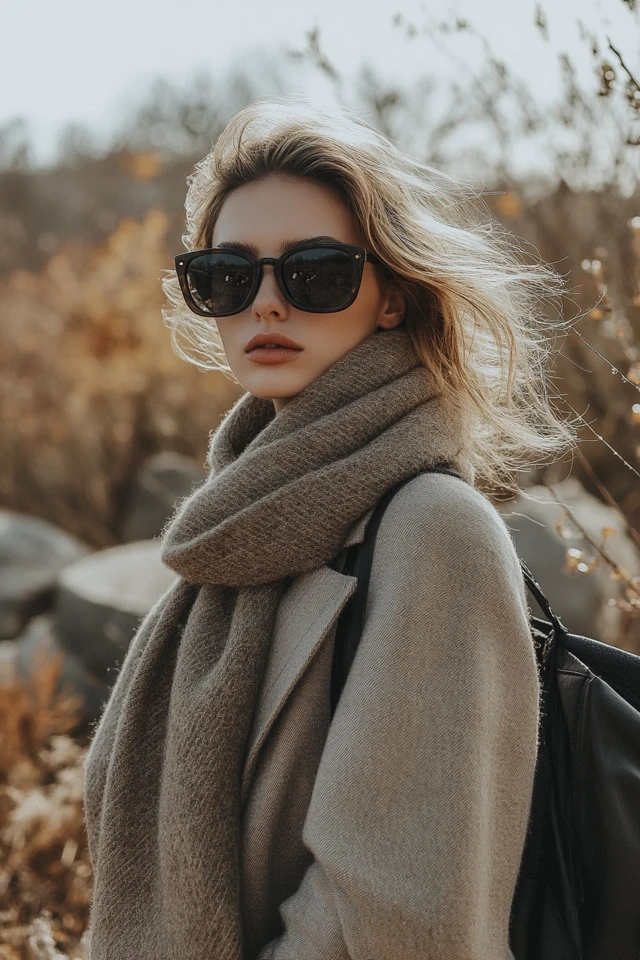
Care tips so your scarf lasts
Check the care label first. Many wool scarves can be spot-cleaned or hand-washed in cool water with a gentle detergent, then dried flat. Fold or roll it for storage in a cool, dry place rather than hanging it, which can stretch the knit. Use a fabric shaver gently on any pills.
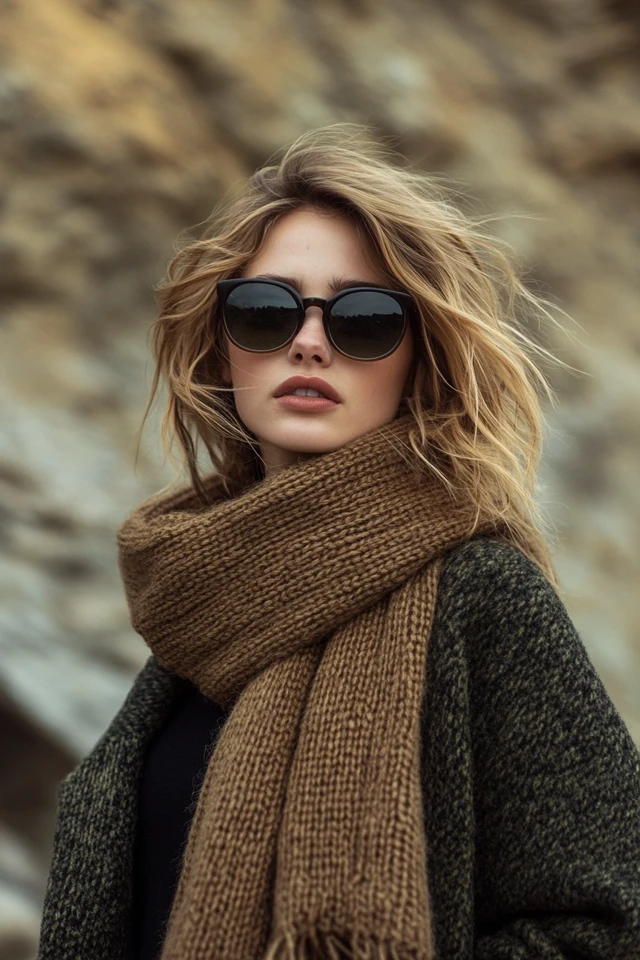
Pair your scarf with a coat that suits the weather too: quilted jackets work well under a thick wrap.
Frequently asked questions
What are the best scarves for staying warm in winter?
Thick wool, merino and cashmere-blend scarves in a dense knit or weave are the best bets. Pick an oversized one you can wrap twice.
What scarf is the warmest?
A large, heavy wool scarf with a tight weave is usually the warmest, especially in wind. Cashmere is very warm for its weight but thinner.
Are heavy wool scarves too warm for mild winters?
Not always. A lighter wool blend or a loose weave gives less insulation on milder days.
Can wool scarves work with eveningwear?
Yes. A fine wool or cashmere scarf in a solid neutral color pairs well with a tailored coat and dressier outfits.
Filed under Weather Style