Pleated Dresses: Fit-and-Flare Styles and How to Wear Them
- Words by
- Julio Arco
- Published
- Reading
- 5 min
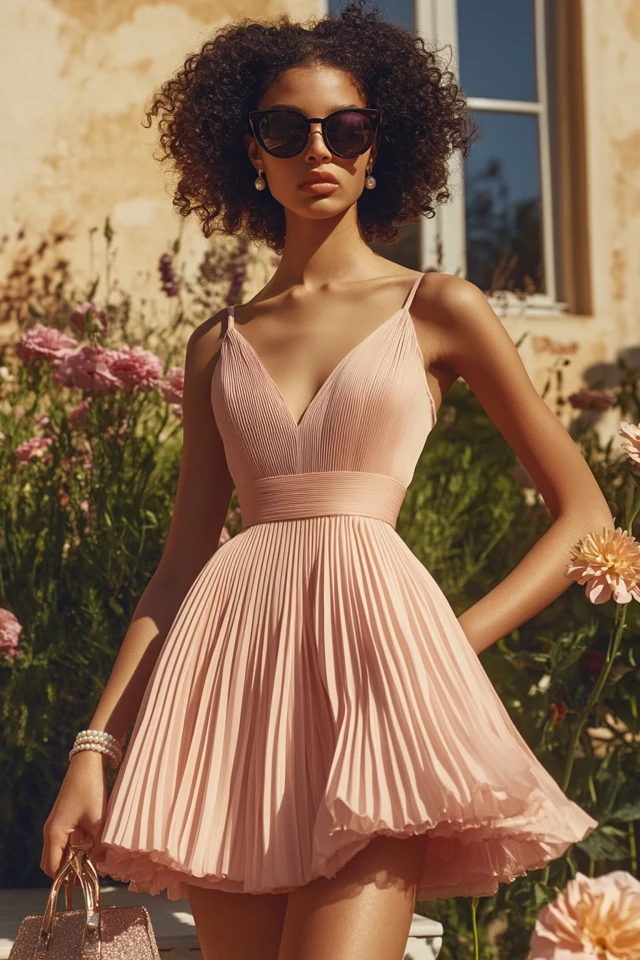
The easiest pleated dress to wear is a fit-and-flare: a fitted bodice, a defined waist and a pleated skirt that swings as you walk. Pick a midi length, a fabric with some weight and a waistline that sits at your natural waist, and it works for the office, a wedding or brunch.
Pleats add texture and movement, and the fitted top keeps the shape from getting lost. Below: the types of pleats, lengths, sleeves, colors, fabrics and how to dress the look up or down.
What makes a pleated dress fit-and-flare?
Two things happen in one dress. The bodice follows your torso and the waist is marked by a seam, a belt or both. Below it, the skirt widens, and the pleats are what give that widening its shape and swing.
If you like the silhouette on its own, see the classic fit-and-flare dress and this look at the silhouette. Here the focus is on the pleats.
Which type of pleat should you choose?
Knife pleats
Narrow, sharp folds that all face one direction. They look tailored and move in a steady ripple. They suit work dresses and anyone who wants a neat line.
Accordion pleats
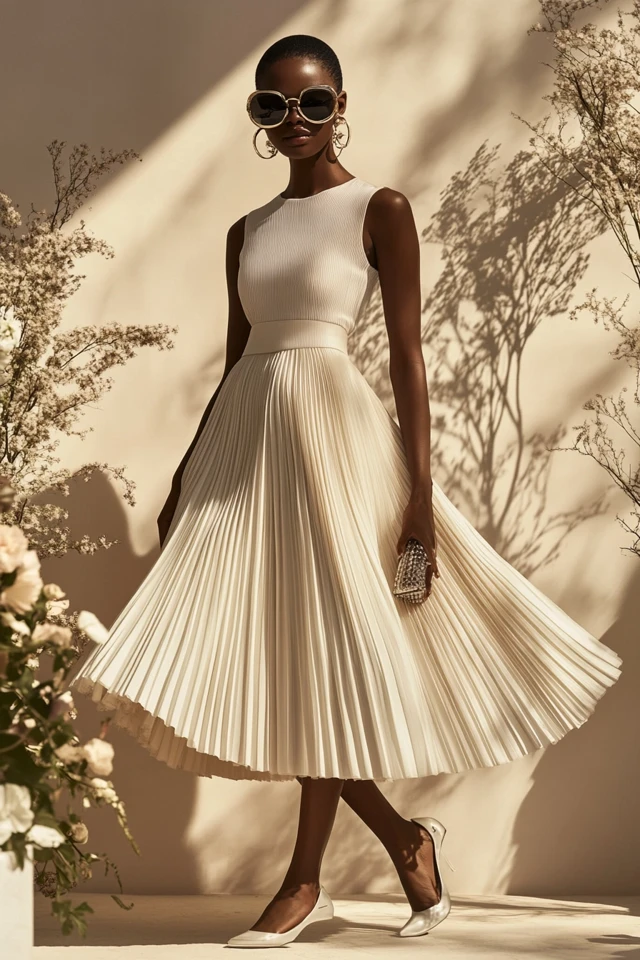
Fine, evenly spaced folds that open like a fan when you move. An accordion pleated dress with sleeves is a good choice if you want movement and more coverage on the arms. These pleats are usually heat-set into synthetic fabric, so check the care label before washing.
Box pleats
Wider, flatter folds with a more structured, schoolgirl-to-tailored feel. They add volume at the hip, so choose them if you like a fuller skirt. For the skirt-only version, read about box-pleated skirts.
Which length works best?
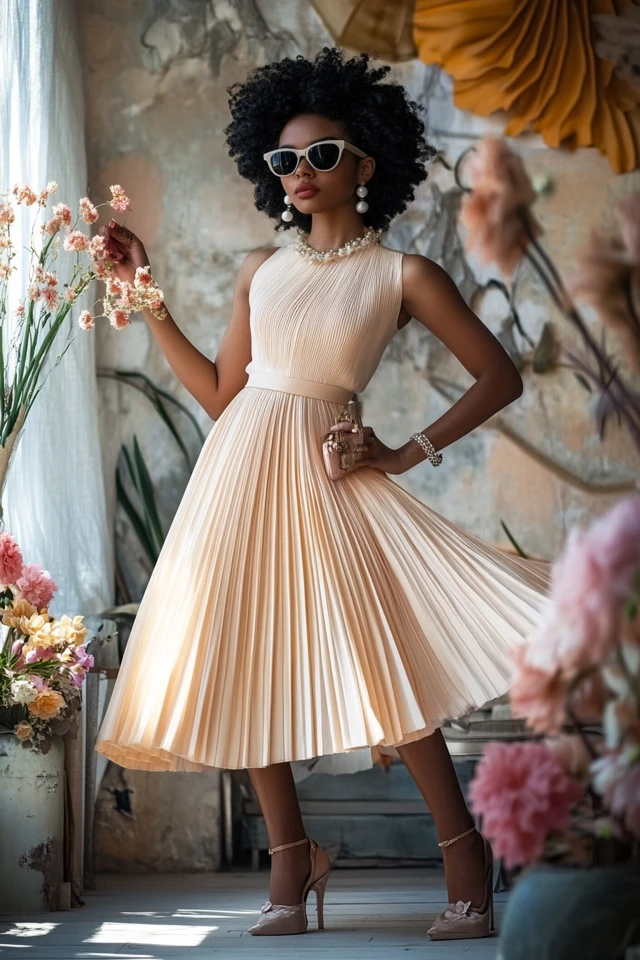
A pleated midi dress is the most flexible option. A hem that lands somewhere between mid-calf and just below the knee looks polished with flats, boots or heels. Pleats add width to the skirt, so a hem that cuts through the widest part of your calf can look heavy. Try the dress with the shoes you plan to wear.
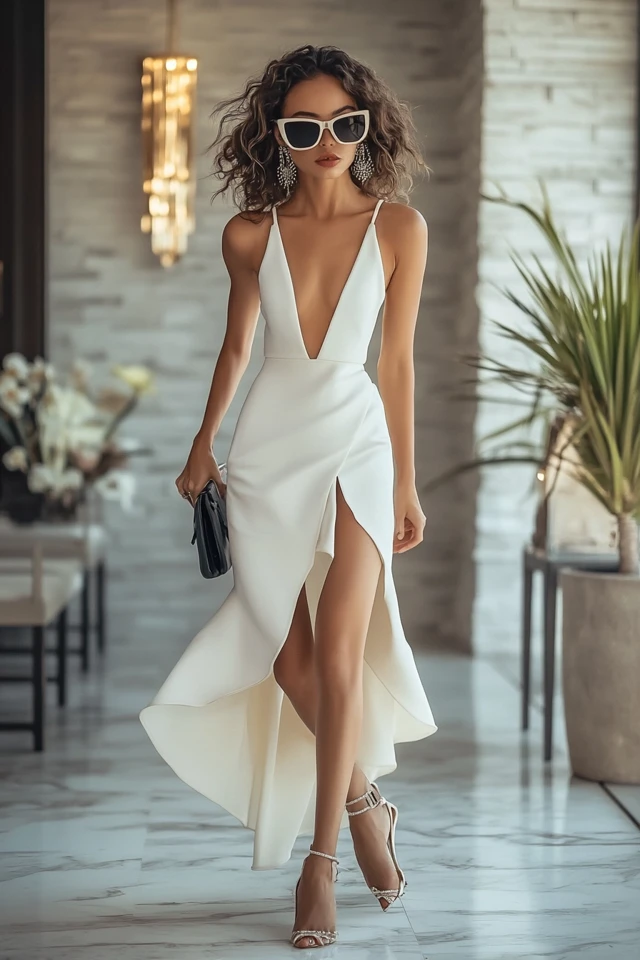
Knee-length pleats feel youthful and are easy for walking and commuting. Maxi lengths are dramatic and suit evening events; see pleated maxi dresses for more. A high low pleated dress, short at the front and longer at the back, shows off shoes and gives movement from behind. It suits parties and weddings more than a typical workday.

Sleeves and necklines: what changes the look?
Through the lens of evidence-based design, I'd treat the neckline as the first thing the eye reads, because it frames the face before anything else. Pleats are busy below the waist, so a simple top half keeps the dress balanced.
- A long sleeve pleated dress works for cooler months and formal settings. Check that the sleeve moves freely when you lift your arms.
- A one shoulder pleated dress adds an asymmetric line and needs little jewelry.
- A V-neck or square neckline suits daytime and office dresses.
- Sleeveless styles are easy to layer under a blazer or cardigan.
Which colors suit pleated dresses?
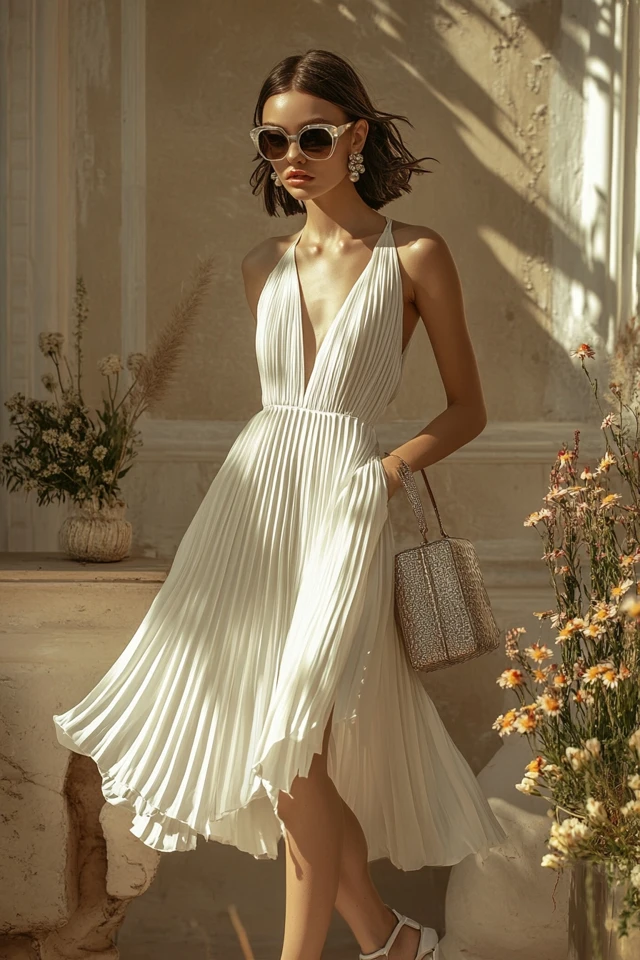
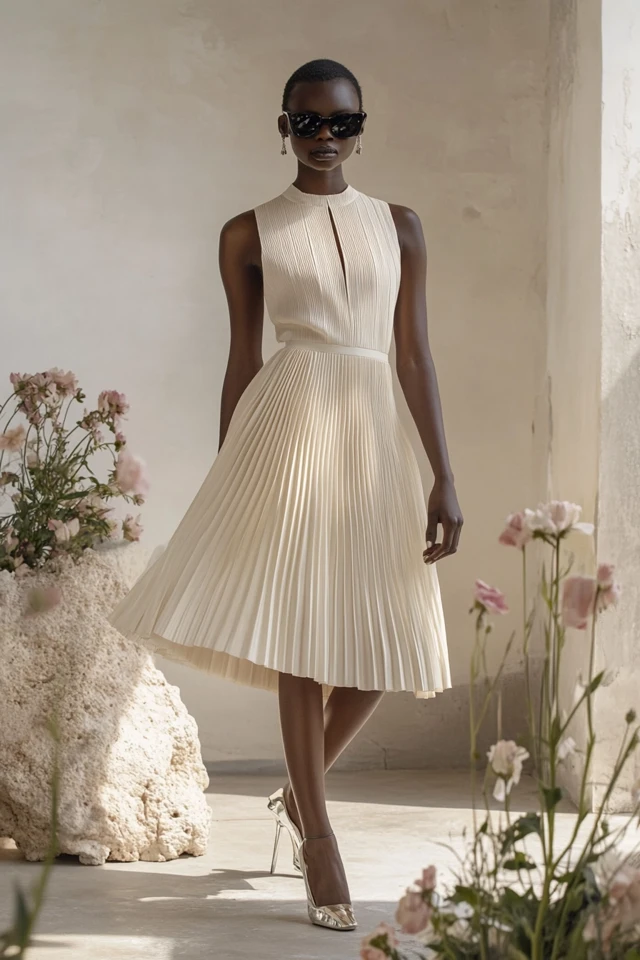
Pleats create folds and shadows, so a color reads lighter on the ridges and darker in the valleys. Solid colors show off the pleating clearly. Busy prints can hide it.
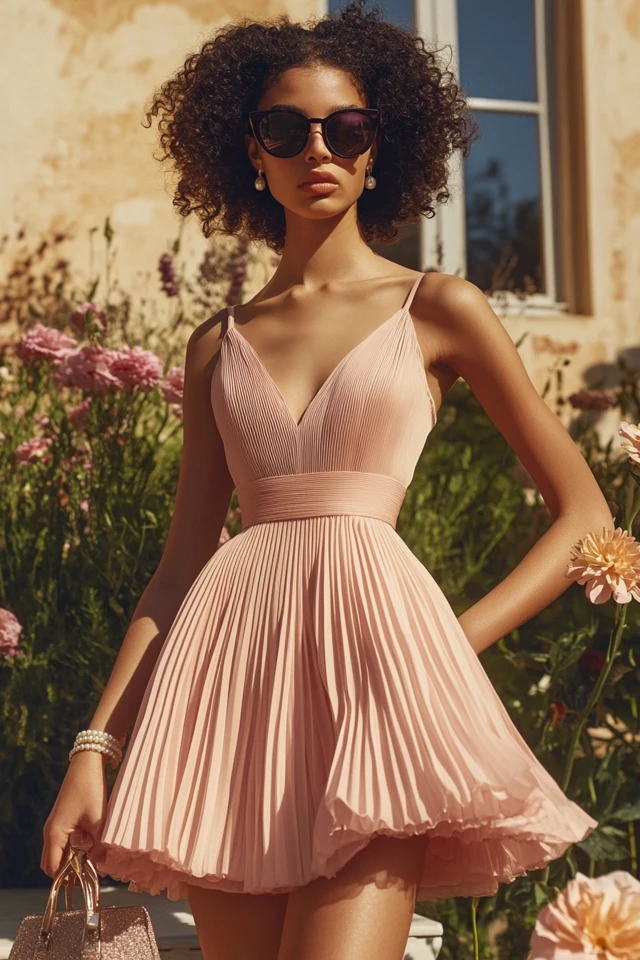
A black pleated dress is the easy all-purpose choice: the folds show as soft shading rather than strong contrast. Navy behaves the same way. Pastels such as blush, lavender or mint look airy, and jewel tones like emerald or sapphire suit satin and evening wear. Cream and taupe look quiet and polished, but a lightweight light-colored fabric may show what is underneath, so check it in daylight.
Which fabric should you pick?
Texture changes how a color reads and how pleats behave. I'd choose by the occasion first, then the fabric.
- Chiffon is light and floaty, good for spring weddings and warm weather.
- Satin and silk catch light along each fold, which looks dressy. They also show marks more easily.
- Cotton is breathable and relaxed, but holds sharp pleats less well.
- Tulle gives volume and works for formal looks.
- Polyester blends usually hold pleats best and are easy to care for.
To keep pleats crisp, follow the care label, use a steamer or a low-heat iron with a cloth, and hang the dress rather than folding it. Delicate fabrics may need dry cleaning.
Is there a plus size pleated dress that flatters?
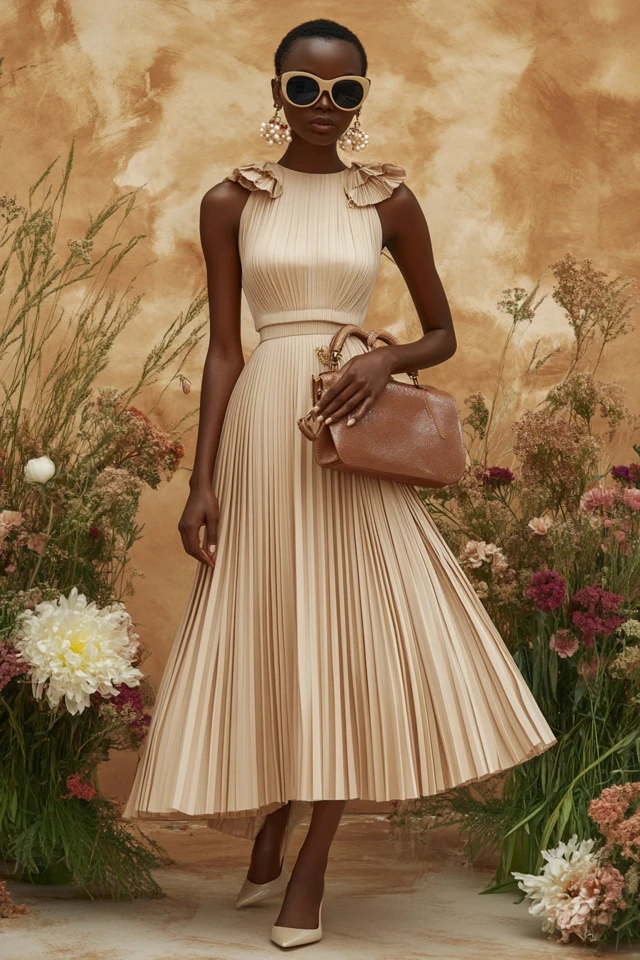
Yes. A fit-and-flare marks the waist and lets the skirt skim over hips and thighs, so it suits many body shapes. For a plus size pleated dress, look for fabric with some drape rather than stiff, thick pleats, which add bulk. Check that the bodice seams sit at your natural waist and that the armholes do not pinch. A jacket that pulls at the shoulders is a fit problem, not a you problem, and the same goes for a bodice that gapes.
Narrow pleats usually look sleeker than wide ones on a fuller skirt. A belt in the dress's own color keeps the line clean.
How to style pleated dresses for different occasions
Work
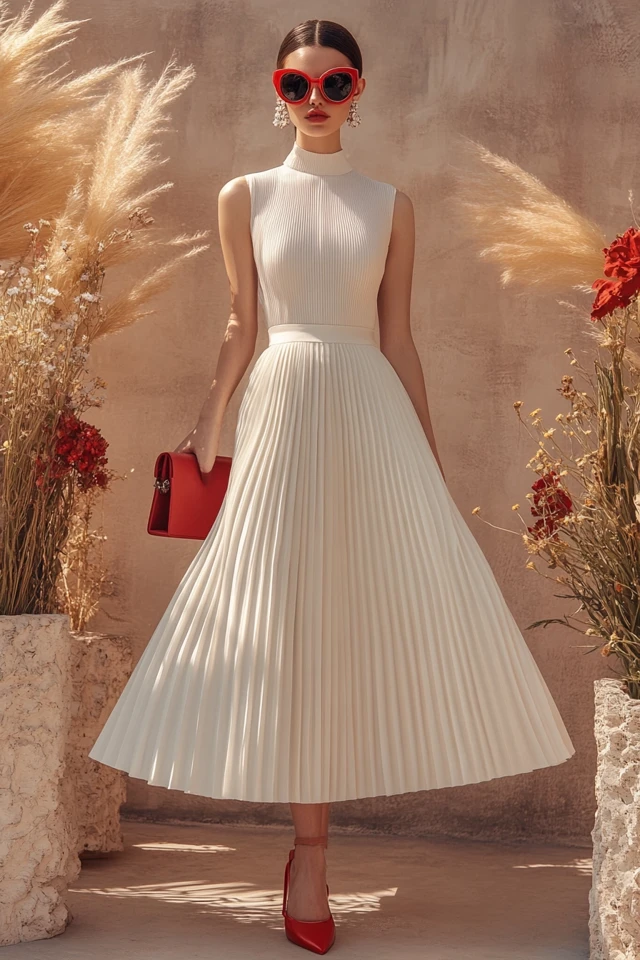
Choose a neutral color in a structured fabric, then add a tailored blazer, pumps or loafers and a structured bag. Keep jewelry small.
Weekend and brunch
A printed or pastel cotton dress works with white sneakers, sandals or espadrilles. A denim jacket or cropped cardigan covers cooler mornings.
Weddings and evenings
Satin, chiffon or a metallic pleat with strappy heels and a small clutch is enough. Let the dress carry the look and keep one accessory bold at most.
Winter
Add opaque tights, ankle boots and a long coat. A long sleeve pleated dress needs less layering underneath.
If you like pleats in separates too, see pleated trousers. For a different way to define the waist, try wrap dresses.
What to check before you buy
- Sit down and walk in it. Pleats should not pull open at the hips.
- Check the waist seam against your natural waist.
- Lift your arms to test the sleeves and armholes.
- Hold the skirt up to light to check how sheer it is.
- Read the care label to see whether the pleats are permanent or need re-pressing.
Frequently asked questions
Can pleated dresses work for all body types?
Often yes, since the fit-and-flare shape marks the waist and lets the skirt skim the hips. Choose fabric with drape and check fit at the shoulders and waist.
Are pleated dresses suitable for work?
Yes, in a structured fabric and a neutral color with a knee or midi hem. Add a blazer and simple shoes.
How do you keep pleats crisp?
Follow the care label, avoid over-washing and steam or press on low heat with a cloth. Delicate fabrics like chiffon or silk may need dry cleaning.
How do you style a pleated dress in winter?
Add opaque tights, ankle boots and a long coat. A long sleeve version needs fewer layers.
Filed under Style & Fit