Pleated Dresses: High-Low Styles for Evening
- Words by
- Julio Arco
- Published
- Reading
- 4 min
For evening, pick the pleated dress by hemline first. A high low pleated dress gives you movement and shows off your shoes, a pleated midi dress is the easiest to wear to most events, and a floor-length pleated gown suits black-tie. Sleeve and neckline come next, then color.
Pleats add motion because every fold catches light differently as you walk. Below is how to choose among the styles, which fabrics hold a pleat, and how to dress each one.
What types of pleated dresses are there?
Most pleated dresses fall into a few groups by hemline, and each suits a different kind of evening.
High-low pleated dresses
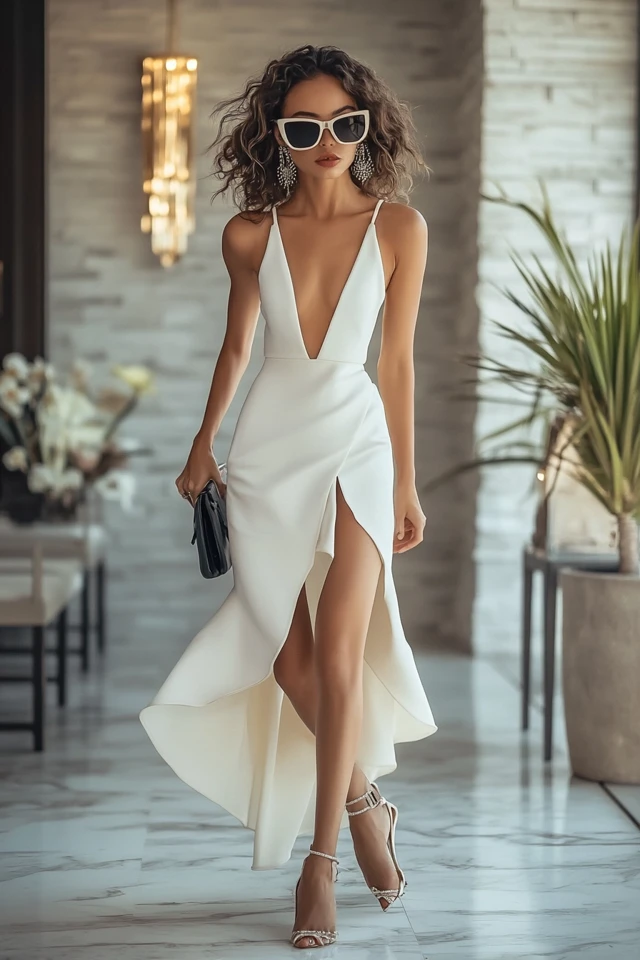
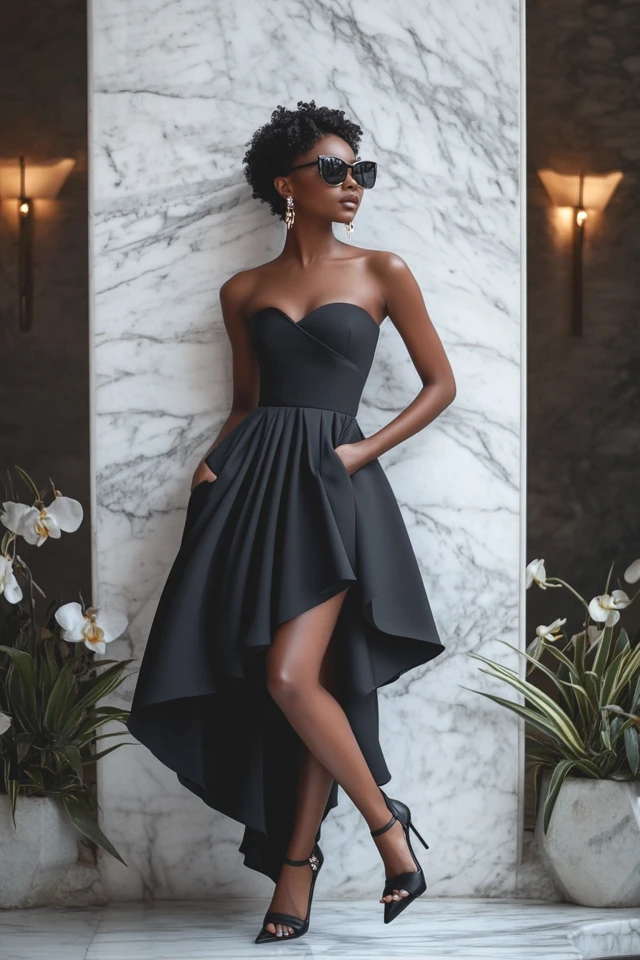
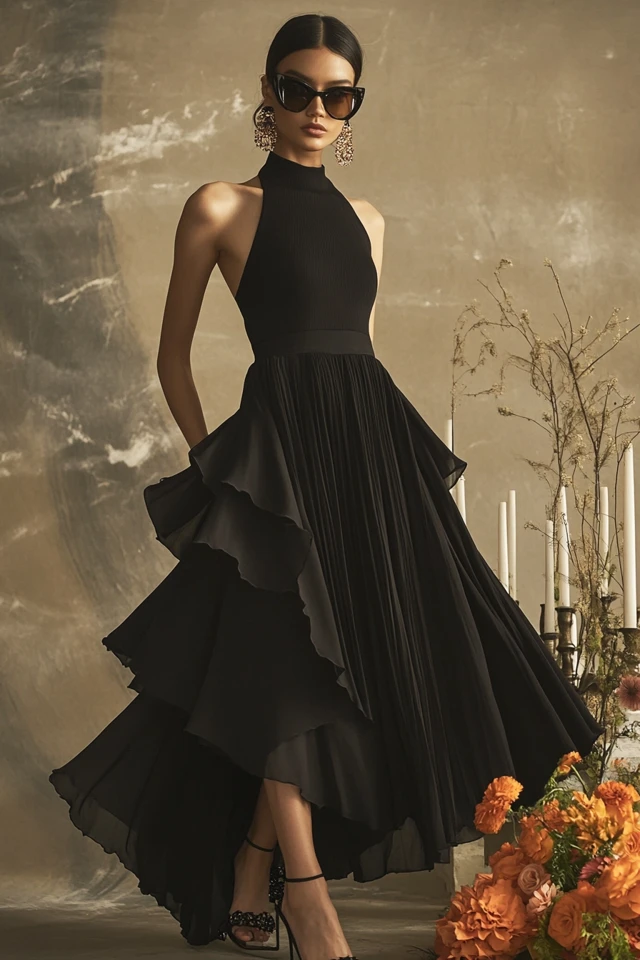
The hem is shorter in front and longer behind. A high low pleated dress is dramatic without being fussy, since the pleats already create vertical lines that lead the eye down to the longer back. It works for weddings, galas and cocktail parties. For more on the cut itself, see high-low hemlines for playful dresses and skirts.
Check the back length before you buy. It should clear the floor by about an inch in your heels so you are not stepping on it on stairs.
Pleated midi dresses
A pleated midi dress usually ends somewhere between mid-calf and just above the ankle. It is the most flexible option: dressy with heels, relaxed with flat sandals. If you are shorter, choose a hem that lands at the narrowest part of your calf rather than the widest.
Pleated maxi and gown styles
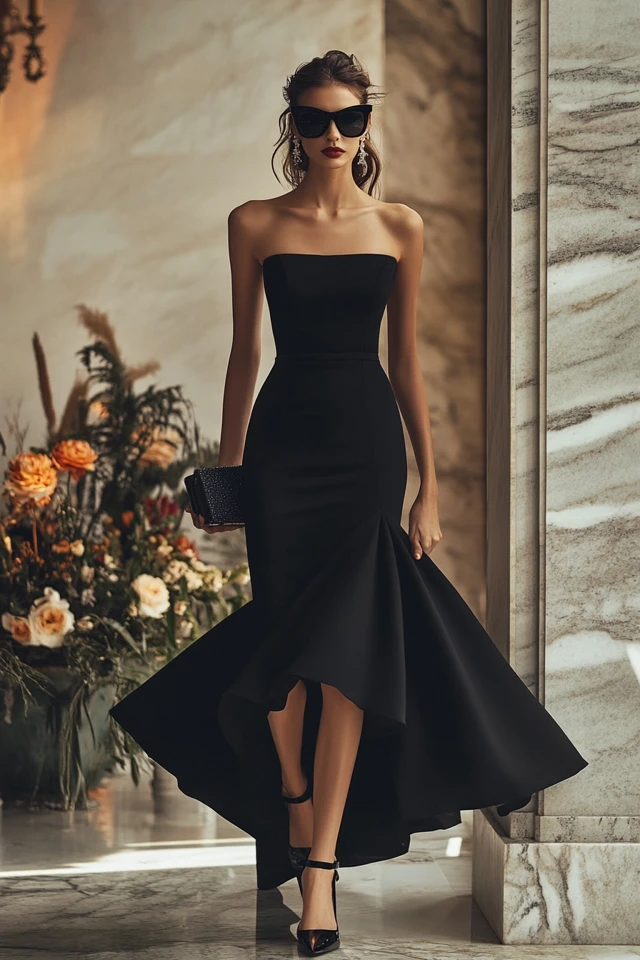
Floor-length pleats are the most formal. Satin-like fabrics give a smooth, liquid fall, while chiffon moves lighter and softer. Wear shoes with a little heel so the hem does not pool.
Which sleeve and neckline should you choose?
A long sleeve pleated dress is a good fit for fall and winter events. Fine pleats on the sleeve can look busy, so some people prefer a smooth sleeve with a pleated skirt. Wear closed-toe pumps and keep jewelry small.
A one shoulder pleated dress puts the focus on a single line across the collarbone. Through the lens of evidence-based design, I'd treat the neckline as the first thing the eye reads, so skip a big necklace and let one earring do the work.
Strapless and halter shapes also pair well with pleated skirts. If you like the halter idea, chic halter neck dresses shows more options.
What colors work best for pleated dresses?
Color reads differently on pleats because folds create light and shadow bands within a single shade.
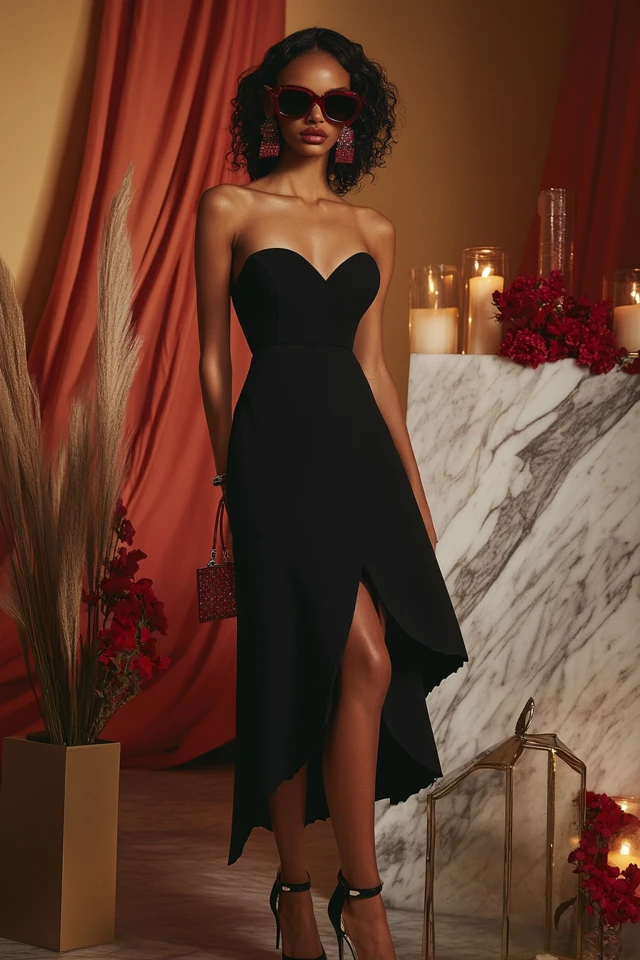
- A black pleated dress is the safest for formal events. The folds add depth that flat black fabric lacks.
- Jewel tones such as emerald, sapphire and ruby look richer in satin and deeper in the shadows of the folds.
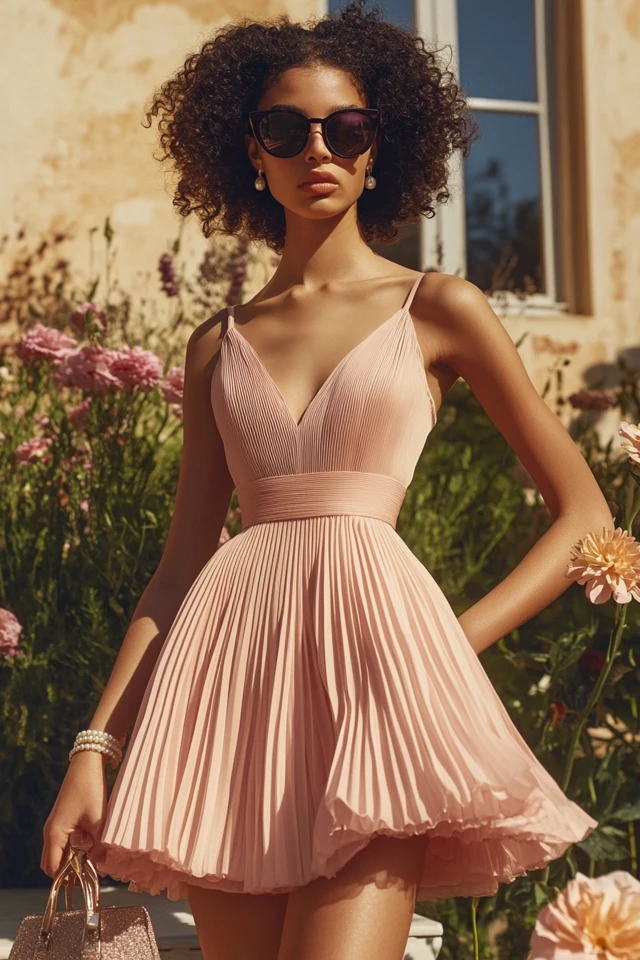
- Pastels like blush and lavender suit daytime weddings and garden parties, especially in chiffon.
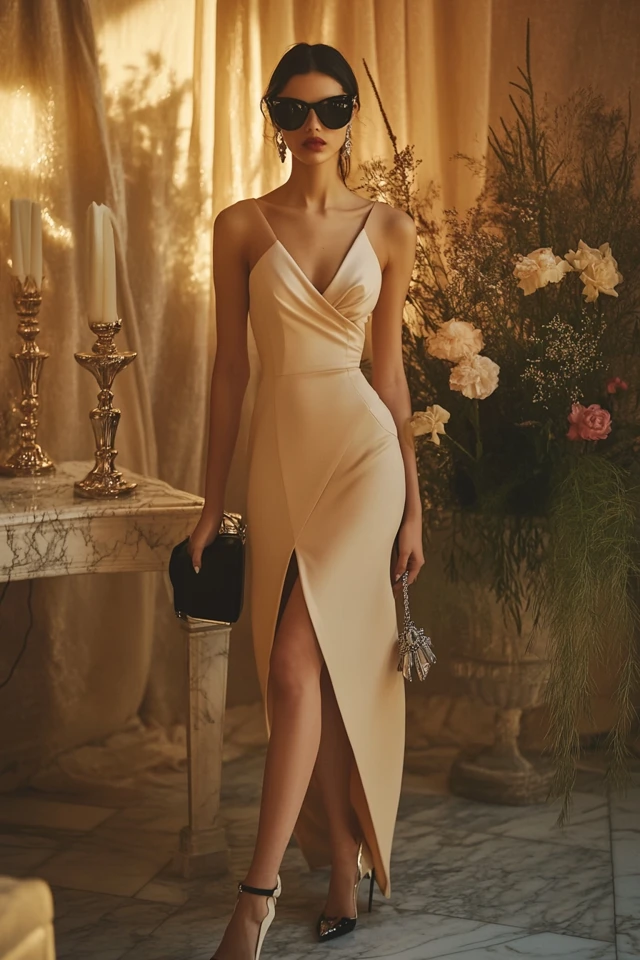
- Metallic pleats such as champagne or silver catch the most light, so keep everything else quiet.
Through the lens of evidence-based design, I'd choose the finish before the shade: a glossy and a matte fabric in the same color do not read as the same color.
Which fabrics hold pleats well?
- Chiffon is light and flowy, good for weddings, though it needs a slip.
- Satin is smooth and formal, with a strong sheen.
- Tulle is voluminous and playful, better for parties than for dinners.
- Velvet is heavy and warm, but pleats rarely suit it, so look for gentle gathers instead.
Look for permanent pleats, which are heat-set into synthetic fabrics and usually survive washing better than pressed ones. Check the care label before you buy.
Are there pleated dresses for plus sizes?
Yes. A plus size pleated dress can be very flattering if you pay attention to where the pleats start. Pleats that begin at the waist or just below the bust skim over the hips, while pleats that start at the hip add volume there. An empire waist, a wrap bodice or a soft, fluid fabric all help. Look for wider, softer pleats rather than very tight accordion folds if you want less bulk.
How to style pleated dresses for different occasions
Wedding guest
Choose a pastel or soft jewel tone in a pleated midi or high-low. Nude pumps or strappy sandals and a light wrap for the evening complete it. Check the invitation before choosing a bold color.
Gala or black-tie
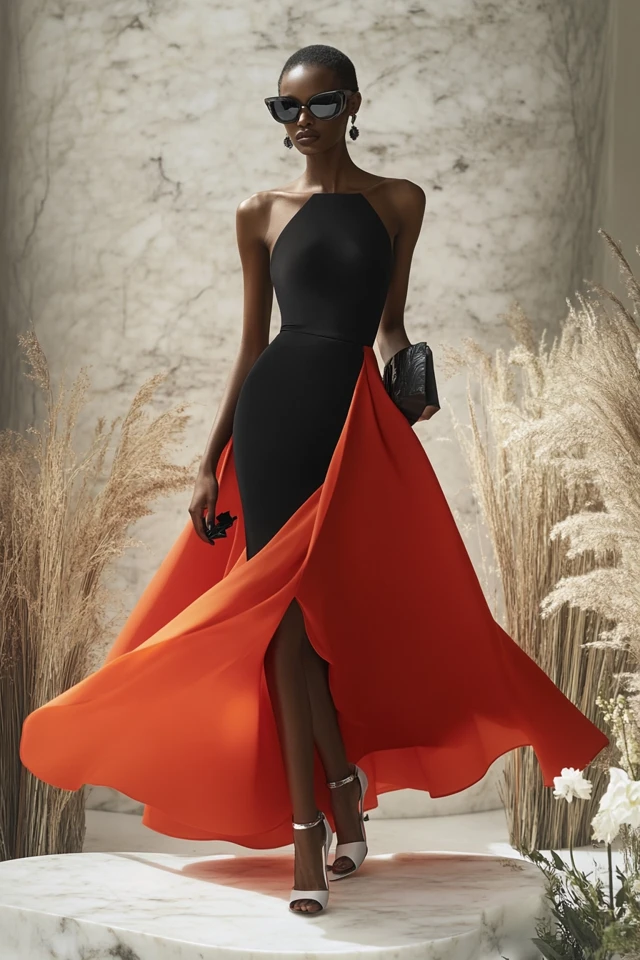
A black or deep-toned pleated gown, heels with some shine, and a simple clutch. For something more draped, see draped cape dresses for evening elegance.
Cocktail party or dinner
A high low pleated dress in satin with metallic heels needs little else. Add one statement earring or a bold lip, not both.
Garden party
Go for a printed or pastel pleated midi with wedges or flat sandals and keep makeup light.
Quick styling tips
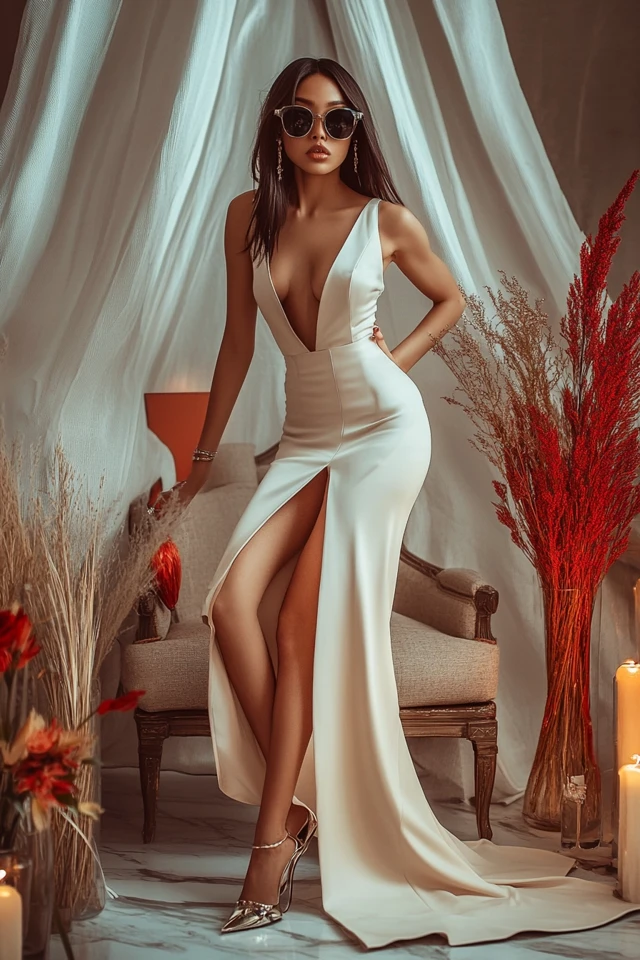
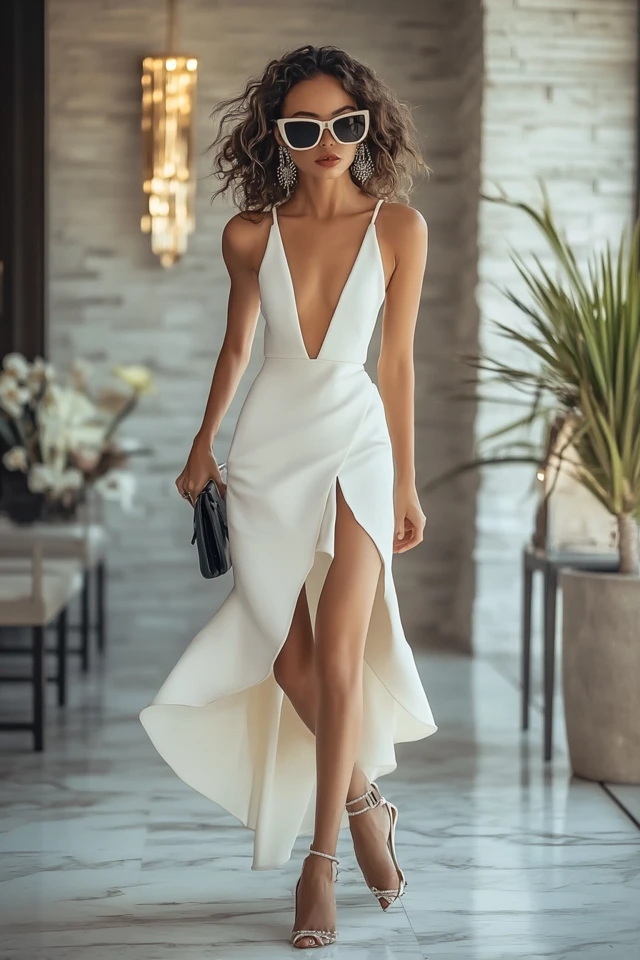
- Let the shoes show. Short fronts reveal them, so pick a pair you love.
- Keep accessories to one focal point if the dress has dramatic pleats.
- Choose an updo or sleek ponytail for strapless and off-shoulder necklines.
- Add a tailored blazer or shawl for cool nights.
- Check that the back hem does not drag.
If you want more ideas for layering the same hem shape, high low skirts for layered styling goes further. For other evening looks, see the safflower organza evening ensemble.
Frequently asked questions
Are high-low dresses flattering for all body types?
Most body types can wear them. The shorter front shows the legs, and the longer back adds coverage, so you can adjust the front length to a point you like.
Can you wear a pleated dress casually?
Yes. A pleated midi in a matte, lightweight fabric looks relaxed with flat sandals or clean sneakers and a denim jacket.
Can you wear pleated dresses in cold weather?
Yes. Choose long sleeves and a heavier fabric, then add a tailored coat or wrap.
Is a high low pleated dress appropriate for a wedding?
Usually yes, in chiffon or soft satin and a pastel or neutral shade. Check the dress code on the invitation, especially for black-tie weddings.
Filed under Style & Fit