Pleated Dresses: Styles, Colors and How to Wear Them
- Words by
- Julio Arco
- Published
- Reading
- 5 min
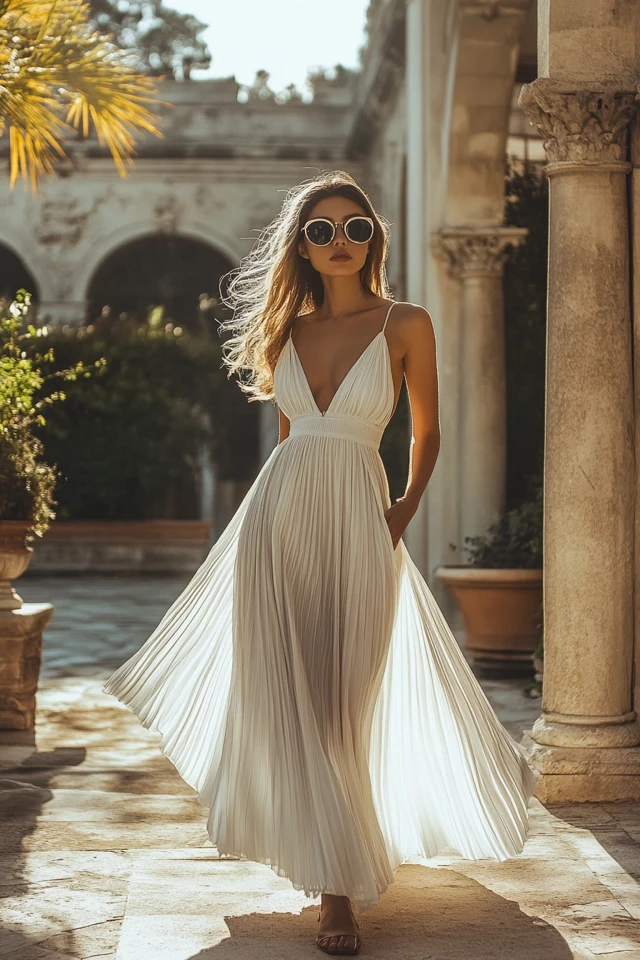
Pleated dresses are an easy way to look dressed up without looking stiff. The folds add vertical lines and movement, so a plain silhouette gets texture without extra trims. For most people, the best starting point is a maxi or midi in a fabric with some weight, so the pleats fall cleanly instead of clinging.
Below: the pleat types, which length and sleeve to pick, how color reads, and how to wear and care for them.
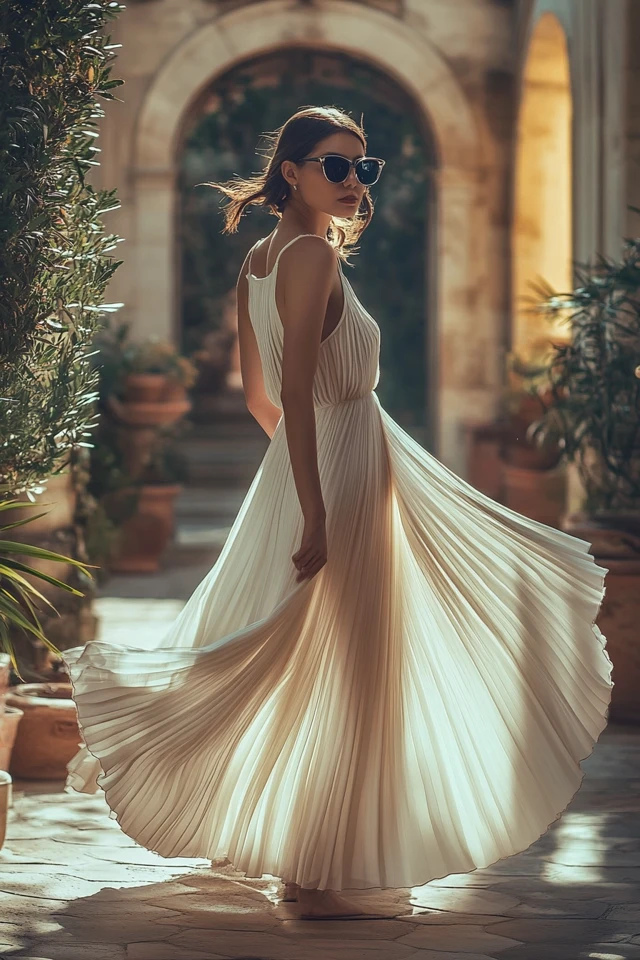
What types of pleats are there?
The pleat style changes the whole mood of a dress, so it helps to know the names when you shop.
- Accordion pleats are narrow, evenly spaced folds that open like a fan when you walk. They look polished and suit formal events.
- Knife pleats all fold in the same direction, giving a sharp, directional movement.
- Box pleats are wider and more structured, with a tailored feel.
- Micro-pleats are fine and soft, adding texture without much volume.
Through the lens of evidence-based design, I'd think of pleats as a texture first. Fine folds catch light in many small strips, so the same color can look deeper in the folds and lighter on the ridges.
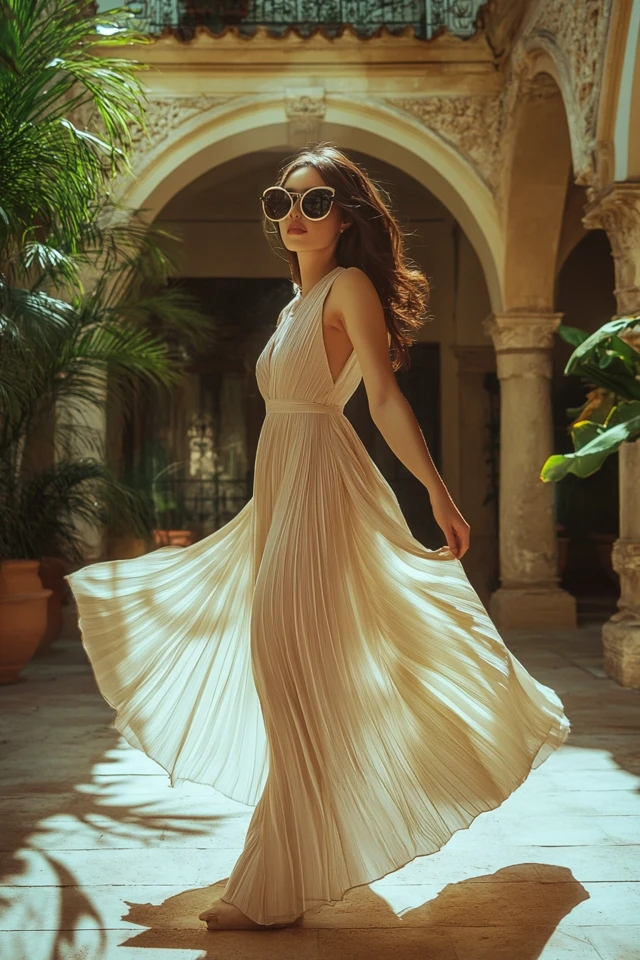
Which length works best: mini, midi or maxi?
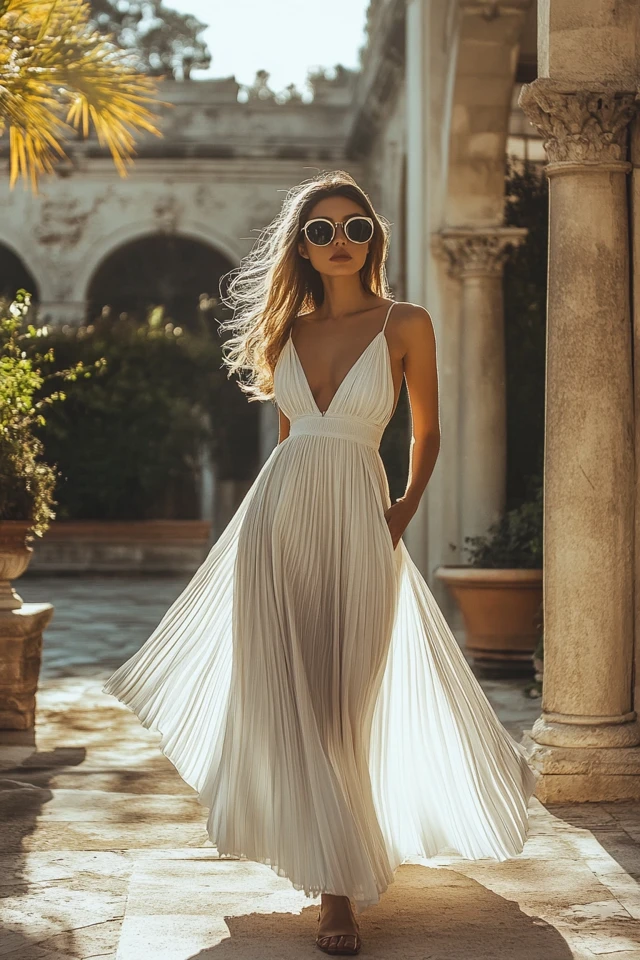
A maxi gives the most drama and the longest vertical line. A pleated midi dress, ending somewhere between knee and mid-calf, is easier to walk in and pairs well with boots or flats. A high-low pleated dress is shorter in front and longer behind, which shows off your shoes and still gives the sweep of a gown at the back.
If you are petite, check where the hem lands. A maxi that stops just above the ankle is easier to manage than one that pools on the floor, and a midi that ends at the widest part of your calf can shorten the leg line. Try it with the shoes you plan to wear.
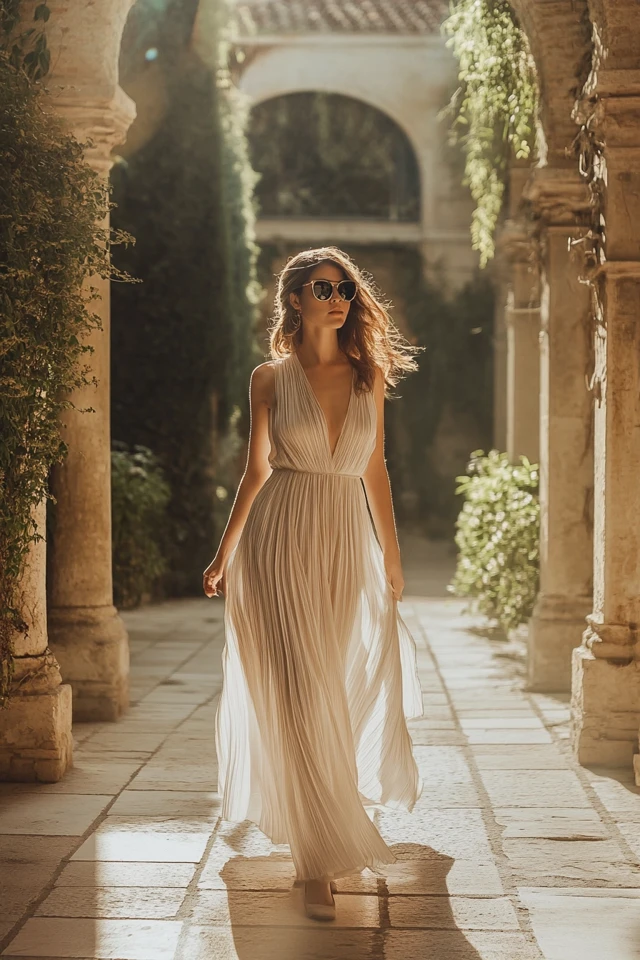
Should you choose sleeves, one shoulder or a backless cut?
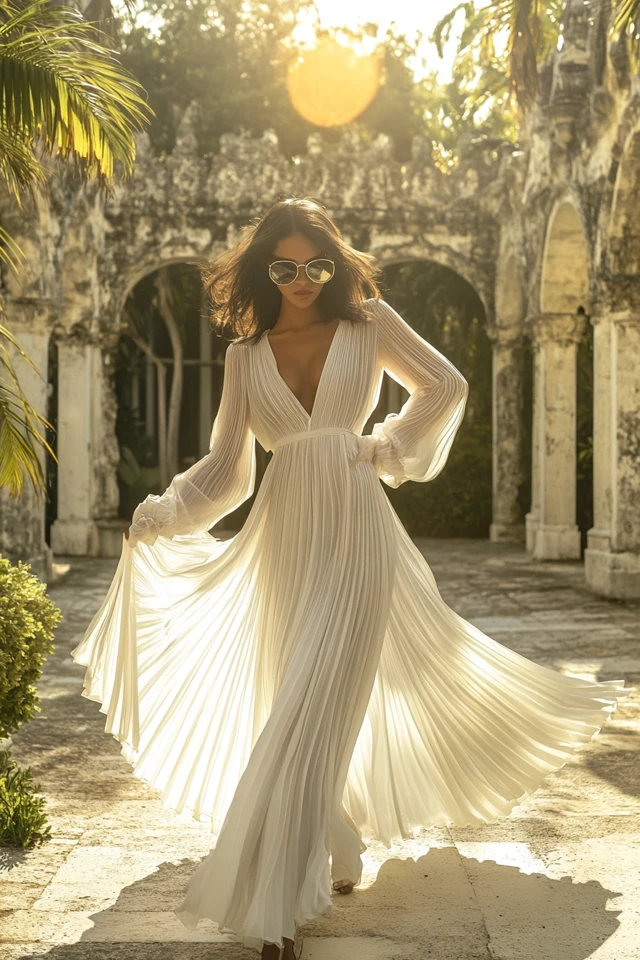
Sleeves change the proportion of a pleated dress. A pleated maxi dress with sleeves, or a long sleeve pleated dress, works for cooler months and for venues where you want more coverage, and the extra length balances a full skirt. Look for sleeves that are lighter or less pleated than the skirt so the arms do not feel bulky.
A one shoulder pleated dress draws the eye diagonally across the body, which is a strong look on its own. Keep jewelry to one statement piece. A backless pleated dress keeps the front calm, so a simple neckline and a low bun or loose hair let the back be the detail.
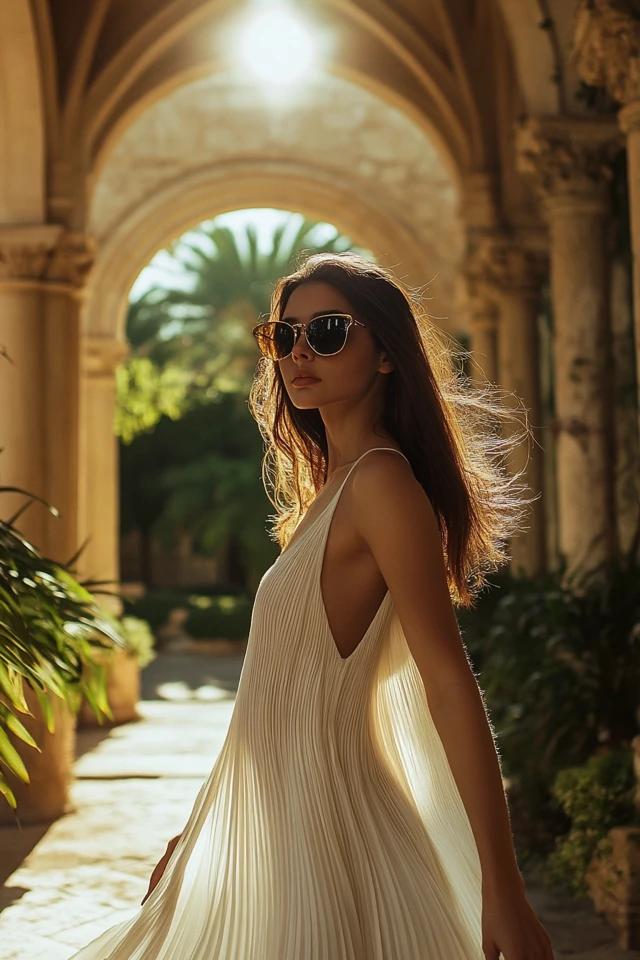
What colors suit pleated dresses?
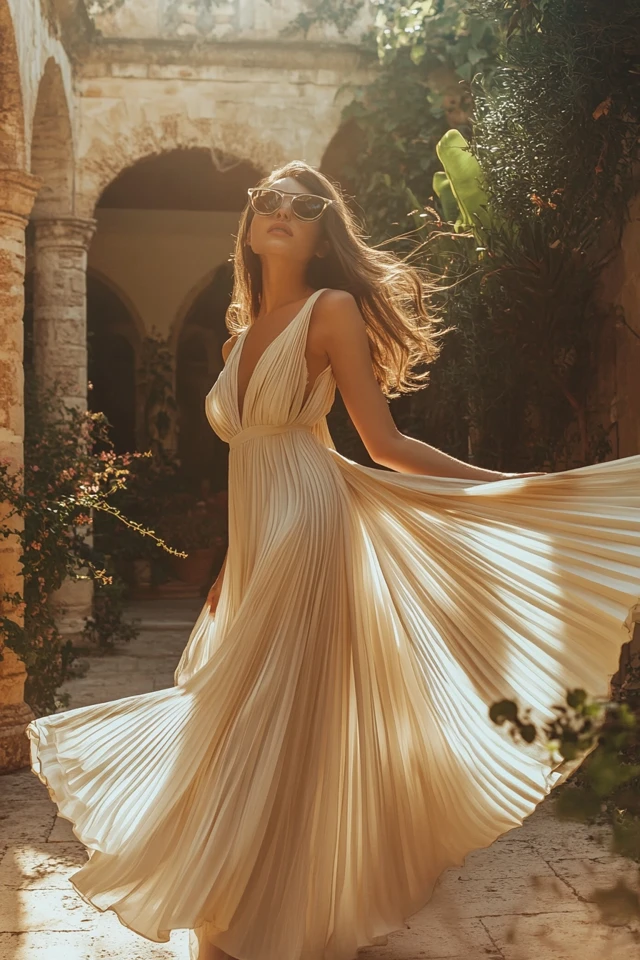
Color reads differently on pleats because the folds create shadow. Dark shades look richer, and light shades look softer and slightly dimensional.
- Cream, beige and taupe look refined by day and photograph softly.
- Pastels such as lavender, blush and mint suit spring and summer events.
- Emerald, sapphire and ruby look dramatic in the evening, and the folds show off the depth of the color.
- Metallics give a lot of shine, so keep the rest of the outfit quiet.
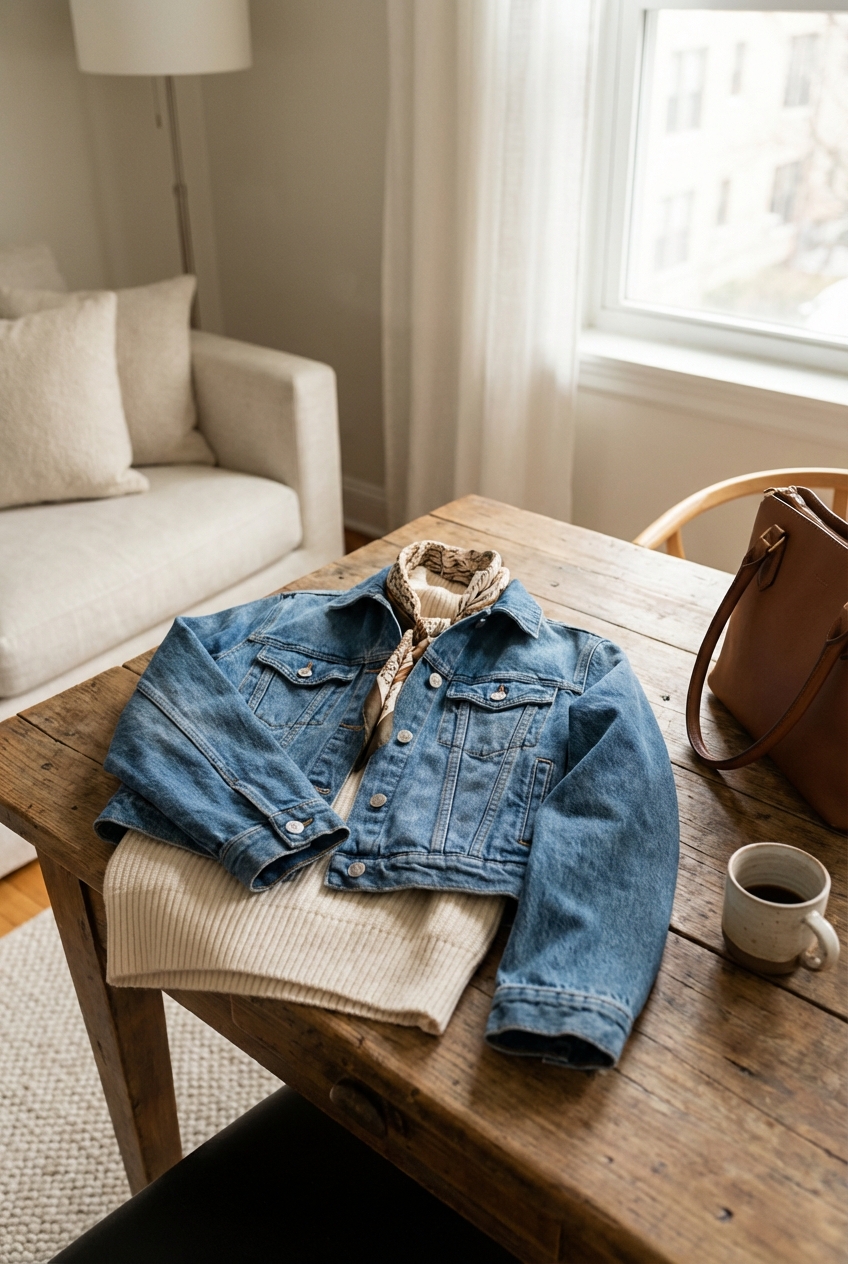
A black pleated dress is the most flexible choice. Add heels and a clutch for a gala, or flat sandals and a denim jacket for dinner. Navy behaves similarly but looks a touch softer next to skin.
How do you choose pleated dresses for your body type?
A dress that pulls at the shoulders or bunches at the hip is a fit problem, not a you problem. These adjustments usually help:
- Petite: finer pleats, a defined or empire waist and a hem just above the ankle.
- Curvy: pleats that start below the waist, a V-neck or wrap top, and a fabric with some weight, such as satin or crepe, so the folds lie flat.
- Athletic: wider box pleats, tiers or a belt to add softness and define the waist.
- Tall: longer hems, bolder pleats and asymmetrical details.
For a plus size pleated dress, look for stretch or a flexible waist, pleats that are stitched down over the hip, and a fabric that drapes rather than stands out. If the pleats flare open at the widest point, size up and have the waist taken in.
How do you style pleated dresses for different occasions?
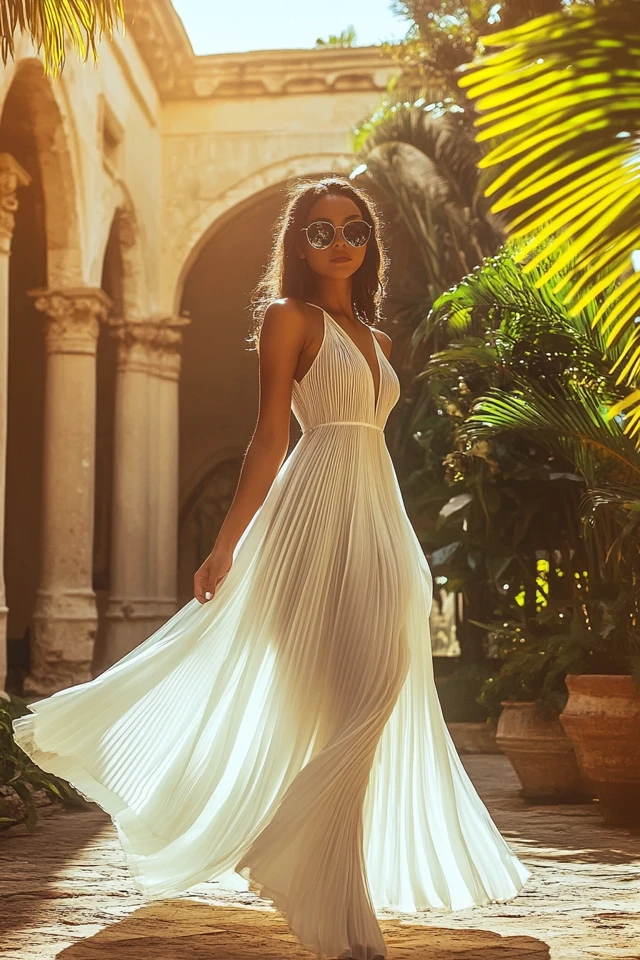
Let the dress be the main statement. For formal events, wear strappy heels or pointed-toe pumps with a small clutch. For daytime, try flat sandals, espadrilles or clean white sneakers, plus a crossbody bag.
A belt defines the waist if the dress is very full: metallic for evening, woven for day. In cooler weather, layer a fitted turtleneck under it, add a cropped jacket or tailored coat, and finish with ankle boots.
As an architect trained in evidence-based design, I'd balance volume with simplicity. If the skirt is full and textured, the eye needs a calm place to rest, so keep earrings and bags minimal.
For related shapes, see pleated dresses with fit-and-flare shapes, pleated maxi skirts if you prefer separates, or sheath dresses for a sleeker line. For warm-weather options, browse glamorous vacation maxi dresses.
How do you keep pleats from flattening?
Follow the care label. Many pleated fabrics need hand-washing or dry cleaning. Skip ironing directly on the folds, and use a cool setting with a pressing cloth only if the label allows it. Store the dress hanging, or loosely folded along the pleat lines, so the folds keep their shape.
Frequently asked questions
Are pleated dresses flattering on every body type?
Most people can wear them. The vertical lines lengthen the look of the body, but the pleat size and fabric weight matter. Choose a drapey fabric and a pleat style that suits your proportions.
Can you wear a pleated maxi dress casually?
Yes. Flat sandals, a crossbody bag and minimal jewelry make it relaxed. A denim jacket also tones it down.
Can pleated dresses work in cooler weather?
Yes. Wear a fitted turtleneck underneath, add tights or ankle boots, and finish with a tailored coat. A long sleeve style makes this even easier.
How do you keep pleats from losing their shape?
Follow the care label, avoid ironing directly on the folds, and store the dress on a hanger.
Filed under Style & Fit