A-Line and Fit and Flare Dresses: How to Choose
- Words by
- Julio Arco
- Published
- Reading
- 6 min
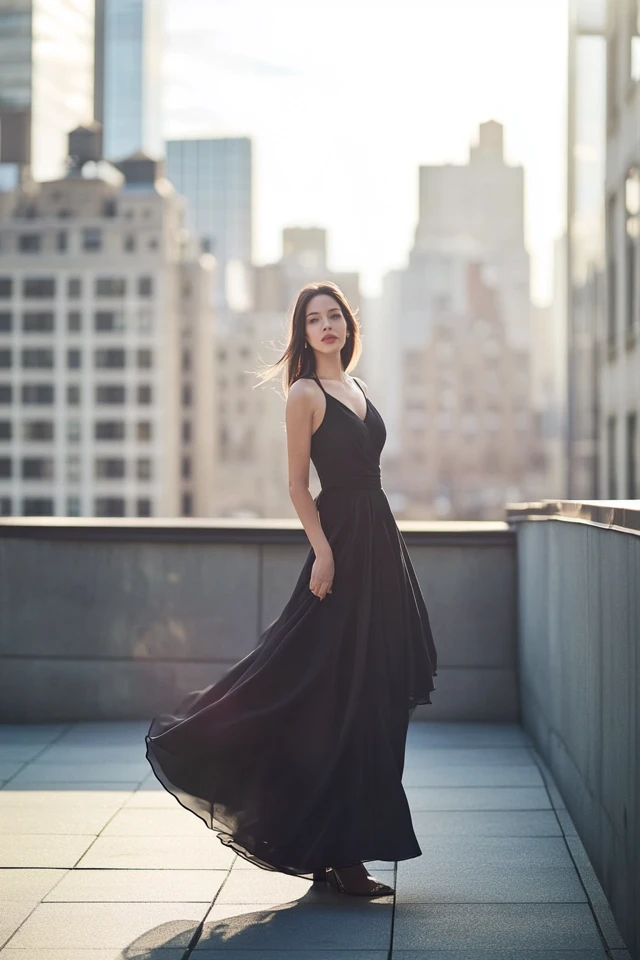
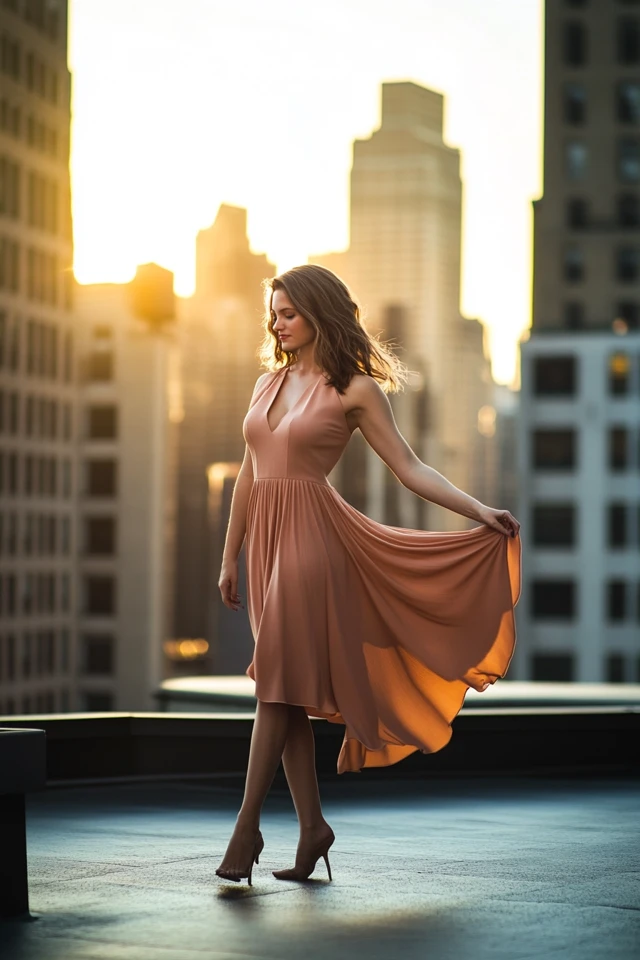
A fit and flare dress is fitted through the bodice, cinched at the waist, and then flares out into a full skirt. An A-line dress skims the body and widens gradually from the shoulders or bust to the hem, with no defined waist seam. Both open the skirt into a triangle, so both suit most bodies, but they do it in different ways.
If you want your waist to be the focal point, choose fit and flare. If you want an easy shape that does not cling anywhere, choose A-line.
What is the difference between A-line and fit and flare?
The difference is where the shape begins. A fit and flare has a seam at or near the natural waist, and the skirt springs out from there. An A-line has no waist emphasis: the fabric falls in one continuous line from the upper body to the hem.
That changes how the dress reads. Fit and flare draws the eye to the narrowest part of your torso, so the proportion is a small top over a wide skirt. A-line reads as one long vertical shape, which is calmer and a bit more forgiving if you prefer not to mark the waist.
Some dresses sit in between, such as an A-line with a thin belt or a seam slightly above the waist. Look at the seam: if the skirt starts at the waist and has volume, it is fit and flare.
What body type can wear a fit and flare dress?
Most of them, because the shape works by proportion rather than by size. Here is how it plays out for common shapes.
- Hourglass: the fitted bodice follows your curves and the skirt keeps the hips balanced.
- Pear: the flare skirts over the hips, so a fitted top with a bit of detail at the neckline evens out the look.
- Apple: choose a waist seam that sits at your narrowest point and a skirt that falls straight from there, not one gathered tightly at the midsection.
- Athletic: the full skirt adds softness, and a defined waist creates a curve where the frame is straighter.
- Petite: keep the hem near the knee or just below, so the skirt does not overwhelm your height.
Through the lens of evidence-based design, I'd treat the waist seam as the first thing the eye reads. If it lands in the right place for you, the rest of the dress almost always works.
Does an A-line dress hide belly fat?
It can, because the fabric skims past the midsection instead of clinging to it. Without a waist seam or a belt, nothing marks where your torso is narrowest, so the eye follows the vertical line down to the hem.
A few details help. Pick a fabric with some weight, such as crepe, ponte or a thick cotton, since thin jersey tends to cling and show every line. Choose a matte finish over a glossy one, because shine catches light on every curve. A V-neck or scoop neckline also lengthens the upper body.
If you do want a fit and flare, look for a wider, softer waist seam rather than a thin tight one.
Which length works best: mini, knee, midi or maxi?
Knee length
A fit and flare dress at the knee is the most adaptable length. It works at the office with a blazer and on a weekend with flats, and it keeps the skirt from swinging too wide.
Midi
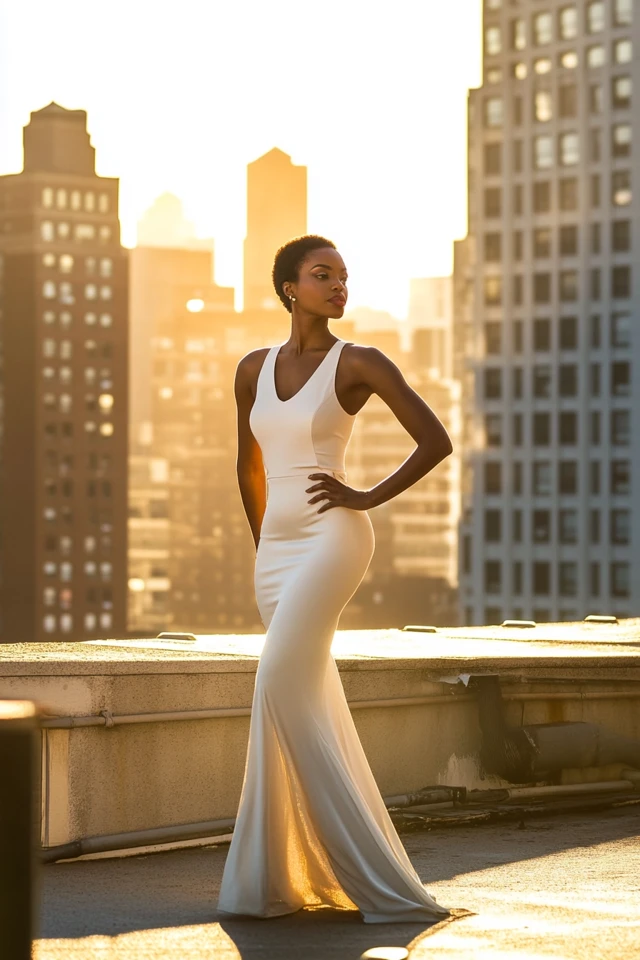
Midi A-line and fit and flare dresses hit anywhere from mid-calf to just below the knee. They look polished and move well. If you are shorter, wear a small heel or a pointed flat so the hem does not cut your leg at its widest point.
Maxi
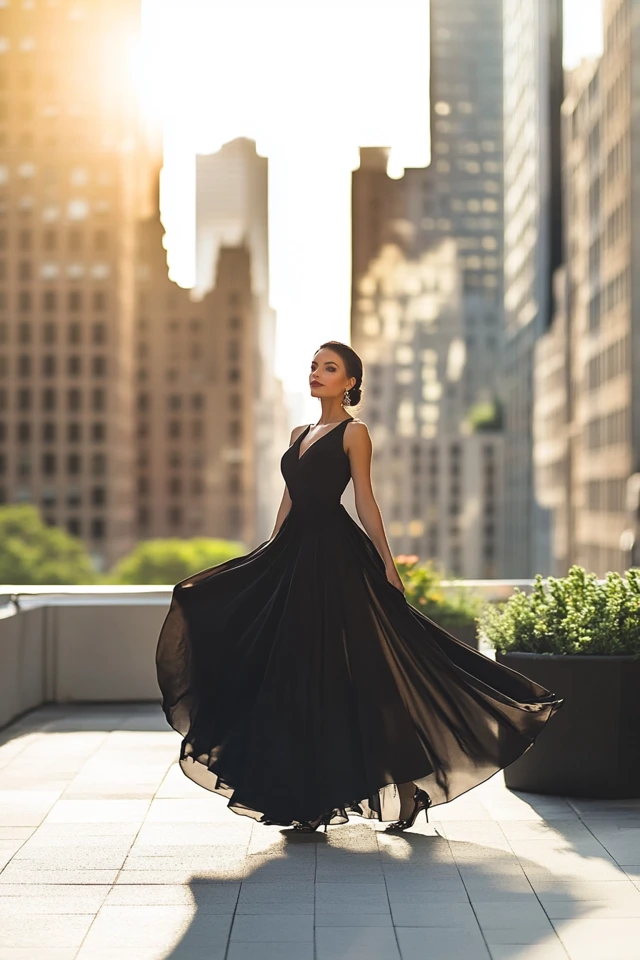
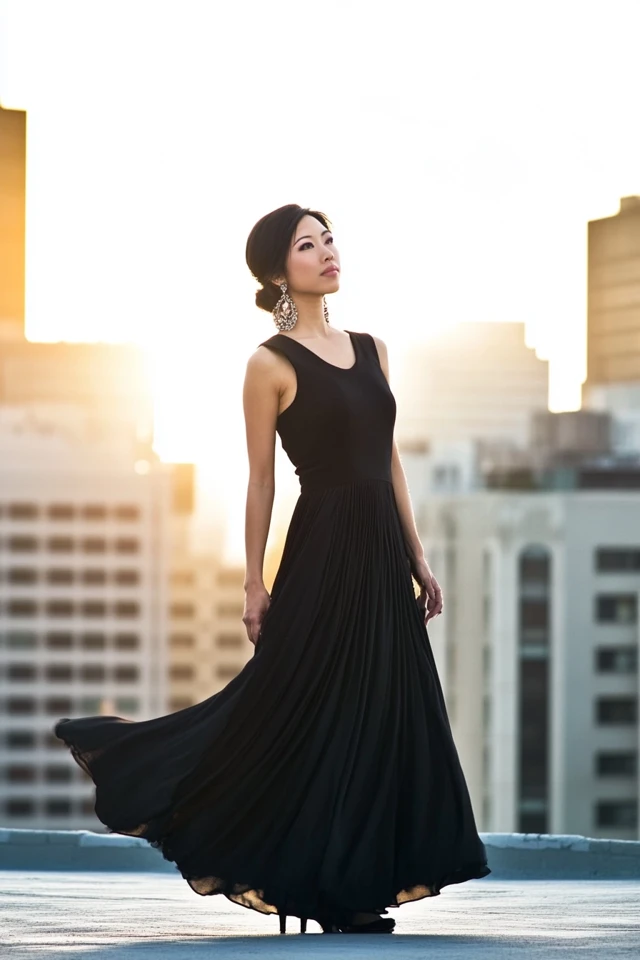
Maxi versions suit formal events and warm-weather days. Check the hem before you buy: it should clear the floor by about an inch in the shoes you will wear.
Mini
A mini flare is playful and easy to move in. It pairs well with boots or sneakers for a casual look.
Can you wear sleeves with an A-line or fit and flare dress?
Yes, and sleeves change the dress a lot. An A-line fit and flare dress with sleeves works in cooler months and in offices with a dress code. Long sleeves with a fitted bodice keep the clean line, while a soft puff sleeve adds volume at the shoulder and balances a wide skirt.
Three-quarter sleeves are the easiest to wear across seasons. Make sure the shoulder seam sits where your shoulder ends, since a sleeve that pulls or droops is a fit problem, not a you problem.

Which fabrics and prints suit the shape?
Fabric decides how the skirt flares. Structured cotton, wool and denim hold a stiff, defined shape. Chiffon, satin and soft crepe fall in loose folds and move more.
Texture also changes how a color reads. A matte black cotton and a glossy black satin look like different colors, because the surface changes how light reaches your eye. Satin is better for evening, while matte fabrics are easier for daytime.
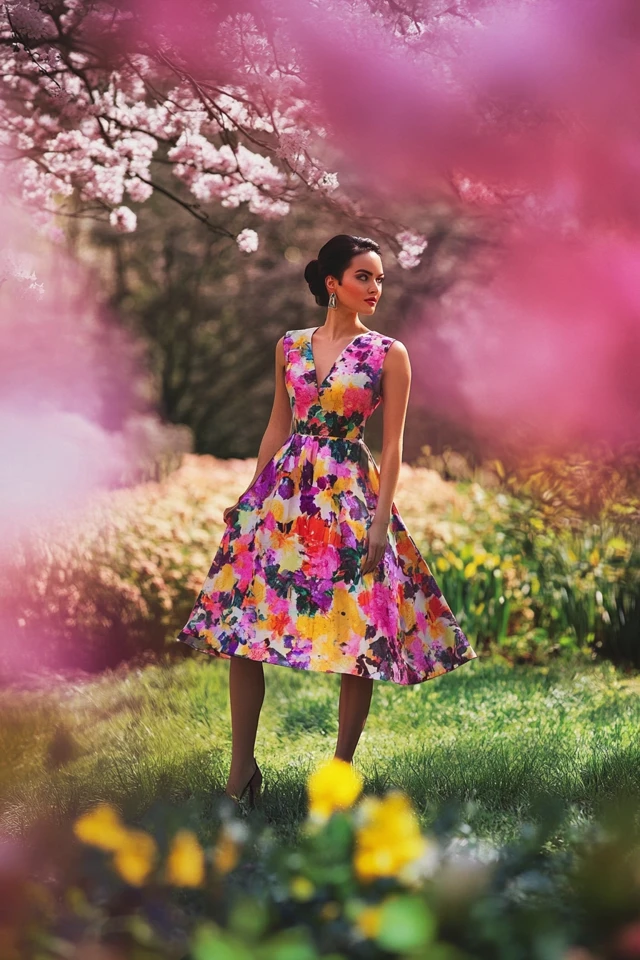
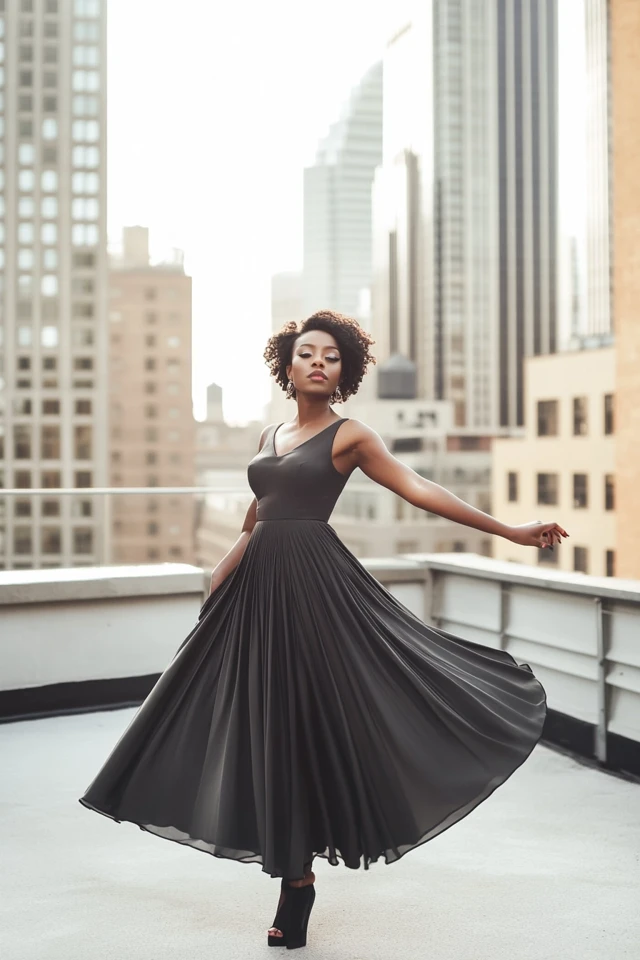
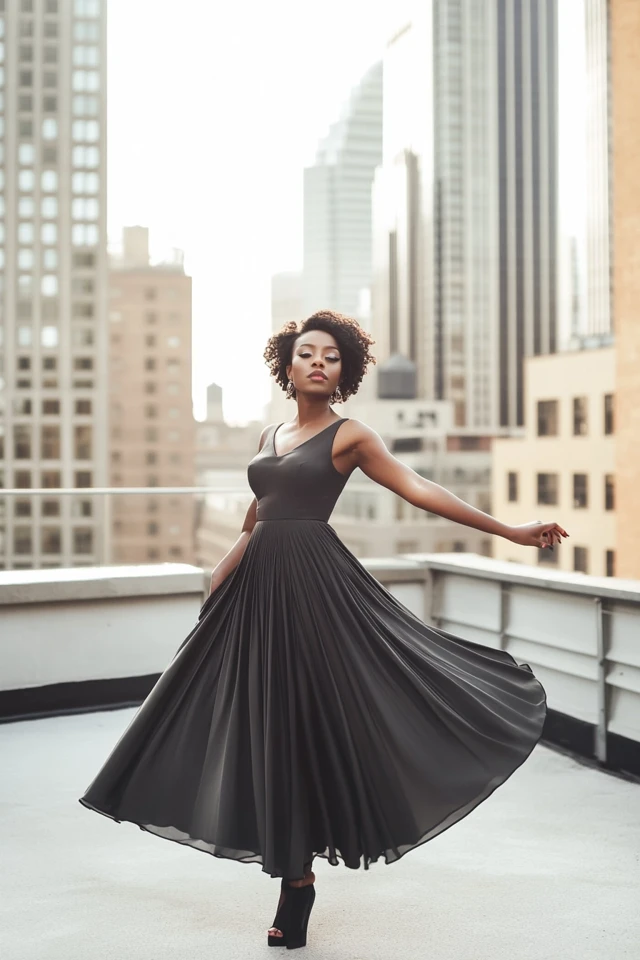
For prints, vertical stripes lengthen the body, and horizontal stripes widen it a little, which can be a fun choice on a fitted bodice. Florals look softest on lightweight fabric. Embroidery adds texture, so keep accessories simple and let it stand out. A good pleated fit-and-flare dress is another way to add movement without busy prints.

Where can you wear them: office to formal?
Office and daytime
Choose a solid or subtle print in a structured fabric, a knee or midi hem and a tailored blazer. Add pumps or loafers. A denim jacket and ankle boots take the same dress to a casual weekend.
Weddings and formal events
A fit and flare dress for a wedding works well in satin, crepe or lace. As a guest, avoid white and check the dress code. Add heels, a clutch and one statement piece of jewelry, either earrings or a necklace. For more formal ideas, see these opera night dresses with classic silhouettes and these classic A-line gowns.
A fit and flare formal dress in a floor-length cut with a fitted bodice looks dressed up without much extra styling.

Cocktail parties
A knee-length or midi fit and flare in a dark color needs very little. Our cocktail party outfit ideas cover simple pairings.

How to style a fit and flare dress
- Define the waist. If the dress has a plain seam, a belt of the same color keeps the line clean, and a contrast belt makes the waist a feature.
- Match shoes to the hem. A heel or wedge lengthens the leg under a mini or midi, while flats and boots make it casual.
- Layer at the top. A cropped jacket or blazer stops at the waist and does not hide the shape. A long cardigan covers it.
- Keep one focal point. If the dress has embroidery or a bold print, stay simple with jewelry and bags.
- Choose color on purpose. Black is easy, and a bright red or a pastel can carry the whole outfit.
For other midi shapes to pair with tops, see classic midi skirts, and for a closer comparison read the classic fit and flare dress.

How should a fit and flare dress fit?
Check four points. The waist seam should sit at your natural waist without pulling. The shoulder seams should rest at the end of your shoulders. You should be able to sit and raise your arms without the bodice riding up. The skirt should flare out smoothly without puckering at the seam.
If the bodice fits but the hips are tight, the skirt is probably too narrow at the top, and a tailor can often adjust that. For anything that needs alteration, ask a professional tailor.

Frequently asked questions
What body type does an A-line dress fit?
An A-line suits most body types because it skims the body instead of clinging. It is especially comfortable if you carry weight at the hips or midsection and prefer not to mark the waist.
What body type can wear a fit and flare dress?
Most body types can, as long as the waist seam sits at your natural waist and the skirt falls smoothly from it. The shape balances wider hips and adds curve to a straighter frame.
What is the difference between an A-line and a fit and flare dress?
A fit and flare has a defined waist with a skirt that flares out from it. An A-line has no waist emphasis and widens gradually from the upper body to the hem.
Does A-line dress hide belly fat?
It often does, since the fabric skims the midsection rather than hugging it. A medium-weight, matte fabric and a V-neck or scoop neckline help most.
Filed under Style & Fit