Fall Layering Neutrals: Corduroy and Soft Knits
- Words by
- Julio Arco
- Published
- Reading
- 4 min
The easiest way to handle fall layering neutrals is to keep the colors close and let the textures do the work. Corduroy gives you a ridged, matte surface, a soft knit gives you a fuzzy, drapey one, and together they make a tonal outfit read as layered instead of flat.
A simple formula: soft knit on top, corduroy jacket or trousers as the structure, and one more layer in a slightly different shade. Below, how to choose the colors, order the layers and keep it all from looking bulky.
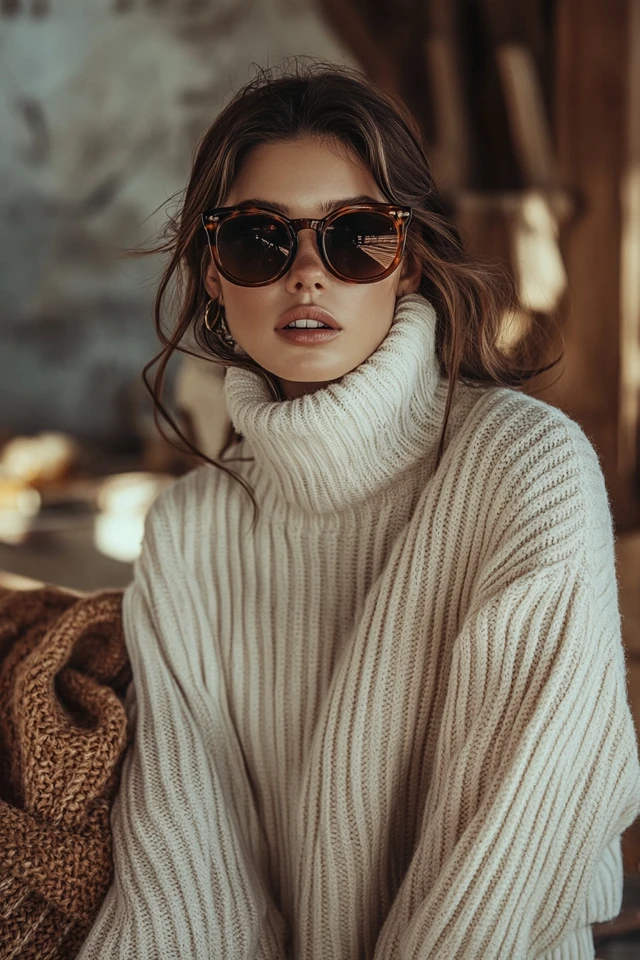
What are fall neutral colors?
Fall neutral colors are the quiet shades that sit well next to each other: cream, oatmeal, camel, tan, taupe, chocolate brown, olive and charcoal. Black and navy work too, though they read heavier next to warm tones.
Corduroy comes naturally in many of these. Camel, rust-brown and olive are common, and knits show up in cream, oatmeal and gray. If you own a few of each, most combinations will already match.
Warm or cool neutrals?
Check what sits next to your face. Warm neutrals (camel, cream, rust-brown) tend to look softer near warm skin tones, while cooler ones (taupe, gray, charcoal) can look crisper. Try a color in daylight against your skin and trust what you see. The usual rule is to keep the undertones in one outfit consistent, so avoid a yellow-cream sweater with a cool gray corduroy.
How to layer fall clothes: the three-layer rule
The 3 layer rule for outfits is a practical one: a base layer, a mid layer and an outer layer. Each does a different job, and each can be a different texture.
Base layer
This sits against your skin. Texas A&M's Howdy Health advises that the layer closest to your skin should be moisture wicking, and it also says to avoid cotton because it absorbs moisture and can keep it next to your skin. That advice is written for cold-weather exercise. For a day of errands, a thin merino or similar fine knit is a comfortable choice for the same reason.
Mid layer
Here is where the soft knit goes: a cable-knit sweater, a cardigan or a turtleneck. Pick a shade a step lighter or darker than your outer layer so the two do not merge.
Outer layer
A corduroy shacket, blazer or chore jacket gives the outfit its shape. If you like blazers, corduroy blazers for fall workwear covers how to wear them to the office.
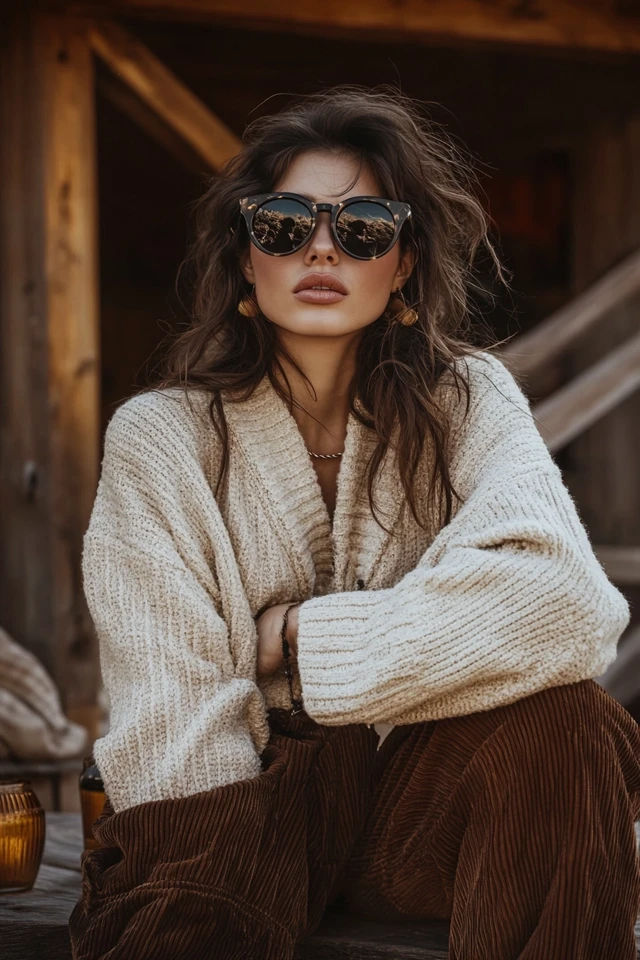
Why do corduroy and knits work together?
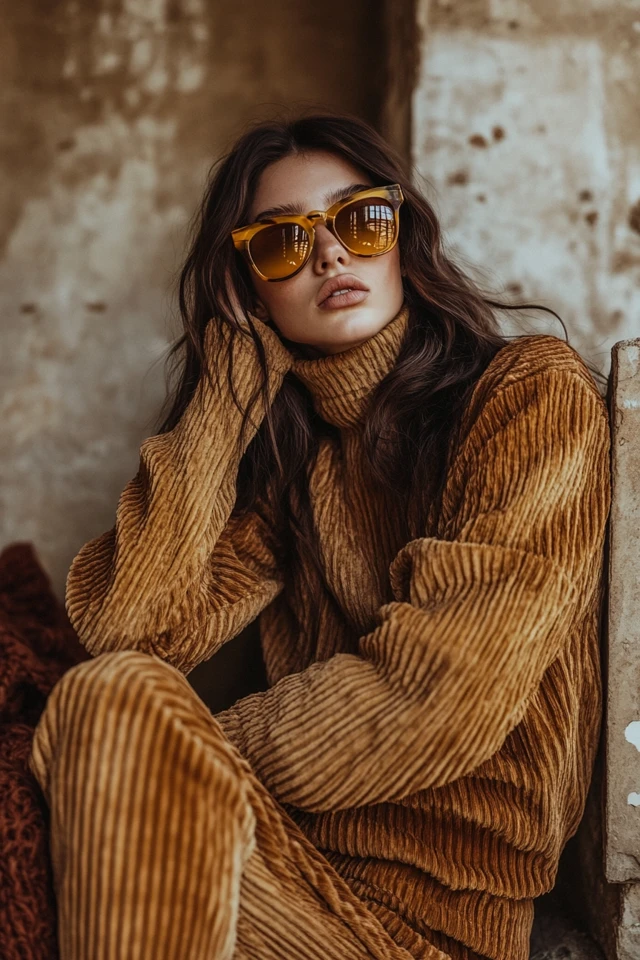
Texture changes how a color reads. Corduroy's ridges catch light and cast tiny shadows, so a camel jacket looks deeper than a smooth camel fabric would. A knit scatters light more softly and looks lighter and fuzzier.
Through the lens of evidence-based design, I'd say that contrast is why a tonal outfit holds your eye: the color barely changes, but the surface does. Wear all-cream in one flat fabric and it can look like a single block. Cream knit under a cream-beige corduroy jacket looks deliberate.
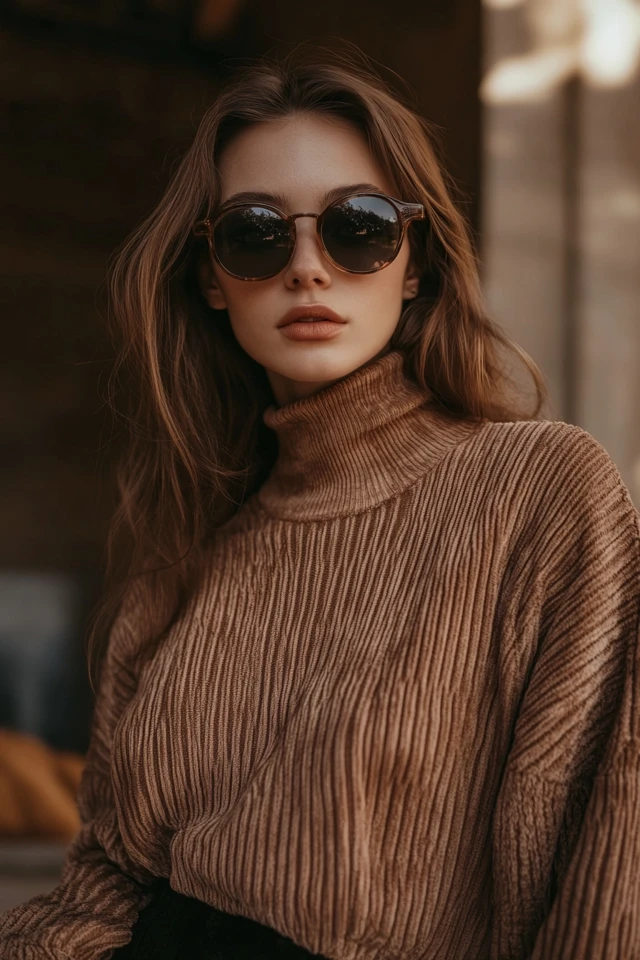
Fall neutral outfit ideas
- Cream cable-knit sweater, camel corduroy jacket, dark jeans and brown boots.
- Oatmeal turtleneck, olive corduroy trousers, a taupe knit scarf and loafers.
- Gray knit cardigan over a white tee, chocolate corduroy skirt, tights and knee-high boots.
- Fine-knit sweater under a corduroy shirt-jacket, straight jeans and clean sneakers for a casual day.
- Slim knit top, tan corduroy blazer and tailored trousers for the office.
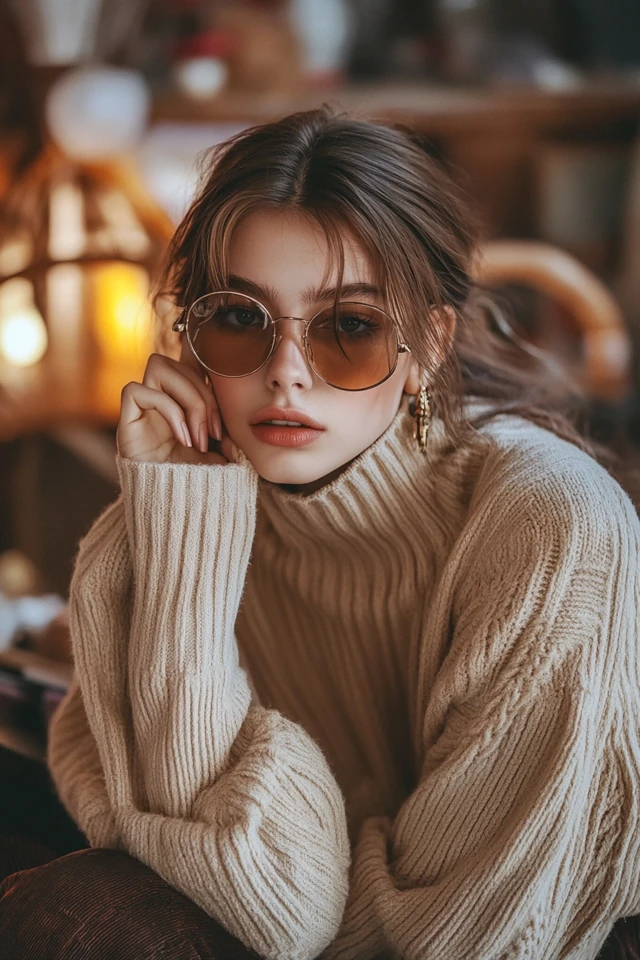
For more combinations in the same family, see mixing corduroy and knits for winter and corduroy and fleece layers.
Balance volume so layers do not look bulky
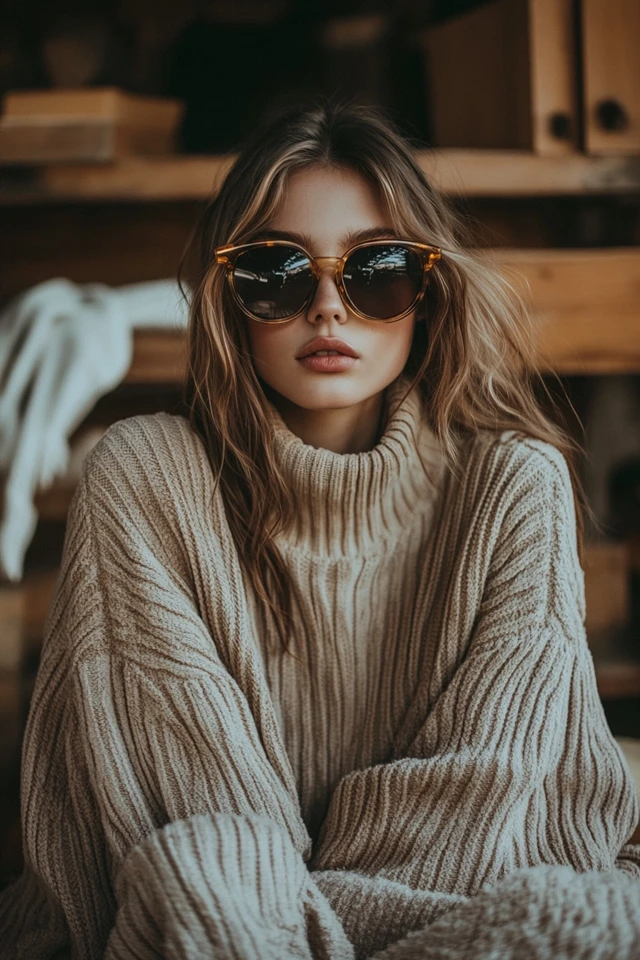
Pair one roomy piece with one slimmer piece. A chunky sweater works with straight or slim corduroy trousers, and wide-leg corduroy looks better with a fitted knit. If both pieces are oversized, the outfit usually loses its shape.
Weight matters as well. A thin knit sits well under thick corduroy, and a chunky knit is easier to wear under a finer-wale jacket. Chunky knits can also be a lot under a fitted jacket, so size up the outer layer if the sleeves feel tight at the shoulder. That is a fit issue, not a you issue.
How to make neutrals feel fresh
Neutrals look dull when everything shares the same shade and the same finish. A few changes help:
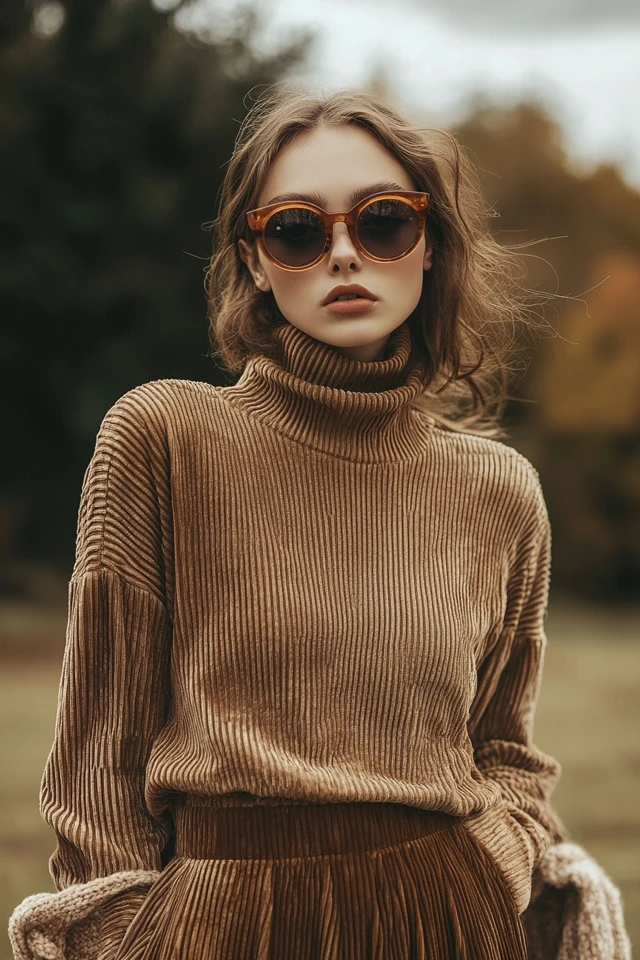
- Vary the tone: one light, one mid, one dark.
- Vary the surface: ribbed, smooth, fuzzy, matte.
- Add one accent, such as a rust scarf, burgundy knit or mustard hat, and keep the rest quiet.
- Finish with leather or suede in a related brown to anchor the look.
If you like a hint of color, soft lilac with beige is a gentle way in.
Buying and caring for the pieces
Choose corduroy that feels flexible rather than stiff. Wide wale reads vintage and relaxed, while fine pinwale looks neater. For knits, wool and similar natural fibers are warm, but check the care label, since many need gentle washing and drying flat to avoid stretching.
Corduroy usually does best on a gentle cycle and hung to dry, again with the label as the final word. Brush the ridges lightly if they look flattened.
If you want a softer outer layer, sherpa jackets are another warm option that fits neutral palettes.
Frequently asked questions
What is the 3 layer rule for winter?
It means a base layer next to the skin, an insulating mid layer such as a knit, and an outer layer that protects from wind and cold. For fall neutrals, vary the texture of each layer so the outfit has depth.
What are fall neutral colors?
Cream, oatmeal, camel, tan, taupe, brown, olive and charcoal are the usual ones. They are easy to mix because their undertones are close.
Can I wear corduroy and knits to work?
Yes. A corduroy blazer or trousers with a fine-knit top and ankle boots looks polished, especially in a dark or muted neutral.
How do I avoid looking bulky when layering?
Pair one voluminous piece with one fitted piece, and keep the base layer thin. Match the weight of the knit to the weight of the corduroy.
Filed under Fabrics & Textures