Transitional Spring Layering Outfits in Lilac and Beige
- Words by
- Julio Arco
- Published
- Reading
- 4 min
The easiest way to build transitional spring layering outfits is to pick one base color and one accent. Soft lilac and neutral beige do this well: beige carries the structure (trench, trousers, knit), and lilac adds the lighter, cooler note (cardigan, scarf, tee).
Start with a thin layer against the skin, add a middle layer you can take off, and finish with a light coat or blazer. Keep the palette to two main colors and the day's temperature swings stop being a problem.
How to dress for transitional weather
Mornings are cold, afternoons are warm, and you carry whatever you take off. So every layer should look good on its own. A simple order works for most days:
- A fitted base: a tee or thin knit.
- A middle layer: cardigan, sweater or shirt you can open or remove.
- An outer layer: trench, blazer or light jacket.
If you will be outside and active, such as walking a lot, the base layer matters more. Texas A&M's Howdy Health notes that the layer closest to your skin should be made of moisture-wicking materials that draw sweat away. The same page advises avoiding cotton because it absorbs moisture and can keep it next to your skin, which makes you cold. That is written for cold-weather exercise, so for a desk day a cotton tee is fine, but it is worth knowing for long walks.
Why lilac and beige work together
Lilac is cool and light. Beige is warm and quiet. Placed side by side, each makes the other read more clearly: the lilac looks fresher, and the beige looks less flat. Neither shouts, so the pair suits layering, where several pieces are visible at once.
Through the lens of evidence-based design, I'd treat beige as the background and lilac as the thing the eye lands on first. That tells you where to put the lilac: near your face (a scarf, a knit, a tee neckline) if you want it noticed, or at the hem and feet if you want it subtle.
On skin tones, lilac tends to look crisper against lighter complexions and softer against deeper ones, and beige varies a lot between warm and cool versions. Hold the piece near your face in daylight and trust what you see.
Beige base with lilac accents
This is the safest route. Build the outfit from beige pieces you probably own, then add one or two lilac items.
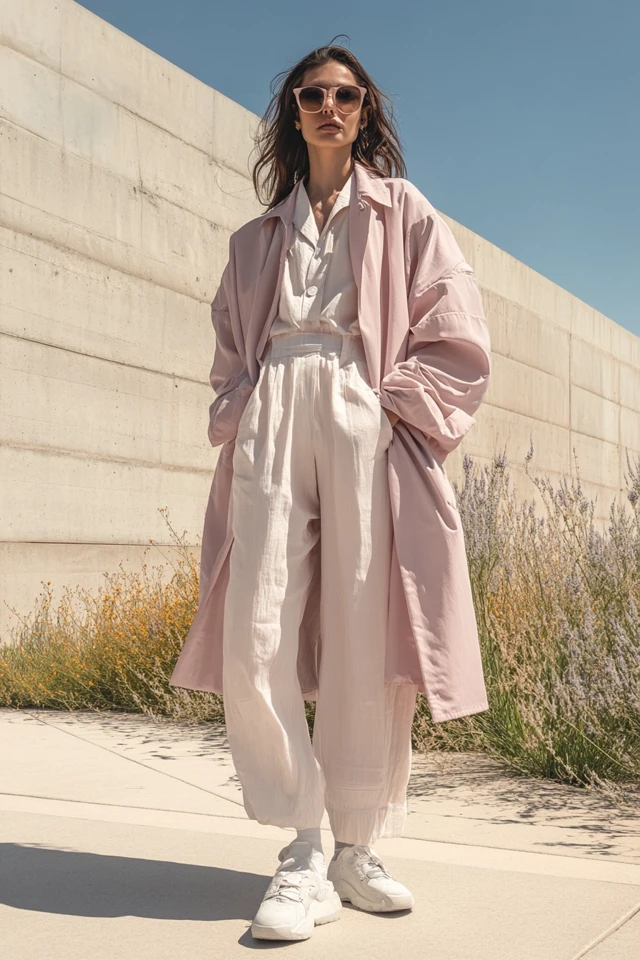
- A beige trench with a lilac scarf, dark jeans and taupe ankle boots.
- A beige midi dress with a lilac cardigan and nude flats.
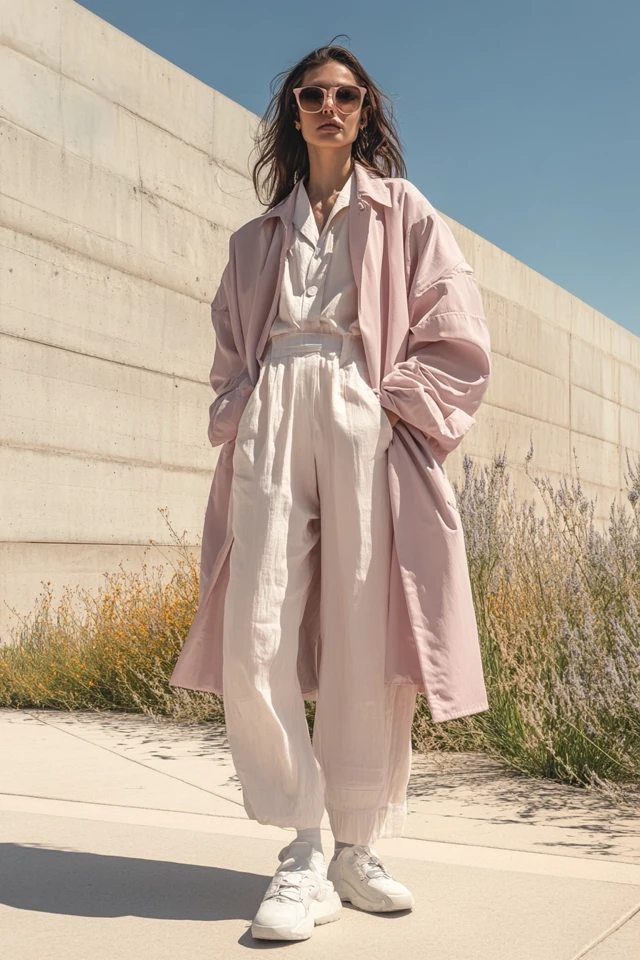
- Wide-leg beige trousers with a lilac tee and a light blazer.
A trench, a crewneck or turtleneck sweater and a pair of straight or wide trousers are the best layering staples for spring in this palette. They work with almost anything else you own.


Lilac base with beige layers
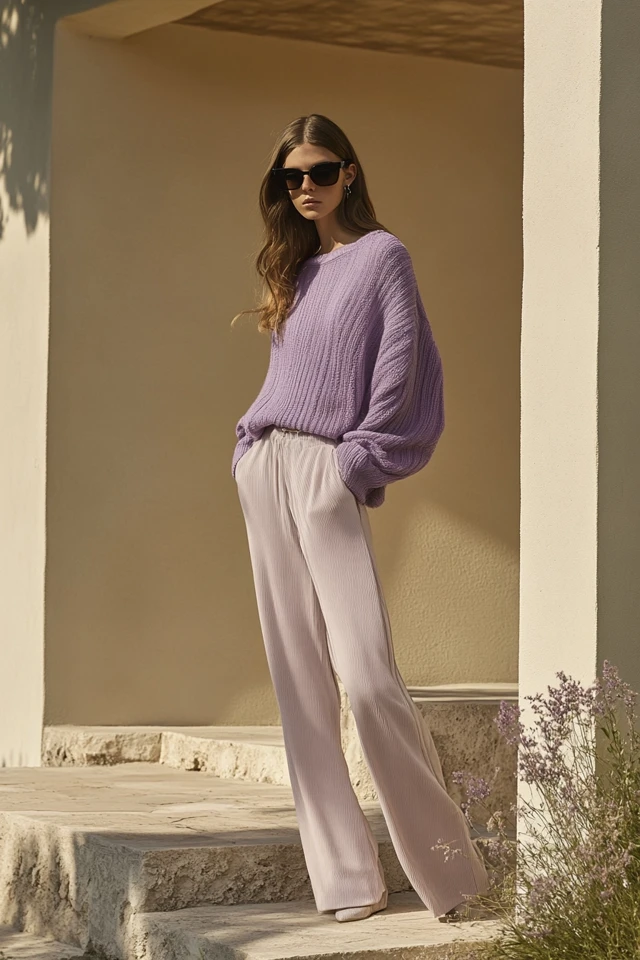
Flip it when you want the color to lead. A lilac knit or blouse becomes the main piece, and beige outerwear frames it.
- A lilac sweater, beige tailored trousers and loafers for the office.
- A lilac slip dress under a beige trench with cream boots for a weekend out.
- A lilac button-down under a beige blazer with straight jeans.
Keep the lilac pale. A saturated purple next to beige stops looking soft and starts competing with it.
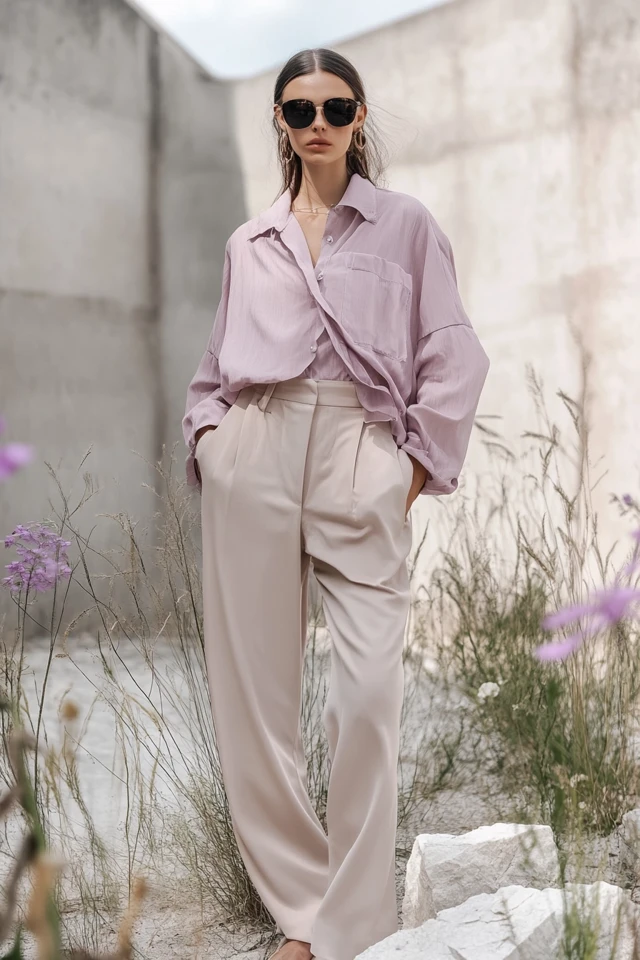
Four lilac and beige outfits to copy
Office
Lilac fine-knit sweater, beige blazer, wide neutral trousers, nude pumps and small gold hoops.
Casual weekend
Beige ribbed turtleneck, lilac chunky cardigan, dark-wash jeans, taupe ankle boots and a woven crossbody.
A simple cardigan and tee spring outfit
Beige tee, lilac cardigan left open, light straight jeans and cream loafers. It takes two minutes to put together and handles a 15-degree swing in the day.
Brunch
Beige A-line midi dress, lightweight lilac scarf, nude espadrilles and a woven tote.


Lightweight layers for spring: texture and fabric
Two pieces in the same color can look different if the surface differs. A matte knit and a silky blouse in the same lilac read as two shades, because the surface changes how light reaches your eye. I'd use that on purpose: pair a soft, matte beige knit with a slightly shinier lilac top, and the outfit gains depth without a third color.
Fine-gauge knits, thin cotton and linen blends, and light wool suit this season. Save chunky cardigans for the coldest mornings, since they are hard to wear under a coat.

Finishing touches
- Shoes: taupe, beige or cream keep the palette quiet; lilac flats or sneakers add a small surprise.
- Metals: gold, rose gold and pearls suit both colors.
- Prints: a subtle stripe or floral that contains both shades ties separate pieces together.
- Third neutral: cream, white or dark denim stops the outfit from feeling like only two colors.
If you like this palette, lilac and beige in layered dresses and lilac with charcoal grey outerwear cover nearby ideas. For a deeper version, see navy and lavender layers, or try chocolate and soft lilac.
Frequently asked questions
How to dress for transitional weather?
Wear three thin layers you can remove: a fitted base, a cardigan or shirt, and a light coat or blazer. Make sure each layer looks good alone, since you will be carrying some of them.
What is the 3-3-3 rule for outfits?
It usually means building an outfit from three tops, three bottoms and three pairs of shoes that all mix together. A lilac and beige palette suits this because every piece matches the others.
Can I wear soft lilac and beige year-round?
Yes. Use lightweight layers in spring and swap in heavier knits and a wool coat when it turns cold, keeping the same two colors.
What other colors go with lilac and beige?
Cream, white, taupe and dark denim blend in easily. Soft blue or blush can work as a small accent.
Filed under Color Palettes