Long Layered Haircuts: Styles, Face-Framing and Fit
- Words by
- Julio Arco
- Published
- Reading
- 4 min
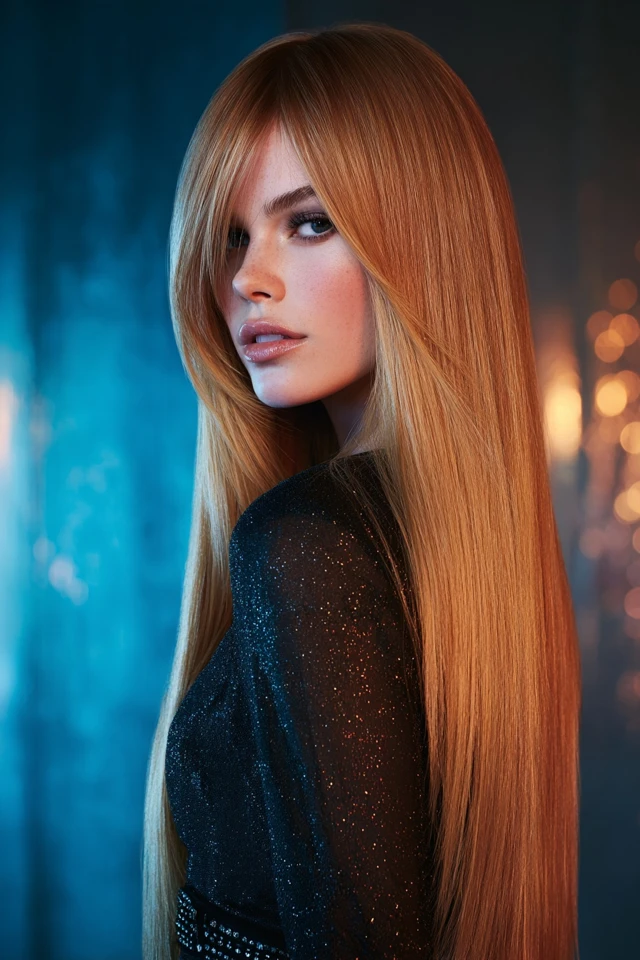
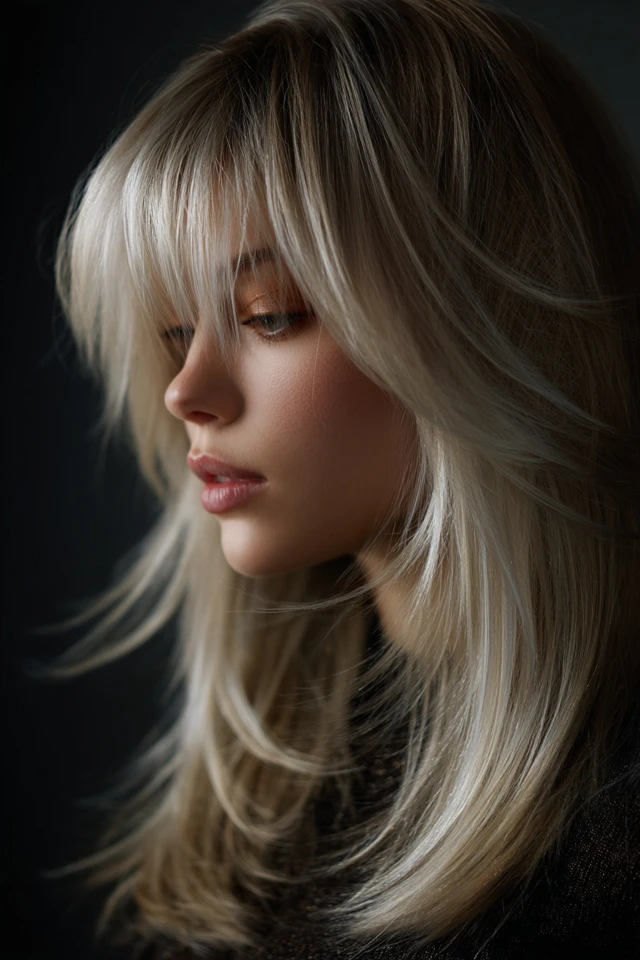
The best long layered haircut is the one whose layer length matches your hair density. Fine hair usually looks fuller with a few longer, subtle layers. Thick hair can take shorter, more visible layers that remove weight. A long feathered cut with a floaty finish sits in the middle: soft, graduated ends that move when you walk.
Below you'll find the main styles, what each does for thin, thick and wavy hair, and how to explain it to your stylist.

What makes a haircut layered and feathered?
Layers are sections cut shorter than the length underneath, so hair stacks and moves instead of hanging as one blunt sheet. A feathered cut uses long, blended layers with thin, wispy ends. The result reads as light because the eye follows many soft edges rather than one hard line at the bottom.
Trade-offs are simple. Layers add movement and shape, and they take weight out. They also need a trim every so often to keep the shape, and very short layers on fine hair can make the ends look sparse.
Which layer cut is best for long hair?
It depends on what you want the hair to do. A few options, from least to most visible:
- Invisible layers: shaped inside the length so the ends still look full. See long invisible layers.
- Long feathered layers: the floaty look this post is about, with soft ends and gentle movement.
- V-shape: the back comes to a point, which draws the eye down the length. See the long V-shape haircut.
- U-shape: a rounder back with a softer curve. See the long U-shape haircut.
If you want a straight layer cut for long hair, ask for longer layers with blended edges, since straight hair shows every line of the cut.
How do you choose layers for thin or thick hair?
Long layered haircuts for thin hair
Keep layers long and few, starting around the chin or lower. Too many short layers leave the ends see-through. A slightly blunter perimeter makes the bottom look denser, and the soft layers above add movement.
Long layered haircuts for thick hair
Thick hair benefits from layers that remove bulk, starting higher and spaced more closely. This stops the triangle shape where hair flares out at the bottom. Ask your stylist to take weight out through the mid-lengths rather than only thinning the ends.
Wavy and curly hair
Curl pattern shrinks hair when dry, so layers look shorter than they were cut. Ask for longer layers and a stylist who cuts curls dry or in their natural shape. For defined curls, see long curly haircut ideas.
How do face-framing layers work?
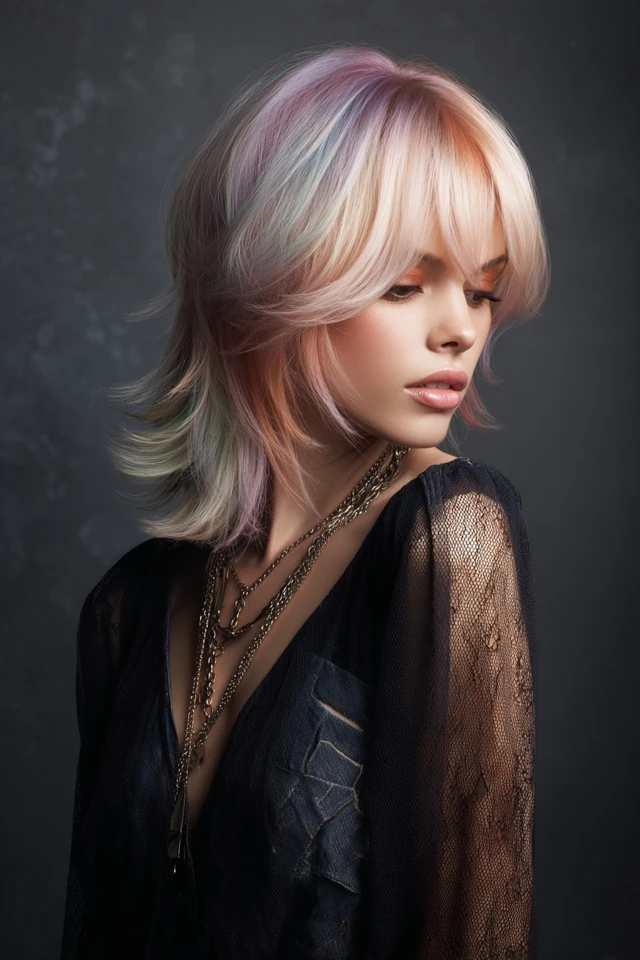
Face-framing layers are the shortest pieces, falling around the cheeks, jaw or collarbone. They guide the eye toward the face. Through the lens of evidence-based design, I'd think of them as the first thing a viewer reads, because the eye goes to contrast and edges near the face before it travels down the length.
For face-framing layers for long hair, a rough guide: pieces that start near the cheekbone open up the face, pieces at the chin add softness around the jaw, and pieces at the collarbone keep length while adding movement.
Should you add bangs?
Long layered haircuts with bangs give the cut a focal point. Curtain bangs part in the middle and sweep to each side, then blend into the face-framing layers, so they grow out gracefully. Long layered haircuts with curtain bangs suit most hair types, though very cowlicky hairlines may need a stylist's advice before cutting.
Wispy bangs look light on fine hair. On thick hair, ask for them to be cut a little longer so they don't puff up.
Do layers make you look younger?
Layers don't change age, but they change what the eye reads. Movement and softness around the face tend to look fresher than one heavy, straight line, while blunt, flat lengths can look severe. Choose by shape and ease of styling rather than a promise of looking younger.
How do you ask your stylist for this cut?
- Bring two or three photos of hair with a similar texture and density to yours.
- Say where the shortest layer should start, for example chin or collarbone.
- Say how much length you can lose, and whether you want to keep the ends full.
- Mention how you usually style it: air-dried, blow-dried or straightened.
If you air-dry, the long air-dry haircut approach is worth a look. For a bouncier finish, see long blowout volume.
How do you keep layers looking good?
Hair is delicate when wet, so the American Academy of Dermatology suggests using a wide-tooth comb instead of a brush to detangle wet hair. If you use a flat iron to smooth the ends, the AAD advises dry hair, low or medium heat, and no more often than every other day. Feathered ends show damage quickly, so a trim to keep the shape matters as much as styling.
Frequently asked questions
What is the most popular layered haircut?
Long layers with face-framing pieces are the most common request, often paired with curtain bangs. The softest version keeps the layers blended so the ends still look full.
Do layers make you look older or younger?
Layers don't change your age, but soft movement around the face usually reads as fresher than a single heavy line. The right layer length for your hair density matters more than the cut's name.
Can fine hair have long layers?
Yes, as long as the layers are few and start low. Too many short layers can thin out the ends.
Filed under Haircuts