Long Layered Haircuts: Ideas for Every Hair Type
- Words by
- Julio Arco
- Published
- Reading
- 5 min
The best long layered haircut depends on your hair. Fine hair usually does better with a few long, subtle layers that keep the ends full. Thick hair can take more layers to remove bulk. Wavy or curly hair needs layers cut to follow the curl pattern. Face-framing pieces and curtain bangs work on almost any of them.
Below you'll find the main styles, how each behaves on different hair, and how to describe what you want to a stylist.
What makes a layered cut "swoosh"?
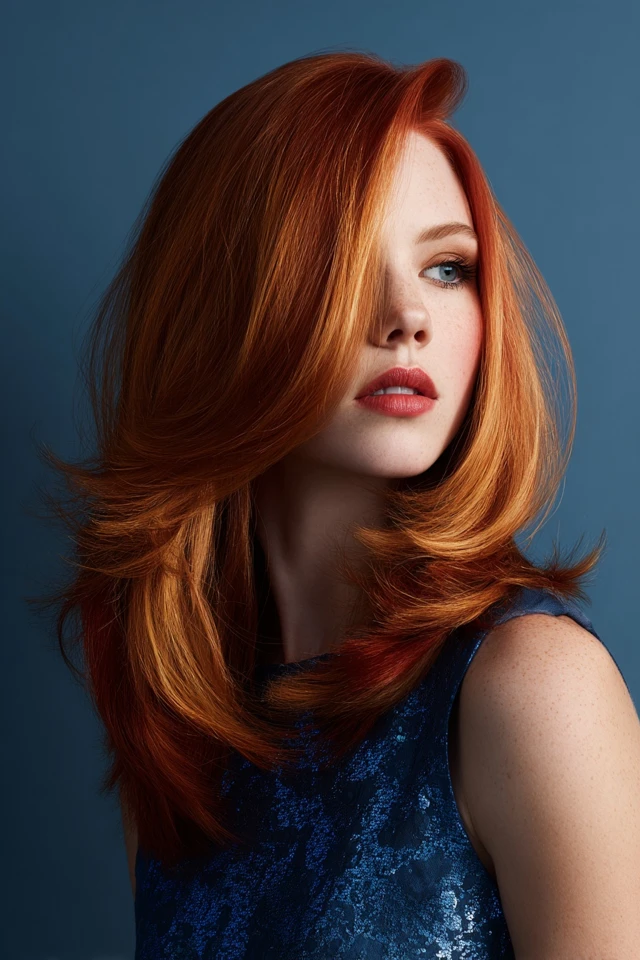
Layers are sections cut at different lengths so the hair moves instead of hanging as one heavy block. The swoosh comes from the front pieces, which are cut shorter and fall away from the face in a soft curve. When you walk or turn your head, those pieces shift first, and the eye follows that movement.
Through the lens of evidence-based design, I'd think of layers as a texture decision. The same color of hair reads differently when light hits stepped ends versus one blunt edge: layers break up the surface and make it look lighter and more dimensional.
Face-framing layers for long hair
Face-framing layers start around the cheekbone or chin and blend down into the length. They are the simplest way to get movement without losing length at the back.
- Starting at the cheekbone draws attention up, toward the eyes.
- Starting at the chin softens a strong jaw and keeps more length.
- Starting below the collarbone is the most subtle, good if you're nervous about a big change.
Straight hair shows these pieces most clearly. If you wear your hair straight, a layer cut for long hair that is straight can look sharp, so ask for the ends to be softened or point-cut.
Long layers with curtain bangs
Curtain bangs part in the middle and sweep to each side, then merge into the face-framing layers. That blend is what makes a textured long cut feel finished instead of a fringe stuck on top.
They suit most hair types, but check your crown first. A strong cowlick or very fine front hairline can make bangs lift or separate. Ask your stylist to cut them a little long at first; you can always go shorter. Expect to trim them more often than the rest of the cut, since they fall into your eyes before the length changes.
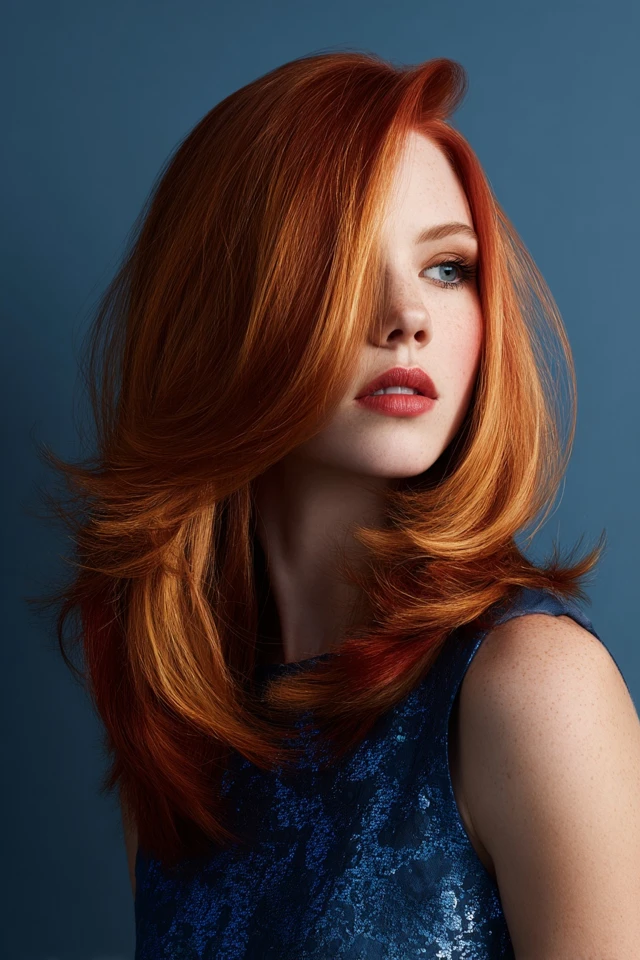
Long layered haircuts for thin hair
With fine hair, too many short layers remove the weight that makes the ends look full. Ask for long, soft layers and keep the perimeter fairly blunt. A few face-framing pieces add shape without thinning the bottom.
If you're after movement without obvious steps, invisible layers are worth a look. A V-shape back can also look dramatic on thin hair, so tell your stylist how much density you want to keep at the ends.
Long layered haircuts for thick hair
Thick hair is where layers do the most work. Internal layers (cut inside the length, where you can't see them) remove bulk so the hair sits closer to the head and dries faster. Longer surface layers then give the shape.
Thick hair can puff out at the ends if layers are too short or too even. Ask for the weight to be reduced through the mid-lengths, not just the tips. If you air-dry, a cut designed for air drying will save you time.
Curly and wavy layers
Curls shrink as they dry, so layers look shorter than they did wet. A stylist who cuts curls dry, or one curl at a time, can judge the final shape better. Too many layers can create a triangle, with a wide top and thin ends. For more on shaping, see long curly cuts with defined curls.
Curly hair also tends to be dry. The American Academy of Dermatology notes that if your hair is dry, textured, curly, or thick, you should shampoo when needed, at least once every 2 to 3 weeks as needed. Check with a dermatologist if you have scalp concerns.
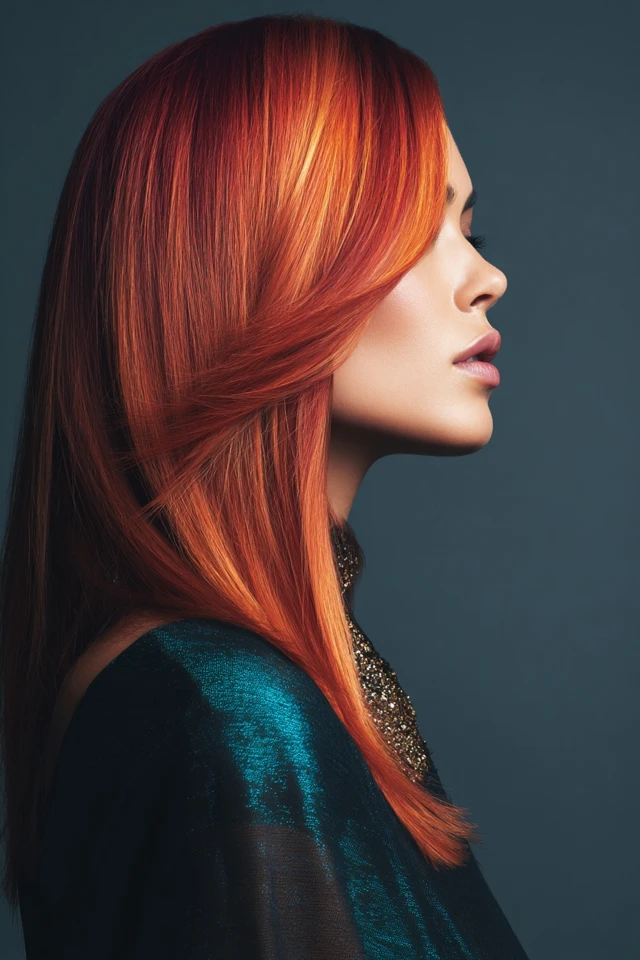
Do layers make you look younger?
Layers don't change your age, but they change what the eye reads first. Movement and soft framing around the face tend to look lighter than a single heavy line. A blunt cut can look polished and sharp, which many people prefer. Pick the one that matches how you want to look and how much styling you'll do.
How to ask your stylist for layers
- Say how much length you want to keep, in inches or by pointing to a spot on your body.
- Name where the shortest layer should start (cheekbone, chin, collarbone).
- Mention your hair texture and how you usually style it: air-dry, blow-dry, or heat.
- Bring two or three photos, and say what you like in each, such as the bangs or the ends.
- Ask for a dry check at the end so you can see how it falls.
If you want a minimal routine, a low-maintenance plan helps you decide how often to trim. Many people with layers book a trim every couple of months, but your hair's growth and your shape will decide.
Keeping layers looking good
Layers show damage at the ends quickly. Use a wide-tooth comb on wet hair, because hair is delicate when it's wet. If you use a flat iron, the AAD advises dry hair on a low or medium heat setting, no more often than every other day.
For a smoother finish, a leave-in conditioner can help. Board-certified dermatologist Zoe D. Draelos, MD, FAAD, says: "You should see less frizz. Your hair should be easier to brush or comb, so you'll have less breakage."
For volume, a blowout shows off layers best, while heatless styling keeps them gentler.
Frequently asked questions
Which layer cut is best for long hair?
Long, soft layers with face-framing pieces suit most hair. Fine hair does better with fewer, longer layers, and thick hair can take internal layers to remove bulk.
Do layers make you look older or younger?
Layers don't change your age, but movement and soft framing around the face can look lighter than one heavy line. A blunt cut reads sharper, so choose by the look you prefer.
What is the most popular layered haircut?
Long layers with face-framing pieces or curtain bangs are among the most requested because they adapt to many hair types and face shapes.
How often should I trim long layers?
Many people trim every couple of months to keep the ends tidy, though growth rate and bangs may call for sooner. Your stylist can set a schedule for your hair.
Filed under Haircuts