Nail Polish Finishes: Cream, Matte, Jelly and More
- Words by
- Julio Arco
- Published
- Reading
- 4 min
Nail polish finishes describe how the color sits and reflects light: solid and creamy (cream), flat (matte), see-through (jelly), sparkly (glitter, shimmer), or shifting (holographic, cat-eye, iridescent). Pick the finish first and the shade second, because the surface changes how a color reads.
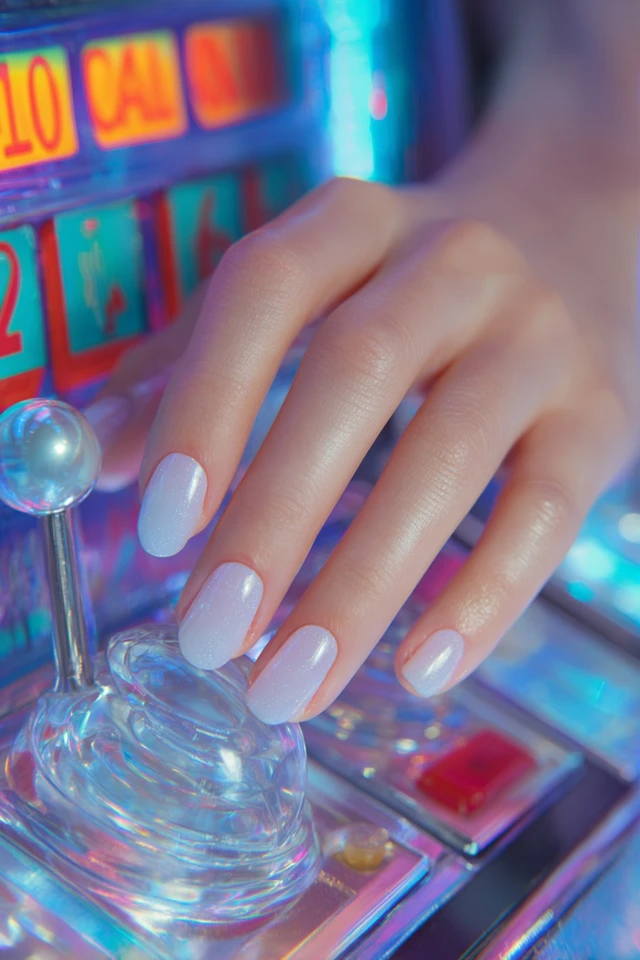
An iridescent quartz crystal manicure, the look this post started from, sits in the shifting group: a sheer base with a pearly sheen that moves between pink, blue and lilac as your hand turns. Below are the different types of nail finishes, what each does, and who it suits.
What are the different types of nail finishes?
Most finishes fall into six families. Here they are side by side.
| Finish | How it looks | Good to know |
|---|---|---|
| Cream | Opaque, smooth, glossy color | The easiest to wear and to apply |
| Matte | Flat, no shine | Shows texture and dryness more |
| Jelly and crelly | Translucent, glassy color | Builds with coats |
| Glitter and shimmer | Sparkle from particles | Harder to remove |
| Holographic and cat-eye | Light-shifting effects | Best on a dark or neutral base |
| Iridescent | Pearly color that changes with angle | Looks softest on pale bases |
That covers the types of nail polish finishes you will see on most shelves and salon menus.
Cream vs matte nail finish
Cream is the classic: opaque color with a soft gloss. It hides ridges slightly and looks tidy even when the application is a little imperfect.
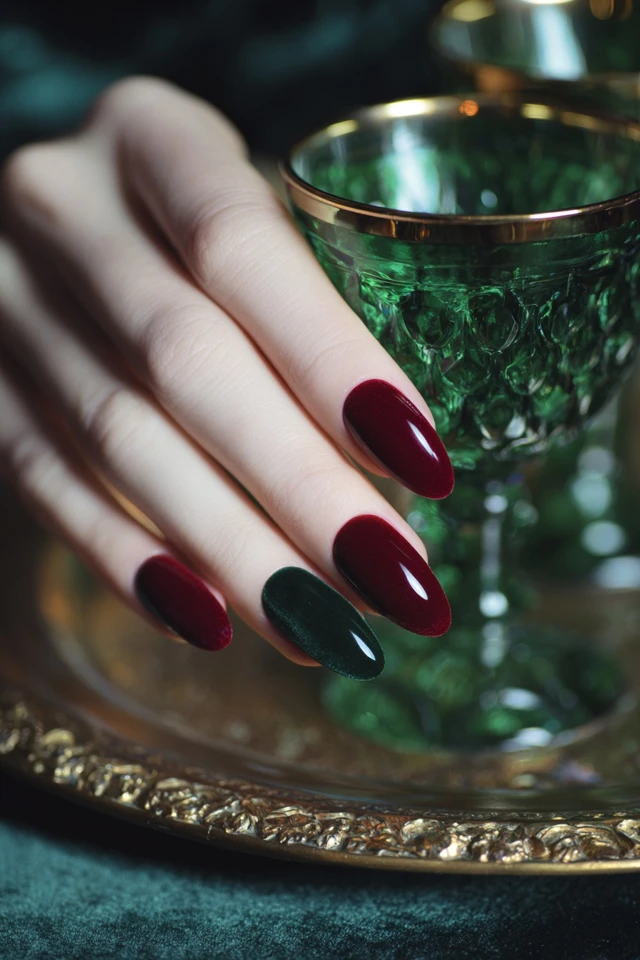
Matte takes the shine away, so the color looks deeper and more muted. Through the lens of evidence-based design, I'd say a matte surface reads as calmer because it scatters light instead of bouncing it back at the eye. The trade-off is that matte shows dryness, cuticle lines and uneven shape more clearly, so it rewards neat prep. A glossy top coat turns almost any matte back into cream.

Jelly and crelly: what is the difference?
A jelly is translucent, like stained glass. You can see your nail through it, and each extra coat deepens the color. A crelly sits between cream and jelly: still a little see-through, but with more body and a slightly milky look.
In the crelly vs jelly nail polish choice, jelly gives the glassier, more playful result, while crelly looks softer and more even on short nails. Both are forgiving of a thin, natural-looking application and look good in pale pinks, peaches and lilacs.
Glitter and shimmer
Shimmer has fine, light-catching particles that give a pearly glow. Glitter has larger pieces that sparkle visibly and can feel slightly textured unless sealed.
Glitter and shimmer nail polish works best when you keep the rest of the outfit simple. For a lighter touch, try glitter on a single accent nail or a gradient from the tips. Seal it with a top coat so the surface stays smooth and does not snag on knitwear.

Holographic, cat-eye and iridescent effects
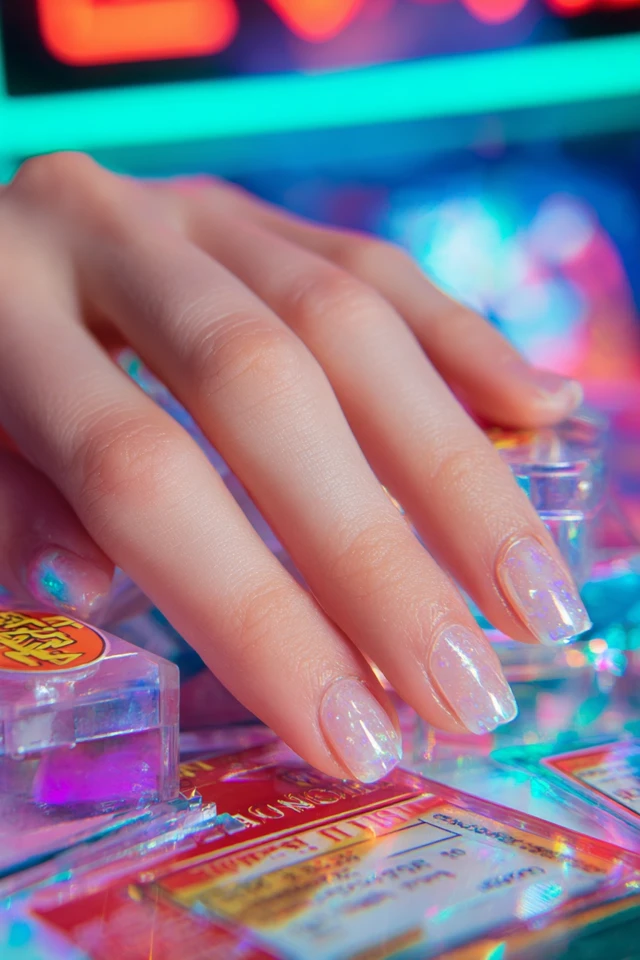
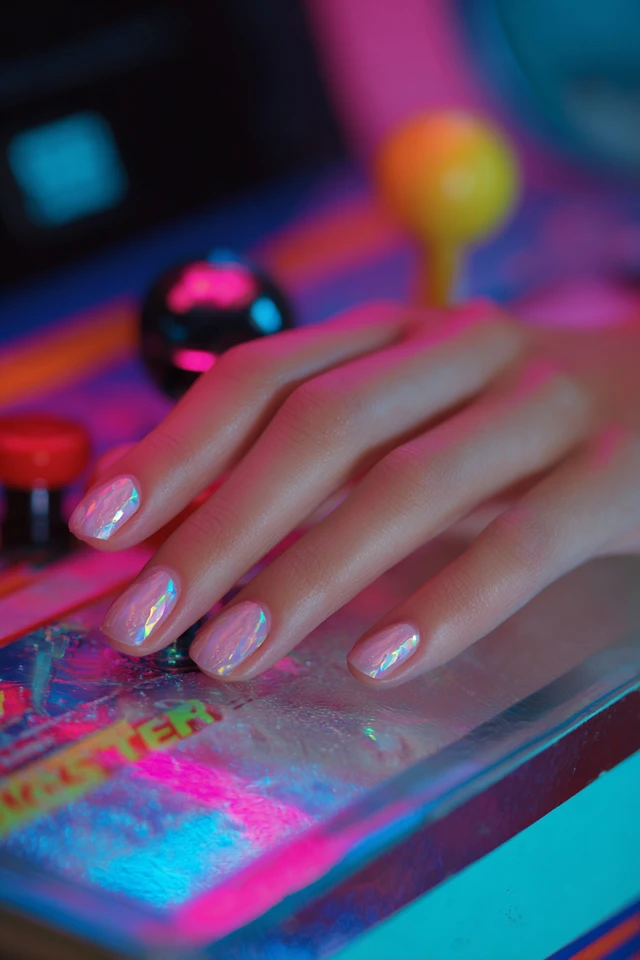
Holographic polish splits light into a rainbow sheen. Cat-eye, also called magnetic, uses fine metallic particles that a magnet pulls into a line, giving a shimmering band that appears to float. Iridescent finishes are subtler, with a pearly shift between a few pastel tones.
With holographic and cat-eye nail polish, the base color matters. A dark base makes the effect vivid, while a pale or sheer base keeps it dreamy, which is the route for a quartz crystal look. If you want more ideas in that direction, see celestial iridescent flake nails and chic iridescent flake nails.
Gel vs shellac nail finish: which is kinder to nails?
Visually, both give a glossy, long-lasting finish. The bigger difference is how they come off. Removal is where most damage happens: the Cleveland Clinic notes that removing gel polish carelessly can temporarily damage nails, with cracking and peeling the most common issues.
For the gel vs shellac nail finish question, shellac is usually described as a gel-polish hybrid that is generally easier to soak off, but the formulas vary by brand, so ask your technician. Whichever you choose, don't pick at it. The American Academy of Dermatology says acetone is the most effective way to remove gel polish at home, and that most or all of it should be gone after the nails sit wrapped for 10 minutes.
Dip powder follows the same logic. Board-certified dermatologist Shari Lipner, MD, PhD, advises waiting one month before another dip manicure after removing the color. If your nails feel weak or look different afterward, check with a dermatologist.
How to choose the right finish
- Short nails: cream, crelly or a sheer iridescent look keeps things clean.
- Long nails: matte, chrome and cat-eye show off the length.
- Work or formal settings: cream, jelly or a soft shimmer reads polished.
- Low maintenance: sheer finishes hide regrowth and chips better than dark creams.
As an architect trained in evidence-based design, I'd match the finish to the fabrics you wear most. A glossy cream sits well against smooth cotton and tailoring, while shimmer and iridescence echo satin, knit with a sheen, or a metallic accessory. Silver or soft rose gold jewelry keeps the tones in the same family.
For more crystal-style inspiration, browse the luminous crystal pixie mani or the crystal BIAB design.
Frequently asked questions
What are the different types of nail finishes?
The main ones are cream, matte, jelly and crelly, glitter and shimmer, holographic, cat-eye (magnetic) and iridescent. Most can be done in regular polish, gel or shellac.
Which is kinder to nails, gel or shellac?
The difference mostly comes down to removal, since careless soaking, scraping or peeling does the damage. Ask your technician which system you are getting and have it soaked off rather than picked.
What is the difference between jelly and crelly polish?
Jelly is fully translucent and glassy, while crelly is a little more opaque and milky. Both build color with extra coats.
Can I make a matte finish glossy again?
Yes. A glossy top coat over matte polish restores shine, and a matte top coat does the reverse over a cream color.
Filed under Nail Design