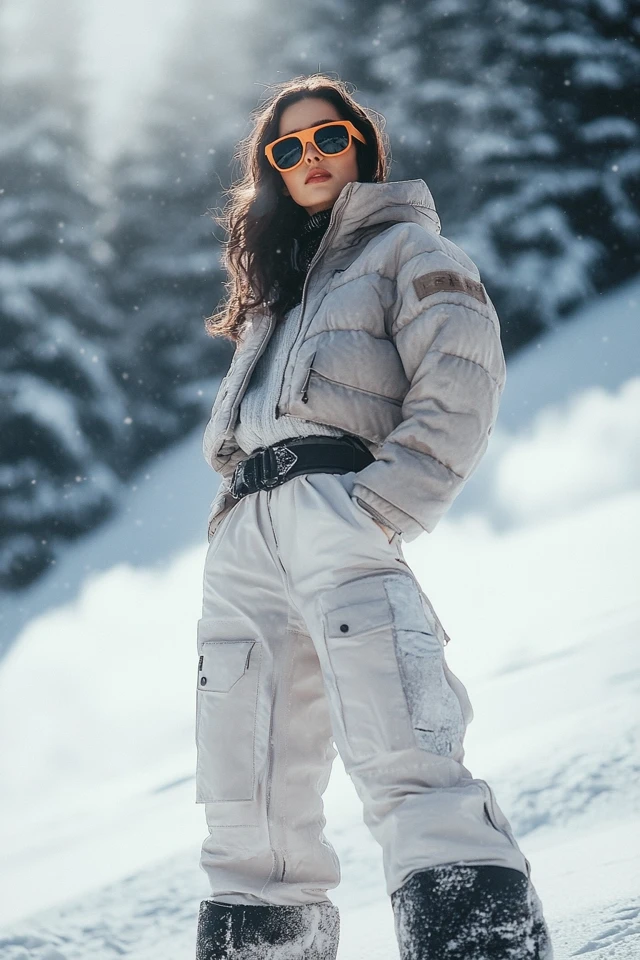
Insulated Snow Pants for Freezing Activities
- Words by
- Julio Arco
- Published
- Reading
- 5 min
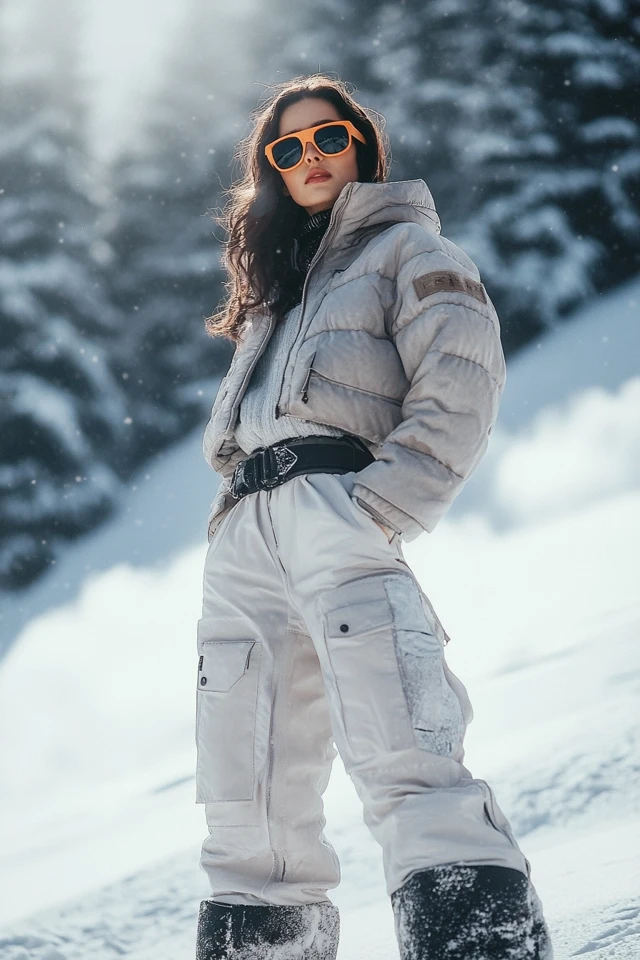
Wear your snow pants over the boot, not tucked in, for most snow days. The pant leg falls over the boot top and keeps snow from dropping inside. Tuck only when the pants have no snow gaiter and you are in very light, dry snow, or when a cuff would drag.
The rest comes down to a dry base layer, a boot with enough room for your toes, and pants that are insulated and waterproof. Here is how to put it together.
Should snow pants be tucked into boots?
Usually no. Snow falls and slides downward, so a leg that sits outside the boot sheds it like a roof. A tucked leg turns the boot opening into a funnel.
There are exceptions, and they are practical ones:
- Your pants have a built-in gaiter or elastic cinch at the hem. Cinch it snugly over the boot and you get the same seal.
- The snow is shallow and powdery, and a loose hem would drag or catch on the boot's laces.
- Your boots are short, and the pants are wide enough to bunch badly over them.
If you do tuck, pull the boot's cuff or drawcord over the pant leg, not under it. That keeps the seam covered.
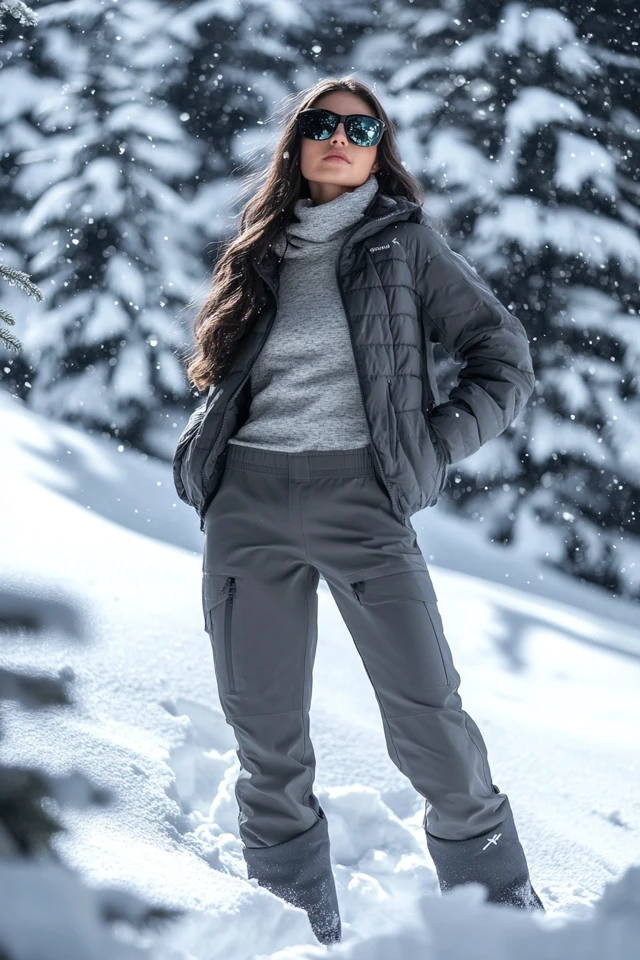
How to wear snow pants with boots
Start by checking the hem. It should reach the top of your boot laces when you stand and bend your knee, without piling up on the floor. If it is too long, many pants have a hem you can cinch or roll.
Then look at the silhouette. A slim-fit pant over a chunky boot reads balanced when the hem just skims the boot. A very wide leg over a short boot looks heavy and traps snow in the folds.
Match the boot height to the activity
For sledding, shoveling or playing in deep snow, choose a boot that rises above the ankle. Ski and snowboard boots are a separate system, so follow the manufacturer's instructions for those and keep the pant leg over the shell.
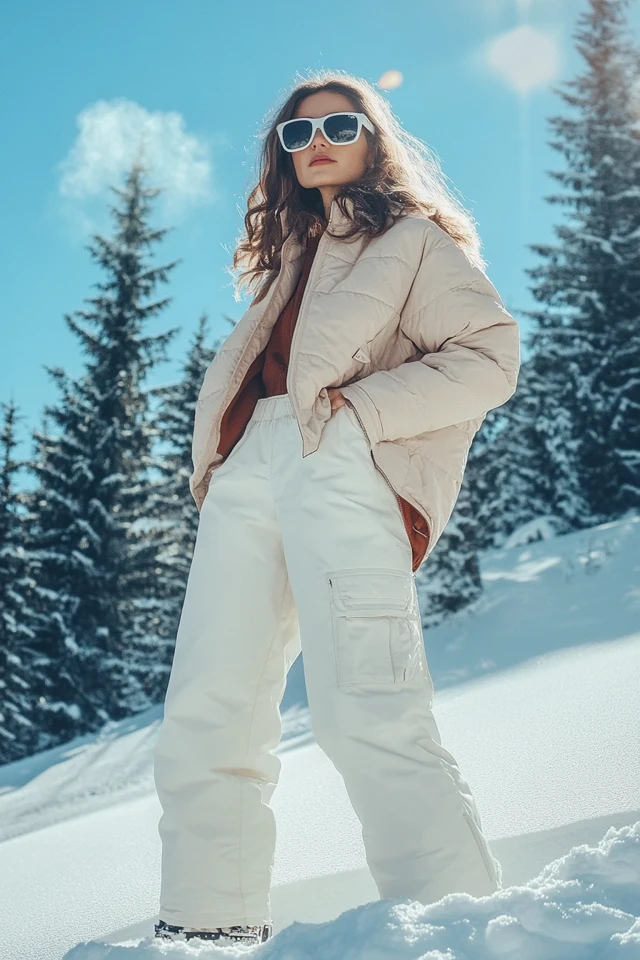
Leave room in the toe
Warmth depends on circulation, so a boot that is too tight will not keep you warmer. Harvard Health advises leaving at least a quarter- to a half inch between your longest toe and the end of the shoe. Try boots on with the socks you will actually wear.
A podiatrist's checklist from Atrium Health Wake Forest Baptist says sensible shoes fit the heel snugly, give plenty of room for the toes, and have a firm sole and arch support. That applies to winter boots too.
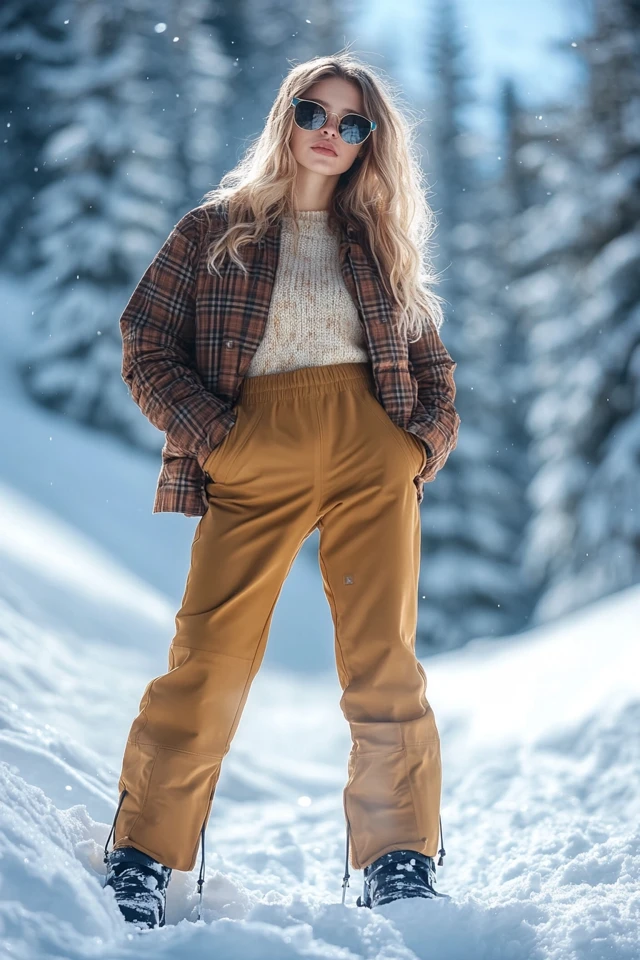
What to wear under snow pants
Think in thin layers. The layer against your skin should wick moisture. Howdy Health at Texas A&M says that layer should be made of moisture-wicking materials that draw sweat away from your skin, and it also advises avoiding cotton, including undergarments, because it absorbs moisture and can keep it next to your skin, making you cold.
In practice, that gives you a simple formula:
- Synthetic or wool base layer leggings against the skin.
- Optional fleece or thermal tights for very cold days or low-activity time, like watching a game or ice fishing.
- Snow pants on top, with room to move your knees freely.
Skip jeans and cotton leggings underneath. If you want more warmth, see fleece-lined leggings for freezing temperatures or stretchy base layers. Socks follow the same logic: wool or synthetic, one pair, not two stacked into a tight boot.
What to look for in insulated waterproof snow pants
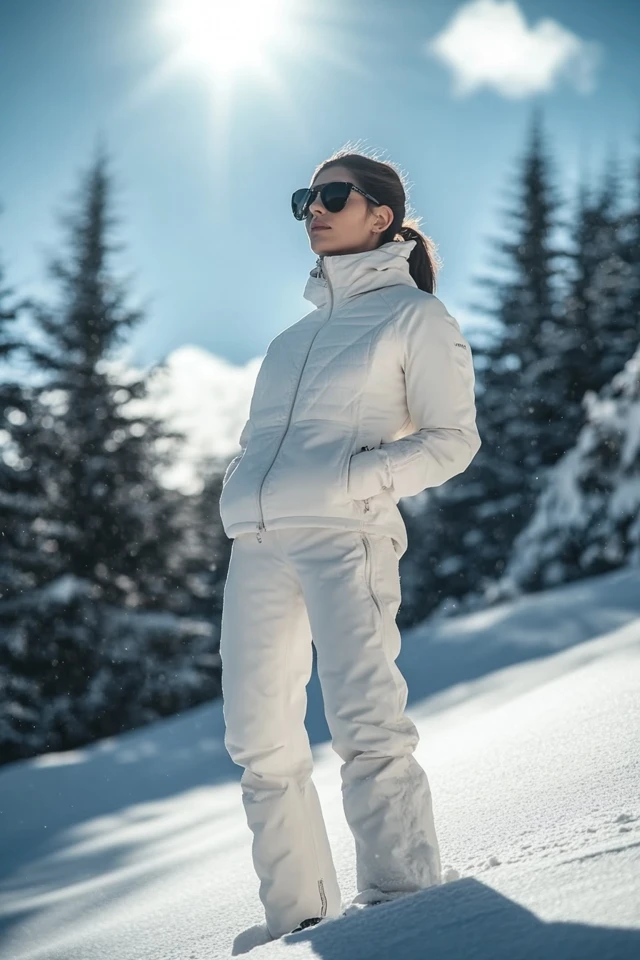
Insulated waterproof snow pants are built from a water-resistant shell with synthetic fill or a lining. Which version suits you depends on how much you move.
- Fit: loose enough to layer under and bend a knee, not so baggy it bunches over the boot.
- Insulation: lighter for skiing or hiking, where you generate heat, and heavier for standing around.
- Waterproofing: check the product listing for a waterproof rating and taped seams, especially for wet snow.
- Ventilation: zippered vents help if you overheat.
- Reinforcement: tougher fabric at the knees and seat helps for sledding and kneeling.
If you prefer one piece, insulated overalls cover the lower back, which pants can leave exposed when you bend.
Snow pants and winter boots for women, men and kids
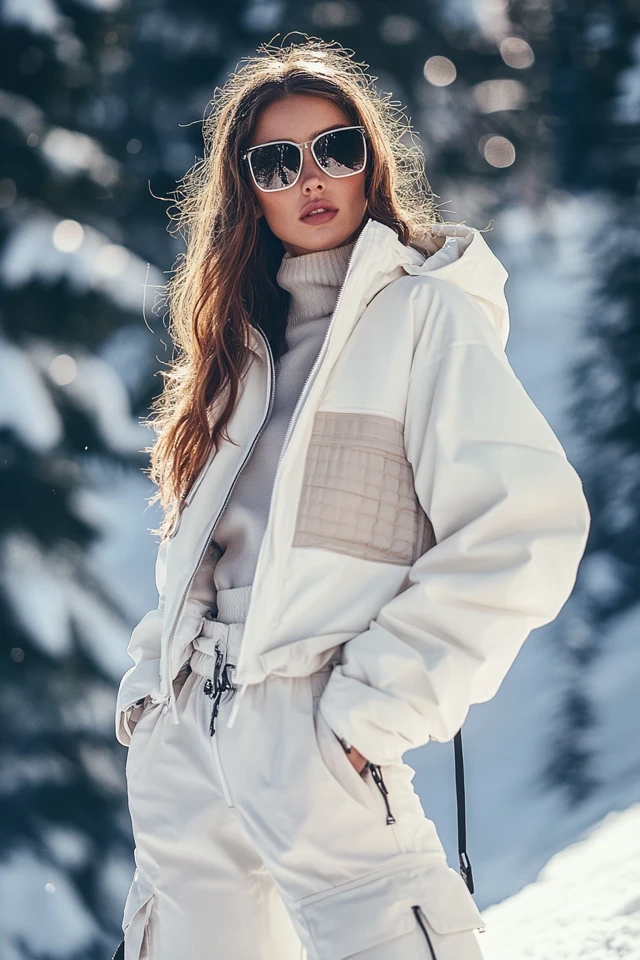
Women's cuts usually have more room through the hip and a shorter inseam, and men's cuts tend to run longer in the leg. Check the sizing chart and the inseam rather than assuming your usual size. Try the pants on with your boots on, as the hem relationship is half of the outfit.
For kids snow pants and winter boots, buy for the season, not for next year. Overly long hems drag and soak, and a boot that is too big lets snow in and makes walking harder. Bibs stay put better on small children. Replace boots when they stop fitting. Podiatrist Gina Hild, DPM, told the Cleveland Clinic that "Shoes typically only last about six months or so depending on the activity level of the individual." Worn-out cushioning is worth checking before each season.
Styling snow pants and boots
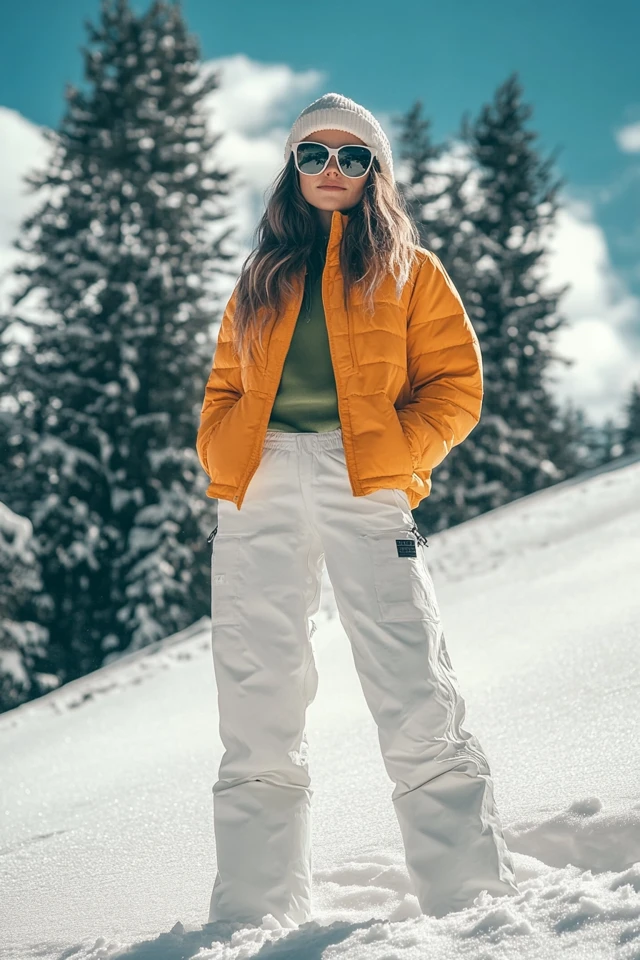
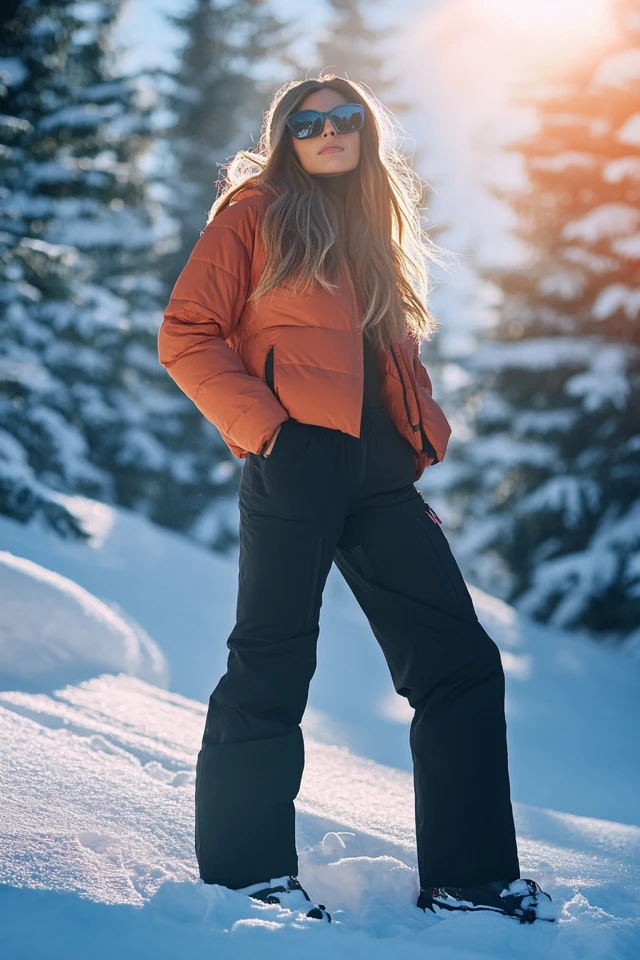
Through the lens of evidence-based design, I'd start with contrast. A dark pant with a lighter jacket reads as a long, clean line, and a bright jacket draws the eye up to your face, away from bulky boots.
- Sporty: black or gray pants, a fitted bright jacket, beanie and waterproof boots. See insulated ski jackets for the top half.
- Casual: a chunky sweater under a padded parka, with simple boots for errands or sledding.
- Playful: a bold pant with a neutral jacket, so only one piece carries the color.
Finish with a warm hat and gloves. Trapper hats and insulated gloves cover the places boots and pants cannot.
Caring for snow pants
Follow the care label first. Most can be machine washed on a gentle cycle with a mild detergent, and fabric softener is usually discouraged because it can affect the water repellency. Air dry, since high dryer heat can damage some fabrics, and store them somewhere dry so they do not get musty.
Frequently asked questions
What pants do you wear with winter boots?
For everyday cold, lined pants, thick jeans or insulated trousers work, with the hem over the boot top. For snow, wear insulated waterproof snow pants over a moisture-wicking base layer.
What should I wear under my snow pants when I ski?
Wear a thin wicking base layer in synthetic or wool, and add a fleece layer only if it is very cold. Avoid cotton, which holds moisture against the skin.
Do snow pants feel bulky?
Some do, but many slim-fit or articulated styles are lighter. Try them on and bend your knees and sit before you buy.
Can I wear snow pants without a base layer?
You can, but a base layer wicks sweat and adds warmth. Without one, the pants' lining or fill has to do all the work.
Filed under Weather Style