Asymmetrical Draped Dresses: Styles, Fit and How to Wear
- Words by
- Julio Arco
- Published
- Reading
- 5 min
Asymmetrical draped dresses work because one strong line, a single shoulder, a diagonal neckline or an angled hem, gives the eye a place to land. Pick one asymmetrical feature, keep everything else quiet, and the dress does the work.
Below: what makes a dress asymmetrical, the lengths and necklines worth knowing, who each shape flatters, and how to style it from daytime to formal.
What makes a dress asymmetrical?
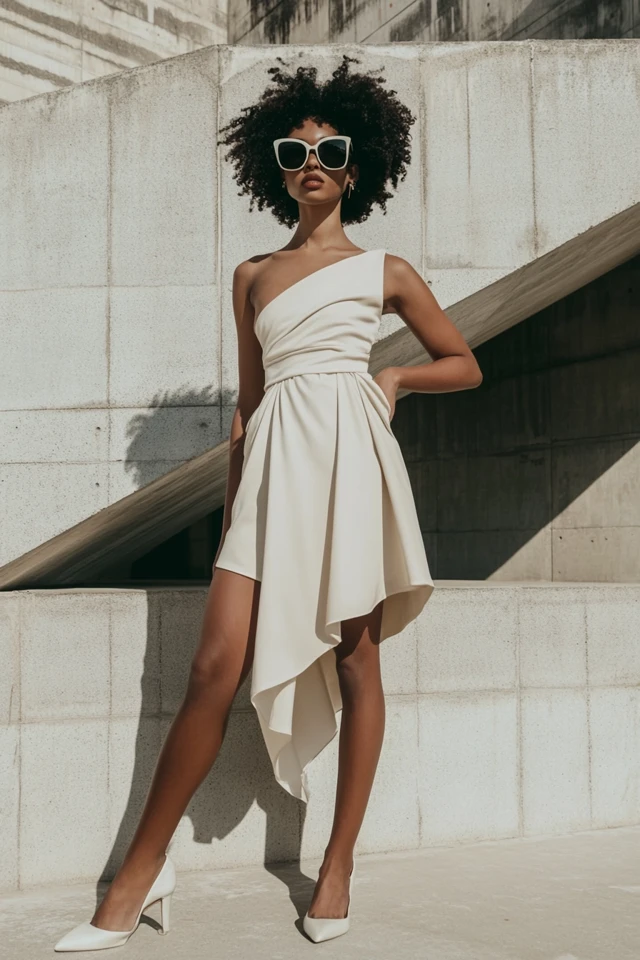
A dress is asymmetrical when its two sides don't mirror each other. That can happen at the neckline, the hem, the waist or in the fabric itself. Draping adds soft folds of fabric that fall across the body, often gathered at one hip or shoulder.
Through the lens of evidence-based design, I'd say the eye follows diagonals first. A slanted neckline or a sloping hem pulls attention along that line, so you can steer where people look.
Which asymmetrical necklines and hems are there?
Necklines
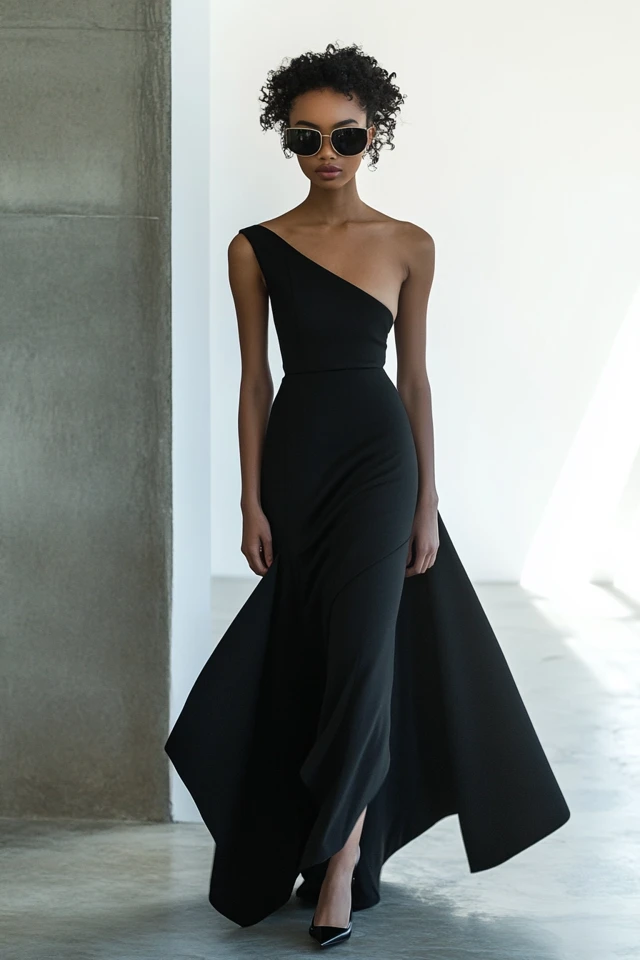
- One-shoulder: the classic. It shows off the collarbone and one arm, and it suits most frames.
- Diagonal or sweep neckline: a slanted cut across the chest, softer than a single strap.
- Asymmetrical dress with sleeves: one long sleeve with a bare shoulder, or a draped sleeve on one side only. A good option if you want coverage without a plain look.
For more on the top half, see elegant asymmetrical necklines in dresses.
Hems
- High-low: shorter in front, longer at the back. Easy to move in and good with flat shoes.
- Diagonal hem: slopes from one side to the other, often with a slit.
- Handkerchief or tiered: points of fabric at different heights, usually in lighter fabrics.
Summer versions are covered in asymmetrical hemlines in summer dresses.
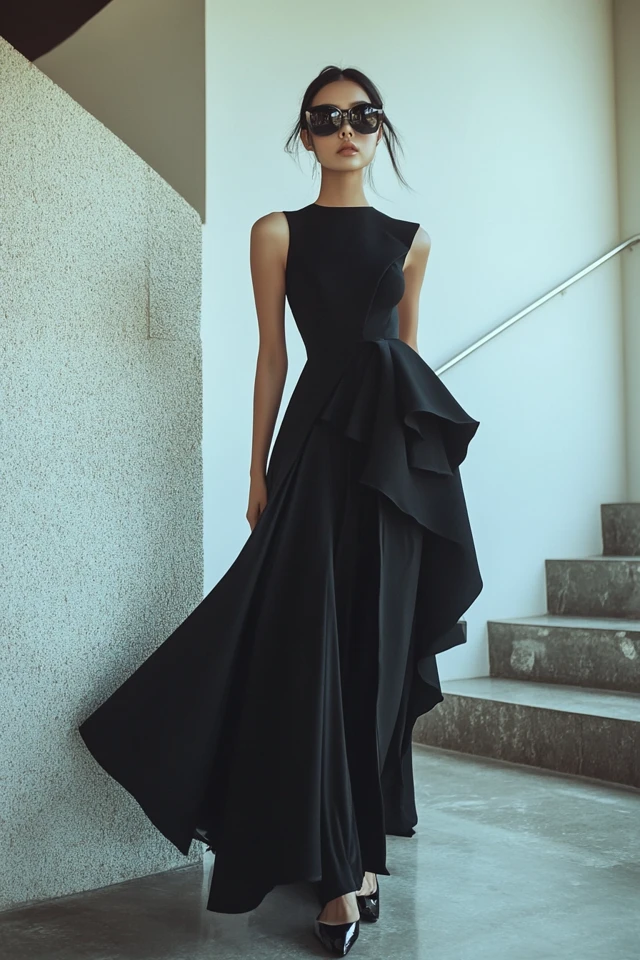
Midi, maxi or mini: which length suits you?
An asymmetrical draped midi dress is the easiest to wear. The hem lands around the calf, so it works with flats, boots or heels, and the drape has room to move.
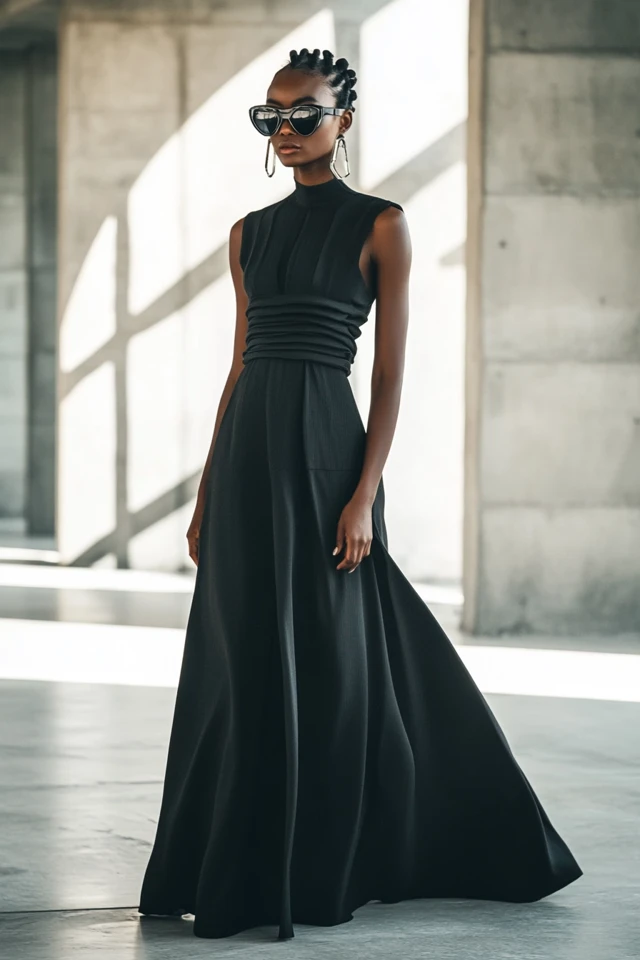
A maxi asymmetrical draped dress is more dramatic. Choose a fabric with some weight, like crepe or satin, so the skirt falls rather than clings. Check that the front hem clears your shoes, since uneven hems catch on stairs.
Minis with asymmetry usually rely on a high-low cut or a wrap. They suit casual and party settings, and a longer back hem adds coverage.
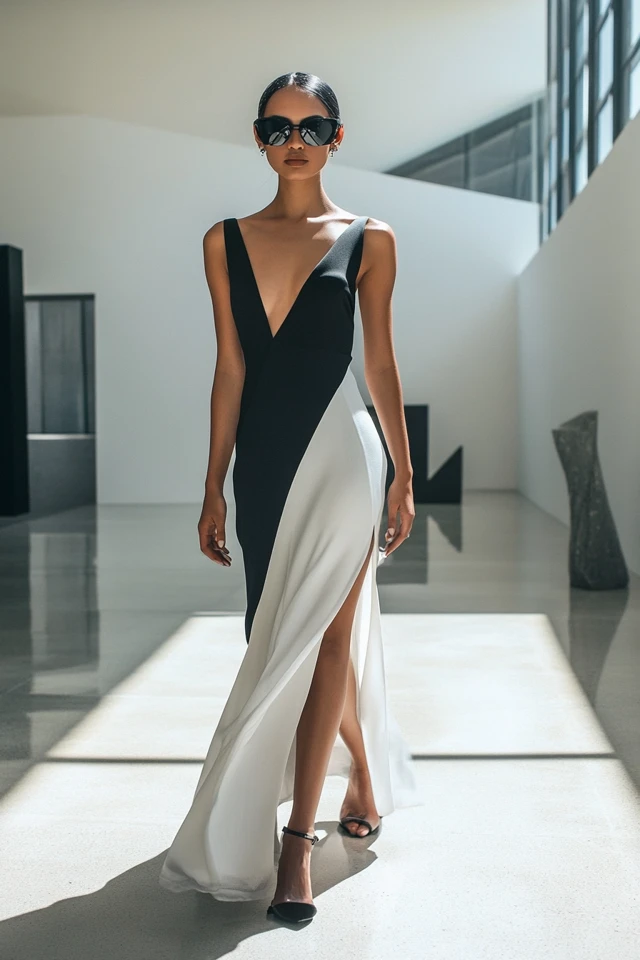
Are asymmetrical dresses flattering?
Usually, yes, because the diagonal lines break up a straight silhouette. Fit is what decides it, and a dress that pulls or gaps is a fit problem, not a you problem.
- Petite frames: a higher hem or one-shoulder neckline keeps the look light. Choose fabric that drapes softly instead of stacking up.
- Curvy figures and plus size asymmetrical draped dresses: look for ruching or a gathered drape at the waist with a fitted bodice. Gathering placed over the midsection skims rather than clings, which is why draped styles are popular for covering a tummy.
- Athletic frames: ruffles, layers or a pleated panel add softness. A belt marks the waist if you want more shape.
- Taller frames: you can carry long hems, big drapes and sculptural details.
As an architect trained in evidence-based design, I'd treat the point where the drape is gathered as the focal spot. Put it where you want attention, and keep it away from areas you'd rather not emphasize.
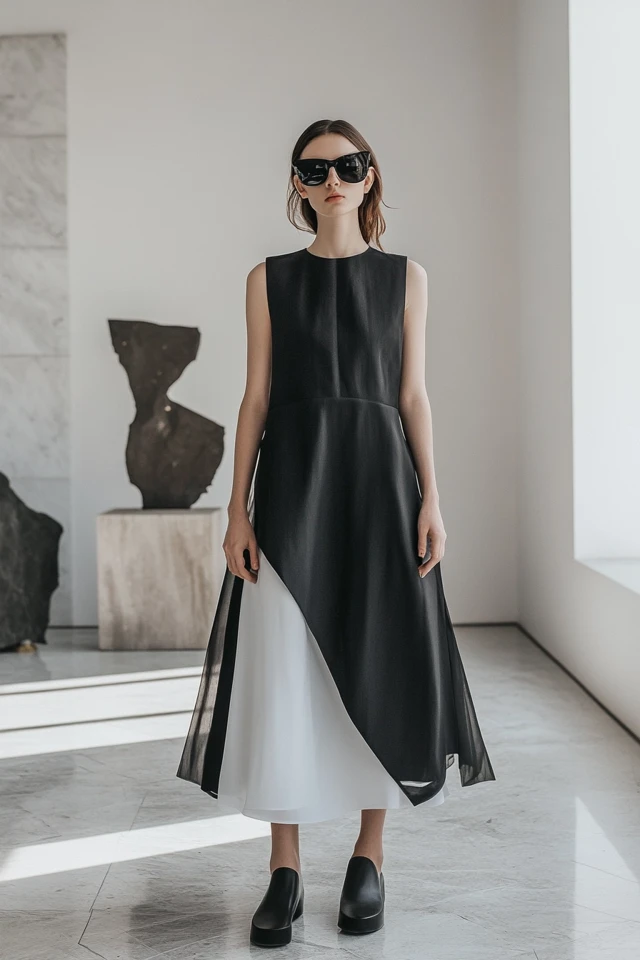
Which colors and fabrics work best?
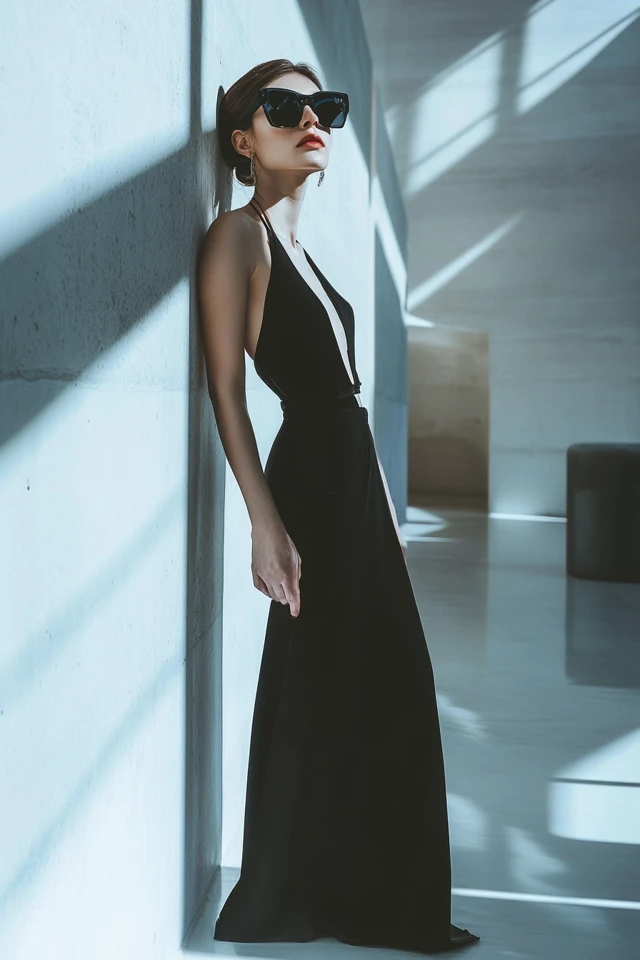
Fabric changes how color reads. A matte crepe and a glossy satin in the same black look like different dresses, because the surface changes how light reaches the eye.
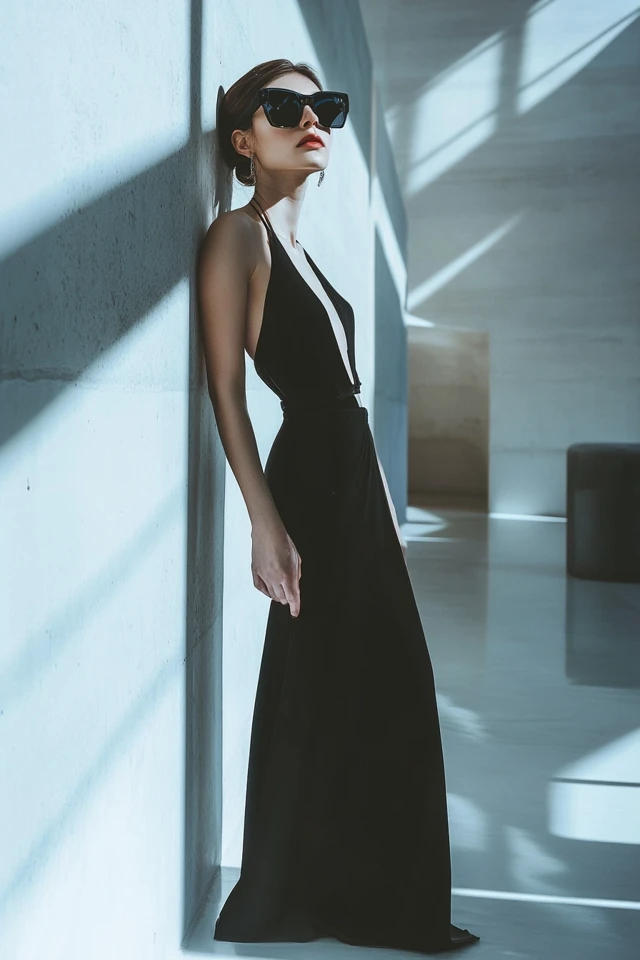
- Black and deep jewel tones such as sapphire or ruby look sharp and keep the focus on the cut.
- White, ivory and soft neutrals show the lines of the drape clearly and feel lighter for daytime.
- Metallics add shine, so they work best when the silhouette itself is simple.
- Chiffon and organza float and move. Satin, velvet and crepe hold structure and look more formal.
For a color pairing to try, see deep teal and cool white in party dresses.
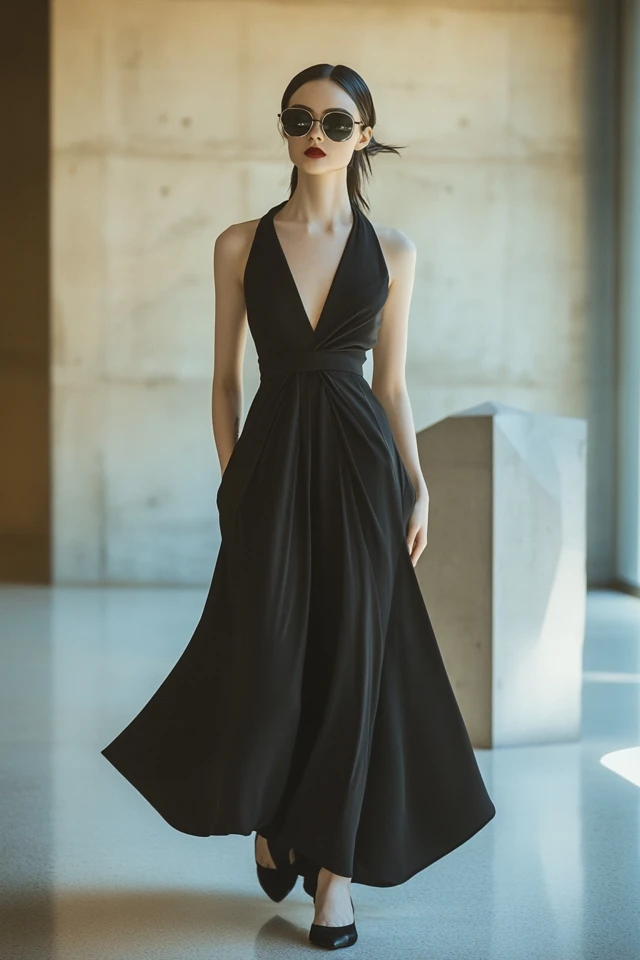
How to style asymmetrical draped dresses
- Keep one statement piece. If the neckline is bold, choose simple earrings or none at all. A one-shoulder dress pairs well with a delicate necklace or a short chain.
- Echo the angles with jewelry. Asymmetrical earrings or a cuff on the bare-arm side repeat the dress's lines.
- Match shoes to the hem. Strappy heels or pointed pumps suit longer hems, and flat sandals or ankle boots suit high-low cuts.
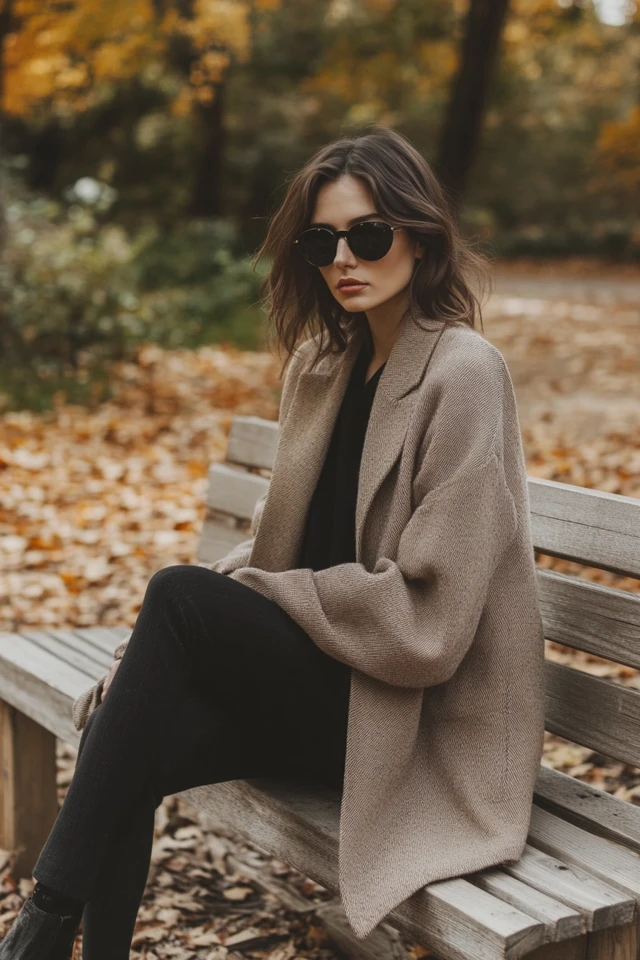
- Layer with a tailored blazer or cropped jacket for daytime. In cold weather, a longline coat should be at least as long as the shortest part of the hem.
- Plan the undergarments. Strapless or adhesive bras help with unusual necklines, and smooth underlayers keep fitted styles clean.
For a casual look, a denim jacket and flat sandals take the formality down. For dates, see asymmetrical dresses for a city date.
Formal and occasion ideas
A formal gown asymmetrical dress in satin, velvet or heavy crepe is a strong choice for weddings and black-tie dinners. A one-shoulder neckline with a floor-length skirt needs little else besides statement earrings and a clutch. More ideas are in elegant asymmetrical dresses for formal dinners.
For cocktail parties, an asymmetrical draped midi dress with a metallic accent is easy to dress up. For comparison with a cleaner, straighter cut, look at sleek sheath dresses.
Caring for draped fabrics
Check the care label first. Delicate fabrics like chiffon and satin usually do best with hand-washing or a gentle cycle. Store the dress on a padded hanger so shoulders and drape keep their shape, and when traveling, fold it loosely in a garment bag instead of tightly rolling it.
Frequently asked questions
Are asymmetrical dresses flattering?
For most body types, yes. The diagonal lines break up a straight silhouette, and fit decides the result: choose the neckline or drape placement that highlights what you like.
What type of dress is most flattering for hiding a tummy?
Draped or ruched dresses with gathering across the midsection skim the body instead of clinging. A wrap shape or a soft asymmetrical drape in a fabric with some weight works well.
Are draped dresses in style?
Draped dresses keep returning because the shape is flexible and works across lengths and occasions. Trends shift, so buy the cut that suits you rather than chasing a season.
Can I wear an asymmetrical dress casually?
Yes. A cotton high-low dress with flat sandals and a denim jacket is relaxed and easy.
Filed under Style & Fit