Asymmetrical Draped Dresses for Formal Dinners
- Words by
- Julio Arco
- Published
- Reading
- 5 min
For a formal dinner, pick an asymmetrical draped dress in a fluid fabric (satin, crepe or chiffon) with one clear off-center feature: a one-shoulder neckline, a diagonal drape or an uneven hem. One focal point reads as elegant. Three competing ones read as busy.
Below: what makes these dresses work, which lengths and necklines suit which dinners, whether they flatter, and how to style them without fighting the dress.
What makes a dress asymmetrical and draped?
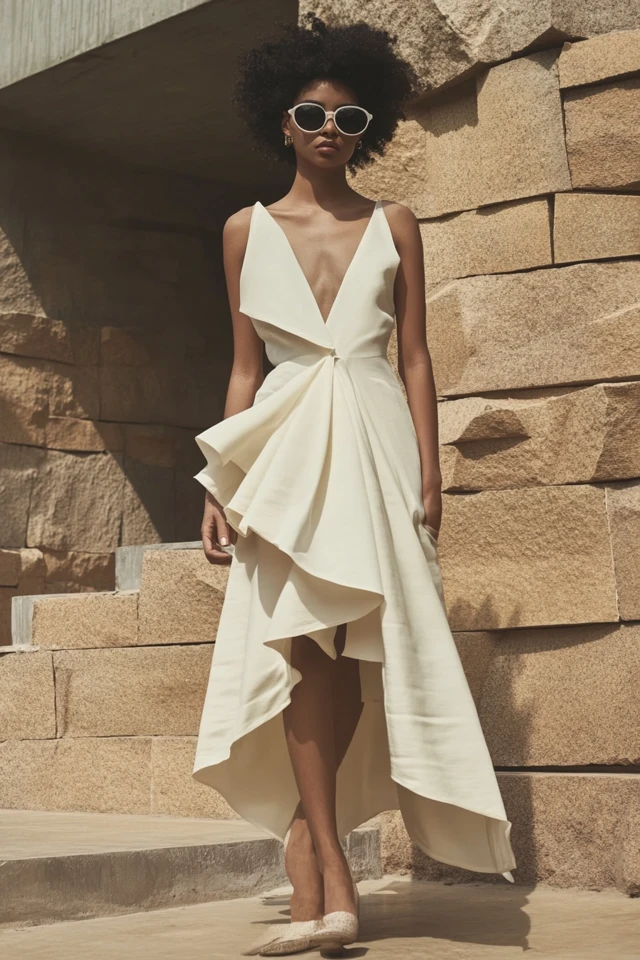
Asymmetry means the two halves of the dress do not mirror each other. It shows up in three places: the neckline (one shoulder, a diagonal line), the waist (a gathered diagonal or wrap) and the hem (higher on one side, or shorter in front and longer behind).
Draping is fabric allowed to fall in soft folds instead of being cut to a rigid shape. Put the two together and you get an asymmetric drape dress, where the fabric gathers at one hip or shoulder and the folds run diagonally across the body. For more on the neckline side, see asymmetrical necklines in dresses.
Are asymmetrical dresses flattering?
Often, yes, because diagonal lines lead the eye across the body instead of straight down or around it. A gathered diagonal at the waist can soften the midsection, and a one-shoulder line draws attention up toward the collarbone and face. That is a matter of how lines are perceived, not a guarantee, so try the dress on and check it sitting and standing.
Through the lens of evidence-based design, I'd look at where the drape lands before anything else. Gathers placed over the area you'd rather not emphasize will add volume there, while drape that starts at the side seam and moves away from it tends to look smoother.
If a dress pulls or bunches at the bust or hip, that is a cut problem, not a you problem. Move up or down a size, or try a style with a wrap closure that adjusts.
Which length works for a formal dinner?
Midi
An asymmetrical draped midi dress is the easiest pick for most restaurant dinners and dressy private events. The hem usually lands between the knee and mid-calf, so it is comfortable to sit in and still looks formal. If the hem slants, check that the shorter side does not ride up when you sit. For more on the length, see versatile midi dresses.
Maxi and gown length
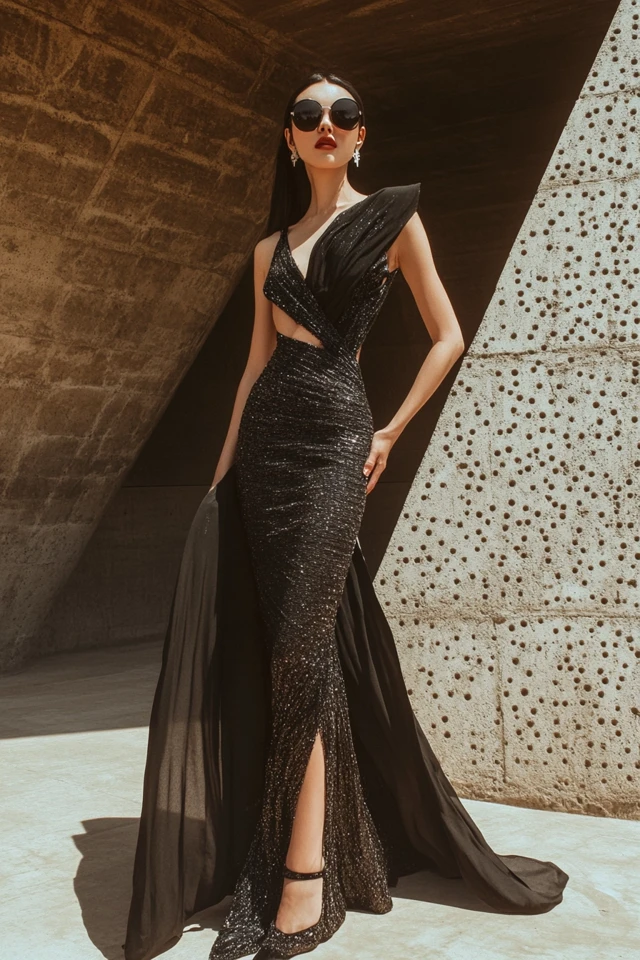
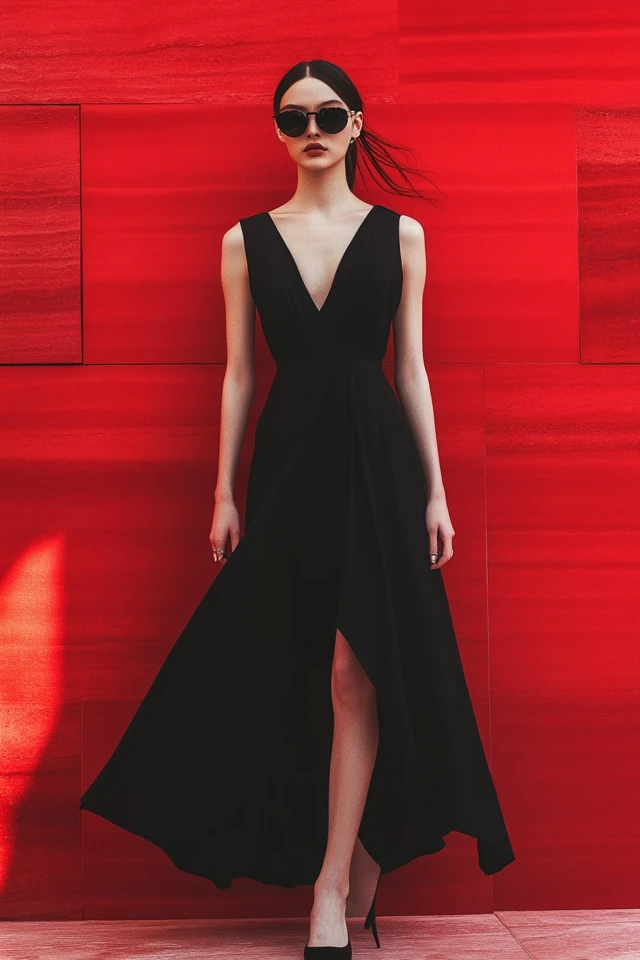
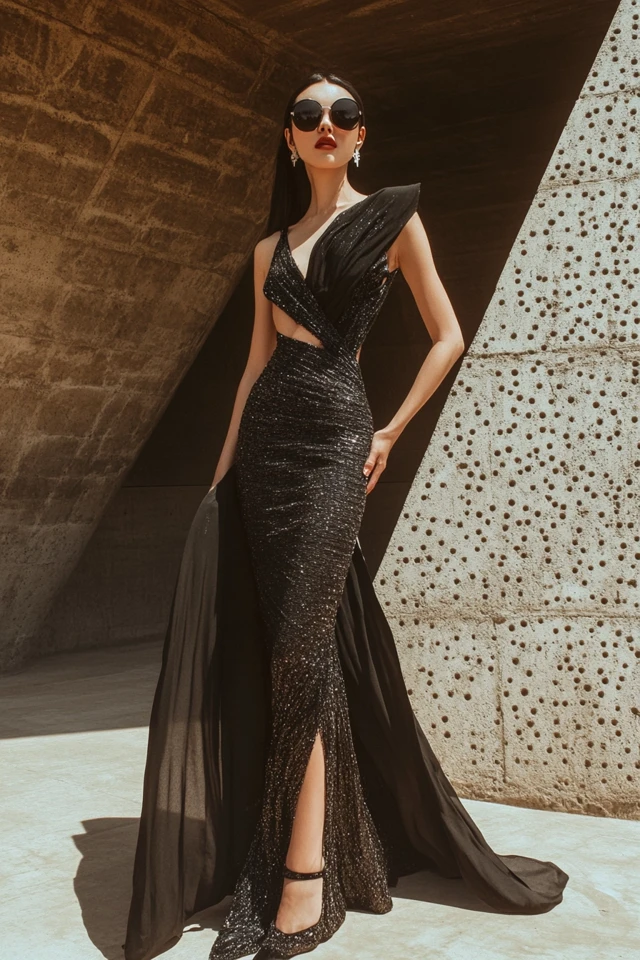
For black-tie or a ballroom, a maxi asymmetrical draped dress is the safer call. A floor-length hem that is longer on one side adds movement when you walk. Hem it for the heel height you will actually wear, since the longer side can catch underfoot.
Knee-length and high-low
A high-low hem works for smaller, less formal dinners. It shows off shoes, but it looks most formal when the back is clearly longer and the fabric is substantial enough to hang well.
Which fabrics drape best?
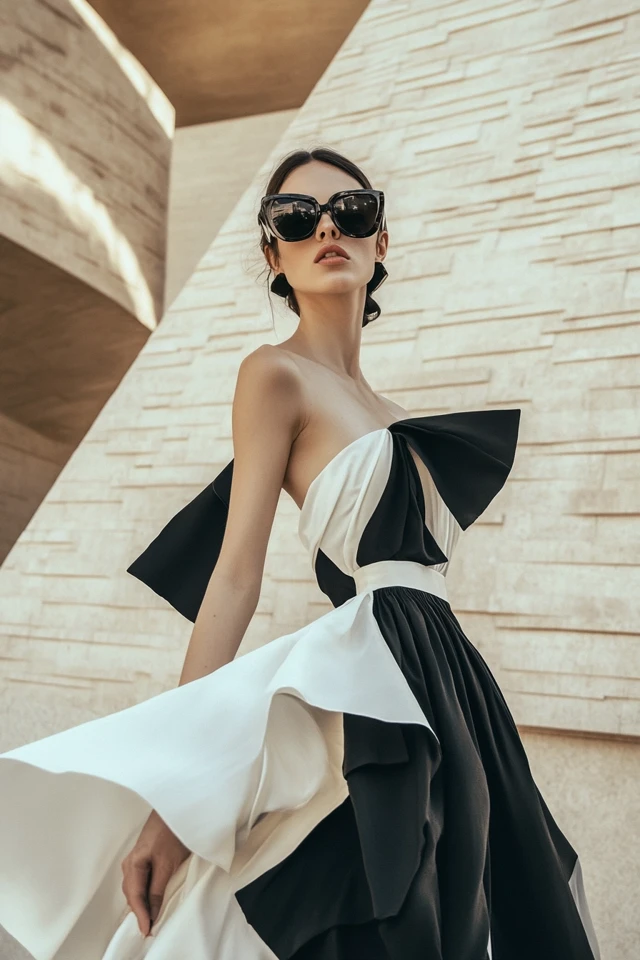
Fabric decides whether drape looks expensive or limp. Texture also changes how a color reads: a matte crepe and a glossy satin in the same shade do not look like the same color, because the surface changes how light reaches the eye.
- Satin and silk drape fluidly and catch light along each fold, which emphasizes the diagonal lines.
- Chiffon is light and floaty, good for layered or flowing hems. It often needs a lining.
- Crepe has a matte, clean fall and holds a shape, a good choice if you prefer structure to shine.
- Velvet is heavy and rich in color, best for cooler months and simpler cuts.
For more on the lighter fabrics, see silk and chiffon in formal dresses.
Can you wear sleeves with an asymmetrical dress?
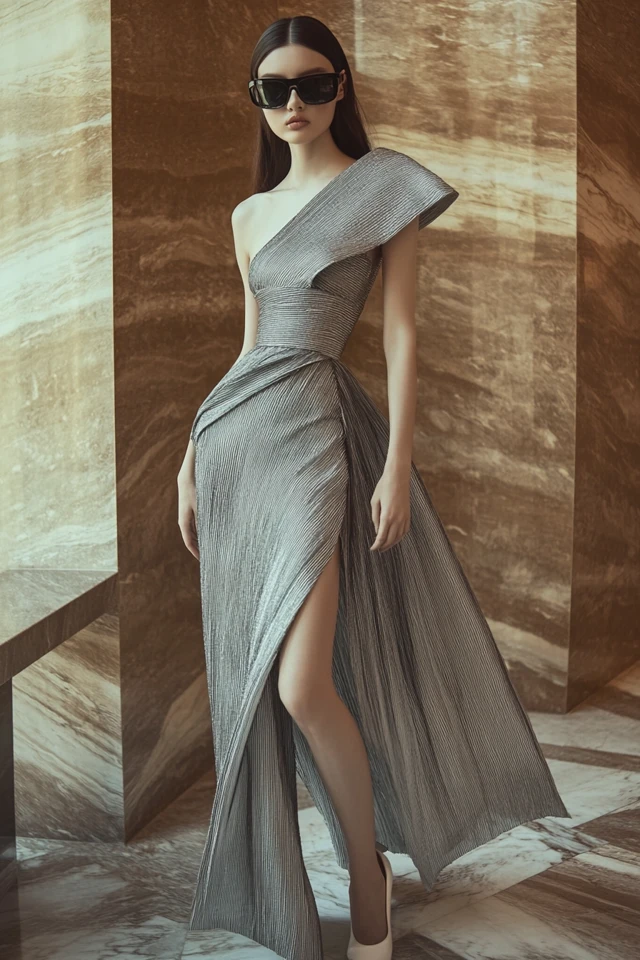
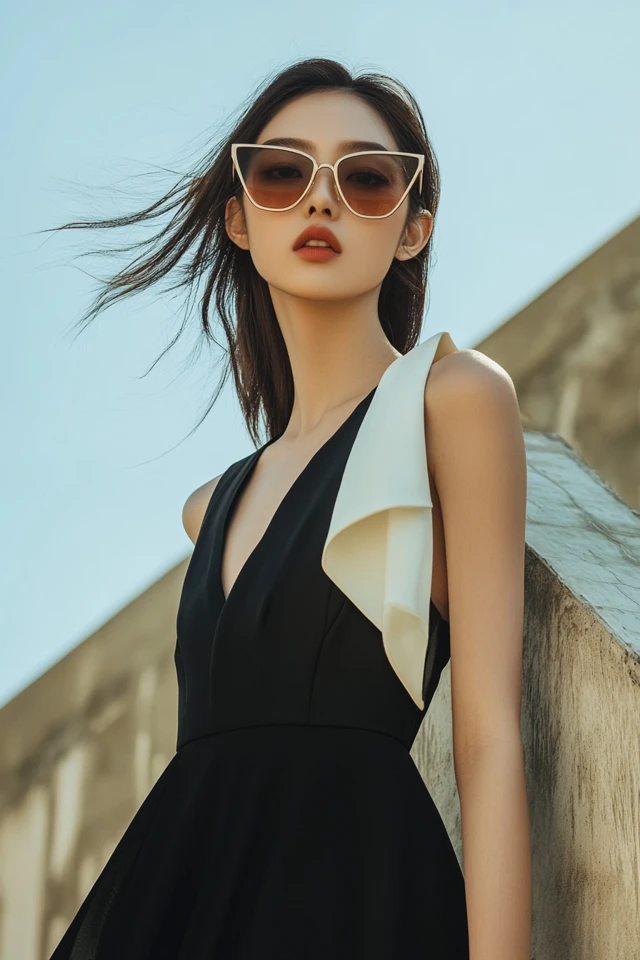
Yes. An asymmetrical dress with sleeves is a good option for cooler venues or if you prefer more coverage. A one-shoulder dress with a single long sleeve keeps the line clean. A two-sleeve dress with an asymmetrical hem or diagonal drape works too, and the sleeve keeps the neckline simple so the drape stays the focus.
Check that the sleeve does not pull across the upper arm when you reach forward, since a fitted sleeve in a woven fabric can restrict movement.
Is there a plus-size option for draped asymmetry?
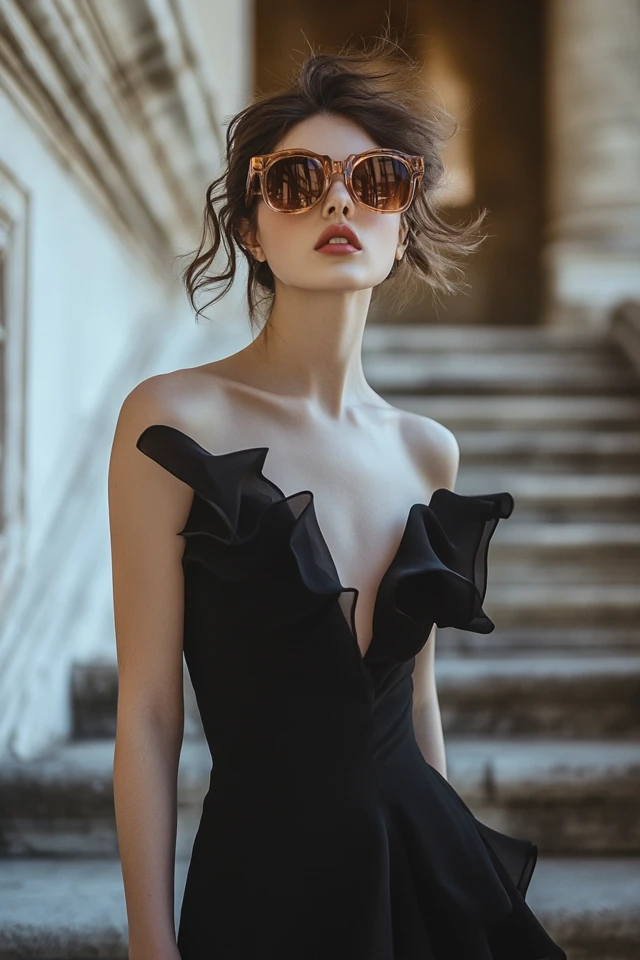
Drape is generally friendly to curves, since fabric that skims and gathers does not need a precise fit. Look for ruching or a wrap that can be adjusted, fabrics with some weight so they do not cling, and a clearly defined waist or diagonal. Sizing and cut vary by brand, so check the measurements listed rather than relying on the size label.
How to style asymmetrical draped dresses
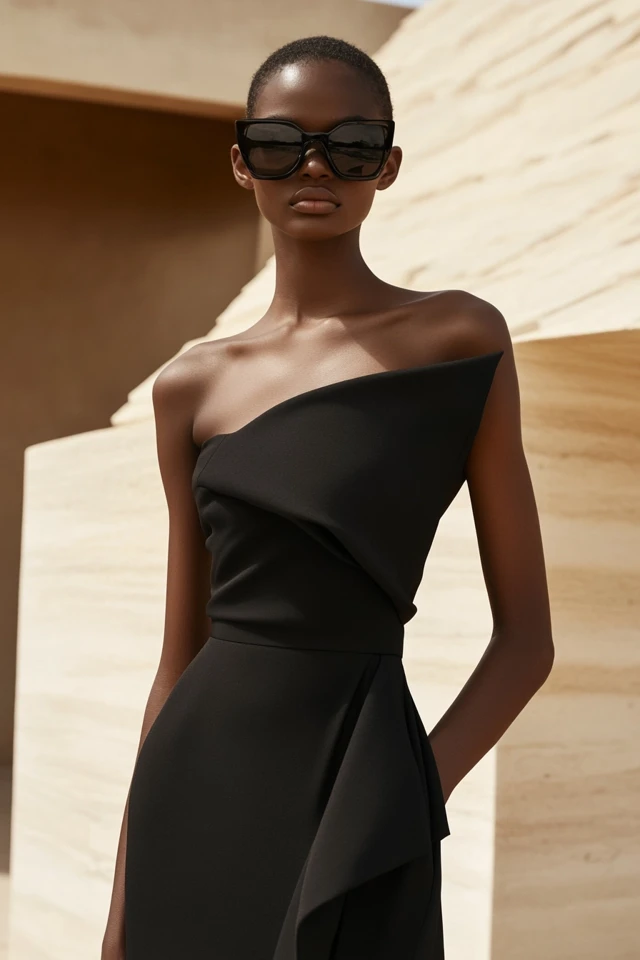
The dress is already the statement, so keep everything else quieter.
- Earrings: with a one-shoulder neckline, a single drop or a small geometric earring on the bare side balances the line. Skip a necklace.
- Hair: sweep it to the covered side or wear it up to show the shoulder. With a dramatic hem, loose waves or a sleek ponytail keep attention on the dress.
- Shoes: strappy sandals or pointed pumps in a metallic or neutral tone. Flats can work with a longer hem, but a slim heel keeps the line longer.
- Bag: a small clutch in a metallic or a color already in the dress.
- Layer: a tailored blazer or a wrap in a matching tone for cool evenings.
As an architect trained in evidence-based design, I'd treat the neckline as the first thing the eye reads, so I'd choose either the earrings or the necklace, never both.
Which colors and details suit a dinner?
Deep jewel tones such as emerald, sapphire and ruby look good against satin and velvet. Soft neutrals and champagne shades look polished in crepe or chiffon; see dusty rose and champagne layers for one pairing. Small cut-outs or sheer panels are fine, but keep to one detail so the dress stays formal.
Practical checks before the dinner
- Sit down in the dress in the fitting room. Check the hem, the neckline and the waist.
- Plan undergarments in advance. One-shoulder and diagonal necklines often need a strapless or adhesive option.
- Walk and climb a few stairs to see how the hem moves.
- Check the care label; many formal fabrics are dry-clean only, and a padded hanger helps keep the shoulder shape.
For other formal silhouettes to compare, look at sleek asymmetrical dresses, satin dresses for an anniversary dinner or asymmetrical hemlines in lighter summer dresses.
Frequently asked questions
Are asymmetrical dresses flattering?
They often are, because diagonal lines and drape lead the eye across the body and can soften areas you'd rather not emphasize. Fit and where the gathers fall matter more than the label, so try the dress on.
What type of dress is most flattering for hiding a tummy?
A draped or wrap style with gathers placed to the side and a fabric with some weight, like crepe or satin, tends to skim rather than cling. A defined waist or diagonal line also helps.
Are draped dresses in style?
Draped dresses are a regular part of eveningwear, though trends shift from season to season. Choose the cut and fabric that suit you and the dress code rather than chasing a single season.
Can asymmetrical dresses be worn to black-tie events?
Yes, in a floor-length gown and a fluid fabric such as satin or crepe. Keep to one asymmetrical feature and add simple accessories.
Filed under Occasionwear