Best Beanies for Winter: Warmest Picks for Hikes
- Words by
- Julio Arco
- Published
- Reading
- 5 min
For a cold hike, the warmest beanie is a snug wool or wool-blend knit, or a fleece lined beanie if wind is the main problem. Pick a close fit that covers your ears and stays put under a hood, and choose a neutral shade so it goes with everything you own.
Below: how the materials compare, what to look for in men's and women's styles, how to wear a beanie on the trail, and how to keep it in shape.
Are beanies good for winter?
Yes. Your head and ears are exposed even when the rest of you is bundled up, and a beanie is the lightest way to cover them. It also packs into a pocket, so you can take it off on a steep climb and put it back on at the summit.
The catch is that the wrong beanie can make you sweaty, and damp fabric near your skin leaves you colder once you stop moving. That is why material and fit matter more than the label.
What kind of beanie is warmest?
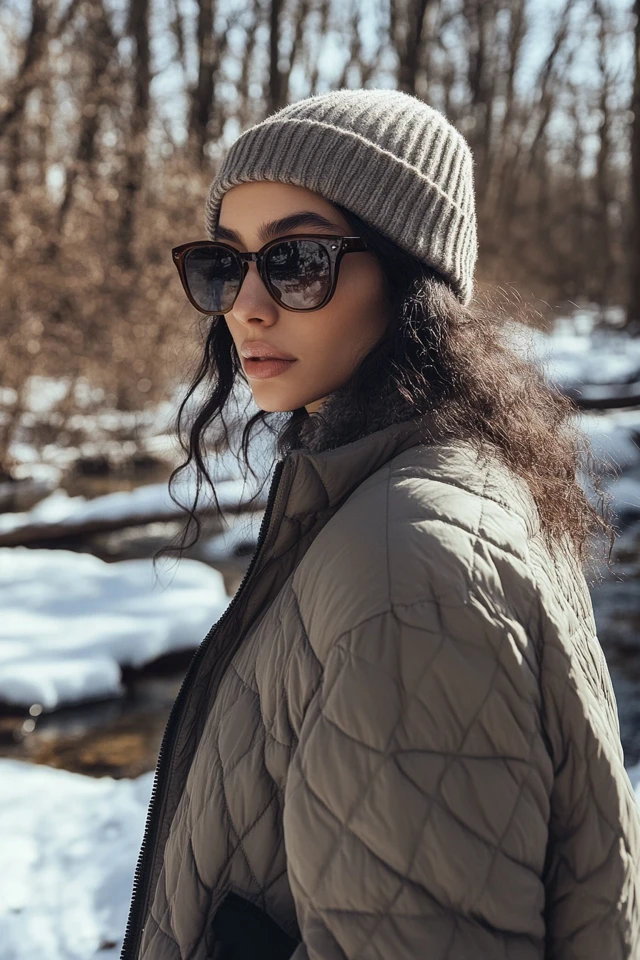
It depends on whether you are moving or standing still, and how much wind you expect. Here is how the common options compare.
| Type | Best for | Trade-off |
|---|---|---|
| Wool or wool blend | All-round hiking, damp cold | Some wool feels scratchy on the forehead |
| Merino | Sensitive skin, long days | Usually costs more and can wear faster |
| Fleece lined beanie | Windy, dry cold, slower pace | Can feel warm fast on a steep climb |
| Thermal beanie hats (thin synthetic) | Layering under a hood, high effort | Less insulation when you stop |
| Acrylic knit | Budget picks, quick drying | Holds less warmth than wool for its thickness |
If you only buy one, a mid-weight wool blend with a snug rib covers most situations. Add a fleece lining only if you run cold or spend a lot of time standing around.
Which beanie is best for winter hiking?
Hiking is different from commuting because you generate heat. The aim is to stay warm without soaking the fabric in sweat. The Howdy Health guide to cold weather exercise advises a base layer of moisture-wicking material that draws sweat away from your skin, and the same logic applies to what sits on your head.
The same page says to avoid cotton because it absorbs moisture and can keep it next to your skin, making you cold. So skip cotton beanies for the trail, however nice the color.
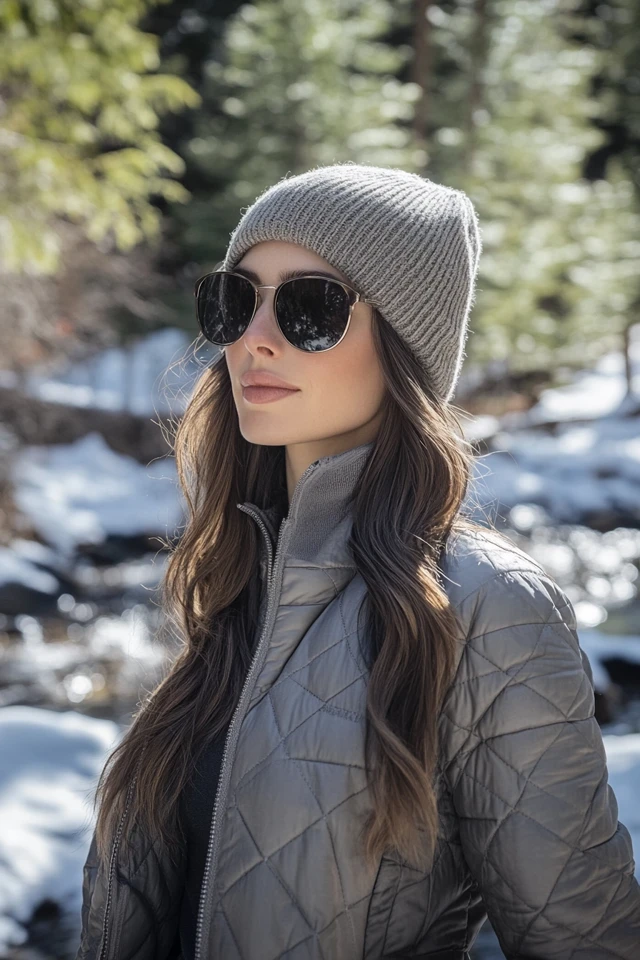
For an active day, I'd go with a thinner wool or synthetic knit that breathes. Save the thick, lined version for lookouts, photo stops and cold starts.
Winter beanies for men and women: is there a difference?
Mostly in sizing and styling, not in warmth. Winter beanies for men often run slightly deeper and looser, while beanies for winter women's collections tend to offer more fitted shapes and sometimes a pom or a longer slouch. Warmth comes from the fiber, the knit density and the coverage, so shop by those and try on whatever sits well on your head.
If you have thick or long hair, look for a stretchy rib or a slightly longer body. If you have a smaller head, a cuffed style that you can fold once or twice avoids bunching.
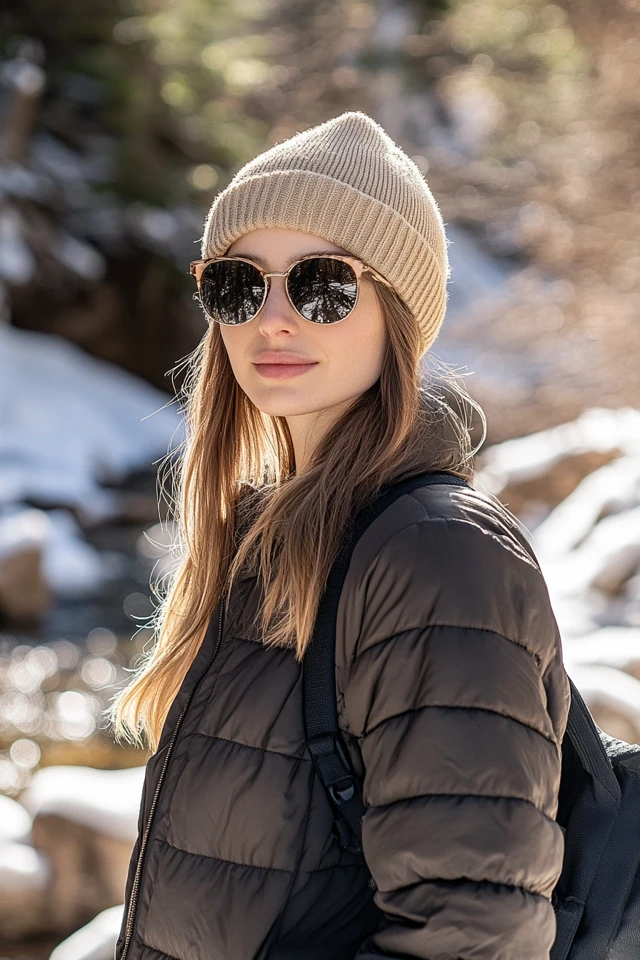
How should a winter beanie fit?
A beanie that slides off or leaves a red line across your forehead is a fit problem, not a you problem. Check three things:
- It should cover the tops of your ears without pulling them flat.
- It should feel snug but not tight at the forehead, since stretchy ribs loosen with wear.
- It should sit low enough to stay put under a hood without a bulky fold at the back.
A fold-over cuff gives you two layers over the ears, which is a simple way to add warmth. Flatten the cuff or skip it if you wear a helmet or a tight hood.
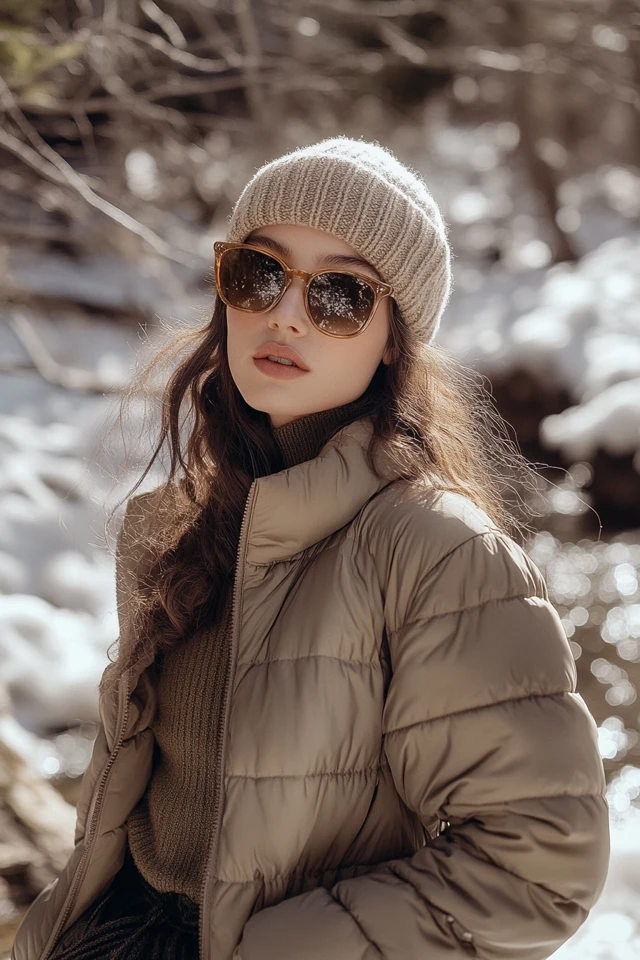
Which neutral colors work for hiking outfits?
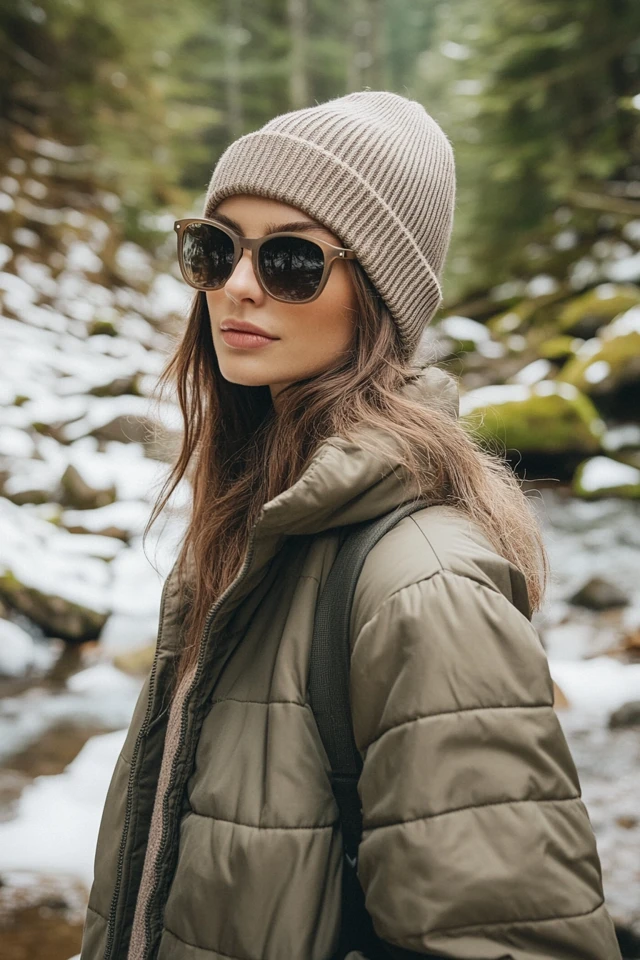
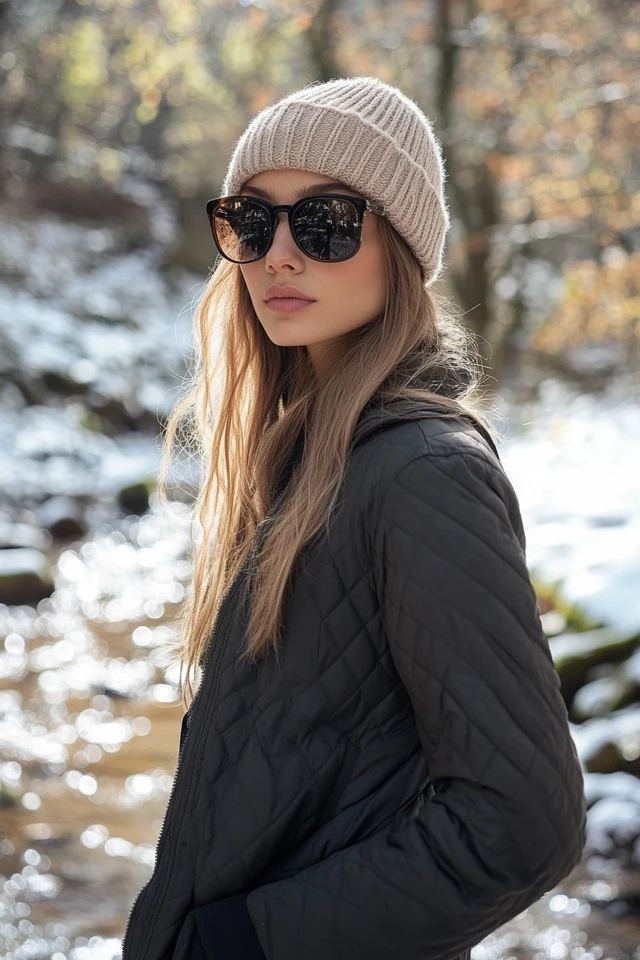
Gray, black, oatmeal, camel, taupe and olive all sit comfortably with outdoor gear, because they are muted and pair with both bright shells and earthy parkas. Through the lens of evidence-based design, I'd think about texture before color here: a chunky rib and a flat knit in the same oatmeal read as different tones because the surface changes how light reaches your eye.
A few easy pairings:
- Charcoal or black beanie with a puffer and dark boots for a clean, minimal line.
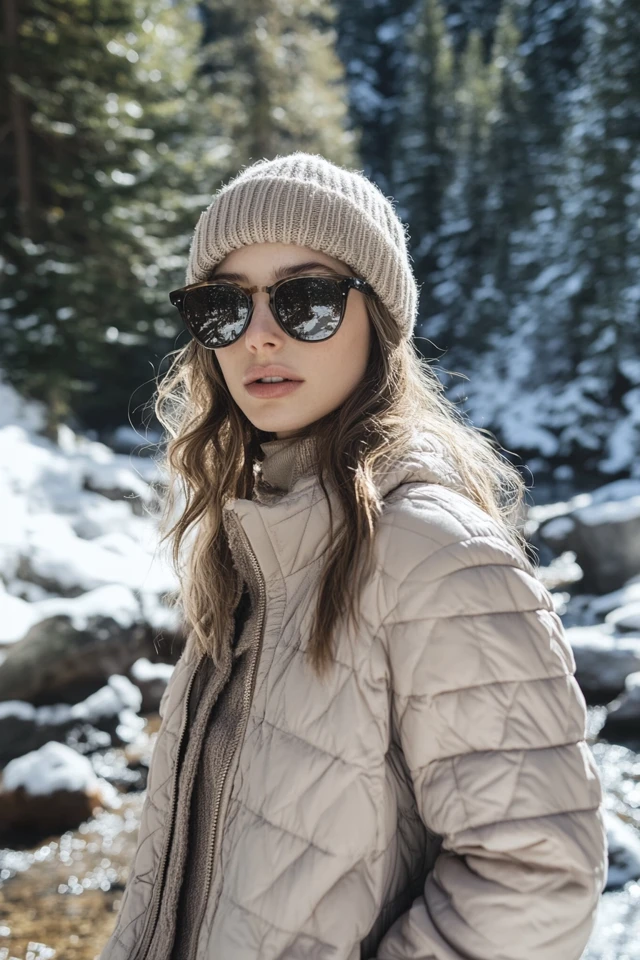
- Oatmeal or taupe with a fleece-lined flannel and an insulated vest for a softer, layered look. Our flannel jacket ideas have more on that layer.
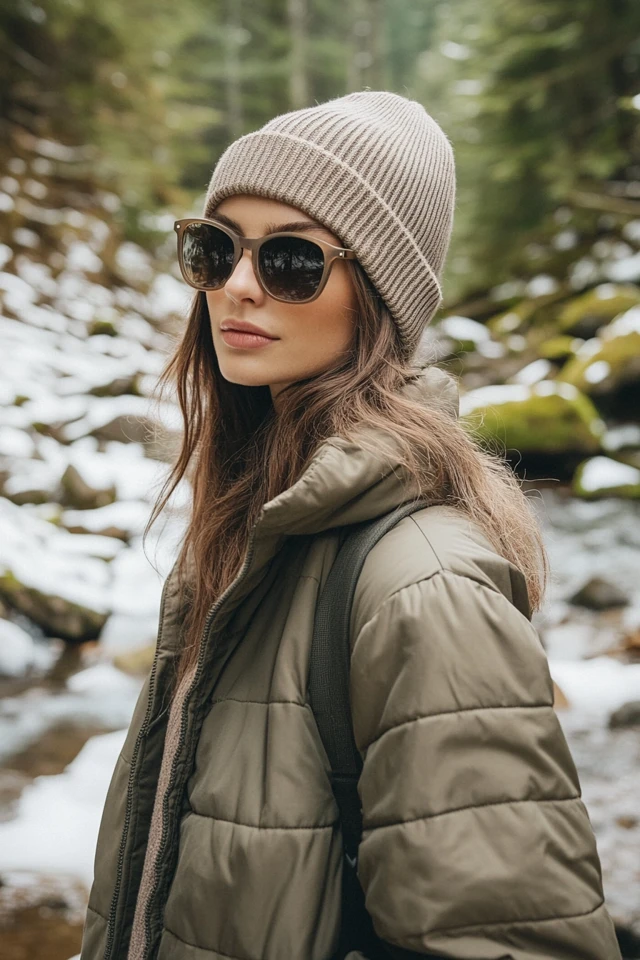
- Olive or camel with a parka in a close shade, so the whole outfit reads as one tone.
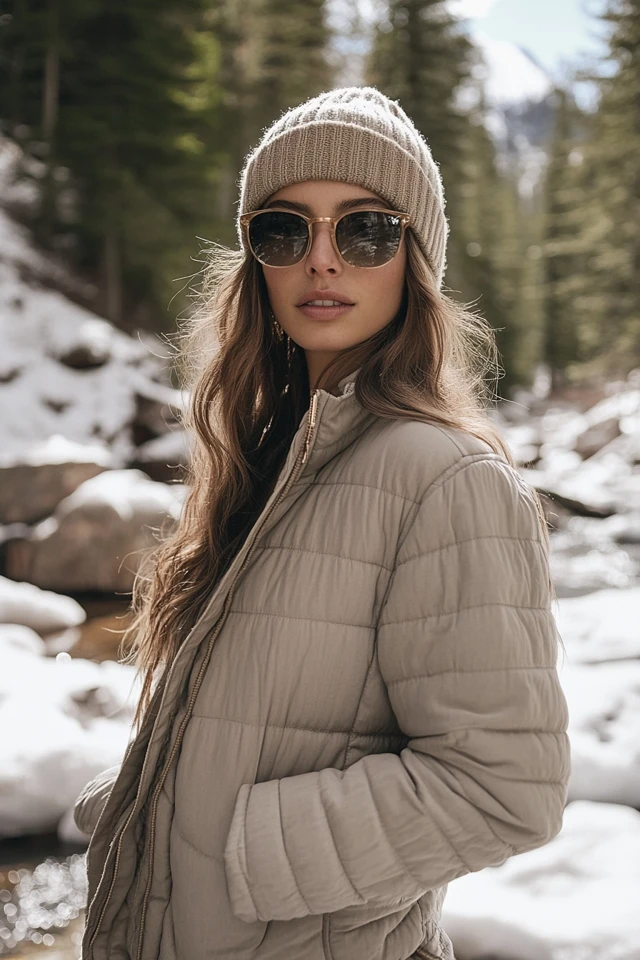
If you want something to wear off the trail too, a cable or waffle knit in a soft neutral works with a wool coat. See neutral oversized coats for ideas, or the top beanie styles for shapes beyond the classic.
How to choose and care for your beanie
Before buying, read the fiber label and feel the inside against your forehead. Wool blends and merino are warm and breathe well. Acrylic dries fast but is less warm for its thickness. If a wool beanie itches, a thin liner or a merino blend is the usual fix; if you get irritation, check with a doctor or dermatologist.
To keep it in shape:
- Wash by hand or on a delicate cycle in cold water, following the label.
- Dry it flat. A dryer can shrink or distort the knit.
- Store it folded or flat rather than hanging.
- Remove pilling with a fabric shaver or comb, gently.
For the rest of the cold-weather kit, see scarves, gloves and beanies or the neutral winter edit. For a softer everyday option, try these soft beanies.
Frequently asked questions
What is the best beanie to keep warm in winter?
A snug, mid-weight wool or wool-blend beanie that covers your ears is the safest choice. Add a fleece lining if you face strong wind or stand around a lot.
Which beanie is best for winter?
For active days, a breathable wool or synthetic knit works best. For commuting or cold lookouts, a thicker lined version is warmer.
Can I wear a beanie under a hood?
Yes. Choose a fitted beanie with a thin or flattened cuff so it sits close to your head without bunching at the back.
How do I keep a beanie from slipping off?
Choose a stretchy rib with a snug fit, or a cuffed style you can fold to adjust. A beanie that is too loose will slide in wind or on a climb.
Filed under Weather Style