Tailored Work Trousers: How to Choose a Straight Leg
- Words by
- Julio Arco
- Published
- Reading
- 4 min
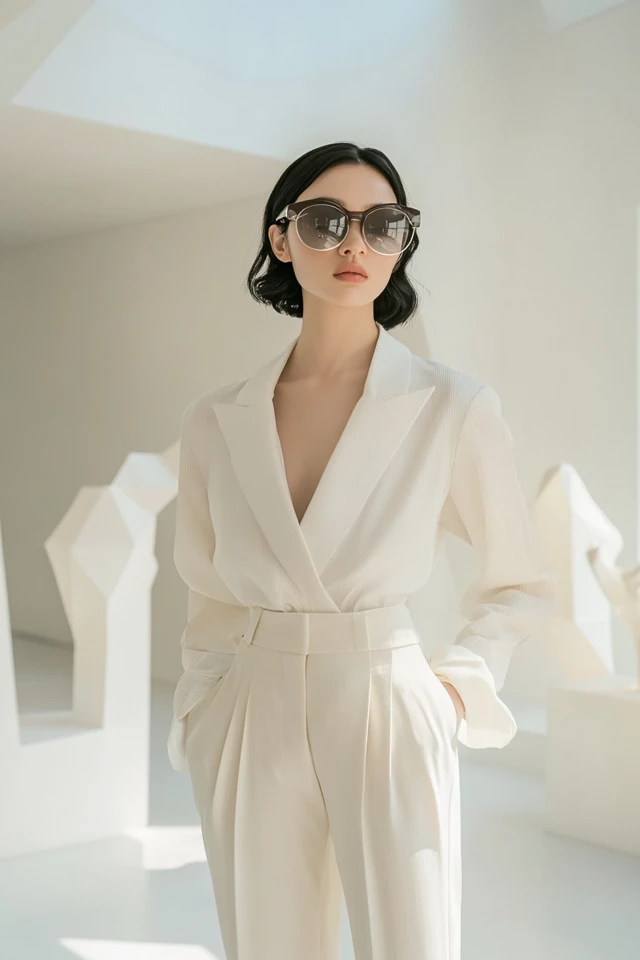
The straight leg is the easiest cut to wear to an office. It keeps the same width from hip to hem, so it looks tidy with a blazer, a knit or a plain tee. Look for a firm fabric, a waistband that sits comfortably, and a hem that just skims your shoe.
Below: what a good fit looks like, which fabrics hold up, which colors work hardest, and how to style one pair several ways.
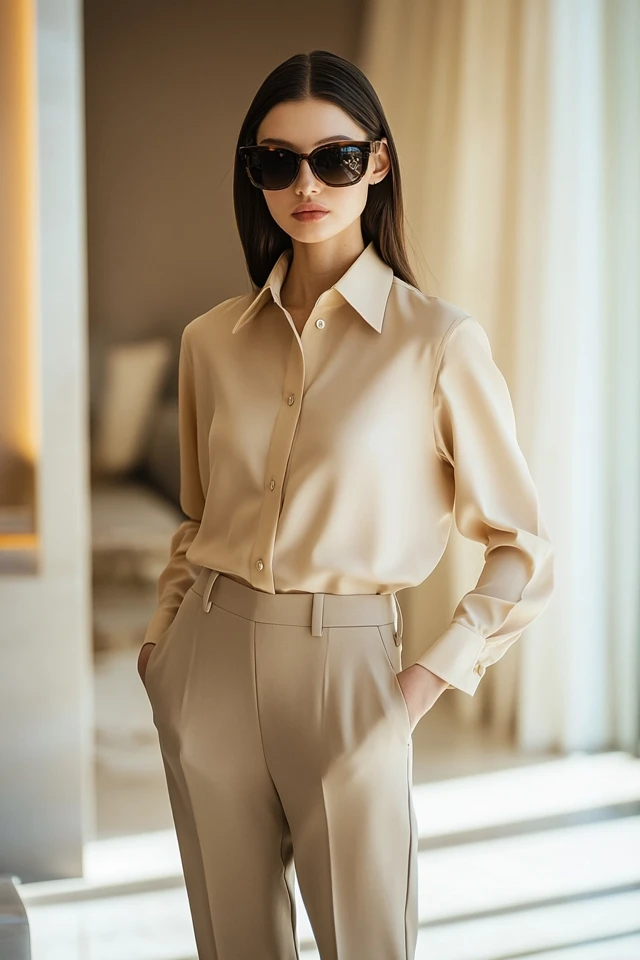
What makes tailored work trousers look good?
New Mexico State University's extension guide names the framework simply. Wendy Hamilton writes: "Three key factors contribute to successful dressing in pants: style, fabric, and fit." Straight leg takes care of style. The other two decide whether the pair looks expensive or tired.
If a pair never looks right on you, it is usually a fit problem, not a you problem. Check the points below before you judge the cut.
How should straight-leg trousers fit?
The same NMSU guide says pants should fit comfortably at the waistline and fall smoothly over the hips and thighs, with the lengthwise grain perpendicular to the floor and the leg creases on the straight grain. In practice, that gives you a short checklist:
- The waistband sits flat without gaping at the back or digging in when you sit.
- No horizontal pulling across the hips or thighs, and no pocket flaring open.
- The crease runs straight down the middle of the knee to the shoe. A crease that swings sideways usually means the leg is twisted or cut off grain.
- The leg hangs straight without clinging to your calves.
A tailor can usually fix waist and hem. Hips and thighs are harder, so buy for those and adjust the rest.
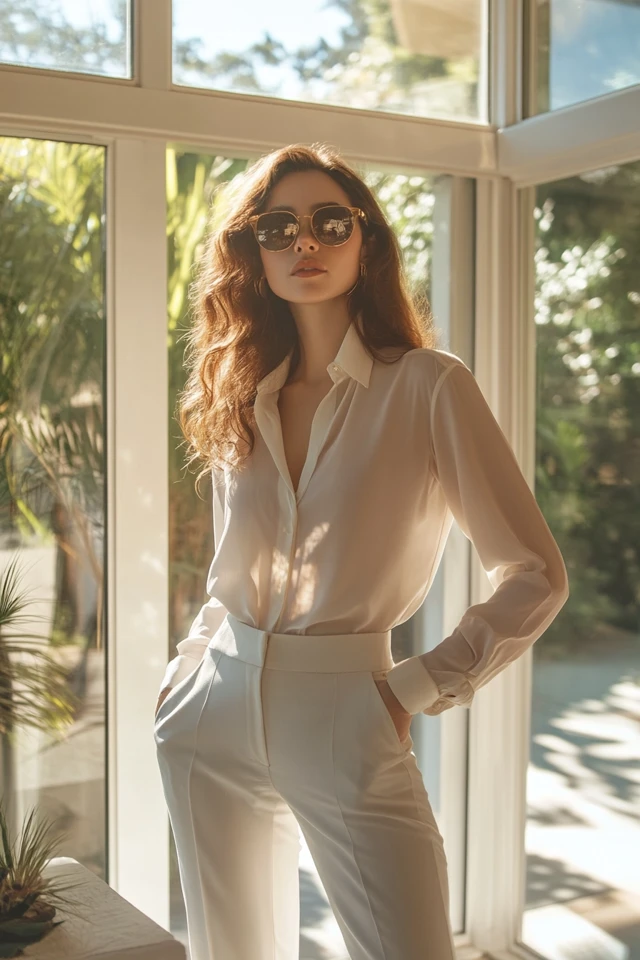
Which fabric works best?
NMSU's guide says the fabric should be firmly woven to hold its shape and wear well, drape gracefully and resist wrinkles. That points you to wool and wool blends, dense crepe, and tightly woven cotton or synthetic blends. A little stretch helps comfort and keeps the line smooth when you sit.
Through the lens of evidence-based design, I'd pay attention to surface. A matte weave reads calm and formal, while a shiny finish catches light at the knee and thigh and draws the eye there. For a long workday, a matte fabric is the quieter choice.
Most tailored trousers are dry-clean only, so check the care label. Hang them between wears to keep the crease and shape.
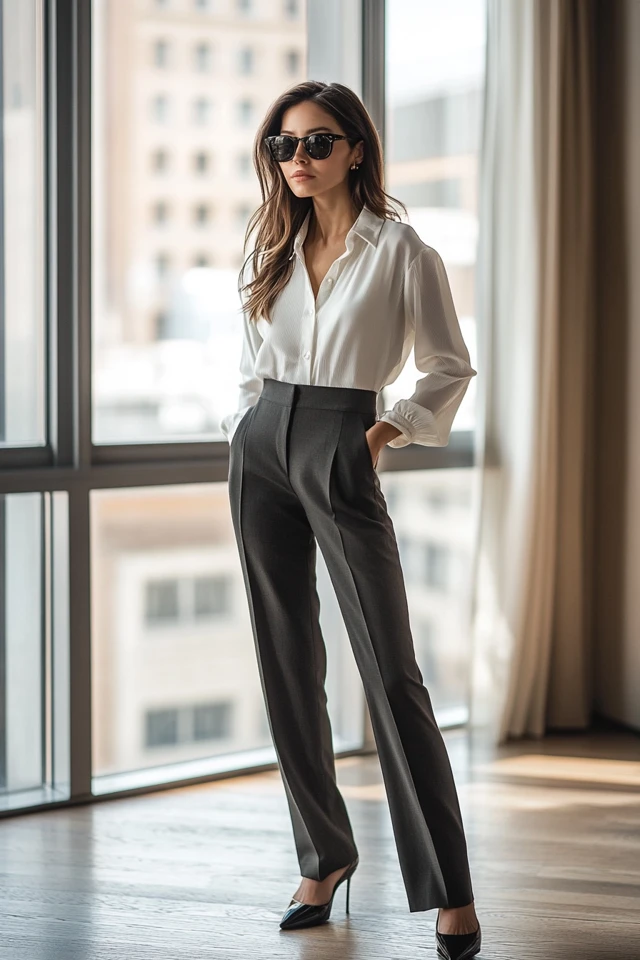
Which color should you buy first?
- Black is the most formal and the easiest to pair, though it shows lint and dust.
- Navy is slightly softer and looks good with white, light blue and cream.
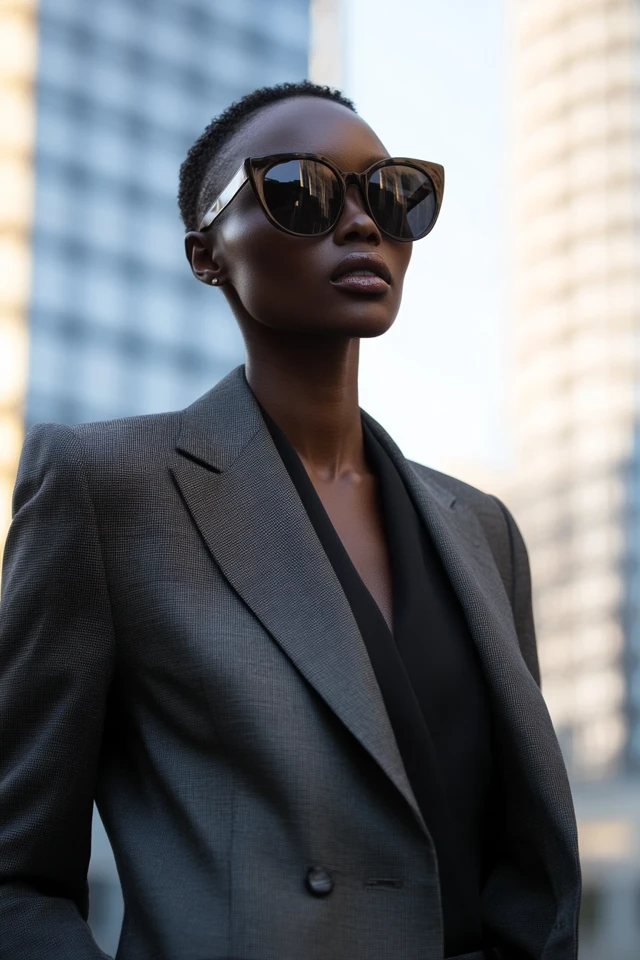
- Charcoal sits between formal and relaxed. Lighter greys feel casual, darker ones more serious.
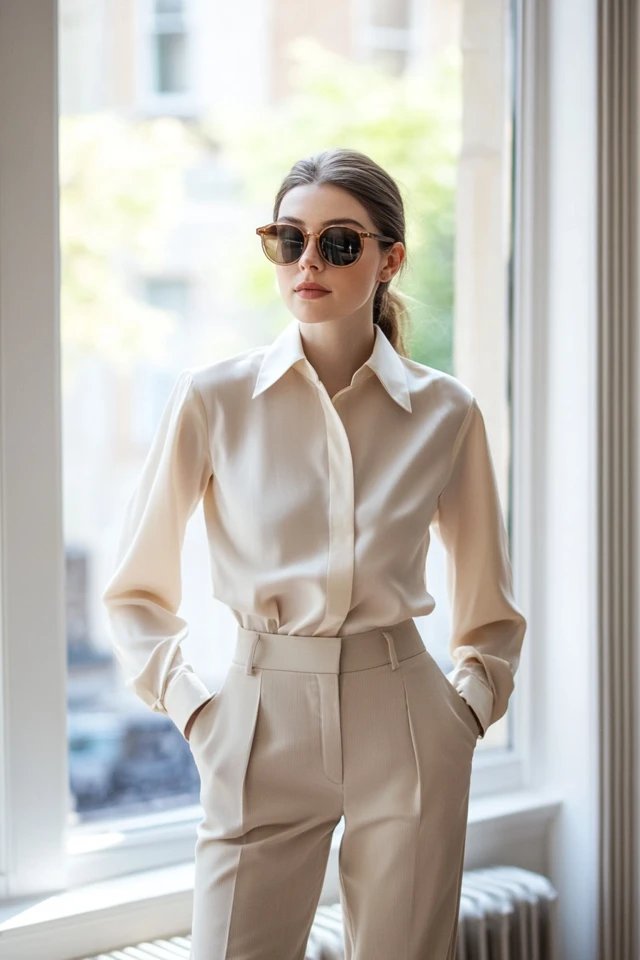
- Camel and beige suit olive, cream and rust, and work well in spring and fall.
- White or cream is a warm-weather option. Choose a heavier, opaque fabric.
If you own one pair, make it navy or charcoal. They look less stark next to skin and are less demanding than black to keep looking fresh.
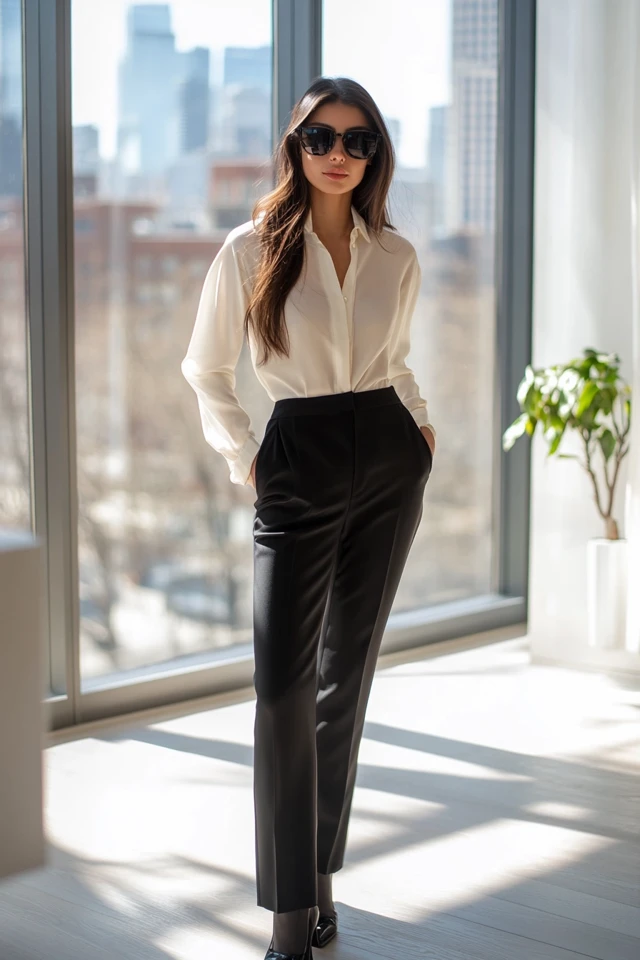
Which rise and length suit your frame?
Tailored trousers with a high waist elongate the leg and give you a clear place to tuck a top in. A mid rise is easier if you prefer a looser waist. Either works with a straight leg.
If you are petite
Try an ankle-length or slightly cropped hem and a high rise. Skip very wide legs, which can swamp a shorter frame, and match the shoe tone to the trouser to keep the line unbroken.
If you are tall
Choose full length, ending just above the floor in your work shoes. A wider hem or a cuff adds balance.
If you are curvy or straight-framed
On a curvier frame, pick a mid or high rise with some stretch and fit the hips first. On a straighter frame, a soft pleat adds shape. A belt defines the waist for both.
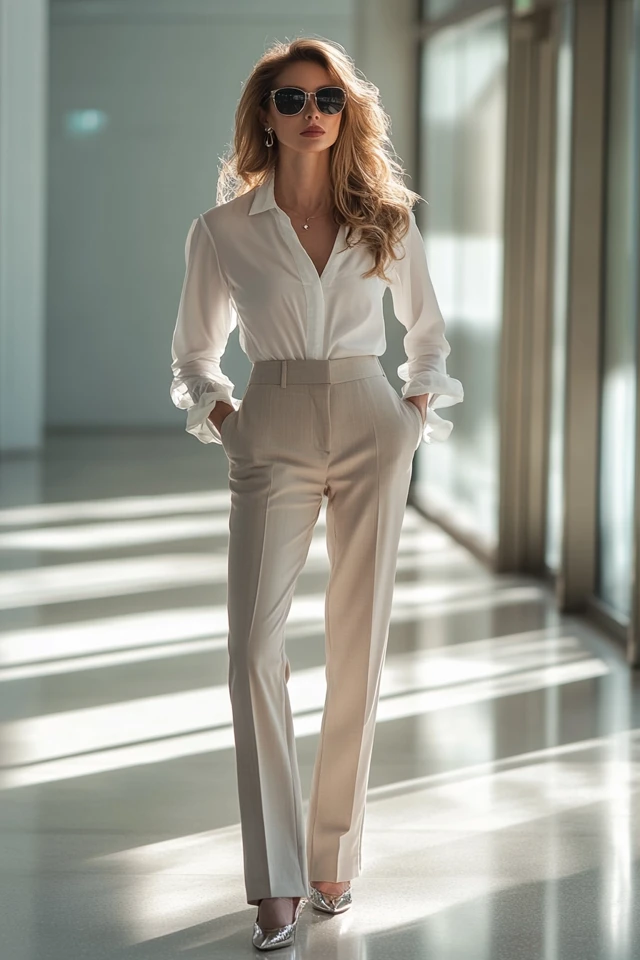
How do you style them for the office?
Balance volume. A fitted or cropped top keeps the line streamlined, while an oversized blazer or chunky knit looks sharper over a high-waisted pair with the top tucked in.
For shoes, loafers and ankle boots look polished, pointed flats or low heels dress the outfit up, and clean white sneakers suit casual Fridays. If you want more drama than a straight leg gives, wide-leg trousers are the nearest step up, and wide leg work pants follow the same fit rules at the waist and hip.
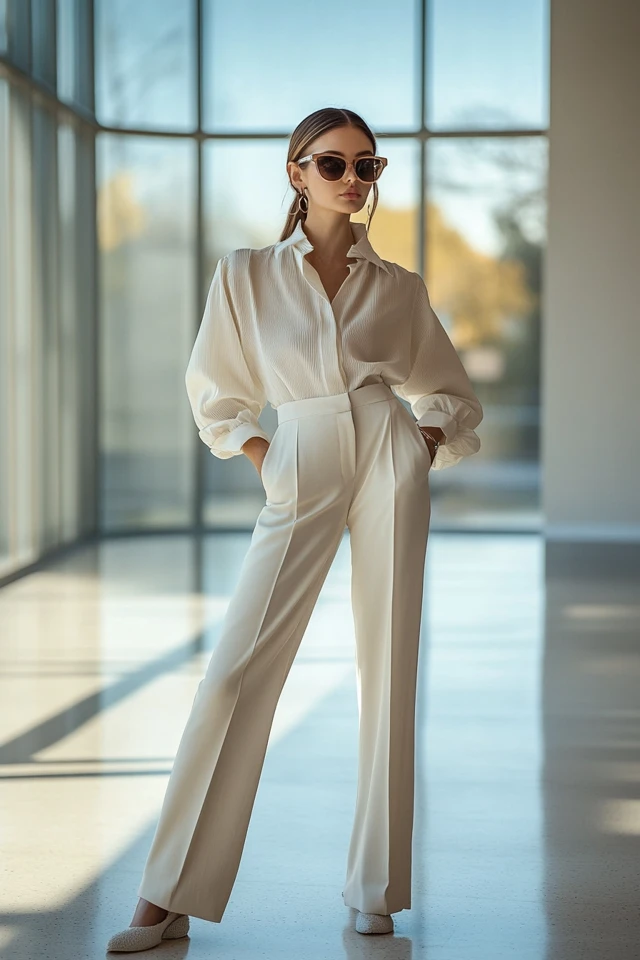
As an architect trained in evidence-based design, I'd treat the waistline as the first thing the eye reads in this outfit. A tucked-in top with a belt in a tone close to the trousers gives a clean vertical line.
For weekends, the same shape appears in denim, and these high-waisted straight-leg jeans follow similar proportion rules.
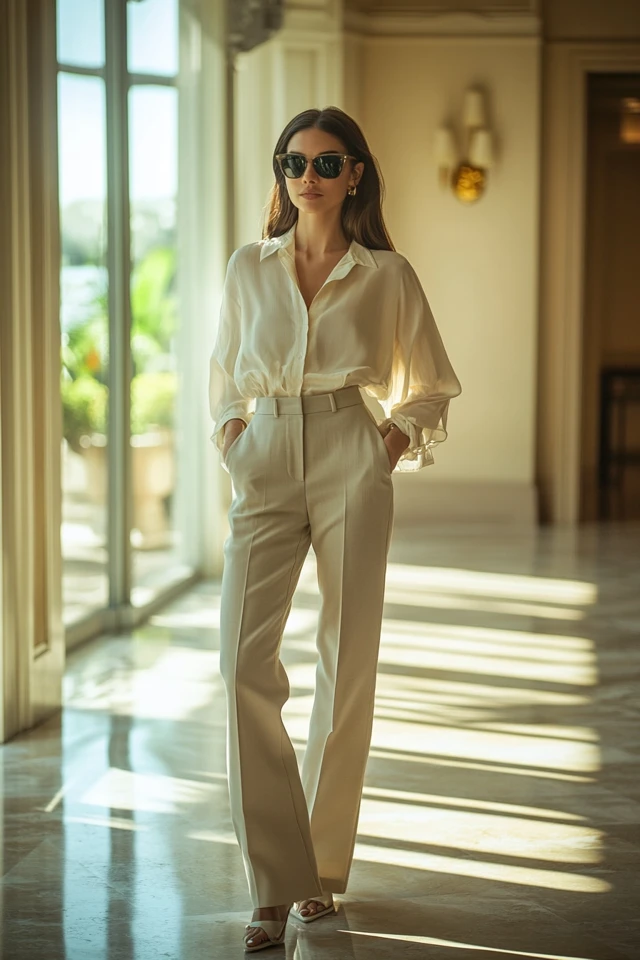
Which details are worth paying for?
Trends such as cropped hems, jewel tones, textured fabrics and paperbag waists are fun but date faster than the classic. Classic black wool, neutral lightweight pairs and fine pinstripes last longer. If you buy a trend, make it a bolder color in a straight cut and keep the top neutral.
Spend on fabric and fit first. A good pair with a tailored hem beats an expensive pair that pulls at the hip.
Frequently asked questions
Can you wear straight-leg trousers casually?
Yes. Swap the blazer for a plain tee or knit and wear sneakers or loafers. The clean line keeps the outfit tidy.
What is the difference between straight-leg and skinny trousers?
A straight leg keeps roughly the same width from hip to hem. Skinny trousers taper closely around the thigh and calf.
What length should straight-leg work trousers be?
Usually just skimming the top of your shoe, or at the ankle bone for a cropped look. Try them on with the shoes you will wear.
Can you wear tailored trousers in cold weather?
Yes. Choose a wool or wool-blend fabric, wear boots, and layer with a knit or long coat. Make sure the leg is roomy enough for tights or thermal layers.
Filed under Style & Fit