Color Blocking Outfits: How to Wear Midi Dresses
- Words by
- Julio Arco
- Published
- Reading
- 5 min
Color blocking means putting solid areas of two or more contrasting colors together in one outfit, with clean edges and no pattern in between. A color-blocked midi dress does it for you: the blocks are sewn in, so the only decisions left are shoes, bag and layers.
The simplest rule for summer is to keep the blocks to two or three colors, keep them similar in intensity, and let everything else stay quiet.
What is color blocking in an outfit?
Color blocking is the use of large, flat fields of color side by side. The blocks can be a dress cut in panels, or separate pieces such as a cobalt top and a tangerine skirt. What sets it apart from florals or stripes is that each color gets a clear, uninterrupted area.
The idea is old. The FIT Fashion History Timeline describes parti-color as the combination of different colors within the same garment along the vertical axis, and notes it was prevalent in Medieval Europe from the late twelfth century until the end of the fifteenth. Today's version is usually softer and more varied in where the seams fall.
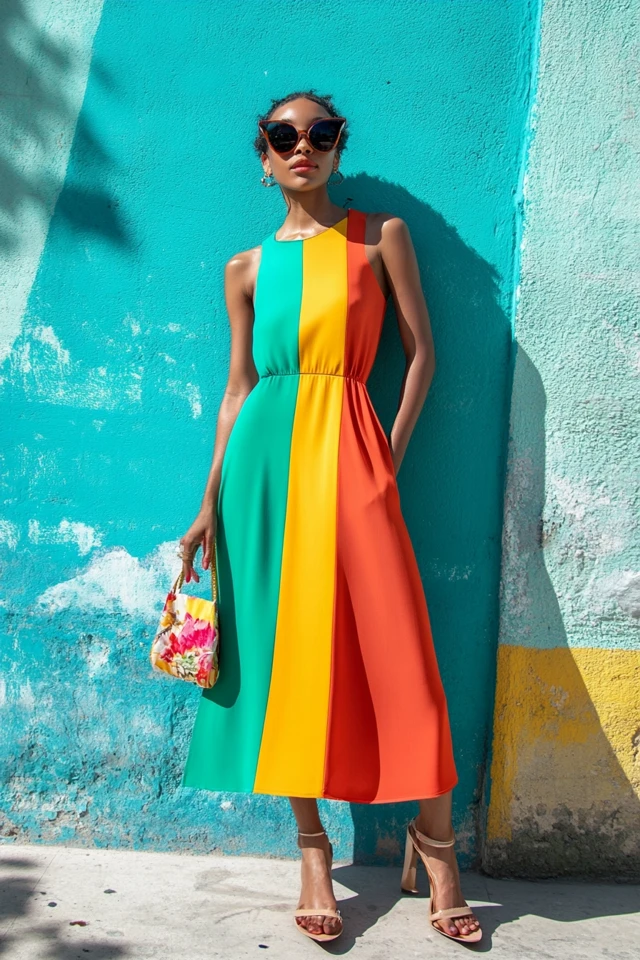
How to color block outfits: five rules that work
Match the intensity of the colors
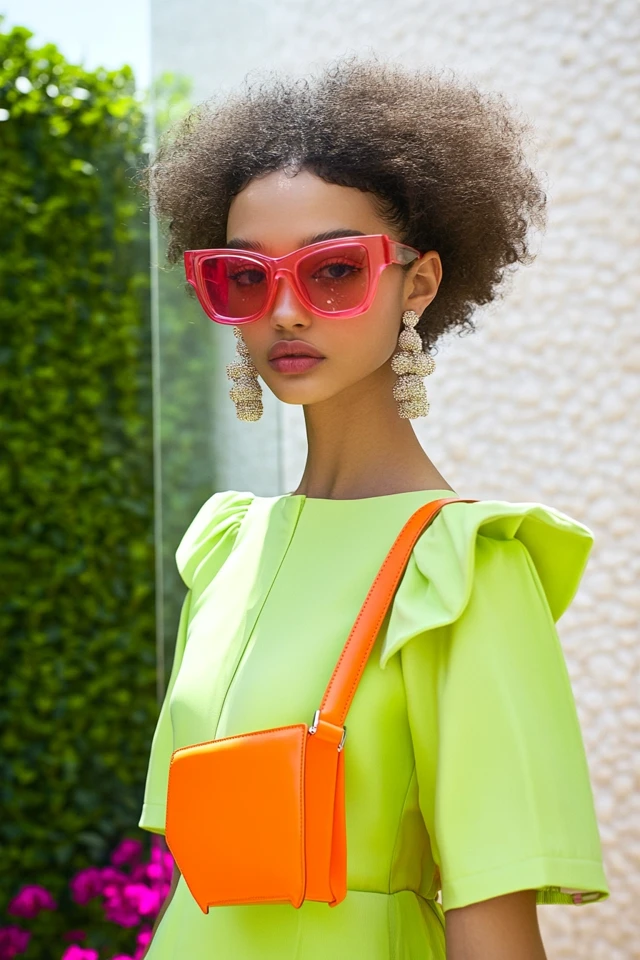
Two colors read as a pair when they are equally strong. Mint beside blush looks calm. Mint beside a neon pink looks like one of them is shouting. If a dress mixes a bright and a pale shade, keep the accessories neutral so the eye has one place to land.
Start with a neutral or one pop
If you are new to this, pick a dress that is mostly beige, white or navy with one colored panel. Through the lens of evidence-based design, I'd treat the largest block as the color people read first, so put it where you want attention: the bodice for a longer-looking torso, the skirt for a lighter top half.
Use the color wheel for pairings
Opposites on the wheel (blue and orange, pink and green) give the strongest contrast. Neighbors (blue and teal, coral and pink) give a softer, more harmonious result. Three colors from evenly spaced points on the wheel is the boldest option.
Let the cut do some work
Vertical or diagonal blocks lengthen the line of the body. A horizontal block at the waist or hip draws the eye to that spot, so place it deliberately. Tiered skirts with a different color on each tier add movement.
Treat accessories as blocks too
A belt, a bag or a pair of shoes can repeat one of the dress colors. That ties the outfit together far better than a third, unrelated color.
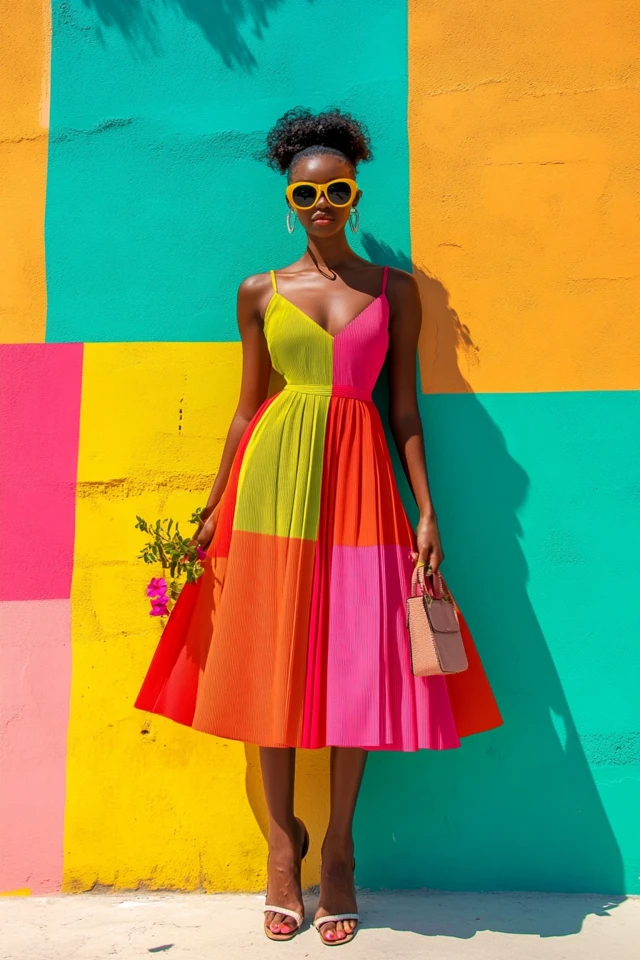
Color blocking examples to try this summer
These are combinations that tend to work on a midi length. Pick the mood you want.
- Mint, blush and lavender: soft and romantic, good for garden parties and daytime events.
- Red, blue and yellow: playful and graphic, suited to festivals and casual days out.
- Beige with coral and aqua: polished with a small twist, a fit for semi-formal plans.
- Two shades of the same hue, such as navy and sky blue: calm, with enough contrast to avoid looking flat.
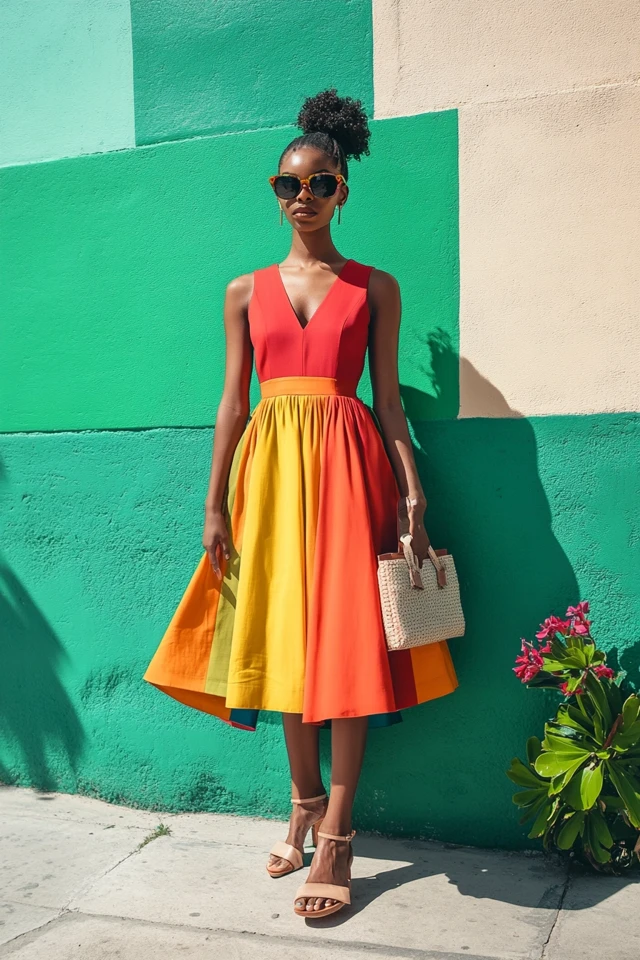
- Orange, lime and turquoise: loud and warm, made for the beach or a trip.
For more palette ideas, see pastel color combinations for summer dresses or, if you want the louder end, neon colors in summer dresses.
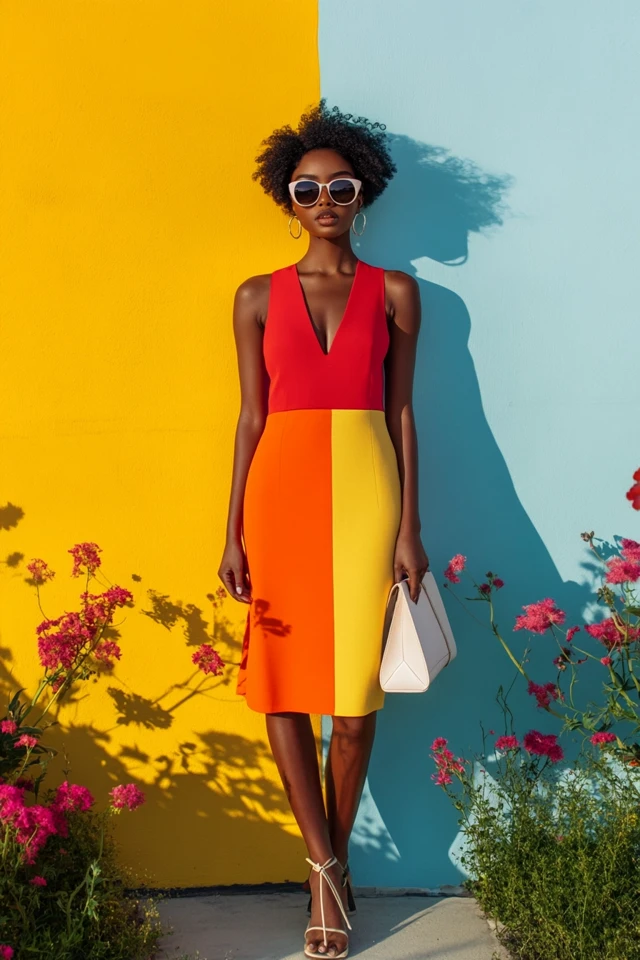
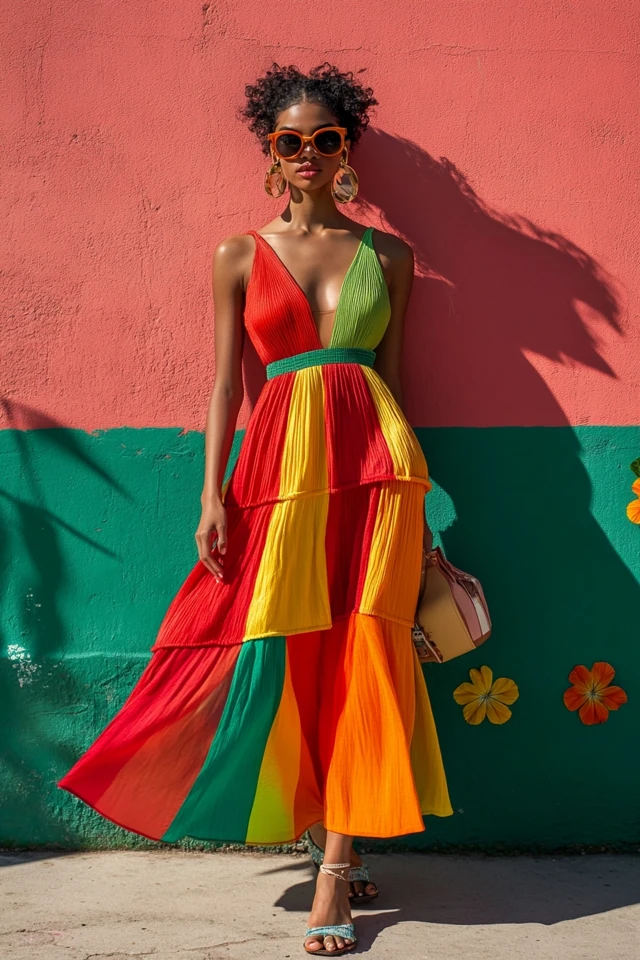
Warm vs cool tone color blocking
Warm colors (coral, orange, mustard) tend to look closer and more energetic. Cool colors (blue, mint, lavender) tend to recede and feel calmer. Mixing one of each gives a lively contrast; staying within one temperature gives a quieter, more cohesive look.
Next to your skin, any color can look different depending on your undertone and the light, so hold the dress up near your face in daylight before you decide.
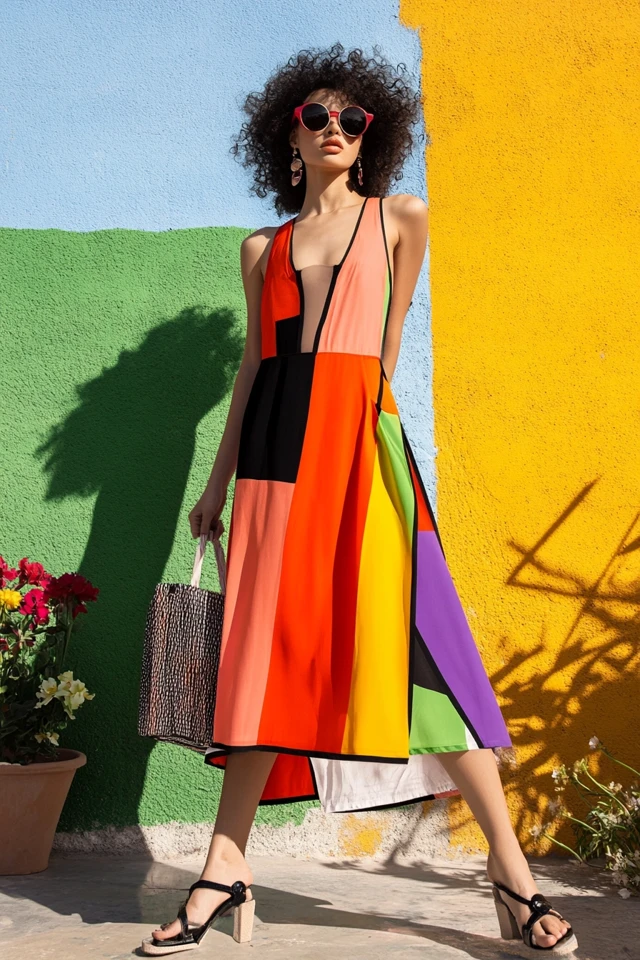
How to style a color-blocked midi dress
Casual days
White sneakers, a light denim jacket and a neutral tote keep the dress in charge. Flat strappy sandals work just as well when it is hot.
Brunch and daytime events
Nude or metallic heeled sandals, a small crossbody and simple jewelry suit pastel or neutral blocks. A wide-brim straw hat adds shade and a finishing line.
Evening
A contrasting belt defines the waist, and block heels or mules add height without fuss. Statement earrings are enough; skip the necklace if the neckline is already busy. For ideas, see summer midi accessory trends.
Beach and vacation
Slides or espadrilles and a woven bag balance bold color with natural texture.
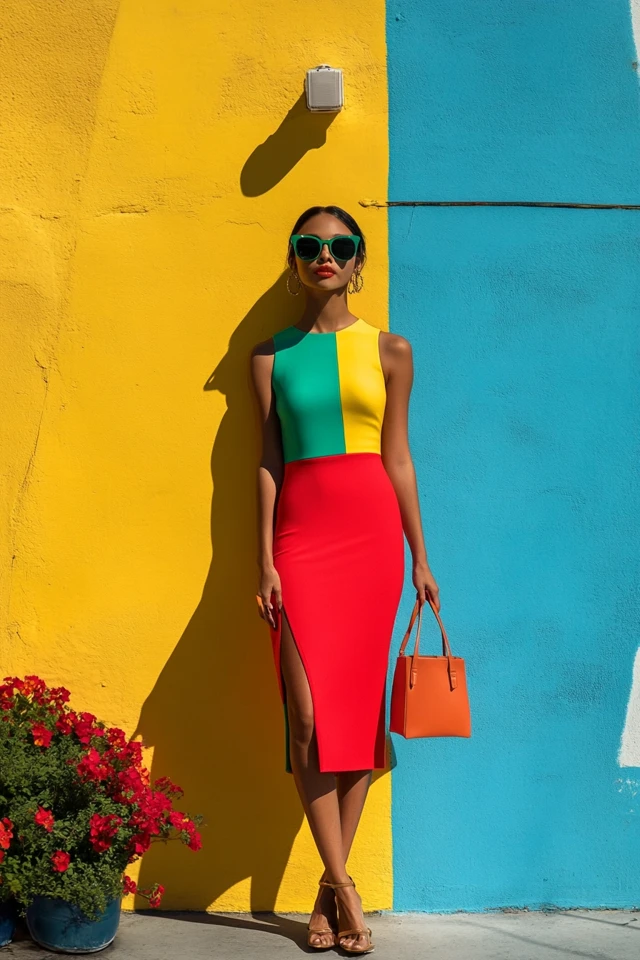
Which fabrics suit color blocking?
Texture changes how a color reads, so fabric matters as much as the palette. As an architect trained in evidence-based design, I'd pick a matte cotton or linen for daytime, because a flat surface keeps the blocks crisp, and save satin for evening, where the sheen softens edges and deepens the color.
- Cotton and linen: breathable and relaxed, best for hot days (linen wrinkles, which is part of its look).
- Jersey knit: stretchy and easy to travel with.
- Silk or satin: dressier, with a fluid drape.
- Chiffon: light and floaty, good for semi-formal events.
If you prefer a wrapped shape, wrap midi dresses with flowing skirts pair well with panel colors.
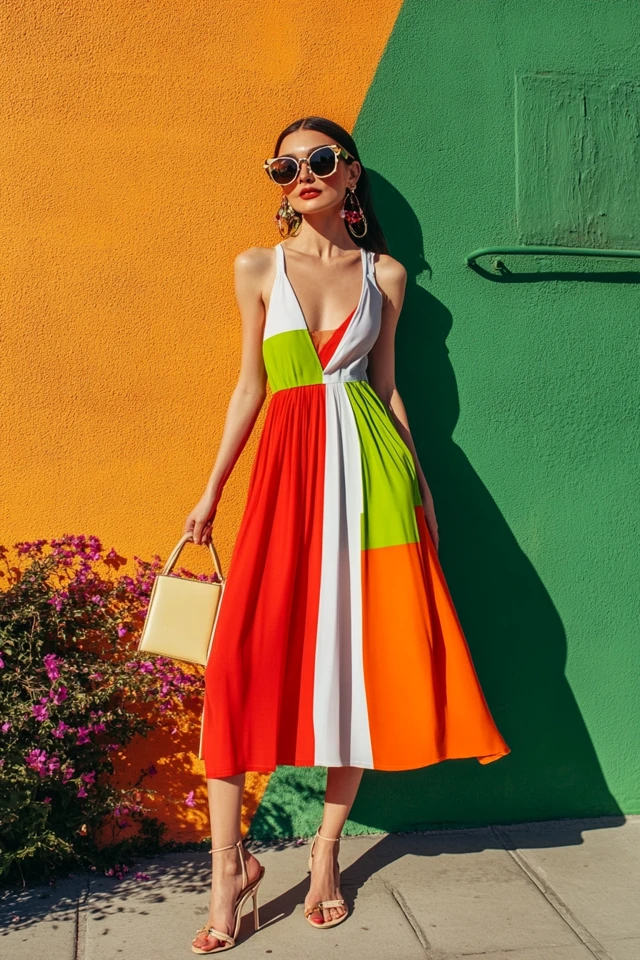
Color blocking do's and don'ts
- Do keep to two or three colors and a consistent intensity.
- Do repeat one dress color in a shoe or bag.
- Do choose a cut that suits you: A-line and wrap shapes are easy starting points, and a fitted bodice or empire waist gives a clear focal point.
- Don't add a patterned bag or scarf unless you want a maximalist look.
- Don't stack several bright accessories on a dress that is already bright.
- Don't worry about being "too old" or "too young" for it. If the dress is comfortable and the colors please you, it works.
For a calmer alternative, try the monochrome midi palette.
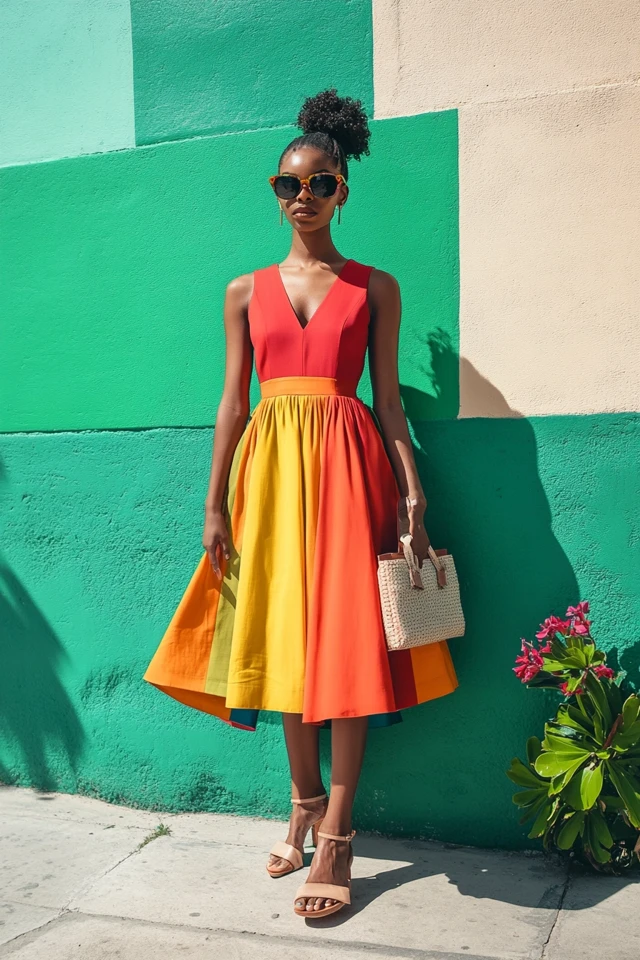
Frequently asked questions
What is color-blocking in an outfit?
It is the pairing of solid, contrasting colors in large areas, either as panels in one garment or as separate pieces worn together. There are no prints between the blocks.
Is color-blocking outdated?
Combining flat colors is a long-standing idea in clothing, so it keeps returning in new palettes. Muted pairings such as dusty blue with sage currently feel less loud than primary colors.
Can I wear a color-blocked midi dress to work?
Yes, if you choose muted or neutral blocks. A blazer and closed-toe shoes make it more office-ready.
How do I wear a color-blocked dress in cooler weather?
Layer a neutral cardigan or blazer over it and add ankle boots or closed-toe pumps.
Filed under Seasonal Trends