Tiered Pleated Maxi Skirts: How to Choose and Style
- Words by
- Julio Arco
- Published
- Reading
- 6 min
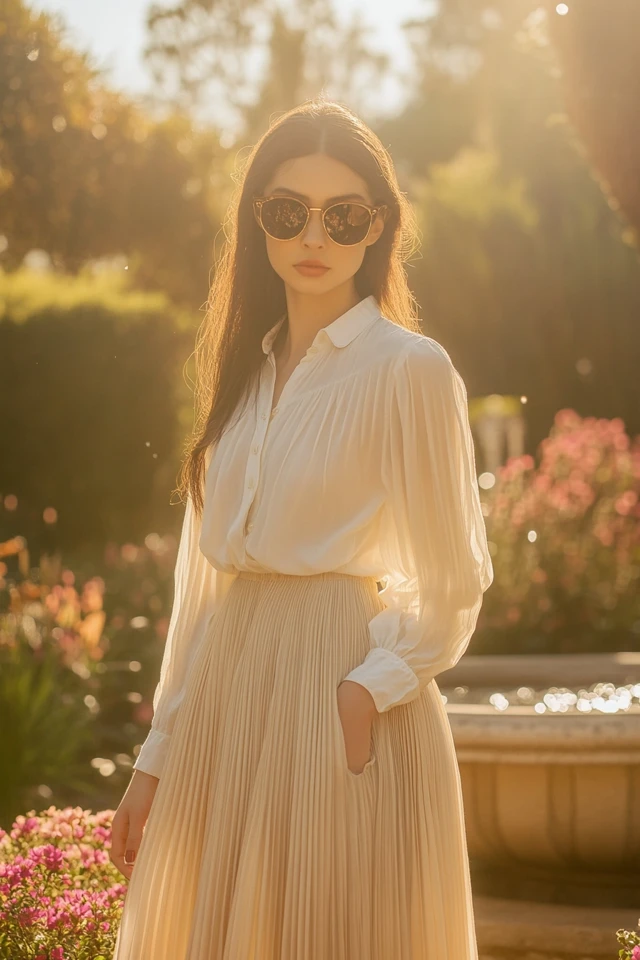
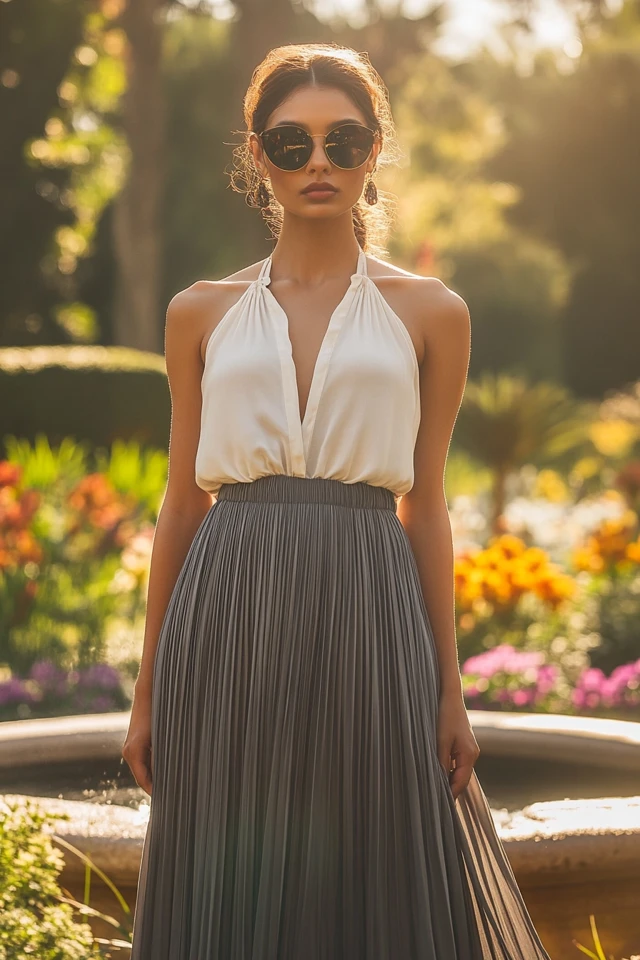
Tiered pleated maxi skirts work best when you let the skirt carry the volume and keep the rest of the outfit fitted and simple. Choose a waist that sits at your natural waist, a fabric that moves (chiffon, georgette, satin, fine organza), and a top that stops at or tucks into the waistband.
They are also a safe buy. Long, full, pleated skirts have returned in many forms for a long time, and the layered version simply adds more movement. Here is how to pick one and wear it.
Are pleated maxi skirts still in style?
Yes, in the sense that matters for a purchase: the shape keeps coming back and is easy to date-proof. Full skirts have a long fashion history. A fashion historian, C. Willett Cunnington, notes in a FIT history page on the 1850s: "The prevalence of the fashion can be gathered from the statement that in 1859 Sheffield was turning out enough crinoline wire a week for half a million crinolines." Volume in skirts is clearly not a new idea.
What changes season to season is the detail: hem shape, tier width, pleat size, fabric sheen. Choose those to suit you, and the skirt will not look dated quickly. Solid colors and narrow, even pleats age the slowest. Asymmetric hems and sheer overlays read as more current.
Tiered, pleated or both: what is the difference?
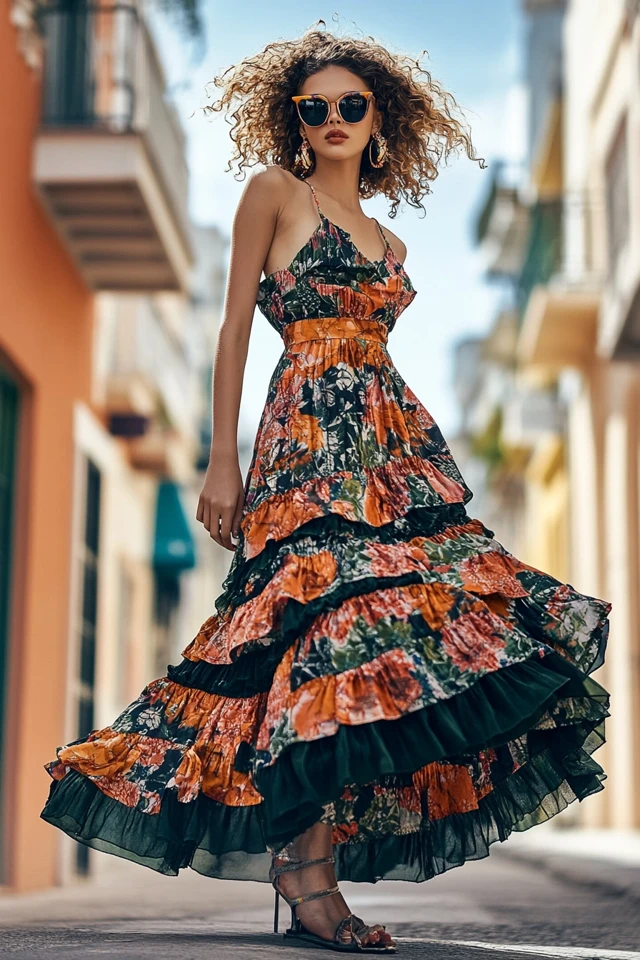
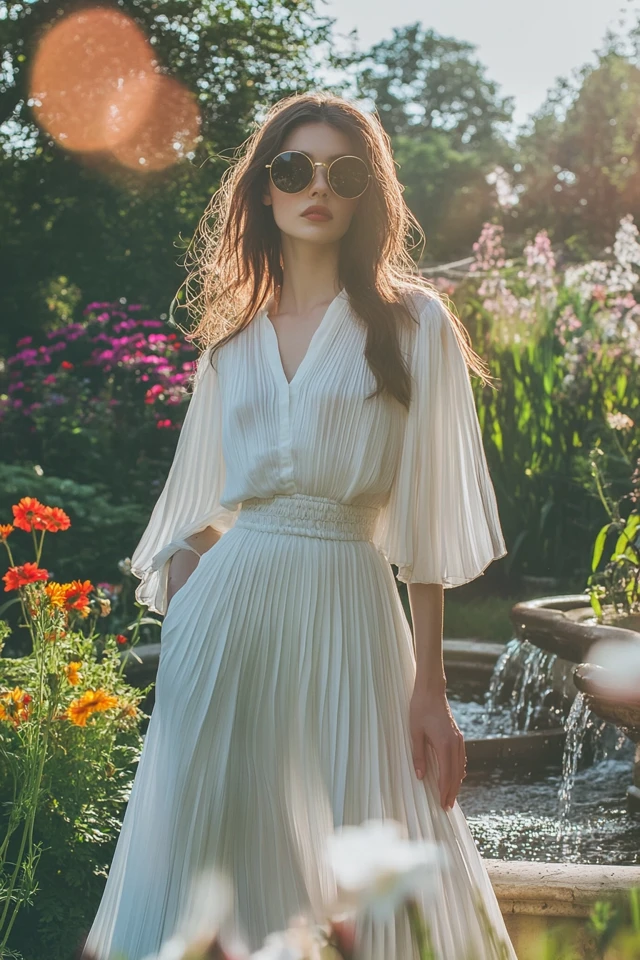
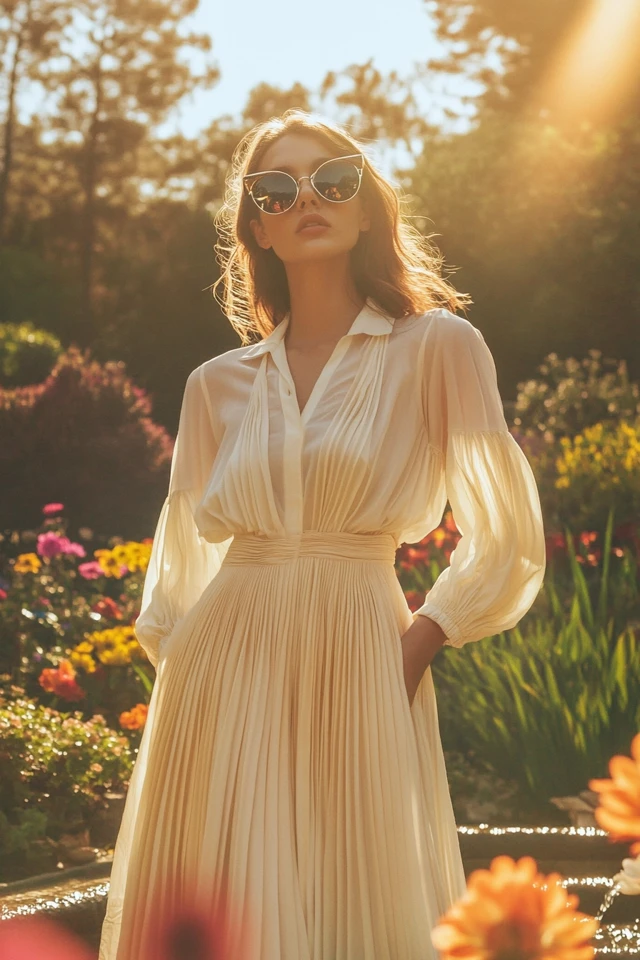
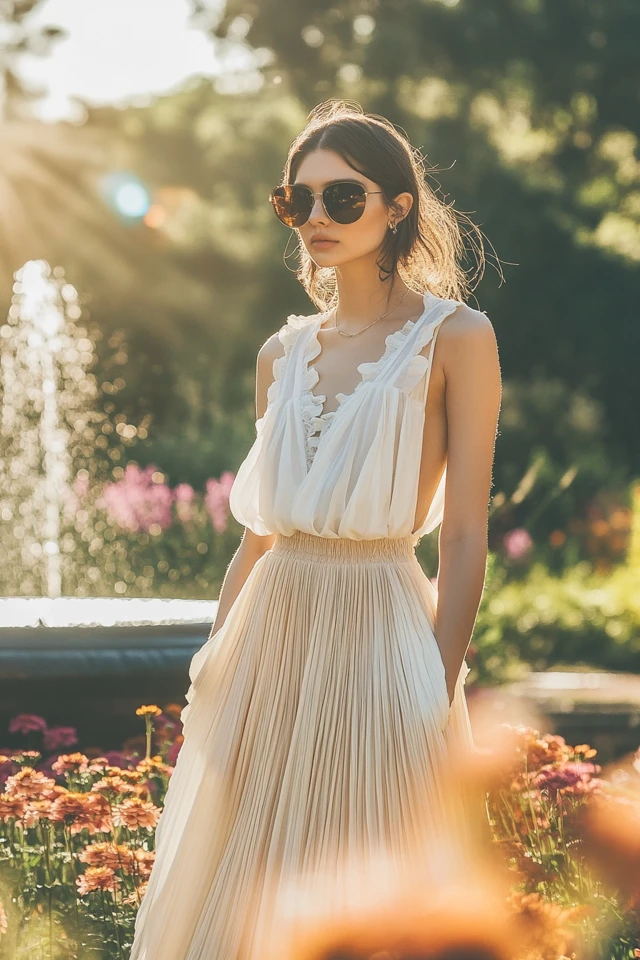
A pleated skirt is one length of fabric folded into regular creases, which gives a vertical line and a swish when you walk. A tiered skirt is built from stacked sections, each wider than the one above, so the volume steps out as it falls. A layered ruffle maxi skirt is a tiered one with gathered edges.
Combining them gives you the vertical line of pleats and the added movement of tiers. The trade-off is bulk. Each tier adds fabric at the hip, so lightweight material matters more here than on a plain pleated skirt.
Which fabrics move and feel best?
- Chiffon and georgette: light, airy, and the easiest to wear in warm weather. They can cling with static, so a slip helps.
- Satin: heavier drape and a sheen that catches light, good for evenings and dressier events.
- Organza and tulle overlays: crisp and sheer, they add volume without weight but can feel scratchy at the waist, so check the lining.
- Cotton and jersey blends: easier to care for and better for daily wear, with softer, less dramatic pleats.
Through the lens of evidence-based design, I'd think about texture before color. A matte chiffon and a glossy satin in the same blush do not look like the same color, because the surface changes how light reaches the eye. If you want a quiet look, pick matte. If you want the skirt to be the focus, pick sheen.
What body type looks good in a pleated skirt?
Most shapes can wear one, because fit comes from where the skirt sits and how much fabric hangs below it. A few adjustments help.
Petite frames
Pick a high waist and narrower pleats, and keep the tiers to two or three so the skirt does not swallow you. A shoe with a little lift helps the hem clear the floor.
Curvy figures
Look for a defined, flat waistband and soft fabric that skims the hips. Stiff tulle layers at the hip add bulk, so keep the volume lower, from the knee down.
Athletic or straight frames
Wider tiers and fuller pleats add shape at the hip. A tucked-in or cropped top defines the waist.
Taller frames
You can carry long, dramatic hems and wide tiers easily. Flat sandals or loafers keep the look relaxed.
If a skirt gapes or pulls at the waist, that is a sizing problem, not a body problem. A tailor can often take in a waistband inexpensively.
How to wear a high waisted pleated skirt long enough for any occasion
A high waisted pleated skirt long enough to reach the ankle needs a short or tucked top, otherwise the proportions get heavy. Tuck a fitted knit or blouse, or wear a cropped top that meets the waistband.
Casual
Try a plain tee or knit tank with white sneakers or flat mules. Our cropped tank and maxi skirt ideas show how simple that balance can be.
Work
Add a tailored blazer cut to the waist and pointed flats or low heels. Choose a solid color and narrow pleats for the most office-friendly version.
Cooler weather
Ankle boots, a fitted sweater and a longline coat work well. Keep the coat's hem a little shorter or longer than the skirt, not the same length.
Dressy and evening
Satin or metallic pleats with a silk or fine-knit top, heels and one piece of jewelry. If you like this shape in a dress, see pleated maxi dresses.
Tiered pleated maxi skirts for a wedding
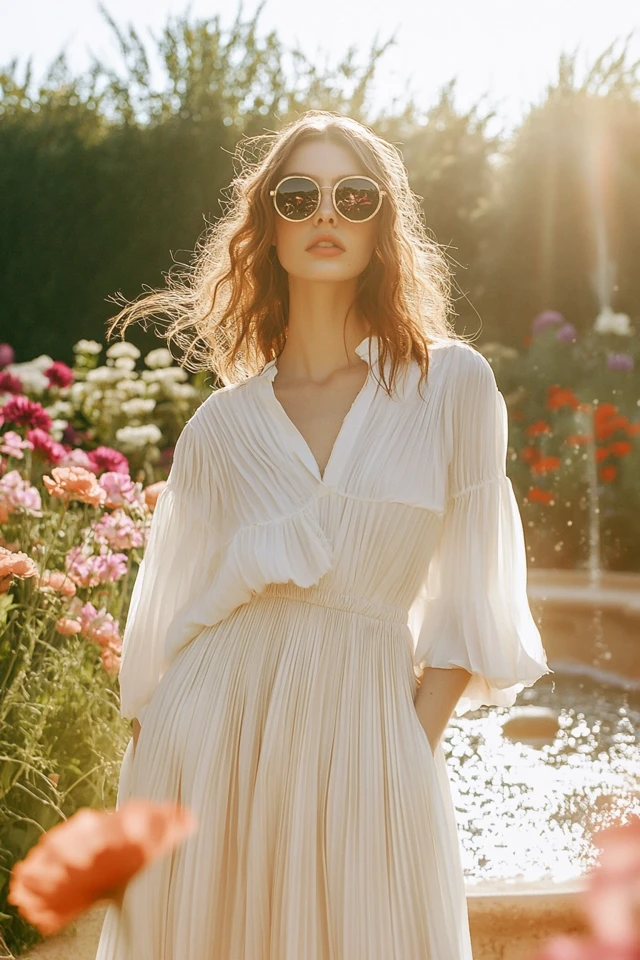
For tiered pleated maxi skirts for a wedding, pick a fabric with some weight, such as satin or lined chiffon, so the skirt stays smooth when you sit and dance. Pair it with a structured or fitted top, and avoid white and ivory when you are a guest.
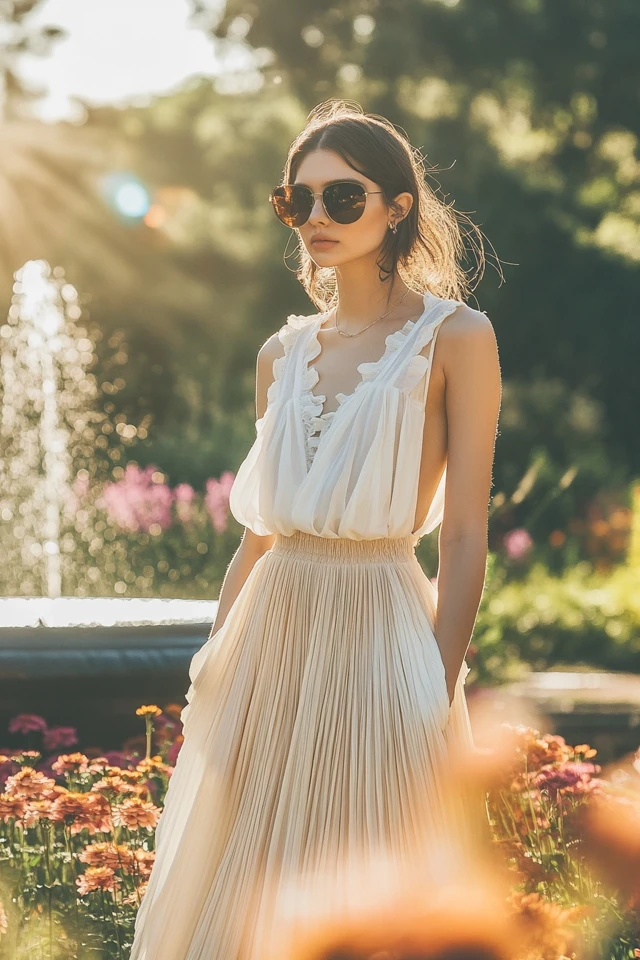
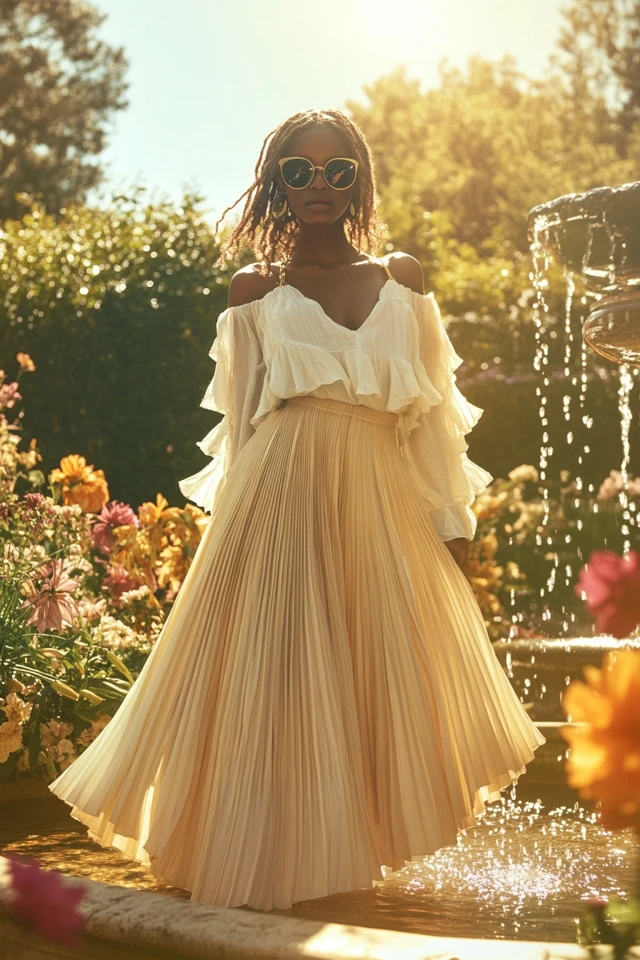
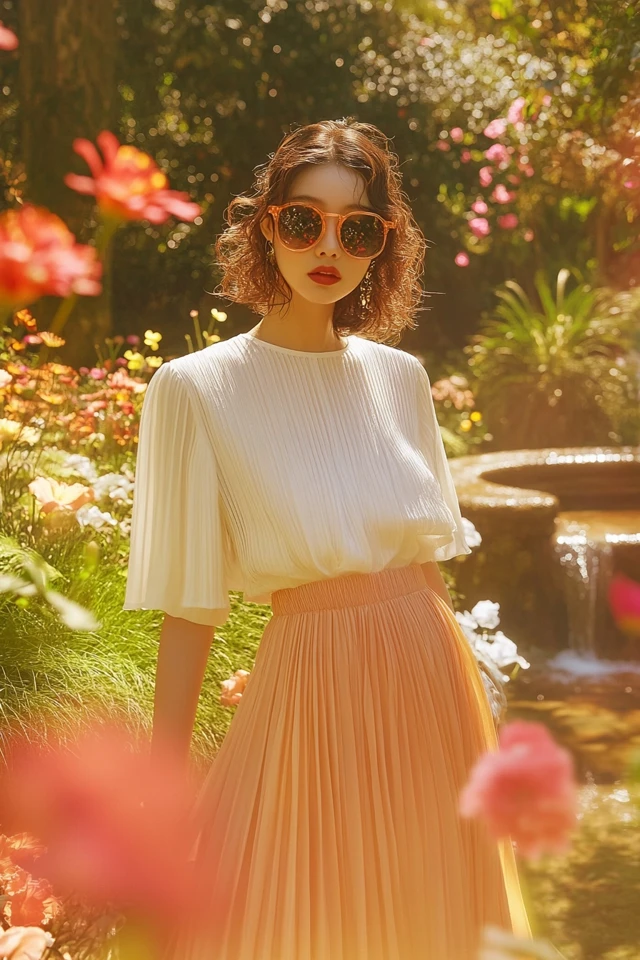
Soft pastels suit daytime and spring ceremonies, while deeper tones and metallics suit evening ones. For outdoor or beach settings, lighter fabric and a hem that clears the grass or sand are practical. Related ideas are in beach wedding maxi dresses and rehearsal dinner outfits.
Color and print
- Black, beige and ivory pair with nearly any top and are the easiest starting point.
- Blush, lavender and mint read soft and light, especially in sheer fabric.
- Terracotta, olive and mustard look warmer and more relaxed.
- Cobalt, fuchsia and crimson make the skirt the center of the outfit, so keep the top neutral.
- Prints work best with small, even repeats on pleats, since large motifs stretch and distort in the folds.
For fall color ideas in a shorter length, look at pleated midi skirts in jewel tones.
Is a knee length version an option?
If a full maxi feels like too much, tiered pleated maxi skirts knee length are not a thing by definition, but a tiered pleated midi or knee-length skirt gives the same movement with less fabric. It suits petite frames and anyone who wears flats and does not want to hem a long skirt.
Care for pleats and layers
- Check the label first. Chiffon and tulle layers often need hand washing or dry cleaning.
- Steam rather than iron, holding the steamer a short distance from the fabric.
- Hang the skirt from clips at the waistband so the pleats fall straight.
- For a synthetic that holds a crease poorly, a tailor or dry cleaner can set the pleats again.
Frequently asked questions
Are tiered maxi skirts still in style?
Yes. The shape keeps returning, and a solid color with even pleats or modest tiers will stay wearable longer than a trend-driven detail like a very asymmetric hem.
What body type looks good in a pleated skirt?
Most body types can wear one when the waist sits comfortably and the fabric drapes rather than stands out. Petite frames do well with narrow pleats, while curvy frames suit softer fabric that skims the hips.
Can I wear a pleated maxi skirt in winter?
Yes. Add opaque tights or a lining layer, ankle boots and a fitted knit, and choose a heavier fabric like satin or a wool blend over sheer chiffon.
How do I stop a pleated skirt from losing its pleats?
Hang it rather than folding it, and steam it gently instead of pressing it flat. Follow the care label, as many layered chiffon and tulle skirts need hand washing or dry cleaning.
Filed under Style & Fit